Bangkok’s icons roll by fast. This 2-hour tuk-tuk route strings together the big hitters with quick landmark looks, including the Grand Palace area, Wat Pho, and a view of Wat Arun across the Chao Phraya River. I love how you pack in major sights without long transfers, but do note Grand Palace admission isn’t included, so your stop there is mostly for viewing and photos unless you buy your own ticket.
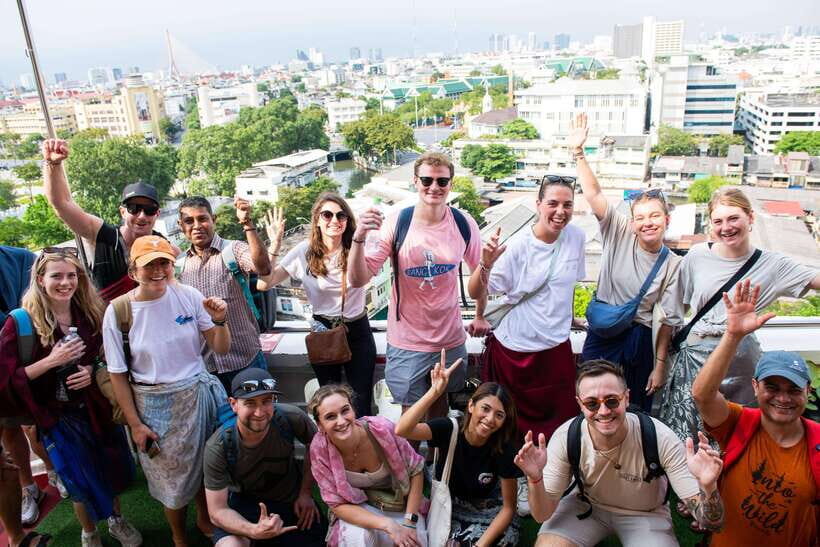
You’ll also ride with a licensed English-speaking guide and a shared tuk-tuk, plus water and a folding lotus flower activity that adds a nice hands-on break from temples and streets. Guides such as Anna, Enjoy, Pu, and Ken show up again and again in the feedback, and that matters here because Bangkok moves fast and your guide is the glue that keeps it fun and understandable.
In This Review
- Key highlights at a glance
- Why a classic tuk-tuk route works in Bangkok
- Meeting Siam: where you start, and where the ride deposits you
- Grand Palace area: the quick look you can build on
- Sao Chingcha (Giant Swing): the photo landmark with meaning
- Wat Ratchanatdaram and Loha Prasat: the Metal Castle detour
- Chinatown on Yaowarat Road: street life you can handle in one stop
- Pak Khlong Flower Talat: a market you can visit any time
- Wat Arun across the Chao Phraya: what you gain from the river view
- Wat Pho and the Thai Traditional Massage School: slowing down in one stop
- The folding lotus moment: the small extra that makes it memorable
- Shared tuk-tuks: comfort limits, plus safety in the real world
- Traffic and timing: when Bangkok changes the plan
- Price and value: why $28.70 can feel fair
- Who this tuk-tuk tour suits best
- Should you book this tuk-tuk highlight tour?
- FAQ
- How long is the tuk-tuk tour?
- What do I get for the $28.70 price?
- What’s the route like, and where does it start and end?
- Are temple admission tickets included?
- How many people share each tuk-tuk?
- Does the tour run in bad weather?
- Can I cancel for a full refund?
Key highlights at a glance
- No-fare-negotiation feel: you get a scheduled, guide-led route instead of haggling in the street.
- Big sights, short stops: quick photo windows at the Grand Palace, Wat Pho, and Wat Arun across the river.
- Chinatown + flower market combo: street energy on Yaowarat Road, then Pak Khlong Flower Market (open 24 hours).
- Loha Prasat, the Metal Castle: a less common temple stop that’s easy to love for its style.
- A real local touch: folding lotus flower activity plus bottled water along the way.
Why a classic tuk-tuk route works in Bangkok
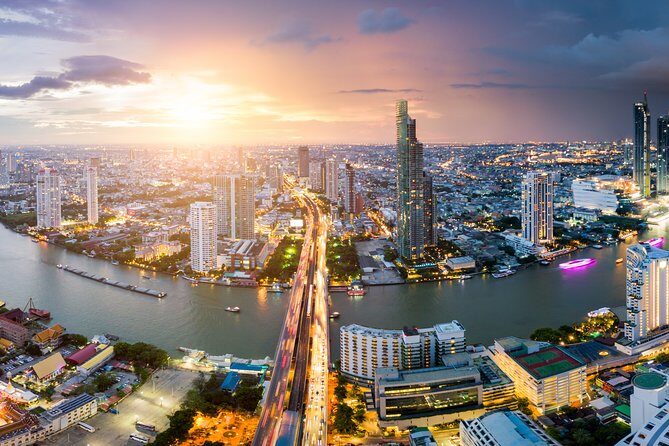
Bangkok can feel like it has two speeds: calm for about 30 seconds, then full-speed traffic chaos the next moment. A tuk-tuk tour is useful here because it’s built around quick movement and quick stops, so you still see the famous parts without spending hours commuting.
This experience is also a smart way to get your bearings fast. You’ll pass places you’ve seen in photos—Grand Palace, Wat Pho, and the Wat Arun river view—then the route swings into more “real Bangkok” areas like Chinatown and the flower market. In other words, you get both the postcard sights and the street-level life.
The other thing I like is pacing. At this length, you’re not stuck watching one long line or one long talk. Instead, you get many short moments—enough to recognize what you’re seeing and decide what you want to return to later.
Meeting Siam: where you start, and where the ride deposits you
The tour starts at Museum Siam in Phra Nakhon. That’s a handy reference point, and it’s listed as near public transportation—good if your hotel isn’t close to the old-city core.
You end on Yaowarat Road in Samphanthawong. That’s convenient because you’re right where many people want to be for dinner after a temple-and-market day. The tour also notes that from the end point, you can use a taxi or MRT (MRT station Wat Mangkon) back to your hotel. Translation: you’re not forced into one more long trip across town.
One practical tip: this is a group format with a maximum of 30 travelers (small enough to feel personal, big enough to keep it efficient). You’ll get moving without waiting around for private delays.
Grand Palace area: the quick look you can build on
Your first temple-world stop is the Grand Palace. This is the Chakri Dynasty royal complex, built in 1782 under Rama I. Even if you don’t spend a full day inside, the setting alone gives you that immediate Bangkok wow-factor: intricate details, royal-scale grounds, and the sense of power that comes through architecture.
Here’s the key trade-off. The stop is listed at about 15 minutes, and admission tickets are not included. So think of this stop as a snapshot. If you want to truly wander indoor halls and courtyards, you’ll likely need to plan a separate visit later with your own paid ticket.
What works well in this short format:
- You’ll get oriented to the complex’s overall layout.
- You’ll see enough exterior detail to understand why it’s the star.
- You can decide if you want a longer, ticketed return.
What to watch for:
- Temple complexes often have dress expectations. The tour doesn’t spell those out here, so use common sense and keep legs and shoulders in mind.
- Short stops mean you move quickly. If you’re the type who likes to linger, this is your reminder to save deeper palace time for another day.
Sao Chingcha (Giant Swing): the photo landmark with meaning
Next up is Sao Chingcha, the Giant Swing. This is a religious structure connected to an older Brahmin ceremony. It’s one of those places where the landmark image is instantly recognizable—and it’s also one of the easiest stops in the route to enjoy without needing long walking.
The stop is listed at about 15 minutes, and entry is free. That makes it a nice breather. You can take pictures, point out the details you noticed during the ride, and let the guide explain the meaning behind the swing without it feeling like homework.
If you’re traveling with kids, this is often a great moment. It’s visually dramatic and simple to understand: a huge structure, a strong silhouette, and lots of photo angles.
Wat Ratchanatdaram and Loha Prasat: the Metal Castle detour
Then you visit Wat Ratchanatdaram Worawihan grounds, including Loha Prasat, also known as the Metal Castle. This one is worth paying attention to because it’s not the default “only-Grand-Palace-only-Wat-Pho” script.
Loha Prasat was built in 1846 under King Rama III and draws inspiration from similar temple styles in India. That matters because it helps you see Bangkok temples as part of a broader cultural conversation, not just one isolated style.
It’s listed as about 15 minutes and free. The short time works because Loha Prasat is visually strong. You don’t need a long lecture to appreciate what you’re seeing—especially if your guide is the type who points out key visual features as you walk.
Potential drawback here is similar to the palace: it’s quick. If you’re a deep-details person, you might feel like you blinked and missed stuff. But as an intro stop, it’s an excellent addition.
Chinatown on Yaowarat Road: street life you can handle in one stop
You then roll into Yaowarat Road, famous as Bangkok’s Chinatown. It’s described as one of the largest Chinatowns in the world and also among the most unchanged neighborhoods in the city. That’s a big claim, but it’s the right reason this stop belongs in a first-time Bangkok route.
This stop is about 20 minutes, and entry is free. So again, it’s a sampling. You’ll get a sense of the street rhythm—food smells, shopfronts, and the feeling that you’re entering a neighborhood with its own tempo.
The trade-off is obvious: with only 20 minutes, you won’t eat your way through the whole area. But you can do something more useful. Use this stop to spot what you want to come back for tonight or tomorrow. Chinatown is one of those places where the best plan is often a shortlist: pick 2-3 food targets, not 30.
Pak Khlong Flower Talat: a market you can visit any time
After Chinatown, the tour heads to Pak Khlong Flower Talat Original, described as Thailand’s largest wholesale flower market. One of the most practical things here: it’s open 24 hours a day, 7 days a week. So even if your Bangkok day starts at an odd hour, you still get a strong chance to see it.
This stop is about 30 minutes, and entry is free. The name means market at the mouth of the canal, which connects the market to how the area historically functioned. You don’t have to be a history buff to enjoy the visuals, but it helps the flowers feel like more than a photo backdrop.
Why this stop is valuable in a tuk-tuk tour:
- Flowers break up the temple-heavy pacing with something colorful and sensory.
- You’re not stuck on a single street; you’re seeing a working wholesale space.
- It’s a great place for your guide to point out how the market supports temples and daily life.
Practical note: markets can be crowded. You’ll have a guide and a set group pace, which keeps it comfortable compared with wandering alone.
Wat Arun across the Chao Phraya: what you gain from the river view
Next is Wat Arun, also known as Wat Chaeng. This temple sits on the Thonburi side of the Chao Phraya River, and this tour frames it as a viewing stop from across the river.
That detail matters. If you try to pack Wat Arun in while solving traffic and parking issues, it can turn into a time sink. Here, you get a classic river view and a strong photo moment without forcing a long temple detour.
The stop is listed at about 10 minutes, and entry is free for this viewing. If your goal is to check Wat Arun off your first-time list and grab photos, this is the right way to do it.
Possible drawback: if you want to climb, explore inside, and spend an hour absorbing the temple floor-by-floor, 10 minutes won’t do it. But that’s not what this tour is trying to be. It’s trying to introduce you, not replace a deeper temple visit.
Wat Pho and the Thai Traditional Massage School: slowing down in one stop
Then you end up at Wat Pho, described as one of the oldest temple complexes in Bangkok and one of the largest in the city. It’s also known for having the largest collection of Buddha images in Thailand, and the tour stop includes the Wat Pho Thai Traditional Massage School area.
This is listed as about 15 minutes, and it’s free. Again, you’re not doing the full Wat Pho crawl here, but you are getting the big identity points:
- A sense of scale
- Key religious art and Buddha images
- The massage school connection, which helps explain why Wat Pho isn’t only a temple—it’s also a place tied to traditional healing education
If you’re the type who enjoys temple architecture more than crowds, Wat Pho is one of the better stops to visit on a tight schedule. It gives you a satisfying “I get it” moment even in a short window.
The folding lotus moment: the small extra that makes it memorable
One inclusion that I really like is the folding lotus flower activity. It’s a simple craft, and it gives you something to do when the day already has sights, sounds, and walking built in.
It also helps the tour feel less like a drive-by photo session. Instead of only looking, you’re briefly hands-on. That’s especially helpful for families and for anyone who learns better by doing.
You’ll also receive 1 bottle of drinking water, which sounds basic, but it’s one less thing you have to stop for in a city where convenience can be hit-or-miss.
Shared tuk-tuks: comfort limits, plus safety in the real world
This tour uses shared tuk-tuks with a maximum of two passengers per tuk-tuk. That’s good because it keeps space reasonable for the ride style, but it also means families or groups bigger than two may split across multiple tuk-tuks.
There’s also a comfort reality: tuk-tuks aren’t designed for tall people. One feedback note calls out that headroom can be tight while you’re riding, which can make it harder to see some things from your seat.
Here’s how to make that work:
- Sit so you can look outward when your guide pauses for the best viewing points.
- Assume the best sights are at stops, not while cruising.
- If you’re tall, be ready for the fact that you’ll enjoy the landmarks more when you’re off the tuk-tuk.
Safety-wise, the tour is guided by licensed English-speaking guides and uses drivers as part of the operation. Many comments praise the guide-host energy and the feel of safe driving. In places like this, a good driver matters more than you think.
Traffic and timing: when Bangkok changes the plan
Bangkok traffic is notorious, and this is a group tour, so you’ll want to be mentally flexible. The tour strongly emphasizes arriving on time, with a maximum waiting period of 10 minutes after the scheduled meeting time.
That’s not just “policy.” It’s because once the group starts, the route has to keep moving.
My practical advice:
- Use the provided meeting location and map link approach so you don’t waste time searching.
- If you’re running late, message ahead before the start.
- Plan your start-day buffer like a pro. Bangkok doesn’t care about your schedule.
The good news is the tour runs rain or shine, and it doesn’t cancel just because weather happens. That can be a plus if you’re building a tight itinerary and you want fewer “weather roulette” problems.
Price and value: why $28.70 can feel fair
At $28.70 per person, this is positioned as an affordable way to see a lot of iconic Bangkok in about 2 hours. The value comes from what’s included: a licensed English-speaking guide, a typical Thai tuk-tuk ride, water, and the folding lotus activity.
What you don’t get included is important:
- Grand Palace admission isn’t included (it’s noted as not included, and the stop is short).
- Personal expenses and optional gratuities for the driver and guide are not included.
So the real question is: are you okay with short looks rather than long museum-style time? If yes, the price feels fair because you’re buying structure—someone organizes the route, keeps the group moving, and gives you context while you’re seeing multiple major sights.
If your ideal day is slow wandering inside major sites, you might feel the clock. In that case, use this as your intro and plan a separate half-day for the place that grabs you most.
Who this tuk-tuk tour suits best
This is a great fit if you:
- Have only a short time in Bangkok and want a first pass at the headline sights.
- Like photo opportunities but also want explanations that make those photos mean something.
- Appreciate guided pacing instead of trying to solve traffic, crossing points, and finding the right streets on your own.
- Want a fun activity break, thanks to the folding lotus flower moment.
It’s less ideal if you:
- Want extended time inside major attractions like the Grand Palace.
- Are very sensitive to tight vehicle comfort (especially if you’re tall).
- Plan to eat a full Chinatown meal right then and there; this visit is short, so you’ll likely come back later.
Should you book this tuk-tuk highlight tour?
I think you should book it if you want an efficient Bangkok intro that mixes iconic sights with real neighborhood texture, and you value a guided structure more than total freedom. The route choices make sense for a two-hour window: the temple lineup gets you oriented, then the flower market and Chinatown give you daily-life contrast.
If you’re the type who needs long indoor time, treat this tour as your preview, not your whole day. Buy your own tickets for places you want to go deeper in afterward.
If you do book, my best advice is simple: be on time, bring comfortable clothing you can move in, and keep your expectations aligned with short stops. You’ll get the fun tuk-tuk ride, the big-photo Bangkok moments, and a smooth introduction you can build on.
FAQ
How long is the tuk-tuk tour?
The tour runs for about 2 hours.
What do I get for the $28.70 price?
Included are a licensed English-speaking tour guide, a typical Thai tuk-tuk ride, 1 bottle of drinking water, and a folding lotus flower activity.
What’s the route like, and where does it start and end?
It starts at Museum Siam (Phra Borom Maha Ratchawang, Phra Nakhon) and ends on Yaowarat Road (Samphanthawong). The end point connects well to taxis and the MRT (Wat Mangkon).
Are temple admission tickets included?
Admission is not included for the Grand Palace stop. Other listed stops have free admission.
How many people share each tuk-tuk?
Tuk-tuks are shared, with a maximum of two passengers per tuk-tuk.
Does the tour run in bad weather?
Yes. The tour operates rain or shine, and cancellations due to weather are not eligible for a refund.
Can I cancel for a full refund?
Yes. Free cancellation is available up to 24 hours in advance for a full refund.