REVIEW · BANGKOK
Bridge on the River Kwai and Thailand-Burma Railway Tour
Book on Viator →Operated by Tour East Thailand · Bookable on Viator
That bridge story keeps pulling you back.
This full-day trip pairs WWII remembrance with real moving travel: a visit to Kanchanaburi’s war cemetery, then the sights and sounds of the River Kwai by long-tail boat, capped off with a train ride along the Thailand–Burma Railway. It’s history you can see, hear, and walk around, not just read.
I love the balance of solemn stops and practical, do-it-yourself time at the river and bridge. I also like that the day includes both the Death Railway train segment and a proper guided explanation, so you’re not guessing what you’re looking at.
One thing to consider: it’s a long 9–10 hour day with an early start at 6:30 am, and the JEATH Museum time is brief, so it may feel light if you want a deep, detailed museum experience.
In This Review
- Key things you’ll notice on this day trip
- Leaving Bangkok Early for Kanchanaburi
- Kanchanaburi War Cemetery: where the story gets real
- JEATH War Museum: short visit, big emotional setup
- The River Kwai: long-tail boat ride and bridge time
- Riding the Thailand–Burma Railway: the “how did they do this” part
- Train seating: consider the optional upgrade
- Lunch plus the real rhythm of a 9–10 hour day
- Guides make or break the emotional impact
- Who should book this tour, and who should think twice
- Should you book the Bridge on the River Kwai and Thailand–Burma Railway tour?
- FAQ
- How long is the tour?
- What time does the day trip start?
- Do I get hotel pickup and drop-off?
- What’s included in the price?
- Are drinks included with lunch?
- How much time do I spend at the cemetery and museum?
- Do I get time at the River Kwai Bridge area?
- Are there optional train upgrades?
- Are restrooms available during the tour?
- What’s the cancellation policy?
Key things you’ll notice on this day trip
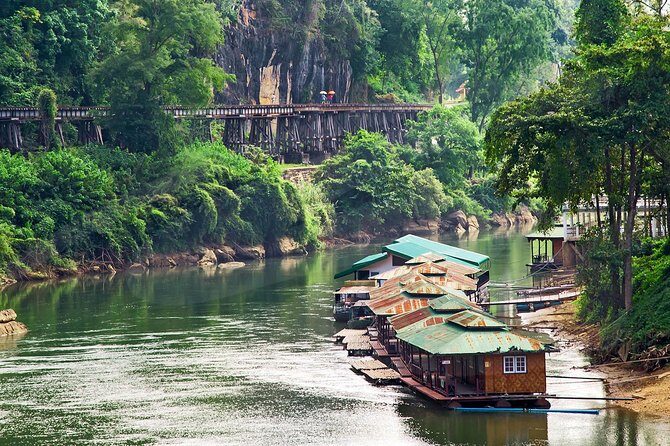
- Early 6:30 am start: you’ll beat Bangkok traffic and still get time to explore at the bridge area
- Allied Kanchanaburi War Cemetery: a direct, respectful introduction before the river and train visuals
- JEATH War Museum: short visit, but it sets the WWII context for what the railway meant
- Long-tail boat to the bridge: a memorable way to approach the River Kwai crossing instead of driving straight up
- Train ride on the Thailand–Burma Railway: scenic stretches plus that “how did they build this?” feeling from the route
- Optional train upgrades: paying extra can help with seating, and it can include water/tea/coffee and a certificate
Leaving Bangkok Early for Kanchanaburi
Your day begins at 6:30 am, with pickup from selected Bangkok hotels. From there, you’ll ride out west in an air-conditioned coach (restroom stops exist along the way, so you’re not stuck the whole drive). Then you settle in for the long, normal rhythm of a group tour: watch, listen, and occasionally stretch your legs when the schedule allows.
Why the early start matters: Kanchanaburi is 80 miles (130 kilometers) from Bangkok, and the day is built so you still arrive with enough energy for the river and railway parts. This is one of those tours where time is the real “ingredient.” If you hate long mornings, you’ll feel it. If you’re okay with an early start, the rest of the day moves smoothly.
You’ll also get countryside views as you go—sugarcane, rice paddies, and pineapple plantations show up in the mix. It’s a nice reminder that the region isn’t just a WWII postcard; it’s a working agricultural province.
You can also read our reviews of more tours and experiences in Bangkok.

Kanchanaburi War Cemetery: where the story gets real
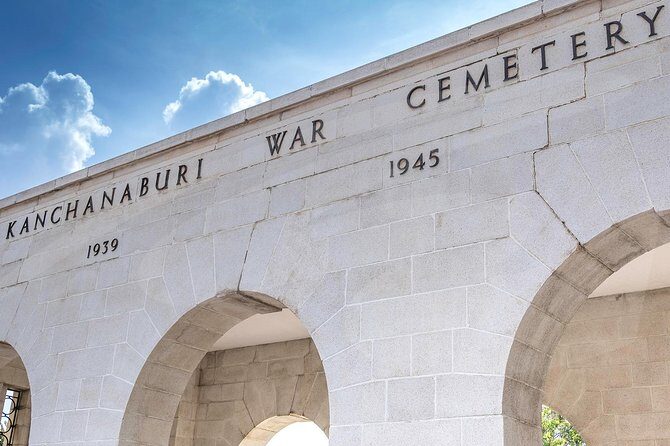
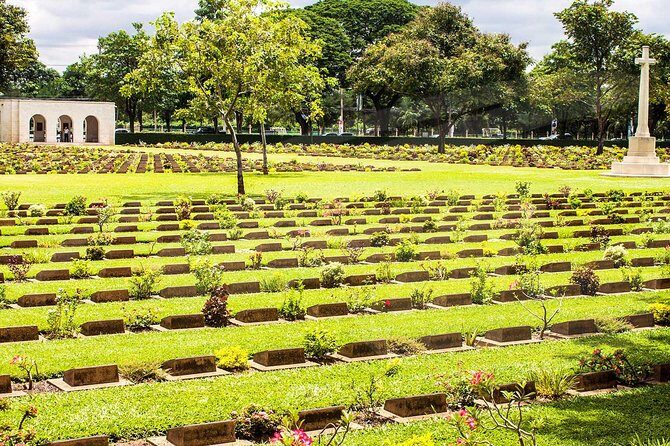
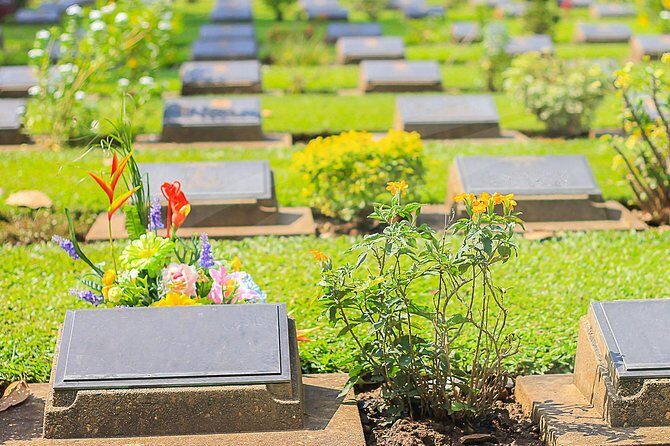
The first stop is the Kanchanaburi War Cemetery, which is the main POW cemetery tied to the Burma Railway forced-labor era. You’ll have about 30 minutes here, with admission included.
This is the kind of place that asks for silence in your own head. The cemetery doesn’t try to entertain you. It makes the connection between the railway’s construction and the people who died for it. Even if you’re not a “history person,” you’ll probably feel the weight quickly, because the setting is direct and human-scale.
Practical tip: spend your time looking first, then reading. If you jump straight into the information panels, you might miss how the graves line up and what that spacing communicates. Thirty minutes is enough to pay respect without rushing, but you’ll want to keep it focused.
JEATH War Museum: short visit, big emotional setup
Next up is the JEATH War Museum for around 20 minutes. Admission is included.
This stop is shorter than many people expect, so I’d treat it as context, not a replacement for a full museum. It helps explain the construction story behind the railway and the POW labor element during WWII. You’ll see historical photos and paintings, which can be easier to process in a quick visit than long lectures or walls of text.
One balanced way to think about it: if you want depth, you may wish the time were longer. If you want a guided primer that sets you up for the cemetery and then the bridge/railway visuals, this works.
My advice: use the museum as your “decoder ring.” Pay attention to the timeline and the reason the railway mattered—then the boat ride and train segments start to make more sense than they would otherwise.
The River Kwai: long-tail boat ride and bridge time
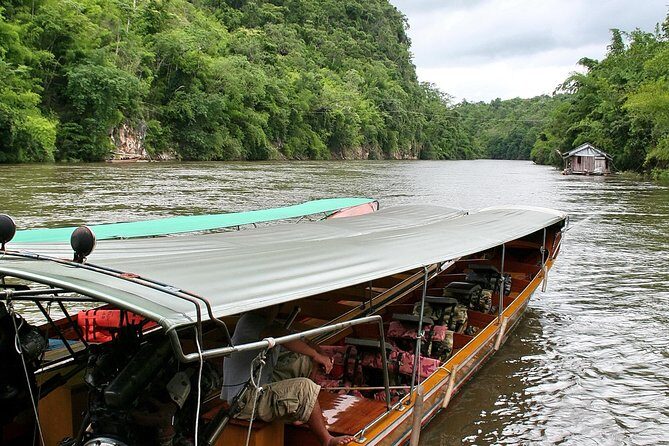
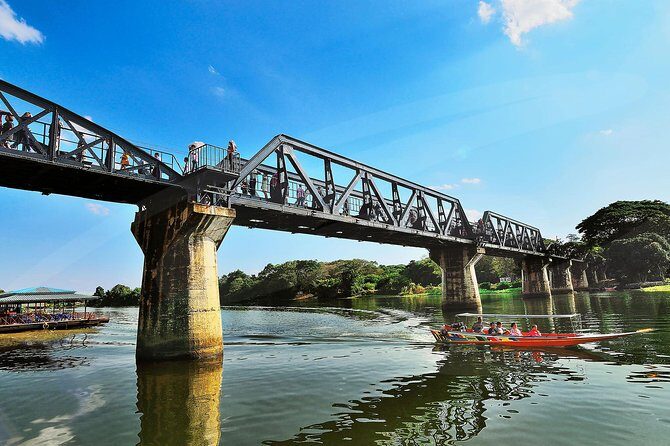
After the museums, you head to the river for a long-tail speedboat ride. You’ll spend about 20 minutes cruising along and you get a view of the bridge. Admission is included.
This is one of the most memorable parts of the day because it changes the angle. Approaching the bridge from the water feels like seeing a movie set from inside the scene. You’re close enough to understand the scale, and you’re moving, which makes the whole experience feel alive rather than just photographed.
Then you get time at the River Kwai Bridge area (about 20 minutes). This is your self-guided moment: take photos, walk around if you can, and soak in the fact that you’re looking at a structure that became iconic through tragedy.
A quick reality check: 20 minutes sounds short, but the bridge area is also the most photo-driven part of the day. If you want deeper exploration around the river, you’ll likely wish you had more time here. Still, for most visitors, it’s a solid hit—especially since the train ride afterward adds a different kind of perspective.
Riding the Thailand–Burma Railway: the “how did they do this” part
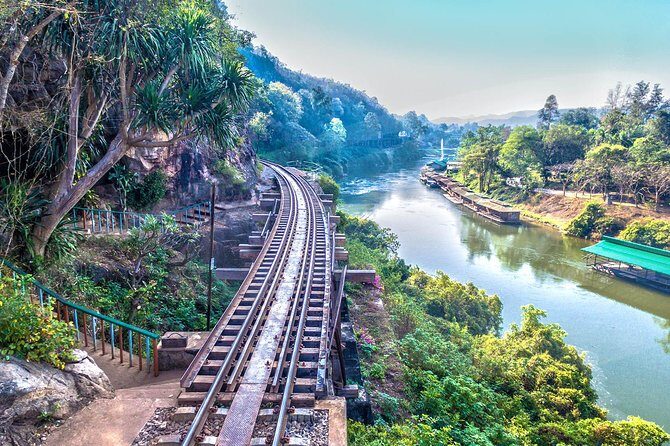
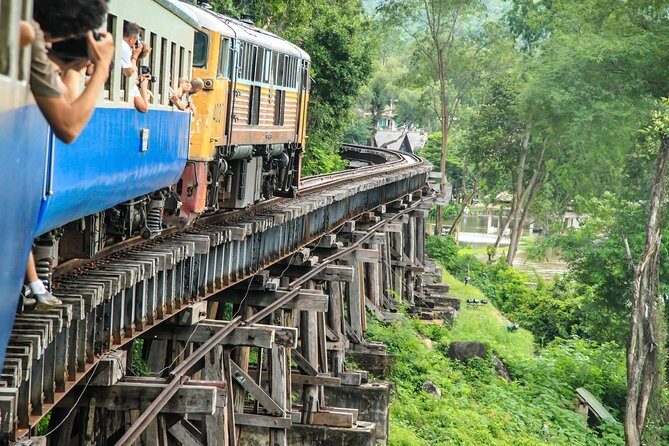
The heart of the experience is the train ride along the Thailand–Burma Railway, often called the Death Railway. You’ll also visit the Death Railway Museum and Research Centre, with about 1 hour 30 minutes there, and admission is included.
Even before the train rolls, this part of the day is built to make you connect effort, geography, and human cost. When you ride the line, you’re seeing the same general route that was forced into the landscape during wartime construction. The train segment is also scenic in the way that comes from curvature and terrain—conditions that made building difficult in the first place.
On the train, pay attention to how the track follows the land. There’s a strong “they carved this through real obstacles” feeling when you notice curves and how the route works through rocky stretches. That’s the moment the abstract becomes physical.

Train seating: consider the optional upgrade
The tour gives you options for the train experience, especially if you care about having a guaranteed seat. There are upgrade choices mentioned as:
- approx. 200 baht: guaranteed seat plus cold towel and drinking water (otherwise it’s first-in-best-dressed)
- approx. 300 baht: guaranteed seat plus cold towel, tea/coffee, drinking water, and a certificate
If you’re sensitive to crowding or you’d rather focus on enjoying the ride instead of managing where you’re standing, that extra cost can be worth it. If you’re comfortable with a bit of flexibility, you may choose not to upgrade.
Lunch plus the real rhythm of a 9–10 hour day
Lunch is included, and it’s part of what makes the day workable for most people. You’re out of Bangkok long enough that planning matters, and having lunch handled saves you from making a decision while you’re already tired.
Beverages are not included, so you’ll want to budget for water and drinks. The day includes a lot of time on transport and in transit between stops, and you’ll feel it if you arrive hungry and don’t hydrate.
Also note the tour includes a maximum of 99 travelers. That usually means a real group experience, not a private car full of you and your thoughts. Still, multiple stops keep things moving, and the schedule is structured so you’re not sitting around wondering when the next part starts.
Comfort-wise, you’re in an air-conditioned coach for the long Bangkok-to-Kanchanaburi transfer and back. If you’re the type who gets cold in vehicles, bring a light layer. It’s one of those simple things that makes the day feel longer or shorter.
Guides make or break the emotional impact
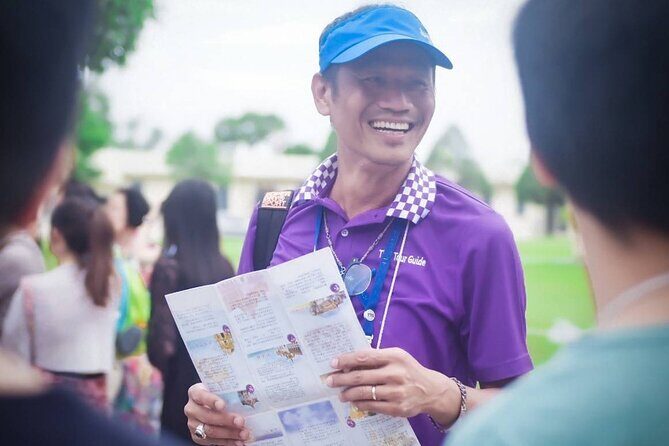
The guided part is a major value point here. A good guide doesn’t just recite dates—they explain why the railway mattered, how the bridge fits into that wartime story, and what you should notice at each stop.
The strongest feedback you’ll see around this kind of tour is usually tied to guide clarity and timing—getting you to the right place when it counts and explaining what the bridge and railway symbolize. I’ve seen guides named such as Betty, Luck, Tiny, Suki, Jenny, and Peter praised for being friendly, informative, and efficient.
If you care about understanding what you’re looking at, this matters. With a day like this, the “what” is fixed (cemetery, museum, river, train). The “why it matters” is often what you walk away with, and that part depends on the guide.
Who should book this tour, and who should think twice
This is a great choice if:
- you want a meaningful WWII day trip without doing all the logistics yourself
- you like trains, scenic rides, and the “approach the bridge from multiple angles” idea
- you want a mix of solemn places and motion-based sightseeing (boat + train)
You might think twice if:
- you get impatient with long days and early starts (6:30 am is early)
- you want a long, deep museum experience at JEATH (the visit is brief)
- you dislike group pacing and prefer fully independent travel
The tour also notes a moderate physical fitness level is best. Most of it is guided and scheduled, but you’ll still be walking around areas and moving between transport segments.
Should you book the Bridge on the River Kwai and Thailand–Burma Railway tour?
I’d book it if you want a day that’s both practical and emotionally direct. The itinerary hits the big themes in a sensible order: cemetery first (respect), museum context second, then the river and bridge visuals, and finally the train ride that turns the story into something you can experience with your eyes.
It’s also good value for the structure you get: hotel pickup and drop-off (selected hotels), air-conditioned coach, a local guide, boat ride, train ride, lunch, and admission fees. Yes, it’s long and it starts early, and yes, the JEATH Museum time is limited. But for most visitors, the combined effect is exactly what you came for: you leave with the bridge in your head and the railway in your body.
If you’re on the fence, here’s my simple decision rule: if you can handle a long day for a once-per-trip experience, this tour earns its spot.
FAQ
How long is the tour?
The duration is about 9 to 10 hours.
What time does the day trip start?
Pickup and start time is 6:30 am.
Do I get hotel pickup and drop-off?
Yes, pickup and drop-off are offered at selected Bangkok hotels.
What’s included in the price?
Hotel pickup/drop-off (selected hotels), air-conditioned transport, a local guide, long-tail boat ride, train ride along the Death Railway, lunch, and admission fees. Mobile ticket is also included.
Are drinks included with lunch?
Beverages are not included.
How much time do I spend at the cemetery and museum?
About 30 minutes at Kanchanaburi War Cemetery and about 20 minutes at the JEATH War Museum.
Do I get time at the River Kwai Bridge area?
Yes, there’s about 20 minutes of bridge time, and you’ll also see the bridge from the long-tail boat.
Are there optional train upgrades?
Yes. There are optional upgrades mentioned (around 200 baht or 300 baht) that can include guaranteed seating plus extras such as water, cold towel, tea/coffee, and a certificate.
Are restrooms available during the tour?
Restroom facilities are available.
What’s the cancellation policy?
You can cancel up to 24 hours in advance for a full refund. If you cancel less than 24 hours before the start time, the amount paid is not refunded.