REVIEW · BANGKOK
Electric Scooter Tour of Bangkok
Book on Viator →Operated by Go Bangkok Tours · Bookable on Viator
Three scooters, many side streets.
This half-day electric scooter tour of Bangkok is interesting because it mixes big sights with the kind of back-street wandering you usually miss when you’re crammed into a bus. I particularly like the max group size of three (so you’re not lost in a crowd) and the way the route strings together markets, wats, and ferry crossings without feeling rushed. One possible drawback: if you’re expecting heavy, nonstop storytelling, keep your expectations flexible—commentary can vary by guide.
You get to cover real ground in about 3 hours, with helmet use, bottled water, snacks, and coffee or tea included. There’s also a practical scooter training/practice start at the market in Bang Rak, which matters if you’re not used to riding in Bangkok traffic.
In This Review
- Key things to notice before you go
- Why an electric scooter tour beats a bus day in Bangkok
- Bang Rak start: scooter practice in the oldest district
- Grand Postal Building and early landmarks you might miss on foot
- Talad Noi wall art, the first Church, and a major bank connection
- Chinatown time: a big maze you’ll travel through on wheels
- Wat Chakrawatrachawat: crocodiles in a temple dating back to the 1800s
- Pak Khlong Flower Talat: Bangkok’s wholesale flower and spice hub
- Ferry to Wat Kalayanamit: biggest sitting Buddha and the biggest bell
- Baan Kudichin Museum: Portuguese settlement and cookies with history
- Lhong 1919 and that afterglow of old immigrant communities
- Temple attire, weight limits, and other practical rules
- Price and value: what $36.58 buys you (and what it doesn’t)
- Who should book this scooter tour
- Should you book this Bangkok electric scooter tour?
- FAQ
- How long is the electric scooter tour in Bangkok?
- What is the price per person?
- Where do I meet the tour?
- Do you pick up from hotels?
- What are the age and height requirements?
- Is there a weight limit?
- What should I wear for temple stops?
- What is included in the tour price?
- What is not included?
- FAQ
- Can I cancel for a full refund?
Key things to notice before you go
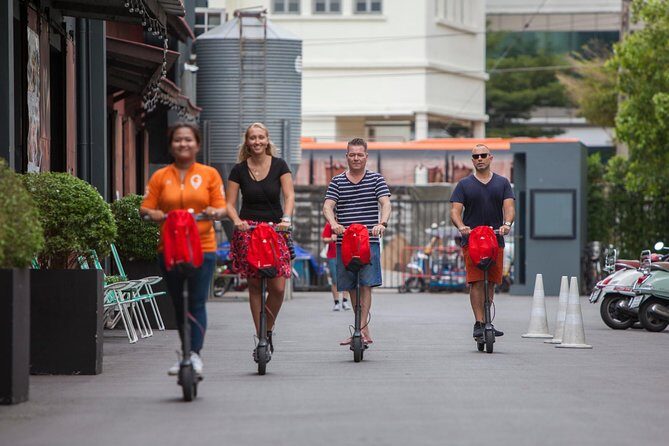
- Small group of three keeps the pacing personal and questions easy
- Scooter practice first so you’re rolling with confidence, not guessing
- Ferry crossing + temple stops give you variety beyond shopping streets
- Markets at street level including the big flower-and-spice wholesale area
- Snacks and coffee or tea included so you’re not scrambling afterward
- Portuguese settlement detour at Baan Kudichin for museum and cookies
Why an electric scooter tour beats a bus day in Bangkok
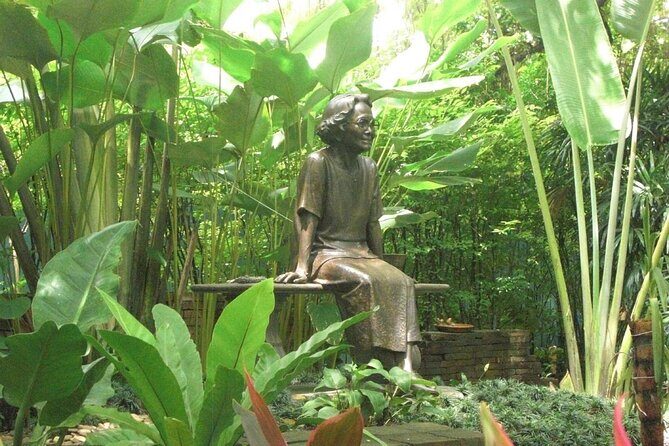
Bangkok is a city where movement is part of the experience. On this tour, the scooter format lets you get close to what’s happening—shopfronts, footpaths, alleys, and river crossings—without the stop-and-go frustration of sitting behind a windshield.
The other big value is the small-group cap at three. That changes the feel fast. You can ask a question, adjust the pace, and actually notice details instead of watching everyone else’s heads disappear ahead of you.
Duration helps, too. At about 3 hours, it’s long enough to feel like you saw Bangkok beyond the highlights, but short enough that you won’t blow half your day on logistics. You also get a choice of morning or afternoon, which makes it easier to pair with temple time or a later dinner plan.
You can also read our reviews of more tours and experiences in Bangkok
Bang Rak start: scooter practice in the oldest district
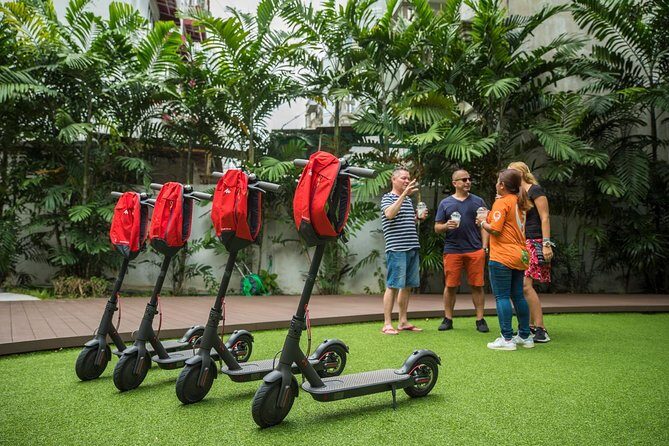
You begin in Bang Rak, right by the Bang Rak market area. Before the sightseeing kicks off, the group does scooter practice for about 10 minutes. This is the part I’d consider non-negotiable: it’s where you learn how the scooter moves and how the guide expects you to ride with the group.
Bang Rak matters because it’s a real local-start neighborhood, not a staged tourist entrance. From here, you’re set up to travel through older parts of Bangkok where streets feel narrower and everything is closer together.
If you’re nervous about riding, this start is a comfort. If you’re totally new, it’s also a reason to arrive ready to listen and follow instructions. With a weight cap of 120 kg and a minimum age of 12 years or 140 cm, the tour is designed for a fairly specific rider profile, so the safety rhythm can stay consistent.
Grand Postal Building and early landmarks you might miss on foot
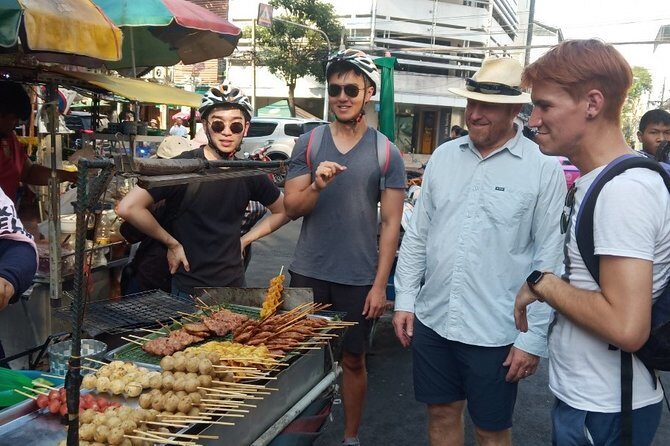
One of your early stops is the Grand Postal Building, which has been converted from a working post office into a cultural centre. It’s brief (about 5 minutes), but it’s a useful pause to see an imposing older structure without committing to a long museum detour.
Right after, you get a stop at Haroon Mosque, described as one of Thailand’s first mosques. You’re there for around 2 minutes, enough time to take in the setting and notice the community vibe. The tour also points you toward roti in the area—exactly the kind of street snack lead that’s better than random restaurant guessing later.
Even if you’re mostly focused on temple photos, these short stops are valuable because they set the tone: you’re seeing Bangkok layers, not just one type of attraction.
Talad Noi wall art, the first Church, and a major bank connection
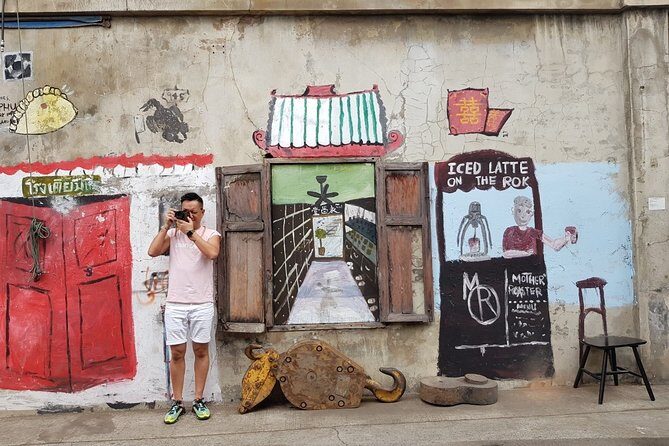
Next up is Talad Noi Wall Art, where the neighborhood is known for street art. The visit is about 20 minutes. But what I like is that it’s not only about murals. The route also notes that Talad Noi connects to older religious and financial landmarks—an early Church and Thailand first Bank, Siam Commercial Bank.
This is a good example of why the scooter format works. You can slip into a lane, take in a wall, and then understand the surrounding neighborhood context at the same time. If you enjoy walking photo routes, you’ll likely want to linger here—but the tour keeps moving, so treat it as a focused taste.
Chinatown time: a big maze you’ll travel through on wheels
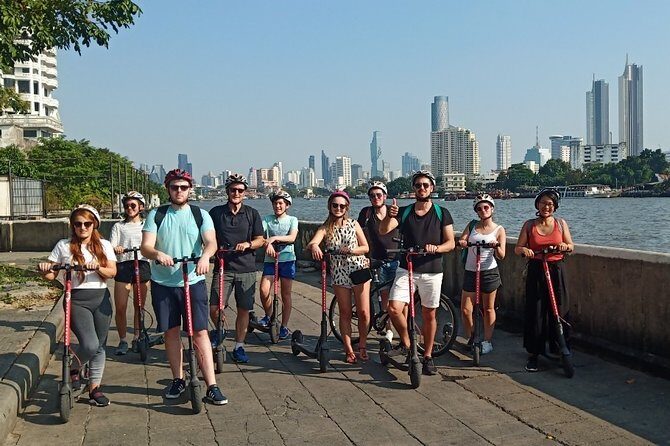
The itinerary includes a major Chinatown experience—one of the world’s biggest—described as an amazing maze connecting several parts. The key point: you’ll spend less time stopping and more time moving through the area as part of the route.
For me, that’s the right balance. Chinatown can swallow your time if you try to do it like a standalone walking tour. Here, you get the feel and the food-and-shopping atmosphere while still hitting temples and markets later.
If you’re a foodie or you like browsing, this is the portion that can make you want to come back on a separate night with more time. Keep that in mind when you plan dinner.


Wat Chakrawatrachawat: crocodiles in a temple dating back to the 1800s
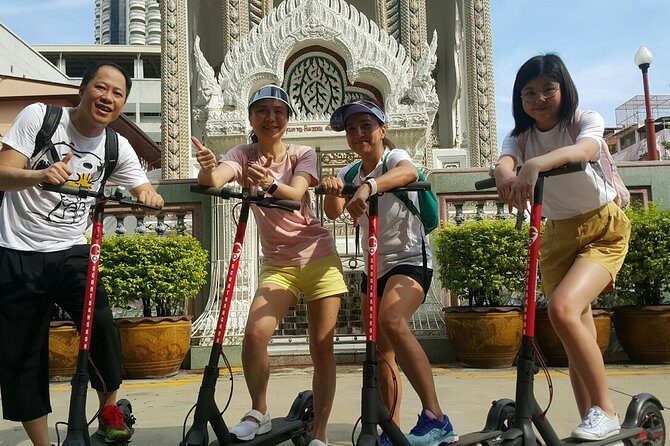
A highlight for many people is Wat Chakrawatrachawat Woramahawihan. The stop is about 10 minutes. The tour notes the temple dates back to the 1800s and houses crocodiles.
The explanation given is practical and historical: traders along the river used to capture and kill crocodiles, and the temple originally kept them to save the animals from that fate. That detail makes the stop more than a quick photo break. You’re seeing how daily commerce and wildlife collided—and how the community responded.
If you care about animal stories or you like understanding why a place is the way it is, this is where the tour gives you something to think about after you leave.
Pak Khlong Flower Talat: Bangkok’s wholesale flower and spice hub
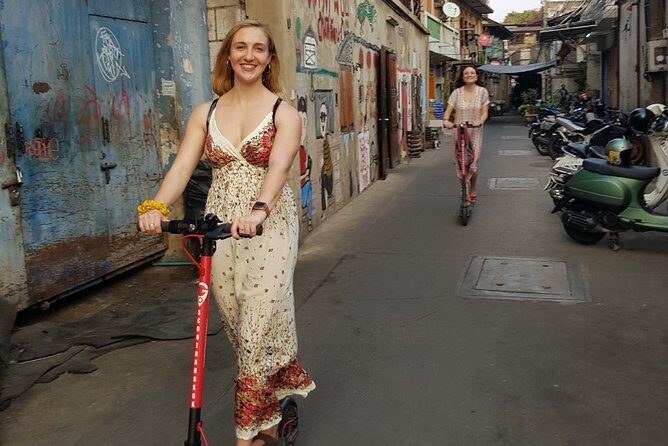
From temple land you shift into everyday commerce at Pak Khlong Flower Talat Original, described as Thailand’s biggest wholesale market for flowers, spices, and vegetables. You’ll have about 10 minutes here.
The market is noted as open 24 hours, but the main selling streets for flowers start in the evenings. Since your tour is a half-day, you might catch a calmer slice of the market depending on your morning versus afternoon slot.
Even with the short time, it’s worth it. Wholesale markets teach you how ingredients and goods move through a city. You’ll see the scale, the colors, and the smell-driven reality of Bangkok shopping—far more informative than only visiting upscale craft shops.
Ferry to Wat Kalayanamit: biggest sitting Buddha and the biggest bell
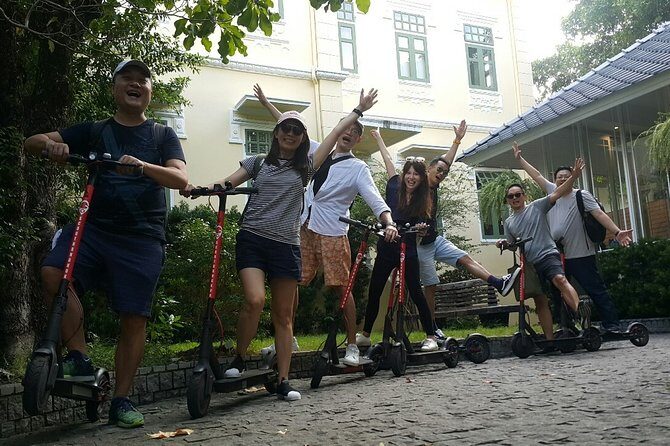
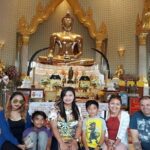
After the flower market, the tour includes a river crossing by ferry, landing you at Wat Kalayanamit Woramahawihan (about 15 minutes).
This stop focuses on two big-ticket features:
- one of the biggest sitting Buddhas in Thailand
- the biggest bell
The ferry ride is part of the fun because it changes your perspective. You get movement, a quick change of scenery, and a break from walking-style traffic. Then you’re at a temple where the scale does the talking.
If you’re planning your own temple visits later, you can use this stop as a benchmark: it gives you one clear, standout temple moment without needing hours of planning.
Baan Kudichin Museum: Portuguese settlement and cookies with history
Next is Baan Kudichin Museum, tied to a Portuguese settlement. You’ll spend about 20 minutes, and the stop is a welcome contrast to pure religious and market scenes.
The tour describes the area as having a museum, coffee shops, and a bakery that still bakes cookies introduced over 200 years ago. That’s the kind of detail that makes Bangkok feel layered, not just crowded.
I like this portion because it also gives you a mental reset. You’ve just moved through a temple-and-market run; now you slow slightly, look around, and enjoy a more reflective break. If coffee is your thing, this is also where it fits naturally since coffee or tea is included.
Lhong 1919 and that afterglow of old immigrant communities
The route also includes Lhong 1919 (about 10 minutes if time allows). It’s described as a complex connected to Chinese immigrants, now converted into restaurants and shops, and it includes some almost forgotten murals.
This stop works best if you enjoy visual art and if you like connecting communities across time—how immigrant groups shaped neighborhoods, then how those neighborhoods changed into what you can visit today.
Because the time is limited, don’t treat this as your only chance to explore murals. Think of it as a short highlight stop that might steer you toward a longer follow-up walk later.
Temple attire, weight limits, and other practical rules
To make the tour comfortable, there are a few rules you should plan around:
- Temple attire is required. Bring clothing that covers appropriately.
- Minimum age is 12 years or 140 cm.
- Weight limit is not over 120 kg.
- Helmet use is included, and you’ll need to follow the guide’s safety instructions.
- A minimum ride readiness matters. You start with practice, then you’re out in real city streets.
Also note what’s not part of the package:
- No hotel pickup or drop-off. You’ll meet at the start point and return there at the end.
- Alcoholic drinks aren’t included, though you can buy them.
These aren’t deal-breakers. They just help you show up prepared so the experience stays fun and smooth.
Price and value: what $36.58 buys you (and what it doesn’t)
At $36.58 per person, this tour is priced like a mid-range activity for Bangkok. The value comes from a few practical factors:
- It’s not just sightseeing. You get scooter time + guided route plus scooter helmet and insurance.
- You also get snacks, bottled water, and coffee or tea included.
- The small group size (max three) boosts the value because the guide can actually interact.
What you don’t get is the convenience of pickup and drop-off, and you shouldn’t count on this being a slow, leisurely walk through every stop. It’s a tight half-day plan designed for movement.
If you’re trying to see more than one neighborhood in a single day—and you don’t want to manage the scooter logistics yourself—this price can feel fair.
Who should book this scooter tour
This experience is a strong match if:
- you want Bangkok sights without a bus
- you like temples + markets + neighborhoods in one run
- you prefer smaller groups where you can ask questions
- you’re comfortable being on a scooter for the half-day
It may not be the best fit if:
- you want a long, unhurried museum day
- you’re expecting nonstop narration every minute
- you’re not willing to follow temple dress rules or helmet/safety instructions
Should you book this Bangkok electric scooter tour?
I’d book it if you want a fast, street-level way to understand Bangkok’s different worlds—old districts, Chinatown movement, temple scale, and wholesale market energy—without turning the day into a complicated transportation puzzle.
I’d pause before booking if you’re very sensitive to commentary style or you’re hoping for a purely contemplative pace. In that case, consider pairing it with a slower, independent neighborhood walk later so you can linger where you want.
If you do book, go in with a simple mindset: you’re here to ride, watch, and learn through the route. That’s when it clicks.
FAQ
How long is the electric scooter tour in Bangkok?
The tour lasts about 3 hours.
What is the price per person?
The price is $36.58 per person.
Where do I meet the tour?
You meet at Thai Cooking School, 69, 2 Soi Charoen Krung 44, Khwaeng Bang Rak, Khet Bang Rak, Krung Thep Maha Nakhon 10500, Thailand. The tour ends back at the meeting point.
Do you pick up from hotels?
No. Hotel pickup is not included, and there is also no hotel drop-off.
What are the age and height requirements?
The minimum age is 12 years, or a height of 140 cm.
Is there a weight limit?
Yes. The tour states a weight limit of not over 120 kg.
What should I wear for temple stops?
The dress code is Temple Attire.
What is included in the tour price?
Included items are bottled water, snacks, coffee and/or tea, helmet use, professional guide and local guide support, taxes and fees, and insurance.
What is not included?
Alcoholic drinks (available to purchase) are not included.
FAQ
Can I cancel for a full refund?
Free cancellation is available. You can cancel up to 24 hours in advance for a full refund; if you cancel less than 24 hours before the start time, you won’t be refunded.