REVIEW · BANGKOK
Floating & Railway Markets and Erawan Waterfall [Optional Luxury]
Book on Viator →Operated by Thailand Insight Travel · Bookable on Viator
Seven stops, one nonstop story. This tour is interesting because it stitches together river markets, a railway market, and Thailand’s famous tiered waterfall in a single 14-hour sweep. You start early, then shift from boats to train tracks to jungle paths without feeling like you’re jumping at random.
I love the way you get the real action at the Mae Klong Railway Market, including riding a local train toward the station. I also love the food-production stops: you’ll see coconut nectar turned into sweet products and you’ll learn how sea salt is made on the salt fields.
One consideration: it’s a long day with a very early start and a light hike at Erawan Falls, so plan around comfort and time outdoors.
In This Review
- Quick hits before you schedule this day
- Dawn start: why 6:30am actually helps
- Mae Klong Railway Market: riding the line and seeing the market change
- Damnoen Saduak Floating Market: canal time beats waiting on the banks
- Samut Sakhon sea salt fields: a quick stop with real-world logic
- Coconut sugar farm: from coconut nectar to sweet products
- Erawan Waterfall: seven tiers, emerald ponds, and a light jungle hike
- Death Railway and River Kwai Bridge: finishing with classic sunset photos
- Optional luxury vehicle: comfort matters on a 14-hour day
- Price and value: is $245.95 per person worth it?
- The kind of guide you want: when Ice keeps the day smooth
- Who should book this tour (and who might not)
- Should you book this floating, rail, and waterfall day?
- FAQ
- What time does the tour start?
- How long is the full tour?
- Is pickup offered?
- Is this a private tour?
- Are mobile tickets used?
- Which stops include admission tickets?
- Which stops are admission-free?
- Is there any swimming?
- What does the end of the day include?
- Can I cancel for a full refund?
Quick hits before you schedule this day
![Floating & Railway Markets and Erawan Waterfall [Optional Luxury] - Quick hits before you schedule this day](https://b.exploringbangkok.com/wp-content/uploads/floating-railway-markets-and-erawan-waterfall-optional-luxury-1.jpg)
- Mae Klong train ride: you’ll ride a local train toward the railway market, not just watch from the side.
- Railway-market timing: the market experience is famous for how quickly things change when the train comes through.
- Hands-on sweetness and salt: coconut sugar production plus sea salt fields give you two practical food lessons.
- Damnoen Saduak by boat: motor boat time on the canals keeps the floating market from feeling like a photo stop.
- Erawan Falls seven tiers: emerald-green ponds, plus a light hike that still feels like you got out into nature.
- Sunset potential at River Kwai: you end with the River Kwai area and a Death Railway walk for great photo timing.
Dawn start: why 6:30am actually helps
![Floating & Railway Markets and Erawan Waterfall [Optional Luxury] - Dawn start: why 6:30am actually helps](https://b.exploringbangkok.com/wp-content/uploads/floating-railway-markets-and-erawan-waterfall-optional-luxury-2.jpg)
Your day starts at 6:30am, and that early push matters. It gives you time to hit Damnoen Saduak and Mae Klong with less rush and more actual sightseeing value, instead of only arriving in peak crowds.
The trade-off is obvious: you’ll be in motion for roughly 14 hours, with transport wrapped around each stop. If you like slow mornings and long breaks, this route will feel like you’re working to keep your energy up.
You can also read our reviews of more tours and experiences in Bangkok



Mae Klong Railway Market: riding the line and seeing the market change
![Floating & Railway Markets and Erawan Waterfall [Optional Luxury] - Mae Klong Railway Market: riding the line and seeing the market change](https://b.exploringbangkok.com/wp-content/uploads/floating-railway-markets-and-erawan-waterfall-optional-luxury.jpg)
This stop is built around the star experience: the Mae Klong area railway market, often nicknamed the life-risking market because of what happens when the train arrives. You don’t just stand near the tracks. You ride a local train toward the Mae Klong station, which helps you understand the layout and why the place works the way it does.
Once you’re at the market, you get to watch the moment-to-moment rhythm up close. Vendors and shoppers share tight space with the railway environment, so you see how daily commerce adapts to trains, not against them. It’s chaotic in the best way: fast, loud, and strangely organized once you notice how people coordinate.
The big win here is that the train ride adds context. You’re not only photographing stalls; you’re learning why the market is where it is and how rail shapes local life.
A practical tip: wear shoes you’re happy to get dusty and bring water. This is the kind of stop where standing around too long can make you feel sticky, especially under morning heat.
Damnoen Saduak Floating Market: canal time beats waiting on the banks
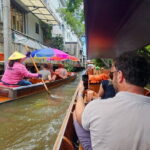
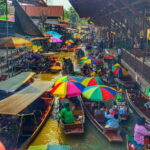
Damnoen Saduak is the floating market people talk about, and the tour gives it a better angle than a quick roadside visit. You get a boat experience on the canals, and you also get roundtrip hotel-to-market transportation that totals about 3 hours and 30 minutes.
That boat time is the point. Floating markets can look repetitive if you only watch from one shore. From the water, you see how boats move, how vendors present goods, and how the canal acts like the street system for the day’s commerce.
The floating market stop lasts about 1 hour 30 minutes. In that window, you’ll have enough time to get your bearings, pick a few standout sights, and take photos without feeling trapped in endless browsing.
One downside to plan for: canal weather can change quickly, and humidity is real. If you’re sensitive to heat, keep your pace steady and consider sun protection before you board.
Samut Sakhon sea salt fields: a quick stop with real-world logic
![Floating & Railway Markets and Erawan Waterfall [Optional Luxury] - Samut Sakhon sea salt fields: a quick stop with real-world logic](https://b.exploringbangkok.com/wp-content/uploads/floating-railway-markets-and-erawan-waterfall-optional-luxury-4.jpg)
Before you jump into the bigger markets, you make a short stop in Samut Sakhon at sea salt fields. This is not rice. You’ll see the whitish salt flats and learn how Thai local knowledge turns salt water into crystallized sea salt.
The time here is only about 15 minutes, so this isn’t a deep farm tour. Think of it as a palate cleanser and a practical lesson: Thailand’s food culture isn’t only cooking and markets—it’s also the materials that make flavor possible, like salt.
This stop is admission-free in the tour setup, which keeps your value strong. If you like seeing how ingredients are made, even briefly, you’ll appreciate the stop more than you might expect from the short duration.
Coconut sugar farm: from coconut nectar to sweet products
![Floating & Railway Markets and Erawan Waterfall [Optional Luxury] - Coconut sugar farm: from coconut nectar to sweet products](https://b.exploringbangkok.com/wp-content/uploads/floating-railway-markets-and-erawan-waterfall-optional-luxury-5.jpg)
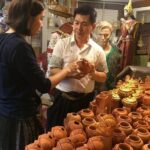
Next comes a coconut sugar farm stop, also about 15 minutes with admission included. Here you’ll observe how farmers process coconut nectar and palm sugar loaf. The farm experience includes a demonstration of cutting the coconut flower, pouring the nectar into a bamboo container, and the use of preservation woods.
This is one of those stops that feels small, but it connects dots. You’re seeing how sweetness gets made from plant materials, not from a factory display. It’s also a good sensory change from the water and the rail tracks—everything feels more hands-and-tools practical.
If you’re buying souvenirs, this is the best place on the route to make sense of them. Even if you don’t buy anything, you’ll understand why coconut sugar and related sweets taste the way they do, because you saw the process steps.
A watch-out: because the stop is short, don’t plan to do heavy shopping afterward. Use this time to ask quick questions and get your bearings first.



Erawan Waterfall: seven tiers, emerald ponds, and a light jungle hike
![Floating & Railway Markets and Erawan Waterfall [Optional Luxury] - Erawan Waterfall: seven tiers, emerald ponds, and a light jungle hike](https://b.exploringbangkok.com/wp-content/uploads/floating-railway-markets-and-erawan-waterfall-optional-luxury-6.jpg)
Erawan Falls is the tour’s big nature break, and it’s one of Thailand’s most recognizable waterfall parks for a reason. The focus is the seven-tiered Erawan Falls, with emerald green ponds along the way.
You’ll spend about 3 hours here, including time to enjoy the tiers and swim in the emerald ponds. The hike is described as light and enjoyable, which matters. It means you can experience the waterfall’s different levels without needing technical hiking skills.
This is the part of the day where you’ll feel the most switch in pace. Earlier stops are action-heavy and transport-heavy. At Erawan, you get time outdoors, breathing humid air under trees, and hearing water instead of engines and horns.
What to bring (or at least plan for): a dry bag, a change of clothes, and footwear that works if there’s slick ground near the water. Swimming sounds fun, but the real comfort upgrade is having a plan for getting back to dry once you’re done.
Death Railway and River Kwai Bridge: finishing with classic sunset photos
![Floating & Railway Markets and Erawan Waterfall [Optional Luxury] - Death Railway and River Kwai Bridge: finishing with classic sunset photos](https://b.exploringbangkok.com/wp-content/uploads/floating-railway-markets-and-erawan-waterfall-optional-luxury-7.jpg)
The day ends with the River Kwai Bridge area, plus a walk that includes the Death Railway. The stop is about 20 minutes, and it’s timed for atmosphere and photos rather than museum-style touring.
Because the bridge has been famous in books and films, it attracts both locals and visitors. That familiarity helps you recognize the spot quickly. But the best value here is the ending light: you get a chance for sunset photos by the riverbank and a sense of how the railway story still shapes the landscape around you.
Keep expectations realistic: this isn’t a long, detailed history lesson on-site based on the tour time. Instead, it’s a satisfying capstone—quiet (relative to markets) and scenic.
If you’re serious about photos, hang back and watch the light shift. River reflections can change fast, and that’s where your best shots usually come from.
Optional luxury vehicle: comfort matters on a 14-hour day
![Floating & Railway Markets and Erawan Waterfall [Optional Luxury] - Optional luxury vehicle: comfort matters on a 14-hour day](https://b.exploringbangkok.com/wp-content/uploads/floating-railway-markets-and-erawan-waterfall-optional-luxury-8.jpg)
This tour offers a choice between a standard vehicle and a luxury vehicle. The practical takeaway is simple: you’re spending a lot of time sitting, so comfort becomes part of the experience.
The luxury option is described as having enhanced comfort and amenities, while standard is described as practical. If you’re booking this for one of those rare full-day marathons, the upgrade can reduce fatigue and help you stay cheerful for Erawan Falls and the end-of-day photo stop.
If you’re sensitive to travel discomfort, or you just know you’ll feel rough after long road time, I’d lean toward the comfort option. If you’re budget-minded and you can handle transit, the standard vehicle should still get you to the same core sights.
Price and value: is $245.95 per person worth it?
At $245.95 per person for about 14 hours, the value comes from the way the day is assembled, not from any single stop.
Here’s why it adds up:
- You get real transport between distant regions with a very early start.
- Several key admissions are included, including the railway market, the coconut sugar farm, and Erawan Falls.
- You also get built-in experiences that are hard to reproduce smoothly on your own in one day, like riding a train toward the Mae Klong station and doing a floating market boat ride.
Some stops are admission-free in the tour setup, including the sea salt fields and the River Kwai Bridge area. That’s good for value because it keeps your day balanced: paid entrances for the main attractions, plus free extras that still make the route feel more complete.
What you should know before you book: you’re paying for time-saving coordination. If you love designing your own routes and you’re comfortable with local transport, you could potentially DIY some pieces. But this itinerary is built to reduce friction and keep the day moving.
The kind of guide you want: when Ice keeps the day smooth
A highlight from the tour experience is the guide. One guest specifically praised guide Ice as considerate and knowledgeable, and that kind of guidance matters on a fast day like this.
On this route, good guiding isn’t about talking more. It’s about helping you understand what you’re seeing fast, timing the experience so you don’t miss the market rhythm, and keeping the group moving without steamrolling anyone’s questions.
When the guide sets the tone, the day feels less like a checklist and more like a story you can follow.
Who should book this tour (and who might not)
This tour is a strong match if you want variety in one long day: train-based market energy, canal life, food production lessons, and a memorable waterfall swim.
You’ll probably enjoy it most if:
- you like seeing everyday Thailand, not only temples and malls
- you can handle heat and a full schedule
- you’re fine with a light hike and changing plans across transport time
It may be less ideal if you need a slow pace, big rest breaks, or you dislike swimming and getting in and out of water. The schedule moves, and that’s the whole point of the value.
Should you book this floating, rail, and waterfall day?
I think you should book this tour if you want a single day that actually mixes Thailand’s daily textures—markets, production, and nature—without you doing route math all morning. The best selling points are the Mae Klong railway market experience and the combination of Erawan Falls with swim time and a light hike.
I’d skip (or downgrade expectations) if you’re easily tired by early starts or you prefer longer stays at fewer places. This is not a slow travel day. It’s a well-paced sprint with a lot of variety.
If you’re debating the luxury vehicle, your decision should be simple: if transit comfort affects your mood, choose luxury. If you’re fine with standard transport for a day, save the money and focus on enjoying the stops.
FAQ
What time does the tour start?
The start time is 6:30am.
How long is the full tour?
It’s listed at about 14 hours.
Is pickup offered?
Yes, pickup is offered.
Is this a private tour?
Yes. Only your group participates.
Are mobile tickets used?
A mobile ticket is part of the tour.
Which stops include admission tickets?
Admission is included for the Mae Klong Railway Market, the Coconut Sugar Farm, and Erawan Waterfalls.
Which stops are admission-free?
The salt field stop in Samut Sakhon, Damnoen Saduak Floating Market, and the River Kwai Bridge stop are listed as admission-free.
Is there any swimming?
At Erawan Waterfalls, you’ll have time to swim in the emerald green ponds.
What does the end of the day include?
You finish with a walk along the Death Railway area and the River Kwai Bridge, which is popular for sunset photos by the riverbank.
Can I cancel for a full refund?
Free cancellation is offered up to 24 hours in advance for a full refund.