REVIEW · BANGKOK
Floating & Railway Markets Tour
Book on Viator →Operated by Thailand Insight Travel · Bookable on Viator
Two markets, one odd timetable.
This tour strings together Mae Klong Railway Market and Damnoen Saduak Floating Market in the same day, then fills the gaps with sea-salt know-how at Ban Ka Long and a quick coconut sugar stop. The best part is how fast the day changes: one moment you’re watching vendors react to a train, the next you’re on a canal boat with market stalls slipping past on both sides.
I love the way the day is built around included transport, not just “look and hope.” The train ride to Mae Klong is a big part of the experience, and so is the motorboat ride at the floating market, which keeps you moving through the canals instead of standing around. I also like that the guide support can be very hands-on—people get attention for photos and small practical wins, like getting the best angles (with guides such as Jim) or staying organized with snacks and extra help (including guides like Poppy).
One thing to think about: this is an early-start, full-day style outing. If you’re not a morning person, plan for that, and remember lunch isn’t included, so you’ll want to budget time and money for food you order yourself.
In This Review
- Key Things to Know Before You Go
- Why the Mae Klong train and Damnoen Saduak boats work so well together
- Price and timing: fitting a lot into about 7 hours
- Ban Ka Long salt fields: a short look at traditional sea-salt making
- Mae Klong Railway Market (Hoop Rom): watching commerce react to a train
- Coconut Sugar Farm: palm sugar loaf and coconut nectar basics
- Damnoen Saduak Floating Market by motorboat: what to do once you’re on the canal
- Photo tips, snacks, and shopping without getting stressed
- Who should book this tour (and who may not love it)
- Should you book this Floating & Railway Markets Tour?
- FAQ
- Is hotel pickup and drop-off included?
- How long is the Floating & Railway Markets Tour?
- What transportation is included in the tour?
- Are tickets and admissions included?
- Is lunch included?
- How much travel time is there between Bangkok and the railway market?
- Is the tour private?
- What guide language do I get?
- Where to next
Key Things to Know Before You Go

- Train-to-market timing: you’ll experience the moment when the market activity has to react to an incoming train
- Motorboat at the floating market: included ride helps you see canals and stalls from the water
- A short salt field stop: quick, focused visit to the whitish sea-salt fields at Ban Ka Long
- Coconut sugar basics: see how coconut nectar turns into palm sugar loaf, in a short farm visit
- Guide quality matters: English-speaking guides are part of the deal, and some are praised for photo help and day-of coordination
Why the Mae Klong train and Damnoen Saduak boats work so well together
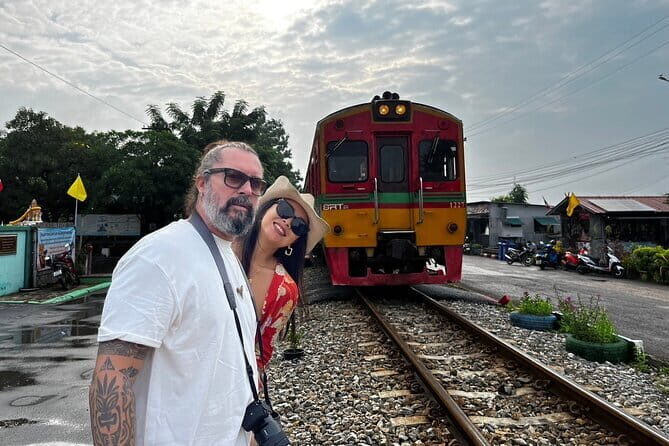
Bangkok can feel loud and fast. This tour slows you down just enough to notice how locals live when commerce is built into the landscape. You’ll start with a short salt-field stop, then head toward the most unusual market in Thailand: the one where goods are pulled back as a train comes through.
That contrast is the whole point. Mae Klong shows everyday life operating on a strict schedule—train arrives, stalls react, life continues. Damnoen Saduak shows daily life shaped by water routes—boats glide along canals and vendors sell from the same waterways people travel through.
In a single day, you get two different “market systems,” not just two random stops. And because the tour includes the transport pieces (train and motorboat), you don’t have to figure out how to connect the dots yourself.
You can also read our reviews of more tours and experiences in Bangkok.



Price and timing: fitting a lot into about 7 hours
The price is $126.74 per person, and that number feels more reasonable when you compare what’s included. You’re paying for a licensed English-speaking guide, a private air-conditioned vehicle, hotel pickup and drop-off, plus the two big transport experiences: the local train ride to the railway market and the motorboat ride at the floating market.
The total day is about 7 hours, which is tight but doable because the tour keeps moving between locations. One key timing note: the roundtrip travel time between Bangkok and the railway market area is about 3 hours, so you’ll spend a meaningful chunk of the day in transit. That’s normal for this route, but it’s good to know so you plan your energy level.
You’ll also want to be ready with a simple mindset: you’re not doing one place in depth. You’re getting a well-paced sampler that shows how these famous markets work, then gives you time at each stop to look around.
Ban Ka Long salt fields: a short look at traditional sea-salt making
Your day starts with pickup in Bangkok downtown, then a quick stop at Ban Ka Long to see the whitish salt fields of Samut Sakhon. This is listed as a short 10-minute visit, and the admission ticket is free.
In a short stop like this, the goal is not a full lesson. It’s more like a “get your bearings” moment: you see the sea-salt landscape and get a quick explanation of how traditional Thai know-how turns sea water into those gleaming salt mountains.
The upside here is that you don’t lose half a day. You get a taste of the region’s working landscape before you shift gears to markets.
The only drawback is time. If you love hands-on farm or food production tours, this salt stop may feel like a preview rather than a full experience.
Mae Klong Railway Market (Hoop Rom): watching commerce react to a train
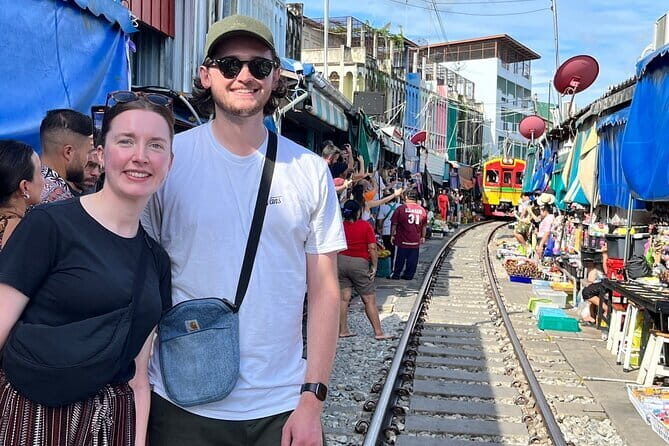
Mae Klong Railway Market, also called Hoop Rom Market, is the star stop. The itinerary gives you about 1 hour 30 minutes here, with the railway market admission included and a local train ride heading toward Mae Klong Station.
This is the famous scene of “life-risking” market energy, but translated into something you can actually watch up close: vendors clear and adjust their goods as the train approaches. The appeal is the speed and the coordination. You get the sense that everyone knows the rhythm and the routine, even though it looks dramatic.
Expect a market setting where movement matters. You’ll be walking and timing your photos around what happens near the tracks, so be ready to shift position quickly. A good tip is to keep your camera strap secure and avoid placing gear where it could block someone else.
Guide help can make this stop better. People praise guides who help with getting the best pictures, so if you’re the type who wants angles and composition guidance, you’ll likely appreciate that. Having a guide who helps you spot the right moment is a big deal at Mae Klong, where things change fast.
Coconut Sugar Farm: palm sugar loaf and coconut nectar basics
After the railway market, you’ll have a short 20-minute stop at a Coconut Sugar Farm, with the admission included. This part is calmer and more “food production” than “big spectacle.”
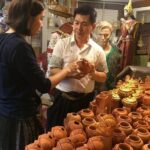
Here, you’re meant to see how Thai farmers produce coconut nectar and turn it into palm sugar loaf using traditional methods. Even if you’re not a food science person, you’ll probably leave with a clearer idea of what that sweet loaf product is actually about—because you see the steps, not just the result.
This stop also breaks up the day nicely. The floating market tends to be visually busy, and the train market is all about movement. The coconut sugar farm is a useful pause where you can slow down, ask questions, and check out how ingredients become products.
Because the time is short, treat it as a foundation. If you want a longer production tour or a full tasting session, this stop may feel brief. But for most people doing a one-day combo tour, it hits the right length.

Damnoen Saduak Floating Market by motorboat: what to do once you’re on the canal
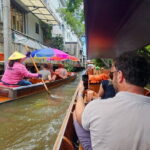
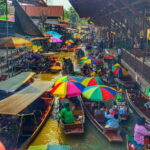
Next is Damnoen Saduak Floating Market, one of Thailand’s most well-known floating markets. You’ll have about 1 hour 30 minutes here, and the itinerary indicates admission is free. The tour also includes an exhilarating motorboat ride, which is crucial.
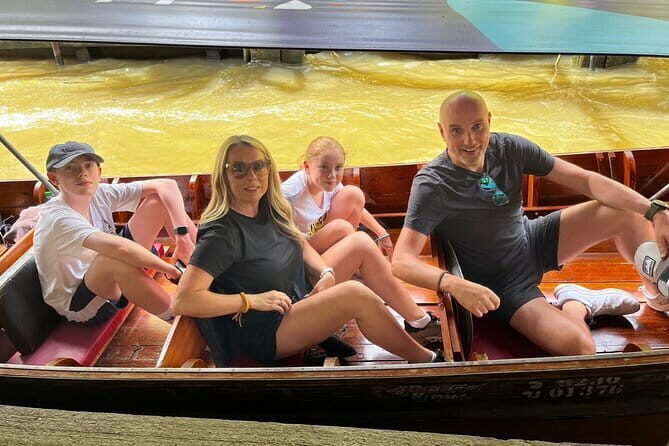
Why it matters: on a canal market, your view depends on where you are. By going by motorboat, you can see stalls lining the waterways without needing to fight for the best footpath angles. You’ll glide through the same kind of canal routes locals use for shopping and daily movement.
Once you arrive at the floating market area, you can explore at your own pace. That freedom is nice, because some people want photos and some want to sample and chat. You’ll likely notice that vendors are used to questions and bargaining, but keep it friendly and quick since you’re sharing space on the water.
A practical approach for Damnoen Saduak: don’t try to see everything. Pick your priorities. If photos are your thing, focus on getting a few clear shots from both the boat and the market edges. If shopping is your thing, decide what you want before you’re surrounded by options.
Also, plan for the boat ride to change how you experience the market. Expect some motion and a different sense of scale compared to standing on a dock. If you get motion-sick easily, it’s smart to take that into account.
Photo tips, snacks, and shopping without getting stressed

This tour is the kind of day where small choices make a big difference. You’ll be on a train, on a boat, walking around a market, then doing another market-style stop. So if you want good photos and not just random snapshots, go practical.
Here’s what I’d do:
- Keep your phone/camera secured and accessible, since the best moments at Mae Klong can be quick
- Wear shoes that handle uneven, crowded spaces
- Bring water and simple snacks if you want extra energy, since lunch is not included
- Think ahead about what you want to buy at the floating market, then move with purpose
One more reason a guide can matter here: people describe certain guides as helping with more than directions. Guides like Jim are praised for looking after guests and getting standout photos. Another guide, Poppy, is mentioned as hospitable and knowledgeable, plus helpful with snack pacing and practical support.
If you’re shopping for art or larger souvenirs, that kind of guide assistance can be surprisingly useful. One person’s experience notes help with purchasing and even shipping a piece of art back home, which is the sort of problem you don’t want to solve last-minute on your trip.
Finally, remember lunch is self-ordered and paid. That’s not a deal-breaker, but it means you should plan money and expect to stop for food during the day rather than getting a fully packaged meal.
Who should book this tour (and who may not love it)

This is a strong match if you want a quick hit of two of Thailand’s most famous market styles, plus a production stop that explains what you’re seeing. If you like markets with real movement—trains, boats, vendors reacting in real time—you’ll probably have a great day.
It’s also a good choice for first-timers who want structure. The tour gives you the big transport pieces (train and motorboat) and a licensed English-speaking guide, so you can focus on the experience instead of routing and transfers.
It may not be perfect if you’re looking for deep, slow travel at one location. The day is packed, and each stop is time-limited. Also, if you hate busy, changeable environments, the markets may feel like sensory overload.
One more note: this is a private tour/activity, meaning only your group participates. If you like moving at your own pace and having your guide focus on your questions, that’s a major value.
Should you book this Floating & Railway Markets Tour?
I’d book it if you want variety in one day and you value included transport. The combination of railway market drama (train timing) plus floating market canals (motorboat ride) is hard to replicate on your own without spending extra time figuring out how to connect everything.
I’d also book if you care about practical guide support for photos and shopping. The way guides such as Jim and Poppy are described—helpful, attentive, and willing to support you beyond just speaking English—fits the kind of day where small guidance helps a lot.
Hold off if you want a relaxed schedule, a long tasting-style food tour, or a single-location deep dive. This is a sampler, not a slow day.
One small advantage to consider: the tour uses a mobile ticket, so you likely won’t be juggling paper. And the day includes travel accident insurance up to 1,000,000 THB per person, which adds reassurance for an active route with a boat ride and train segment.
FAQ
Is hotel pickup and drop-off included?
Yes. The tour includes hotel pickup and drop-off in Bangkok downtown, using a private air-conditioned vehicle.
How long is the Floating & Railway Markets Tour?
It’s about 7 hours in total.
What transportation is included in the tour?
You get a local train ride to the Mae Klong Railway Market and a motor boat ride during the Damnoen Saduak Floating Market.
Are tickets and admissions included?
Most admissions are included or listed as free for the salt fields and floating market. The railway market and coconut sugar farm admissions are included.
Is lunch included?
No. Lunch is self-ordered and paid by you.
How much travel time is there between Bangkok and the railway market?
The roundtrip travel time between Bangkok and the railway market is approximately 3 hours.
Is the tour private?
Yes. It’s private, and only your group participates.
What guide language do I get?
The tour includes a licensed English-speaking guide.
Where to next
If you’re doing Bangkok markets in one day, I’d pair this with a lighter evening afterward. Your legs will notice the train-and-market rhythm, and you’ll want downtime to review photos and plan what souvenirs make sense to bring home.