REVIEW · BANGKOK
Flower Market & Floral Art: Multilingual Private Tour [EN/others]
Book on Viator →Operated by Thailand Insight Travel · Bookable on Viator
Smell the jasmine. Then fold it.
This private Bangkok experience mixes Pak Khlong Flower Talat with hands-on floral craft, then moves into calm Thai temples and the Siam–Portuguese Kudi Chin area. You choose a morning or afternoon slot, and the guide keeps a pace that doesn’t feel like you’re sprinting through Bangkok’s sights.
I really like two parts: the lotus folding and garland making, where you’ll actually make things meant for worship, and the way the guide’s explanations add context you won’t get from wandering alone. Names you might hear attached to this tour include guides like Nina and Nine, both of which are called out for adapting the trip to your needs.
One consideration: this route includes walking and steps around temples and the market, so it’s not recommended for travelers with walking difficulty.
In This Review
- Key highlights worth planning for
- Morning or Afternoon Flower Route: A calmer way to see Bangkok
- Pak Khlong Flower Talat: Where the city smells like work (and beauty)
- Lotus folding and Thai garlands: The hands-on part that changes your souvenirs
- Stop at the market: folding Thai lotus shapes
- Later in the temple: longer workshop with community artisans
- Ferry to Kalayanamitr Temple: A short ride that adds local rhythm
- Inside Wat Kalayanamit Varamahavihara: Thai-Chinese worship and the Sam Por Kong factor
- Santa Cruz Church and the Kudi Chin neighborhood: Portuguese roots in a Bangkok setting
- Baan Kudi Chin Museum: where food, religion, and lineage meet
- Price and what makes it good value at about $95
- Who this private tour suits best (and who should skip it)
- Should you book Flower Market & Thai Floral Art with the Kudi Chin focus?
- FAQ
- How long is the tour?
- Is pickup included?
- What language options are available?
- What’s included besides the market visit?
- Is lunch included?
- Is the Baan Kudi Chin Museum open every day?
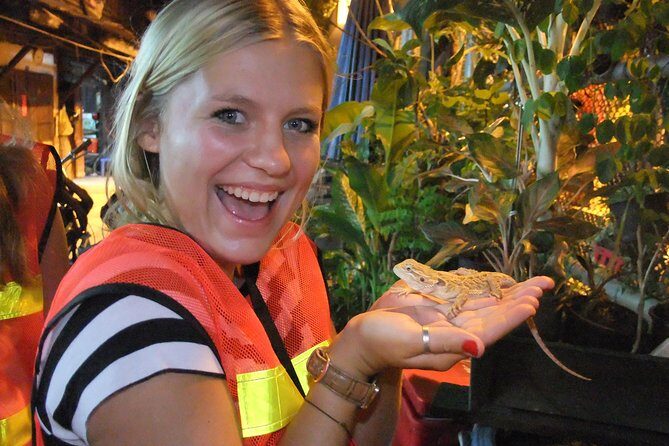
Key highlights worth planning for
![Flower Market & Floral Art: Multilingual Private Tour [EN/others] - Key highlights worth planning for](https://b.exploringbangkok.com/wp-content/uploads/flower-market-floral-art-multilingual-private-tour-en-others-1.jpg)
- Pak Khlong Flower Talat (early energy) at the original, largest flower market in Bangkok
- Lotus folding workshop: learn cone-shaped Bua Luang and ball-shaped Bua Chut
- Temple visits with a ferry ride that breaks up the city and adds a local touch
- A longer in-temple workshop with Thai local artisans linked to the Kudi Khow community
- Baan Kudi Chin Museum admission plus a chance to try Kudi Chin snacks
- Private pacing with licensed guide support in multiple languages (EN and others)
Morning or Afternoon Flower Route: A calmer way to see Bangkok
Bangkok can feel like nonstop motion. This tour is built around the idea that flowers and worship slow you down in a good way. You’ll have about 4 hours to move through the day’s highlights, and because it’s private, your guide can flex timing if you want extra questions, photos, or a quick break.
Picking morning versus afternoon matters. Morning tends to match how florists shop and how lively Pak Khlong feels when people are buying fresh stems. Afternoon can be a gentler option if you’d rather ease into the day and avoid the earliest rush. Either way, you’re not just collecting landmarks. You’re learning why these rituals and craft traditions matter to daily life.
Also note the practical rhythm: you’ll combine land walking with a ferry ride to reach Kalayanamitr (Wat Kalayanamit Varamahavihara). That small change is useful. It turns a typical “temple hop” into something that feels like part of local routine.
You can also read our reviews of more private tours in Bangkok


Pak Khlong Flower Talat: Where the city smells like work (and beauty)
![Flower Market & Floral Art: Multilingual Private Tour [EN/others] - Pak Khlong Flower Talat: Where the city smells like work (and beauty)](https://b.exploringbangkok.com/wp-content/uploads/flower-market-floral-art-multilingual-private-tour-en-others-2.jpg)
Your first stop is Pak Khlong Flower Talat Original, described as the original and biggest flower market in Bangkok. You’ll get roughly 30 minutes to explore, with admission included. This is the kind of place where you can learn a lot just by watching: buyers show up with purpose, vendors arrange in patterns that make sense for garlands and offerings, and flowers are treated like real tools for ceremonies.
What to look for:
- Bundles and stems that are chosen for scent and freshness
- Sellers focused on making things quickly, not just displaying them
- The energy shift as you move around the market spaces
What I like about starting here is the contrast. Before you’re in temple quiet, you get the sensory “loud” version of Bangkok—fragrant, colorful, and busy in a real-world way. It also makes the later workshop feel more meaningful. You’re not learning craft in a classroom. You’re learning craft in the place that feeds the tradition.
Lotus folding and Thai garlands: The hands-on part that changes your souvenirs
![Flower Market & Floral Art: Multilingual Private Tour [EN/others] - Lotus folding and Thai garlands: The hands-on part that changes your souvenirs](https://b.exploringbangkok.com/wp-content/uploads/flower-market-floral-art-multilingual-private-tour-en-others.jpg)
This is a craft tour, not a photo-only tour. The best part is that you’ll make the floral items yourself, guided by local vendors and artisans.
Stop at the market: folding Thai lotus shapes
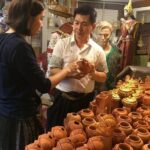
After exploring the market, you’ll join a mini floral handicraft workshop with a lotus seller. Your instruction includes two classic lotus forms:
- Bua Luang: cone-shaped lotus
- Bua Chut: ball-shaped lotus
The tour description notes that you’ll bring your folded lotuses to pay respect to Buddha, turning the craft into an actual ritual moment instead of a take-home project.
Later in the temple: longer workshop with community artisans
One of the schedule highlights is the longer workshop at Kalayanamitr Temple, about 1 hour, with Thai local artisans. The tour also connects this work to a social enterprise model that hires skilled floral artisans from the Kudi Khow community, where many residents could not access opportunities easily. That piece matters because you’re paying for more than instruction. You’re supporting a pathway for skilled workers.
Then there’s the Thai garland workshop with Thai artisans. This is the part that helps you understand how garlands are shaped for offering and why certain materials are used.
If you’re the kind of traveler who likes buying gifts that don’t feel generic, this is a better route. Your garland and lotus fold become a story you can explain, not just something that sits in a drawer.
You can also read our reviews of more shopping tours in Bangkok






Ferry to Kalayanamitr Temple: A short ride that adds local rhythm
![Flower Market & Floral Art: Multilingual Private Tour [EN/others] - Ferry to Kalayanamitr Temple: A short ride that adds local rhythm](https://b.exploringbangkok.com/wp-content/uploads/flower-market-floral-art-multilingual-private-tour-en-others-4.jpg)
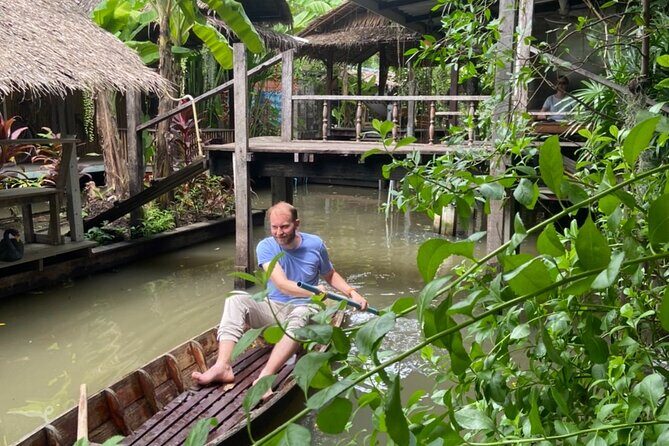
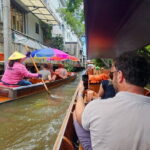
One of the most practical elements is the transport plan. You’ll take a ferry to reach Kalayanamitr Temple. There’s a short stop where you can feed fish at the pier in front of the temple.
Why this is more than a cute photo spot: in Thai belief, feeding fish is tied to making merit, which people view as helping them move toward fertile outcomes. Even if you keep it simple and just participate respectfully, it’s a moment that helps you understand how the temple connects to everyday spiritual actions.
It’s also a good breather in a 4-hour itinerary. Bangkok walking can be intense. A quick water crossing gives you a different view of the area and a chance to regroup before you enter the main temple spaces.
Inside Wat Kalayanamit Varamahavihara: Thai-Chinese worship and the Sam Por Kong factor
![Flower Market & Floral Art: Multilingual Private Tour [EN/others] - Inside Wat Kalayanamit Varamahavihara: Thai-Chinese worship and the Sam Por Kong factor](https://b.exploringbangkok.com/wp-content/uploads/flower-market-floral-art-multilingual-private-tour-en-others-5.jpg)
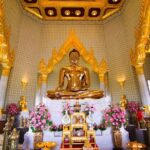
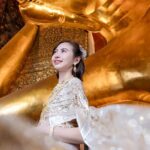
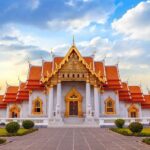
At Kalayanamitr, you’ll enter a temple known for a smoothing blend of Thai and Chinese Buddhism beliefs. You’ll pay respect to Sam Por Kong, noted as one of the largest golden Buddha images in Bangkok. This is the sort of detail that makes your visit feel more specific. You’ll know what you’re looking at and why it’s important.
The schedule includes a 20-minute entry portion. That’s long enough to get your bearings, observe how worship flows, and ask questions without feeling rushed into the next stop.
Right after, there’s also time at the Guanyin Shrine, with a short 10-minute visit. The description says the Guanyin in this shrine is linked to an older tradition dating back to King Taksin’s reign, about 230 years ago. Even if you don’t go deep into history at every single shrine, that date anchor helps your brain place what you’re seeing in time.
Santa Cruz Church and the Kudi Chin neighborhood: Portuguese roots in a Bangkok setting
![Flower Market & Floral Art: Multilingual Private Tour [EN/others] - Santa Cruz Church and the Kudi Chin neighborhood: Portuguese roots in a Bangkok setting](https://b.exploringbangkok.com/wp-content/uploads/flower-market-floral-art-multilingual-private-tour-en-others-6.jpg)
After the temple area, you’ll walk to Santa Cruz Church, also known as Kudi Chin, near Kalayanamitr Temple. The tour explains that the church connects to Portuguese presence in Thailand and mentions that it was built when King Taksin granted a portion of land.
This stop gives you a different angle on Bangkok’s religious and cultural mix. You go from florals and Thai-Chinese temple worship to a Christian site tied to the Siam–Portuguese lineage. It’s not a long stop, but it’s memorable because it changes the lens.
In a city full of sameness, this kind of cultural crossroad is exactly what makes a tour feel worth your time.
Baan Kudi Chin Museum: where food, religion, and lineage meet
![Flower Market & Floral Art: Multilingual Private Tour [EN/others] - Baan Kudi Chin Museum: where food, religion, and lineage meet](https://b.exploringbangkok.com/wp-content/uploads/flower-market-floral-art-multilingual-private-tour-en-others-7.jpg)
Your final major cultural stop is Baan Kudi Chin Museum, with admission included. The museum is described as a learning place for local culture—history, religion, and even food recipes connected to the Siam–Portuguese lineage living in the area.
A couple of helpful planning notes:
- The tour listing says the museum is closed on Monday, so if your dates include Monday, double-check tour availability.
- Your visit is about 20 minutes, which means it’s a focused introduction, not an all-day museum commitment.
One nice touch is that you’ll have a chance to try Kudi Chin snacks. The exact items aren’t listed, so go with curiosity rather than expecting specific foods. Still, this is the kind of experience that turns “cultural understanding” into something you can taste, and that tends to stick.
Price and what makes it good value at about $95
![Flower Market & Floral Art: Multilingual Private Tour [EN/others] - Price and what makes it good value at about $95](https://b.exploringbangkok.com/wp-content/uploads/flower-market-floral-art-multilingual-private-tour-en-others-8.jpg)
At $95.17 per person for about 4 hours, this tour is priced in the “worth it if you care about details” category. You’re not just paying for access. You’re paying for:
- Licensed guide or interpreter in options that include English (and other languages)
- A Thai lotus folding workshop (including the lotus forms)
- A Thai garland workshop with local artisans
- Admission to Baan Kudi Chin Museum
- Travel accident insurance
- A private air-conditioned vehicle for hotel transfer
- A mobile ticket
Lunch is not included, so you’ll either grab something before or after. If you’re trying to keep costs reasonable, plan to snack lightly during the day or eat a proper meal after the tour.
When I judge value, I look at what you’re actually doing. Here, you’re making offerings and learning in a living community setting. That turns the price into labor, training, and cultural access—not just sightseeing.
Also, the tour notes group discounts. If you’re traveling with friends or family, bundling can make the per-person cost feel even more reasonable.
Who this private tour suits best (and who should skip it)
This tour fits best if you like:
- Hands-on cultural activities (not just watching from the sidelines)
- Bangkok experiences that balance busy markets with calm temple time
- A local-community angle, especially through the Kudi Chin neighborhood and museum
- Family-friendly sightseeing, since the guide can adapt pacing (one family story in the info mentions daughters ages 9 and 11 enjoying it)
You should think twice if:
- You have walking difficulty. The tour notes it’s not recommended for travelers with walking issues.
- You want a long temple-only day. This is a balanced route with multiple short stops. It’s efficient, but it won’t feel like you’re hanging out in one place for hours.
If service animals are important for you, the listing states they’re allowed.
Should you book Flower Market & Thai Floral Art with the Kudi Chin focus?
Book it if you want Bangkok to feel human-scale. This tour trades the usual “checklist temples” style for floral craft you do with your hands, then ties it into temple worship and the Siam–Portuguese Kudi Chin story. The private format, plus guides like Nina or Nine who are described as adapting to needs, makes it easier to ask questions and slow down when something catches your attention.
Skip it if you’re only interested in long museum time, a purely historical tour with no craft, or you need an itinerary that avoids stairs and uneven walking. In that case, you’ll likely feel rushed or physically uncomfortable.
If you’re somewhere in the middle—curious, respectful, and willing to get a little close to the culture—this is a strong value choice that makes Bangkok’s flowers do more than decorate your photos.
FAQ
How long is the tour?
It runs for about 4 hours.
Is pickup included?
Yes. The tour includes private air-conditioned vehicle transfer for hotel pickup/transfer, and it ends back at the meeting point.
What language options are available?
The tour offers licensed guide or interpreter options including English (and other languages such as ES, IT, DE, FR, ZH) depending on the option you select.
What’s included besides the market visit?
You’ll do a Thai lotus folding workshop, a Thai garland workshop, visit multiple temples, and get admission to the Baan Kudi Chin Museum.
Is lunch included?
No. Lunch is self-order and paid.
Is the Baan Kudi Chin Museum open every day?
No. The museum is closed on Monday.