REVIEW · BANGKOK
From Bangkok: Historical Day Tour to River Kwai
Book on GetYourGuide →Operated by Bigcountry Experience Co.,Ltd. · Bookable on GetYourGuide
A single day can weigh a lot. This Kanchanaburi trip mixes WWII memorials with the real line of the Death Railway, plus a train ride and stops at the River Kwai Bridge. You’ll hear the story from an English-speaking guide, and the pacing is built around seeing the key places without feeling like you’re sprinting.
I especially like two things: the war cemetery visit and how guides such as Luke, Henry, Jokey, Woody, and Ong explain what you’re looking at. I also like the hands-on part of riding the Death Railway train, which turns history into something you can feel through the route and timing of the journey.
One drawback to plan for: the day is long. It’s about a 3-hour drive each way, and Bangkok traffic can stretch the experience closer to a 12-hour day on some departures.
In This Review
- Key things I’d circle before you book
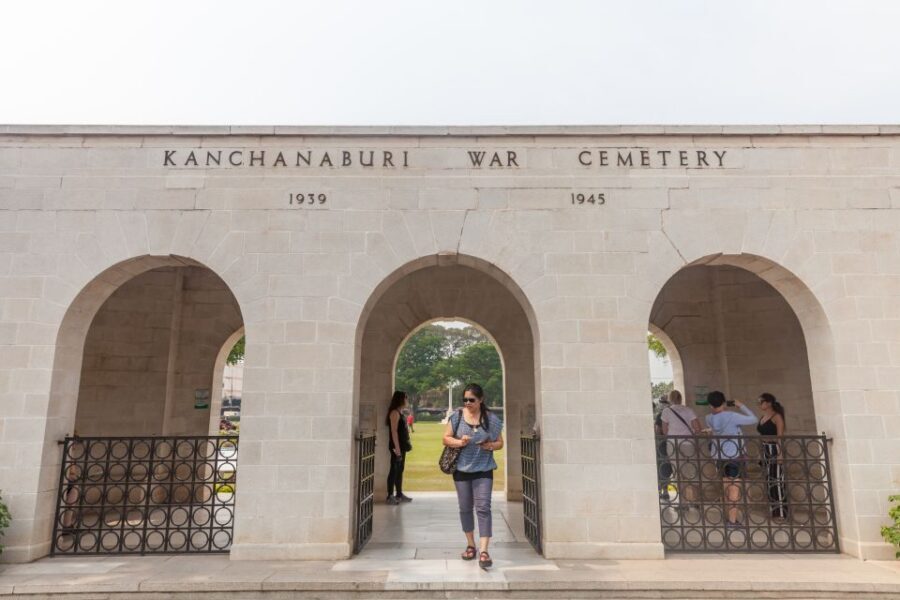
- Kanchanaburi War Cemetery: start where the story turns personal
- Thailand-Burma Railway Centre: the museum that makes the mechanics understandable
- River Kwai Bridge: photos are easy, perspective takes longer
- Riding the Death Railway: the original line adds a real sense of distance
- Lunch at the disembarkation station: good fuel, not a rushed snack
- Cave area and track walk: wear shoes that won’t betray you
- The real test: Bangkok timing, traffic, and a 10-hour plan that can stretch
- Price and value: what THB 100, THB 200, and lunch actually buy you
- Who this tour suits best (and who should think twice)
- Should you book the River Kwai historical day tour?
- FAQ
- FAQ
- Where does the tour meet in Bangkok?
- What time are pickup options if I choose hotel pickup?
- How long is the day trip, and how long is the drive to Kanchanaburi?
- What’s included in the price?
- Do I get an assigned seat on the train?
- How much does an assigned train seat cost?
- What languages are offered for the tour guide?
- What major stops are part of the experience?
- Is lunch included, and when do I eat?
- Can I cancel for a full refund?
Key things I’d circle before you book
- War Cemetery first: you start with the graves before seeing the railway story.
- Thailand-Burma Railway Centre: interactive exhibits with photos and artifacts keep the context clear.
- River Kwai Bridge time: enough room to get on the bridge and take photos.
- Train ride on the original track: a highlight, with countryside views and a unique feel for the route.
- Small-group feel: guides like Luke and Henry tend to manage time well and answer questions.
- Seat reality check: the basic train fee doesn’t guarantee a seat, and you can pay extra for an assigned one.
Kanchanaburi War Cemetery: start where the story turns personal
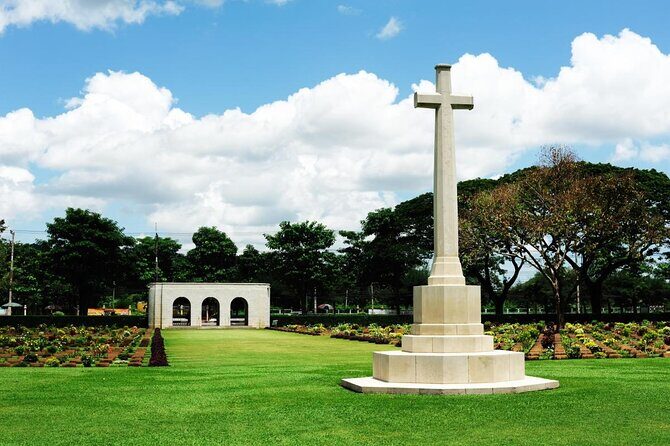
The tour begins with the War Cemetery and the Allied memorial setting. This is the part that makes everything else click. Before you see the railway line, you’re looking at the human cost, with graves tended carefully, and an estimated 9,000 Allied soldiers laid to rest here.
What I like about the approach is the order. You don’t get a “history lesson” in a classroom first. You walk among the memorials, then you move into the bigger story of how the Death Railway was built by Allied prisoners of war, and why the Japanese wanted a route stretching toward the Burmese border. It’s heavier than a typical sightseeing day, so go in with that in mind.
Your guide can shape the mood without turning it into a lecture. Based on past guide experiences on this tour, people often praise the way guides answer questions and set expectations at each stop. That matters, because the cemetery visit can feel overwhelming if you don’t know what you’re looking for.
Practical tip: the cemetery area and museums can involve a lot of walking and standing in heat. If you’re sensitive to sun, plan to hydrate early. Some guides also help you stay on track with water and breaks during the day.
You can also read our reviews of more historical tours in Bangkok

Thailand-Burma Railway Centre: the museum that makes the mechanics understandable
Next comes the Thailand-Burma Railway Centre in Kanchanaburi. This is the interactive museum, research, and information centre that focuses tightly on the Thailand-Burma Railway built during World War II.
Here’s what makes it useful for real understanding: it’s not just old photos behind glass. You’ll see recreated scenes, plus pictures and artifacts that help explain what happened and why the project was so deadly. Even if you already know the broad outline of the Death Railway, this centre helps you connect the story to specific locations you’ll later recognize, including the bridge area and parts of the railway route.
One detail I’d plan around: museum time can feel like it passes faster than you expect, especially when the exhibits are readable and you want to take in everything. If you’re the type who likes to read every label, give yourself permission to accept that you won’t absorb every detail in one pass. A strong guide helps you prioritize what’s most important.
Also note: the museum has multiple levels, and people have said it’s easy to spend enough time to feel satisfied without trying to read everything line by line. Wear comfy shoes, and expect to move.
River Kwai Bridge: photos are easy, perspective takes longer
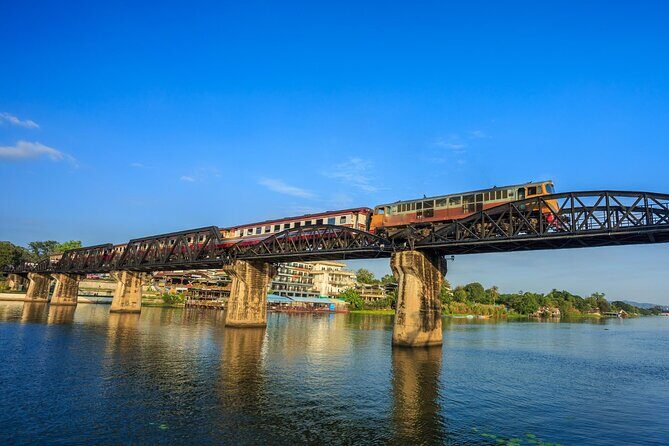
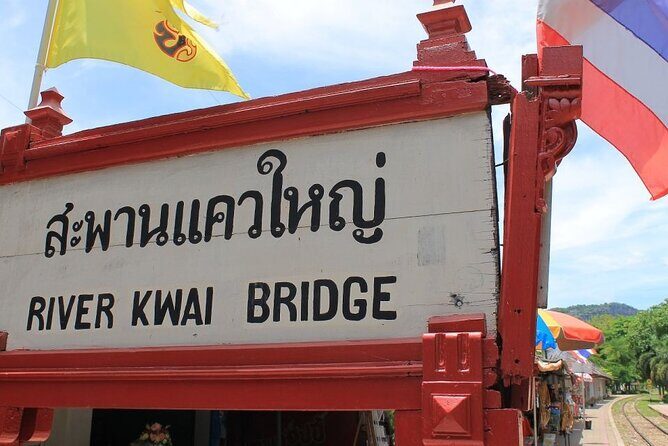
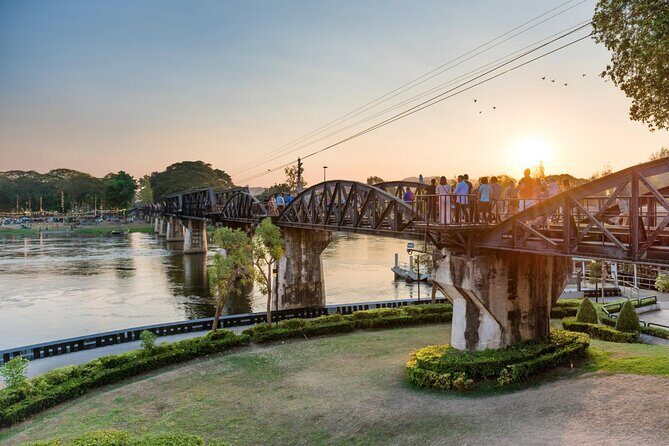
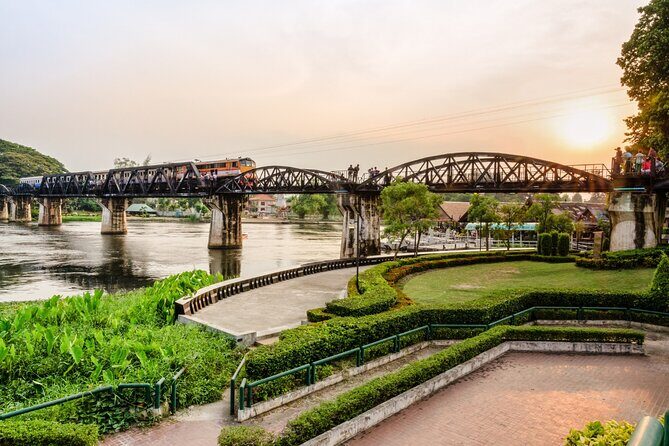
After the museum groundwork, you’ll head to the bridge on the River Kwai. The bridge is famous for a reason, but the best part of this stop isn’t the photo. It’s the way it lands after the cemetery and the railway centre.
You’ll get time to explore the area and take pictures, including being out on the bridge itself while trains move through nearby parts of the setting. The timing and atmosphere make it feel more grounded than a quick roadside stop.
A small practical note: this is still part of a day tour with traffic and schedules, so you won’t get unlimited linger time. Plan to do what matters quickly: get your photos, then take a few minutes to just look at the structure in context. If you’ve just learned how the railway was built by Allied prisoners of war, the bridge stop turns reflective fast.
Riding the Death Railway: the original line adds a real sense of distance
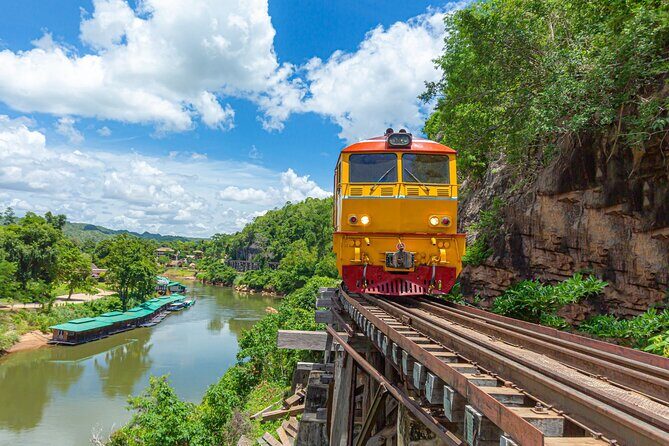
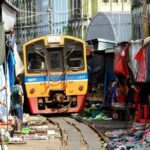
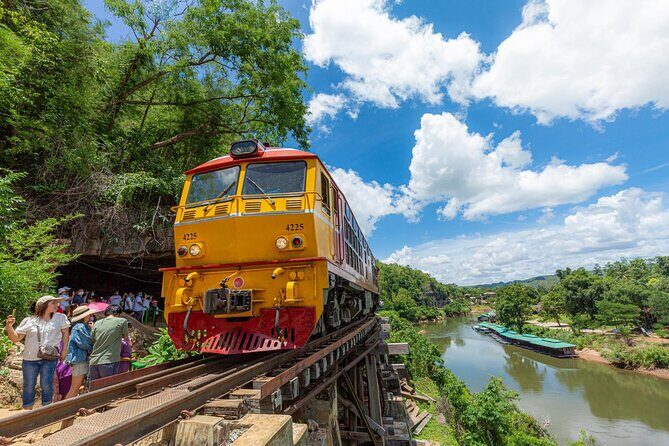
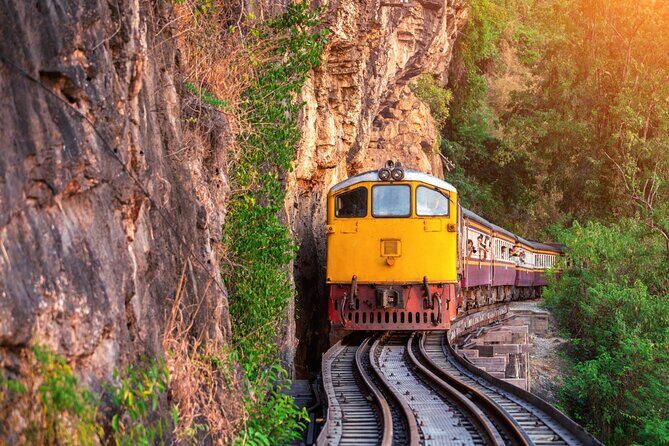
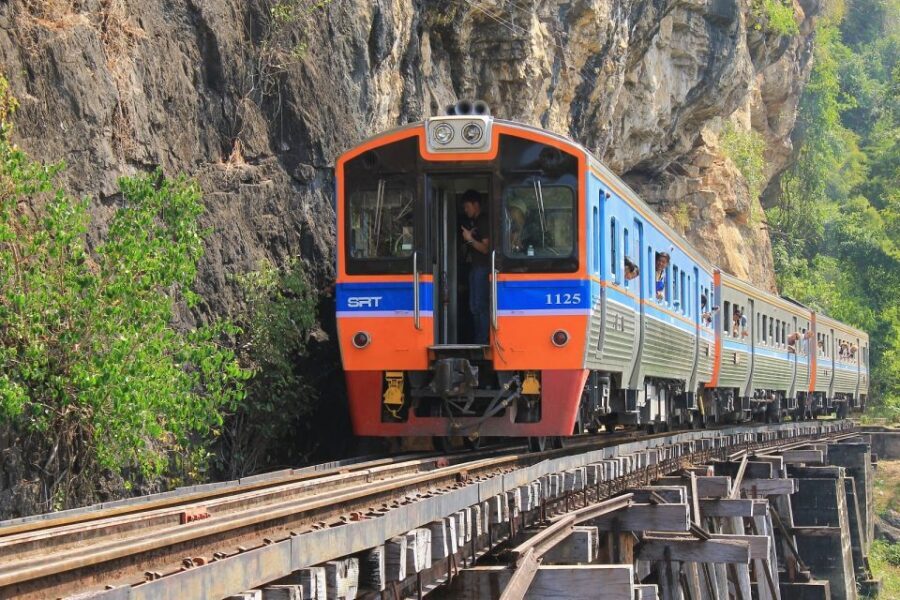
The highlight for many people is the train ride along the original Death Railway track. It’s included as a basic train fee, and you’ll ride after you’ve seen the cemetery and museum.
What makes this segment special is simple: you’re not just looking at history. You’re traveling the corridor that once mattered. Reviews for this tour frequently call the train ride a standout, and the countryside views help keep the day from feeling like a museum-only experience.
Two key practical things to know:
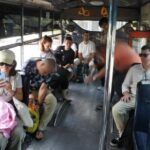
- Seat assignment is not guaranteed with the basic fee. The tour includes the basic train fee (THB 100), but it does not promise a seat. If you want an assigned seat, it’s encouraged to pay THB 200 per person upfront for seat assignment.
- The seat situation can change your comfort. Several people say paying for a seat can be worth it, especially if you’re older, tired from the long day, or you just want to relax during the ride.
If you care about views, pay attention to where you sit. Some guides have helped people secure seats on a particular side for better sightlines over viaduct-type sections. When you’re boarding, ask your guide what side tends to give the best views for the route that day.
Also, manage expectations. This train segment is part of a longer itinerary, so it’s not a multi-hour scenic journey. Still, it hits the emotional and historical “realism” point that generic bus tours can’t.
Lunch at the disembarkation station: good fuel, not a rushed snack
After the train ride, lunch is waiting at the disembarkation station. This is a nice built-in break because it gives you food right after the train segment, not after another long transfer.
From how people describe the meal, the lunch is generally seen as tasty and properly satisfying, not just a token sandwich. Some meals are more like a simple set-menu or basic options rather than an enormous buffet, so if you have dietary needs, it helps to plan to choose from available options rather than expecting a huge selection.
Also, since it’s Thailand, expect heat. Some guides help with hydration and remind you to pace yourself. If you’re traveling in warmer months, take that seriously. The day can feel long even with good pacing.


Cave area and track walk: wear shoes that won’t betray you
After lunch and the train timing, you’ll likely have a walk connected to the railway route near the cave area, with mentions of the Krasae Cave Bridge and a cave stop where there’s a Buddha statue. People also flag that the cave area can involve uneven, muddy ground.
That means your shoe choice matters more than you think. Wear something with grip and stable footing. If you’re planning to go into the cave area, consider how far you want to go based on your comfort on slippery ground. Some advice given by past visitors is to only go as far as feels manageable.
This stop adds variety. You go from the museum into the bridge into the train, and then you get a short walk that helps you feel how the railway threads through the area.
The real test: Bangkok timing, traffic, and a 10-hour plan that can stretch
The tour is listed as 10 hours, and the commute is roughly 3 hours one way. That already sets expectations: you’re spending a lot of time in transit.
Now add the Bangkok reality check: pickup and drop-off schedules can shift due to traffic. People have described the day as running closer to 12 hours when Bangkok traffic is heavy, so don’t book this day if you have late-night plans you absolutely must keep.
Here’s how to stay sane:
- Start early mentally. Pickup options can be as early as 6:00 AM depending on where you’re picked up.
- Bring water and something light to snack on if you tend to feel hungry between stops.
- Pack for heat. A hat or fan can be genuinely useful, and sensible shoes help because you’ll have walking time across multiple stops.
This tour works best when you treat it like a full-day outing, not a quick excursion.
Price and value: what THB 100, THB 200, and lunch actually buy you
The price is about $51 per person, and for most people that feels fair for what’s included: air-conditioned van transport to Kanchanaburi, an English-speaking guide, entrance fees, lunch, and the basic train fee on the Death Railway track.
But the value hinges on one detail: seating on the train.
- You get the basic train ride fee included (THB 100).
- You do not automatically get an assigned seat.
- If you want that certainty, you pay THB 200 per person for seat assignment.
Is it worth paying extra? If you hate standing or you’re traveling with discomfort issues, paying for an assigned seat is a smart move. If you’re flexible and okay with whatever boarding arrangement happens that day, you might skip it.
Either way, the combination of cemetery + interactive railway museum + bridge stop + train ride is what you’re paying for. It’s a focused day about one story, told at multiple levels: memorial, museum, structure, and route.
Who this tour suits best (and who should think twice)
This is a strong fit if you want one day out of Bangkok that teaches you something specific and important. It’s also a good choice if you like tours with a guide who can explain what you’re seeing, not just transport you between photo stops.
You’ll likely enjoy it if you:
- care about WWII history and want a structured route through the main sites
- like hands-on experiences like the train ride
- appreciate a small-group feel where the guide can manage questions and timing
You might think twice if you:
- hate long drives and early starts
- need a very short day with minimal walking
- want a relaxed, flexible itinerary without strict timing pressure
Should you book the River Kwai historical day tour?
If your priority is to understand the Death Railway story in a way that connects the cemetery, the museum, the bridge, and the train ride, then yes, I’d book it. The structure of the day keeps you from getting lost in generic sightseeing, and the best parts tend to be the guide-led context and that train ride along the original track.
My final decision advice is simple: if you’re sensitive to discomfort, consider paying for an assigned train seat (THB 200). If you’re comfortable on your feet, pack heat-ready basics and solid footwear. Then plan to treat this as a full-day experience with emotional subject matter, not just a checklist.
FAQ
FAQ
Where does the tour meet in Bangkok?
The meeting point is BMP Bigcountry at River City Bangkok: 23 Charoen Krung Soi 24 Talad Noi, Sampantawong, Bangkok 10100, Thailand.
What time are pickup options if I choose hotel pickup?
Pickup times depend on your area. Sukhumvit areas (1-39, 2-26) and Khaosan pickup start at 6:00 AM, and Silom area pickup starts at 6:15 AM.
How long is the day trip, and how long is the drive to Kanchanaburi?
The duration is 10 hours, and the one-way commute takes about 3 hours.
What’s included in the price?
Included are lunch, entrance fees, an English-speaking guide, transportation by air-conditioned van, and the basic train fee on the Death Railway track (THB 100).
Do I get an assigned seat on the train?
No. The basic train fee included does not guarantee a seat. Assigned seating is optional.
How much does an assigned train seat cost?
Assigned train seats cost THB 200 per person.
What languages are offered for the tour guide?
The tour guide is available in English and Thai.
What major stops are part of the experience?
You visit the War Cemetery, the Thailand-Burma Railway Centre, see the bridge on the River Kwai, and ride along a stretch of the Death Railway track.
Is lunch included, and when do I eat?
Lunch is included, and it’s served at the disembarkation station after the train ride.
Can I cancel for a full refund?
Yes. Free cancellation is available up to 24 hours in advance for a full refund.