REVIEW · BANGKOK
Kanchanaburi Full Day Tour: River Kwai and Erawan Falls
Book on Viator →Operated by WanderSiam · Bookable on Viator
Kanchanaburi makes Bangkok feel a world away. This full-day trip mixes Death Railway history with a proper nature break, including time at the JEATH War Museum and a walk over the River Kwai bridge. The big payoff for me is Erawan Falls, where you can actually swim and climb through a seven-level cascade system.
What I like most is how the day is structured: you get story time at JEATH, then you move to living history at the bridge, and finally you end in fresh-water scenery. A second standout is the human side: the guide can turn facts into a real sense of place, and I loved the way photo stops are handled (guides like Na, Lisa, and Paul showed up in reviews as big helpers).
One consideration: it’s a long day with a lot of road time, so the tour works best if you’re okay with travel fatigue and you accept that you might not hit every waterfall level.
In This Review
- Key highlights at a glance
- Why Kanchanaburi Feels Like a Reset from Bangkok
- Morning Pickup and the Road to Kanchanaburi (What 7:15 am Really Means)
- JEATH War Museum: The Death Railway Story in One Concentrated Block
- The River Kwai Bridge Walk: Looking at History from the River
- Getting There by Water and a Quick Pause Near Markets
- Erawan National Park: 7 Levels, Emerald Pools, and a Real Swim Workout
- How to use your time inside the park
- What’s Included in the Price (and What Will Cost Extra)
- Guide Quality: When Na, Lisa, or Paul Make the Day
- Group Size and Pace: Why Small Can Feel Better
- Who This Tour Suits Best (and Who Should Skip)
- Should You Book This River Kwai and Erawan Falls Day Trip?
- FAQ
- How long is the tour?
- What time does the tour start?
- What’s included in the tour price?
- Is lunch included?
- Do I need to pay for entry to the museum and the national park?
- Is hotel pickup available?
- Where is the meeting point?
- Should I bring swimwear and a towel?
- Is there an extra cost for a life jacket at Erawan Falls?
- How big are the groups?
Key highlights at a glance
- JEATH War Museum first: the Death Railway story comes in one focused block
- River Kwai bridge walk: you’re on the line, not just looking at it
- Erawan Falls swimming time: seven tiers, emerald-green pools, and a real workout
- Small groups: capped at 10 per group (and up to 30 total on the day)
- Guide impact: names that keep popping up include Na, Naa/Nan, Lisa, and Paul
- Value for price: entrance fees and transport are built in, not tacked on later
Why Kanchanaburi Feels Like a Reset from Bangkok
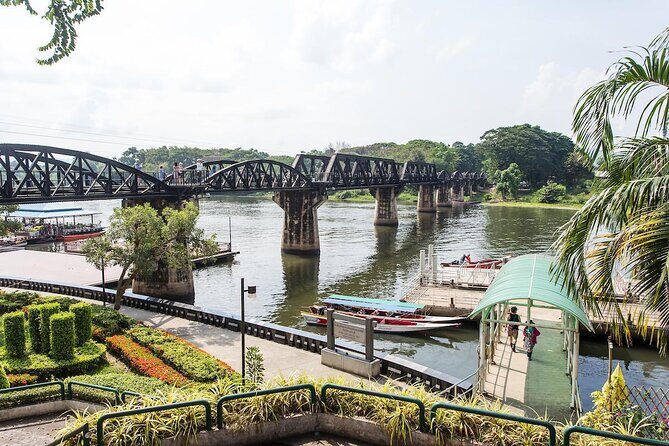
Bangkok is nonstop. This tour is a full day of contrast: WW2-linked history in Kanchanaburi, then cool-water movement at Erawan Falls. Even the travel rhythm helps. You leave the city early, then the day slowly shifts from museums and memorials to river air and forest shade.
The best part is that it’s not just sightseeing. You’re given time to do something at each stop. At the museum, you can watch and read and absorb. At the bridge area, you walk and get that “I’m here” perspective. And at the falls, you get wet. A few review write-ups specifically called out swimming in the pools, including Level 7 for those who want to go high.
You can also read our reviews of more tours and experiences in Bangkok

Morning Pickup and the Road to Kanchanaburi (What 7:15 am Really Means)
The day starts around 7:15 am, with transport by air-conditioned vehicle. The ride to Kanchanaburi is about 3 hours each way depending on traffic, so plan for a long sit. The tour duration is listed as roughly 12 hours, which matches the feel of a true day trip rather than a “quick tour.”
Pickup depends on where you’re staying. Hotel pickup is offered only for accommodations on/near Khao San Road and Siam Square. If you’re not in that pickup list, you’ll go to the WanderSiam office in Chinatown (you’ll receive the exact timing by message the day before).
My practical advice: if you want to feel human at Erawan, treat the morning like a travel day and the afternoon like your reward. Bring a light layer for the air-con ride, and don’t plan on a late breakfast that turns into a “hangry” mood by mid-morning.
JEATH War Museum: The Death Railway Story in One Concentrated Block
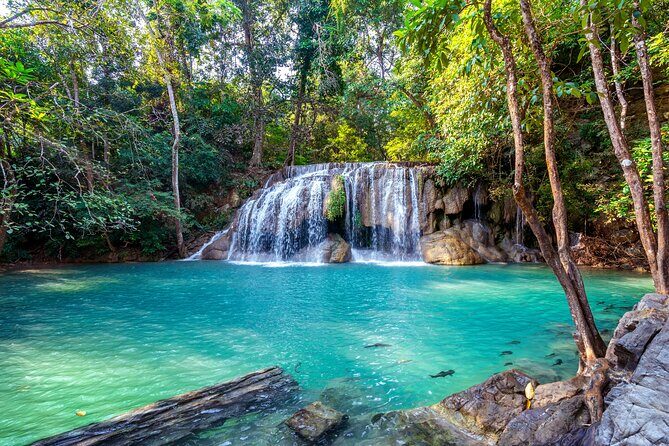
This stop is long on purpose: about 4 hours 30 minutes. The JEATH War Museum focuses on the men who worked on the Death Railway, and JEATH is an acronym based on POW nationalities represented in the story.
In a perfect world, a museum like this gets updated often. In the real world, you might notice a place that doesn’t feel brand-new. One review mentioned that the museum displays didn’t seem refreshed and that some English information felt limited. That doesn’t ruin the visit, but it does change what you should expect: this is more about the subject and the guided framing than about a slick modern exhibit.
How to get more value anyway:
- Go in ready to listen. A strong guide matters here because the story can be heavy and easy to “skim” if you’re not paying attention.
- If you prefer emotional, human-scale storytelling, you’ll likely appreciate how the museum links the railway route to POW experience.
- If you want hands-on, interactive displays, you might find the museum more static than you’d hoped. That’s a fair mismatch, so mentally file it under “important context,” not “entertainment.”
The River Kwai Bridge Walk: Looking at History from the River
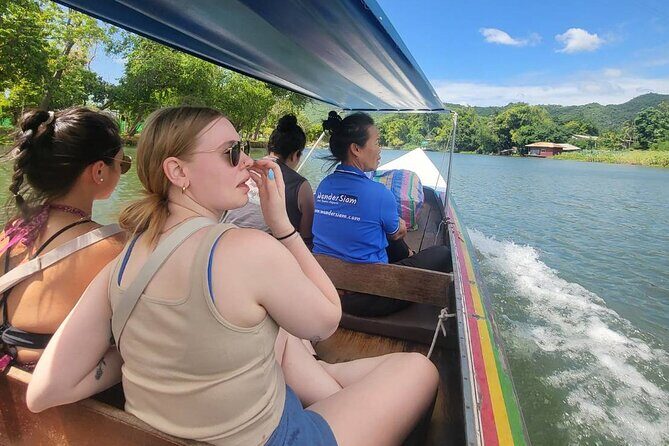
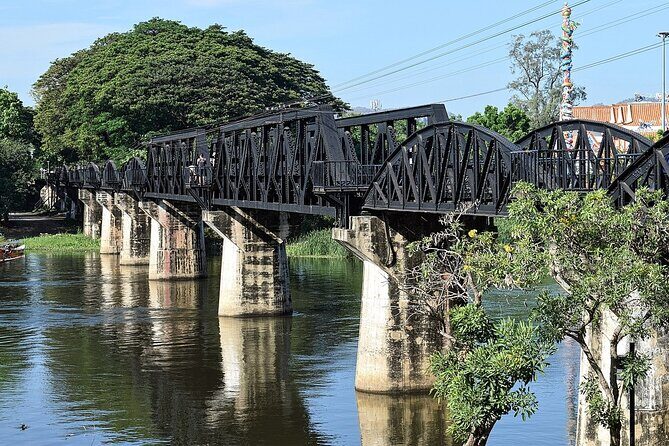
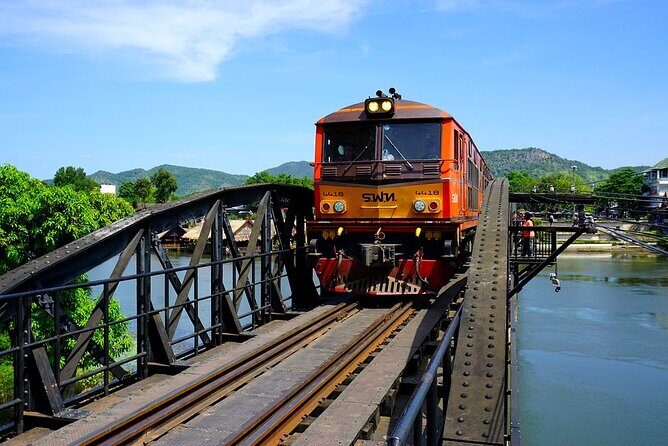
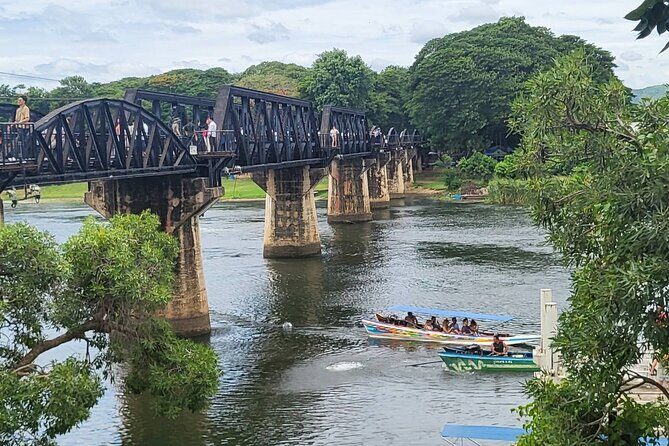
Next is the River Khwae (spelled Khwae in the stop description) bridge area, with about 1 hour allocated on-site. You’ll hear the bridge story as part of the strategic railway route toward Burma during WWII.
The big difference between reading about a bridge and walking it is scale. Reviews repeatedly point to this as a standout moment, including time spent crossing the bridge and, for some, seeing trains on a working line. That’s the kind of detail that makes history feel present instead of distant.
One more reason this stop works: it’s sensory. Even if the schedule is tight, you get river air, the view of the structure from the water’s edge, and that moment of standing in the exact place the story references. For many people, that walk becomes the emotional “bridge” between the museum’s background and the falls’ escape.
Getting There by Water and a Quick Pause Near Markets
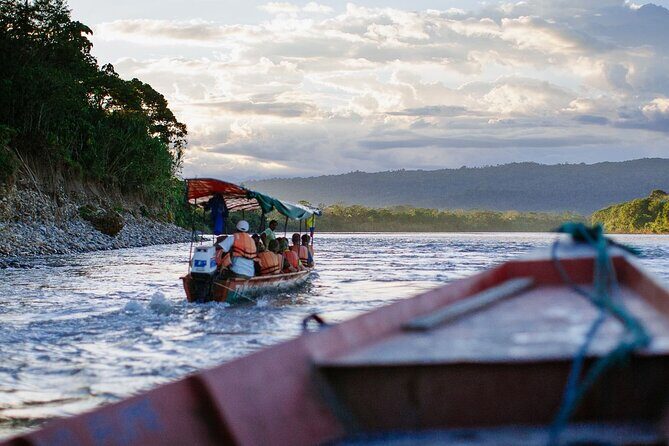
You may also get a boat or water transfer component to reach the bridge area—at least that’s how several experiences are described. One review specifically called out a water taxi after the museum, and another mentioned a boat ride and a stop to shop near markets.
I like these little transitions because they break up the long day. They also give you a breather without losing momentum. The key is to treat this as a short mental reset, not a chance to slow the tour down. If you’re aiming to swim at Erawan (and most people are), keep your energy for the afternoon.



Erawan National Park: 7 Levels, Emerald Pools, and a Real Swim Workout
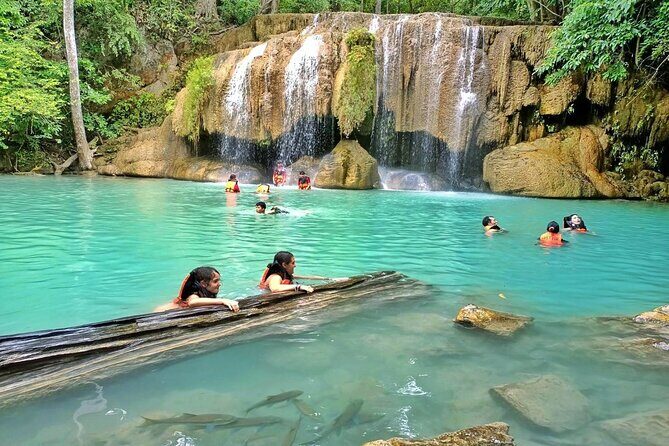
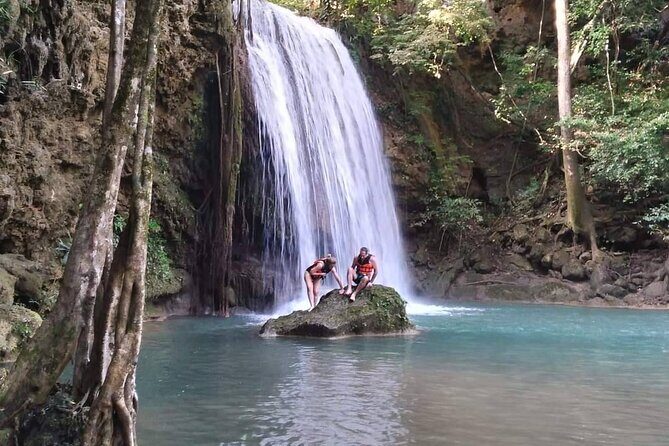
This is the headline. Erawan National Park gets about 6 hours 30 minutes, and the star is the seven-tier Erawan Falls with emerald-green ponds. The park is one of Thailand’s most popular waterfall spots, and that popularity shows in the energy level once you arrive.
Here’s the reality: you can choose your effort level. You can do a lower-level swim and enjoy the falls without going all the way up. Or you can climb. One review described the hike to Level 4 and swimming along the way. Another said Level 7 is worth the climb, with a bigger payoff for people who can handle humidity and steps.
Two practical tips that keep coming up:
- Bring water shoes if you can. One review noted that walking in wet areas can be painful underfoot and that tennis shoes worked, but water shoes would be better. If you’re going to climb, protect your feet.
- Bring swimwear and a towel, and don’t treat this like a “look only” stop. The best memories people mention are the swims and being under the waterfall flows.
What about life jackets?
Life jackets are not included, and the cost is listed as THB 20 per person at Erawan Falls. Some guides also help you make a plan based on your comfort level. If you’re not a confident swimmer or you’re traveling with kids, this can make the experience feel safer and more relaxed.
How to use your time inside the park
With 6.5 hours, you still need a strategy. If you try to do everything, you may end up rushed, and a couple reviews specifically suggested that you might not have enough time to swim at every level. So decide early:
- If your priority is swimming: pick 2–4 levels and linger.
- If your priority is the top view: go higher, then reward yourself with a swim on the way down.
- If you want photos: go slower than you think you need, because the falls are visual and the best spots aren’t always at ground level.
What’s Included in the Price (and What Will Cost Extra)
The tour price is $87.07 per person, and the value is mostly in what’s already covered. You get:
- Transportation by air-conditioned vehicle
- An English-speaking guide
- A bottle of drinking water
- Entrance fees for JEATH War Museum and Erawan National Park
Not included:
- Lunch
- Gratuities for driver/guide (not required)
- Life jacket at Erawan Falls: THB 20 per person
My take on value: paying for a single-day trip like this usually adds up fast once you consider the drive from Bangkok, guide time, and entrance fees. Here, the entrance costs are included, which is one less “surprise” during the day. The only true wildcard cost is lunch, plus optional spending inside the park or around markets.
Guide Quality: When Na, Lisa, or Paul Make the Day
This tour lives or dies by the guide, because you’re combining an emotionally heavy topic with a nature day. The reviews give a clear pattern: the guides named Na and Lisa are often singled out for enthusiasm and for turning the day into something memorable, not just a checklist.
A few standout themes from those experiences:
- Guides explained the bridge and Death Railway context clearly, and kept it moving at a pace that still felt human.
- Some guides acted like photo helpers, taking pictures at key stops. That matters on this kind of tour because you don’t always have time to pose, walk back, adjust, and try again.
Even the driver gets praised. In at least one account, the driver was described as going above and beyond to stop for snacks like banana fritters. That’s not a core tour feature, but it’s the kind of small comfort that makes a long day feel easier.
Group Size and Pace: Why Small Can Feel Better
The tour caps participants at 10 per group and up to 30 travelers total. That small-group feel is part of why people talk about enjoying the day rather than feeling like they were dragged from stop to stop.
Still, you should expect a structured schedule:
- Museum time is significant.
- Bridge time is short by design.
- Erawan gets the longest “free-feel” block, because you’ll walk, climb, swim, and choose your own comfort zone.
If you’re a slow traveler, consider that the bridge stop is time-limited. If you’re a fast traveler who loves big climbs, you’ll want to be ready to move quickly once you hit the park.
Who This Tour Suits Best (and Who Should Skip)
This day trip is a strong match for:
- People who want history plus nature in one shot
- Anyone who likes guided context, not just sightseeing
- Travelers who want a real swimming option and don’t mind a hike
You might reconsider if:
- You hate long drives and prefer shorter outings
- You expect a high-tech, museum-with-glossy-exhibits experience (some museum feedback suggested it can feel dated)
- You want guaranteed time for every single waterfall level. You can do a lot, but you’ll still need to pick what matters most.
Should You Book This River Kwai and Erawan Falls Day Trip?
If you want a balanced day—serious WWII context in Kanchanaburi, then cooling off with a seven-tier waterfall—this tour is easy to justify. The strongest reasons to book are the included entrance fees, the guide-driven story at JEATH, and the fact that Erawan Falls is not a quick stop. You’ll have enough time to enjoy the falls as an activity, not just a photo backdrop.
My final check before you commit:
- If you can handle a long day and a bit of climbing in humidity, book it.
- If you want a fully flexible, unstructured nature day, you may prefer spending more time in the area on your own or with a shorter, falls-focused plan.
- If you’re excited about swimming and not only looking, this is the kind of day trip that tends to feel worth the early start.
FAQ
How long is the tour?
The duration is listed as approximately 12 hours.
What time does the tour start?
The start time is 7:15 am.
What’s included in the tour price?
Transportation in an air-conditioned vehicle, an English-speaking guide, a bottle of drinking water, and entrance fees for the JEATH War Museum and Erawan National Park.
Is lunch included?
No, lunch is not included.
Do I need to pay for entry to the museum and the national park?
Entrance fees for JEATH War Museum and Erawan National Park are included.
Is hotel pickup available?
Pickup is offered only from accommodations on/near Khao San Road and on Siam Square. If you are not in that pickup list, you’ll use the designated meeting point at the WanderSiam office in Chinatown.
Where is the meeting point?
The meeting point is WanderSiam – Tour Operator at 459/1 Thanon Chaokhamrop, Khwaeng Pom Prap, Khet Pom Prap Sattru Phai, Krung Thep Maha Nakhon 10100, Thailand.
Should I bring swimwear and a towel?
Yes. Swimwear and a towel are recommended, and proper walking shoes are advised.
Is there an extra cost for a life jacket at Erawan Falls?
Yes. Life jackets can be rented at Erawan Falls for THB 20 per person.
How big are the groups?
The maximum number of participants per group is 10, and the maximum number of travelers is 30 for the whole day.