REVIEW · KANCHANABURI
Kanchanaburi Tour Hellfire Pass History tour
Book on Viator →Operated by Paddle and More Travel · Bookable on Viator
Turning points hit fast.
This Kanchanaburi tour packs the most powerful stops of the Hellfire Pass and Death Railway story into one day, with a smooth rhythm of museum walking, a train ride, bridge time, and a relaxing long-tail boat cruise. I especially like that the day includes admission tickets at the key sites, and I also like the mix of heavy history and calmer scenery on the River Kwai.
One thing to consider: it’s a long day (about 9 hours) with several transfers and a museum walk, so plan for time on your feet and heat, and report any food allergies ahead of time.
In This Review
- Key highlights to look forward to
- Why this day works so well (Hellfire Pass to boat ride)
- The 9-hour flow, from hotel pickup to return
- Hellfire Pass Memorial Museum and walking trail (the emotional anchor)
- Tham Kra Sae Bridge: a short stop with a dramatic rail feel
- The Death Railway train ride: your view window
- River Kwai Bridge: symbolism plus a long viewing break
- The long-tail boat cruise on the River Kwai: a needed reset
- Chong Kai War Cemetery: closing on a quieter, respectful note
- Price and value: what your $110.68 is really buying
- Group, style, and the kind of guide that matters
- Who should book this tour (and who should skip it)
- Quick FAQ
- FAQ
- How long is the Kanchanaburi Hellfire Pass History tour?
- Do I get hotel pickup?
- What are the main stops on the itinerary?
- Is lunch included?
- Are admission tickets included?
- Is this tour private?
- What should I do if I have food allergies?
- Should you book this Hellfire Pass history day in Kanchanaburi?
Key highlights to look forward to
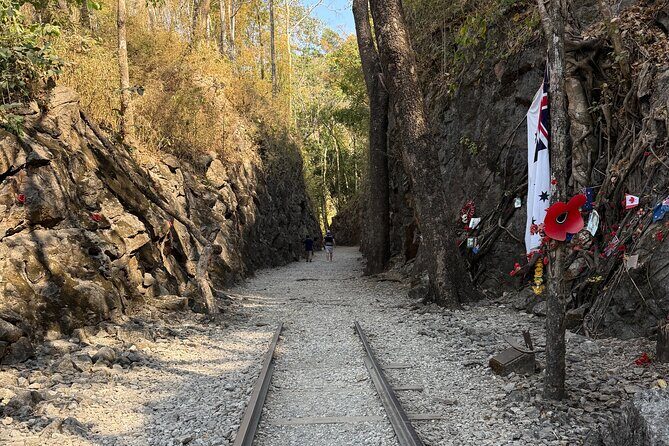
- Hellfire Pass Memorial Walking Trail with admission included (about 1 hour)
- Tham Kra Sae Bridge stop for a quick, scenic cliffside rail moment (about 20 minutes)
- Historic Death Railway train ride timed in the middle of the day for big WWII-and-view contrast
- River Kwai Bridge visit paired with a short walking and photo break (about 1 hour 30 minutes total)
- Long-tail boat cruise on the River Kwai to slow the pace (about 30 minutes)
- Chong Kai War Cemetery as a quiet, respectful ending (about 30 minutes)
Why this day works so well (Hellfire Pass to boat ride)
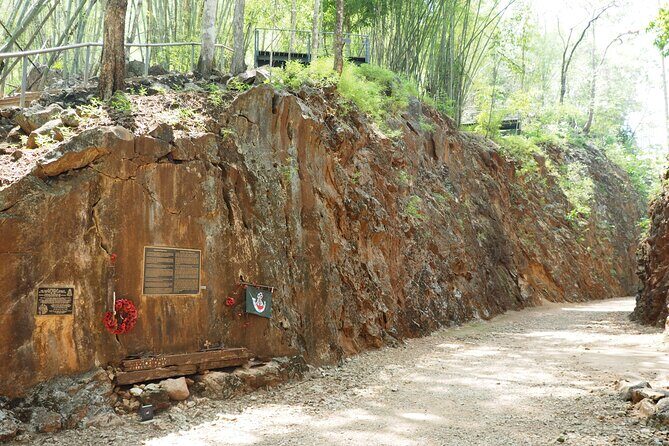
This tour is built around emotional impact, not just sightseeing. You start at Hellfire Pass, where the story is explained through the memorial museum and the walking trail, and you keep that context as you move along the Death Railway route. Then you switch gears to the River Kwai—still meaningful, but lighter on your schedule—ending with a peaceful cemetery.
I like that the itinerary doesn’t treat the sites like separate postcards. It connects the dots: POW sacrifice at Hellfire Pass, rail engineering along the river area, and memorials for Allied soldiers at the end. That flow makes the day feel coherent, even when it’s packed.
A nice bonus is how practical it is. Pickup is offered, you get a planned lunch break, and you’re not left juggling tickets for each stop—admissions are included for multiple parts of the program.
You can also read our reviews of more tours and experiences in Kanchanaburi.

The 9-hour flow, from hotel pickup to return
The schedule starts early. You’re picked up around 08:00 from your hotel area, then head to the first memorial stop. The day runs until about 17:00, back at the meeting point.
Here’s the pacing in plain terms:
- Morning focus on Hellfire Pass and a quick scenic rail bridge stop
- Midday history + food with lunch at a local restaurant
- Afternoon highlight sequence: train ride, River Kwai Bridge time, and the boat cruise
- Final stop at Chong Kai War Cemetery before heading back
Because there are several moving parts (train ride, bridge visit, boat), having a driver and schedule matters. You’ll feel that on a day like this—less time stuck waiting, more time using the hours wisely.
Hellfire Pass Memorial Museum and walking trail (the emotional anchor)
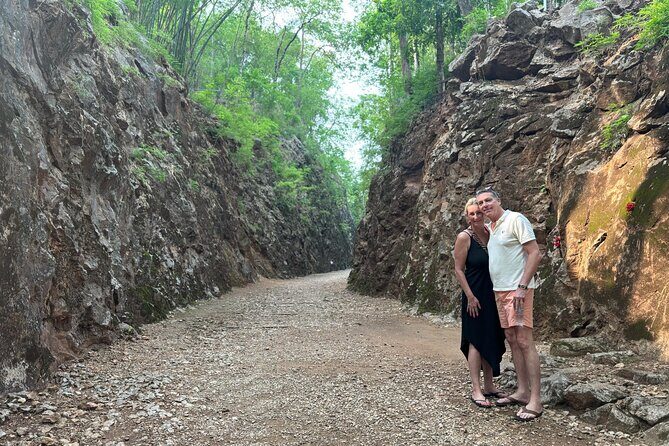
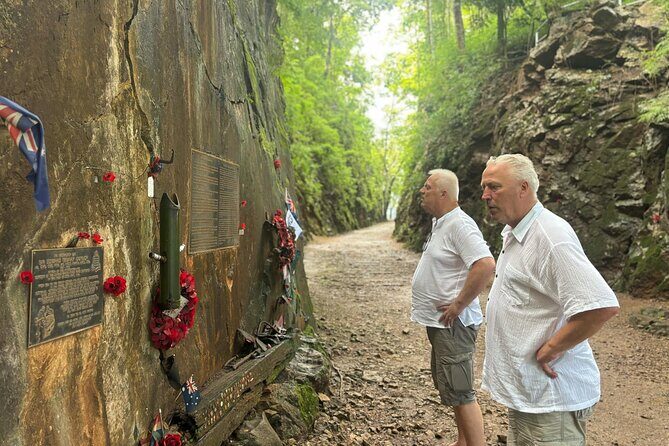
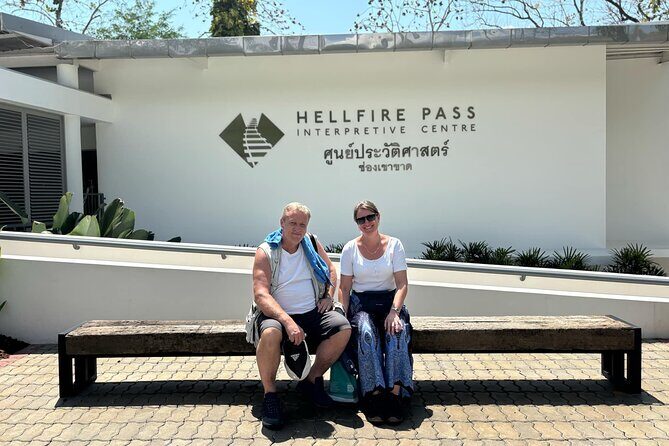
Your first major stop is the Hellfire Pass Interpretive Centre and Memorial Walking Trail, with admission included. You’ll spend about 1 hour here.
This is the part of the day where you should slow down. The museum and walking trail focus on WWII POWs, and the tone is meant to be reflective. Even if you don’t read every panel, the structure of the place helps you understand what happened and why the memorial exists.
What I’d watch for:
- Footwear: expect walking on a memorial trail area, so comfortable shoes beat sandals.
- Pace yourself: one hour sounds short, but the content is heavy and doesn’t benefit from rushing.
- Weather matters: you’ll likely feel the midday heat later, but you’ll still want sun protection even in the morning.
A possible drawback is that this emotional stop is early. If you’re sensitive to WWII history, bring a little mental room for it before moving on to the train ride later.
Tham Kra Sae Bridge: a short stop with a dramatic rail feel
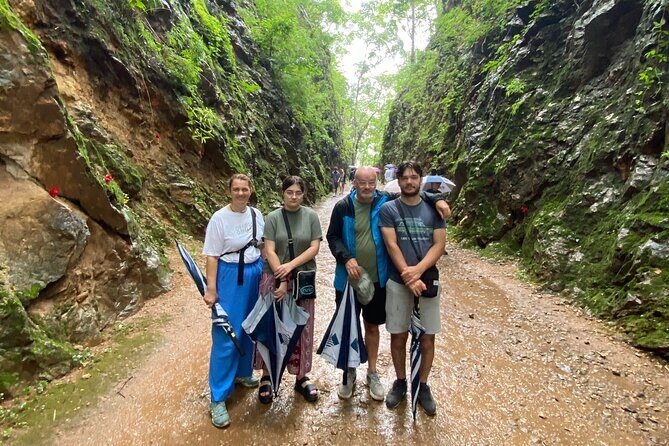
Next up is Tham Kra Sae Bridge (also listed as Tham Kra Sae / Tham Krasae Bridge). It’s about 20 minutes, with an admission ticket included.
This is a quick photographic and scenic break on the Death Railway route, known for its wooden railway bridge setting along a cliffside area. Since it’s brief, it works well as a transition between the museum and the train ride.
How to use this stop well:
- Treat it as a chance to look slowly from a couple of angles rather than trying to see everything at once.
- If you’re prone to motion sickness, note that you’ll be back on transport soon, so take a breath and hydrate when you can.
The Death Railway train ride: your view window
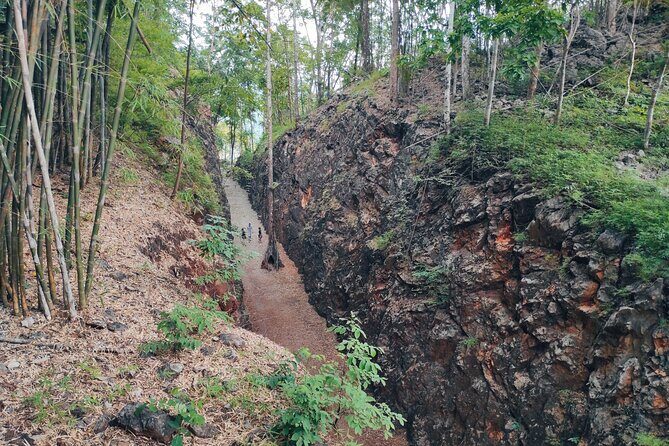
Then comes the big mid-afternoon highlight: a train ride on the historic Death Railway. This segment is timed for about 13:30–15:00.
The core value here is the combination of:
- Context you just learned at Hellfire Pass, and
- The actual experience of traveling through the same rail corridor.
The day is carefully arranged so the train ride doesn’t feel random. You’ve already been introduced to the WWII POW story and the meaning of the rail system, and then the train gives you a moving perspective—where the scenery changes while the history stays present.
Practical note: train timing can feel longer than the clock. You’ll probably want to keep water handy and be ready for camera stops, because the “best view” often happens when you least expect it.



River Kwai Bridge: symbolism plus a long viewing break
After the train ride, you visit the Bridge on the River Kwai, spending about 1 hour 30 minutes with admission included.
This stop is both recognizable and meaningful. It’s a symbol tied to WWII history, but in practice you’ll experience it like this: you arrive, you see the structure in person, you walk/stand long enough to absorb it, and you take photos when the angle works.
To get the most out of the time:
- Pause for a moment before you start photographing. The bridge looks famous on posters, but it lands differently in real life.
- Wear something comfortable for standing and walking. The bridge stop is longer than the earlier stops.
The long-tail boat cruise on the River Kwai: a needed reset
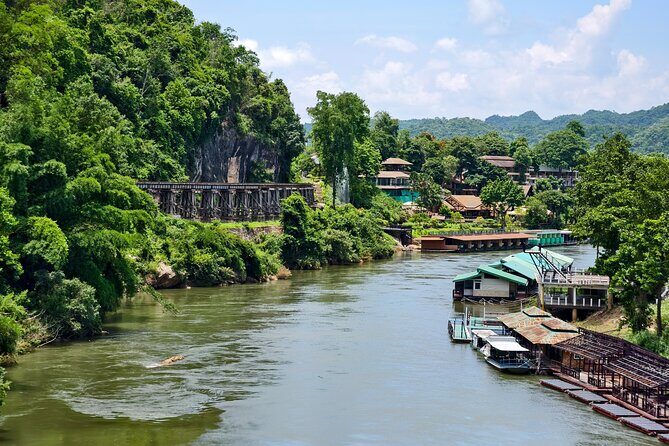
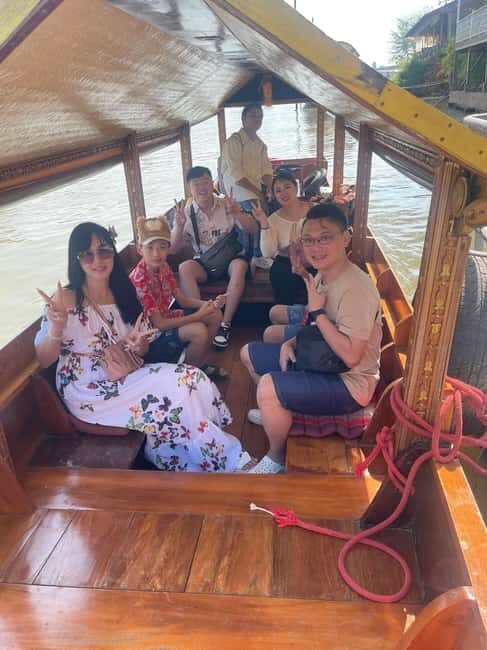
Then the pace softens. You’ll take a long-tail boat ride along the River Kwai for about 30 minutes, and it’s another ticket-included stop.
This is more than a scenic break. It gives you a different kind of perspective—quiet movement along the river after the intensity of the memorials and rail story.
What you’ll likely enjoy:
- The contrast between history on land and the calmer view from the water.
- A chance to sit, catch your breath, and let the day settle in.
If you’re the type who gets tired after museums, this boat segment is often the “I can finally enjoy the place” moment of the day.
Chong Kai War Cemetery: closing on a quieter, respectful note
The last historical stop is Chong Kai War Cemetery, about 30 minutes with admission included.
Unlike the museum’s guided-style learning, a cemetery visit is about presence. It’s meant to be peaceful and reflective, honoring WWII Allied soldiers. Ending here works because the intensity of the day has already been established earlier, and the cemetery gives you a calmer place to absorb everything.
Practical tip: keep your voice low and slow down your walk. This is one of those stops where rushing can make it harder to respect the space.
Price and value: what your $110.68 is really buying
At $110.68 per person, this tour isn’t the cheapest way to do Kanchanaburi—but it’s priced like a day that covers real costs: transport, multiple ticketed sites, lunch, and scheduled activities.
Here’s why the value can feel strong for the right person:
- Several stops include admission tickets (memorial museum, bridges, cemetery, and the key activities)
- You get a full-day program with a train ride and a long-tail boat segment, which are harder to stitch together independently without losing time
- Pickup is offered, which reduces the “find your way” stress
Where value can be less appealing is if you already plan to do only one or two of these highlights. The tour is best when you want a structured day with minimal decision-making.
Also, with private group service and mobile tickets, you avoid a lot of small friction points that can pile up on busy days.
Group, style, and the kind of guide that matters
This is a private tour/activity, meaning it’s just your group. That matters on a long history-heavy day because it’s easier for the guide to match your pace and answer questions without merging into a large crowd.
In the best cases, you’ll have a guide who can keep the day clear and humane. One name that comes up is Ricky, and a driver named Mr Lat shows up in people’s stories as well—informative and good-humored, while still handling serious content with care. Even if you don’t get the exact same pairing, the success factor is the same: you want someone who can connect the stops without turning the day into a race.
Who should book this tour (and who should skip it)
This tour fits you well if:
- You want the major WWII memorial anchors of the Kanchanaburi area in one day
- You like guided structure, ticket handling, and planned timing
- You’re comfortable with a longer day and some walking
You might want to reconsider if:
- You’re looking for a mostly relaxed sightseeing day. This is heavier than it looks on paper.
- You’re very sensitive to WWII-related content and need more time to process.
- You don’t want a schedule that runs from morning into late afternoon.
Quick FAQ
FAQ
How long is the Kanchanaburi Hellfire Pass History tour?
It runs about 9 hours.
Do I get hotel pickup?
Pickup is offered, starting around 08:00, and you return at about 17:00.
What are the main stops on the itinerary?
Hellfire Pass Memorial Museum and walking trail, Tham Kra Sae Bridge, a historic train ride on the Death Railway, Bridge on the River Kwai, a long-tail boat cruise on the River Kwai, and Chong Kai War Cemetery.
Is lunch included?
Yes, lunch at a local restaurant is included.
Are admission tickets included?
Admission tickets are included for multiple stops, including the Hellfire Pass Memorial Museum, Tham Kra Sae Bridge, the Bridge on the River Kwai, and Chong Kai War Cemetery.
Is this tour private?
Yes. It’s private, so only your group participates.
What should I do if I have food allergies?
Food allergies must be reported.
Should you book this Hellfire Pass history day in Kanchanaburi?
I’d book it if you want one organized day that gives you both context and variety: museum walking, a train ride, bridge time, and a River Kwai boat reset. The best part is the way the schedule connects the memorial story across multiple sites, so you don’t just check boxes—you understand the meaning as you move through the day.
I wouldn’t book it if you’re hoping for a short, laid-back outing or if WWII memorials feel like too much for you in one sitting. For everyone else, this is a strong value use of time in Kanchanaburi: ticketed stops, a real train experience, and a calm finish that’s earned, not rushed.