REVIEW · BANGKOK
Private Kanchanaburi Erawan Waterfall&Thai-Burma Death Railway Tour from Bangkok
Book on Viator →Operated by UME Travel · Bookable on Viator
That day packs a lot.
This private tour from Bangkok trades busy streets for western Thailand and a mix of big emotions and cool-water fun. You’ll visit the POW sites around Kanchanaburi, then head to the famous seven-tier Erawan Waterfall for swimming and time to hike up to higher viewpoints. I also like that it’s built around a private, English-speaking guide, so you can ask questions and move at a comfortable pace.
Two things I especially like are the POW history stops and the chance to cool off at Erawan. The Don Rak War Cemetery focuses on the 6,982 Allied POWs who died during construction of the Thai-Burma Railway, and the JEATH Museum adds the human stories connected to Hellfire Pass. The one drawback to plan for is that the schedule is a long day, with an early 7:00 am start and walking on uneven ground—so pack for both emotional sites and physical comfort.
In This Review
- Key Highlights You’ll Actually Feel
- Why This Kanchanaburi Day Trip Works (Even If You Hate Early Starts)
- Hotel Pickup to Kanchanaburi: What the Long Drive Means for Your Day
- Don Rak War Cemetery: A Quiet, Direct Start to the WWII Story
- JEATH War Museum: When the Stories Get Personal
- The Death Railway Angle: Bridge on the River Kwai and the Included Train Ticket
- Lunch by the River Kwai: Where Break Time Actually Matters
- Erawan Waterfall: Swimming, Fish, and the Stairs to Higher Tiers
- Private Van + English Guide: Why It’s Worth Paying More Than a Bus Tour
- Who This Tour Fits Best (And Who Might Want a Different Plan)
- Price and Logistics: Is $180 a Good Deal for What You Get?
- Should You Book This One?
- FAQ
- Can I book a private tour with only my group?
- What time does the tour start?
- How long is the day trip?
- What’s included in the price?
- What admission costs are covered for the main stops?
- Is swimming at Erawan Waterfall part of the experience?
- What’s the cancellation option if plans change?
Key Highlights You’ll Actually Feel
- Don Rak War Cemetery’s POW focus on the 6,982 Allied prisoners who perished during the Thai-Burma Railway construction
- JEATH Museum with attention to Allied POWs and Asian labourers linked to Hellfire Pass and other WWII suffering sites
- Bridge on the River Kwai plus the Death Railway theme, with time for photos and a clear historical frame
- Included train ticket that turns the Death Railway story from words into a real ride experience
- Erawan Waterfall’s seven tiers with about two hours to swim and hike toward the highest levels
- A private van with hotel pickup and an English-speaking guide to keep the day smooth
Why This Kanchanaburi Day Trip Works (Even If You Hate Early Starts)
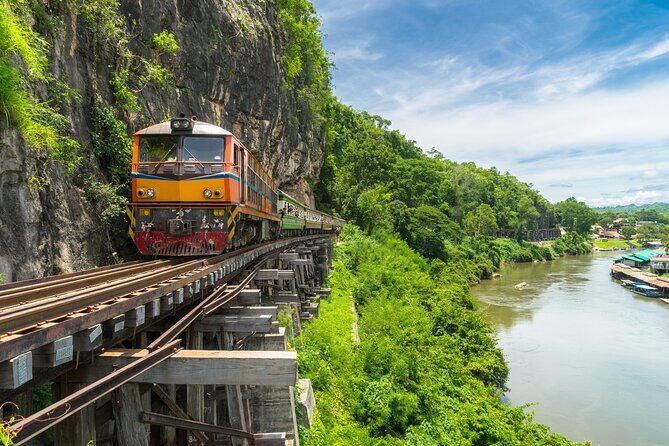
Kanchanaburi is one of those places where “one-day trip” actually makes sense. You’re going far enough west to feel a change from Bangkok, yet everything on this route is within reach—cemeteries, WWII sites, and Erawan Waterfall—so you don’t lose the day to logistics.
The best part is the structure. You start with history while your brain is fresh, then you shift to a lighter mood with lunch by the river and a swim later at Erawan. That contrast is powerful, and it’s exactly why the tour earns strong scores.
You can also read our reviews of more private tours in Bangkok

Hotel Pickup to Kanchanaburi: What the Long Drive Means for Your Day
The tour starts at 7:00 am, with pickup from your hotel and a drive of about 2.5 hours to Kanchanaburi. This matters because you’ll feel the day is “full,” not rushed in a broken way, but simply packed.
You also shouldn’t plan anything the evening after. Even when the tour is marketed as one day, it typically runs into nighttime, so treat it like a whole-day outing rather than a quick excursion.
The private van is air-conditioned, and you’ll have a driver plus a guide. That combination helps on Thai road trips where traffic and timing can shift without warning.
Don Rak War Cemetery: A Quiet, Direct Start to the WWII Story

Your first major stop is Don Rak War Cemetery. This is not a museum stop with gimmicks—it’s a place of remembrance, with a focus on the 6,982 Allied POWs who died during the construction of the Thai-Burma Railway.
I like that the stop is short, around 30 minutes, because you get context without turning it into a marathon. You can take in the setting, read what’s there, and let the guide explain the connections in plain language.
Practical note: wear shoes you can walk in comfortably. Even with a short visit, cemeteries can involve surfaces that don’t match city sidewalks.
JEATH War Museum: When the Stories Get Personal
After Don Rak, you head to the JEATH Museum, with about an hour there. JEATH is dedicated to Allied prisoners of war and Asian labourers who suffered and died at Hellfire Pass and elsewhere across the Asia Pacific region during World War II.
This is where the tour can tug harder at you emotionally, mainly because museums like this focus on people, not just dates. If you like understanding the “how” and “why” behind the headlines, you’ll appreciate having an English-speaking guide to connect the dots.
In the past, I’ve found that the value of a small museum stop depends a lot on how the guide paces questions. Names that have shown up in guides for this tour include Ying and Toni, and multiple people praised the way their guides explained just enough without turning the day into a lecture.
The Death Railway Angle: Bridge on the River Kwai and the Included Train Ticket
Next comes the River Khai Bridge, timed around one hour. This is the world-famous bridge tied to the Death Railway, and it was destroyed during Allied bombing raids toward the end of World War II.
The bridge stop is the kind of place where you’ll want photos, but don’t treat it like only a photo-op. The reason it hits is the story: a famous structure tied to wartime forced labor. Having a guide there makes the photos feel less like souvenirs and more like understanding what you’re looking at.
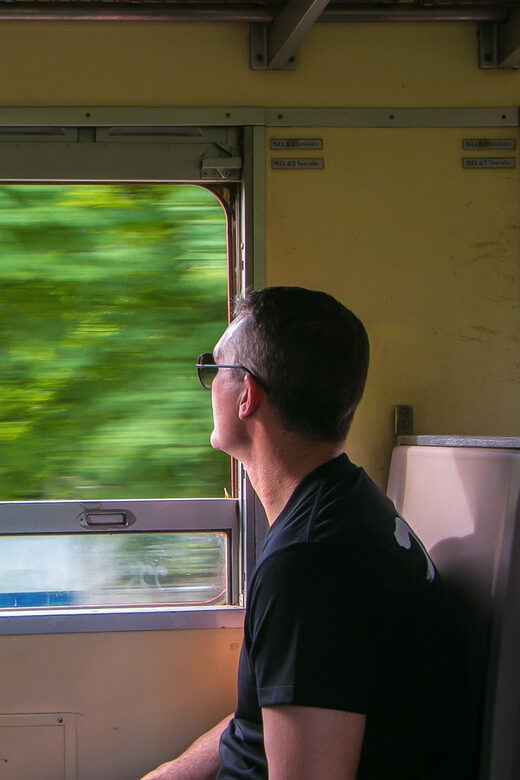
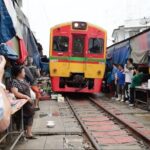
One more key piece: your ticket includes a train ride connected to the Death Railway experience. Reviews often mention a vintage-style train feel, and that combo—history sites plus an actual ride—helps the day stop being purely “read and watch.” If you like physical experiences (even short ones), this is a big part of the tour’s value.
Tip: if you’re sensitive to tight schedules, keep an eye on timing around the bridge. One guest noted they almost missed key moments like the train connection, so I’d treat this as a day where you stay close to the group and don’t get lost taking extra pictures.



Lunch by the River Kwai: Where Break Time Actually Matters
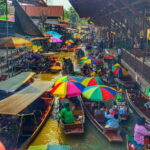
Lunch is included at a local restaurant. One detail I really like here is that you’ll eat somewhere with a scenic view of the river.
For a day tour that mixes heavy history and physical fun, lunch isn’t just about food. It’s your reset point—water, a breather, and a chance to step back before the waterfall.
Also, note what’s included and what isn’t. The meal is included, but personal expenses and beverages are not. If you drink more water than most people, plan for that.
Erawan Waterfall: Swimming, Fish, and the Stairs to Higher Tiers
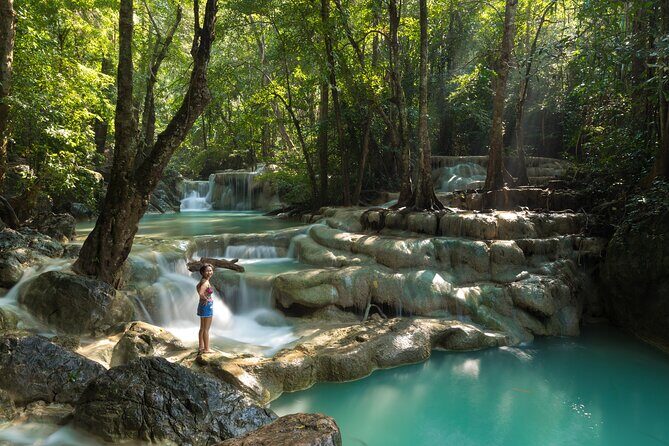
The final stop is Erawan Waterfall, a spectacular seven-tier cascade. You’ll have about two hours here, which is a good amount of time for a proper soak and a climb.
The tour highlights swimming with fish beneath the falls. That sounds like a fun extra, but it also means you should be ready for a wet, slippery environment. Bring swimwear if you want to actually enjoy the water, and wear water-friendly footwear you can trust on stones.
Erawan isn’t only about standing still for photos. There’s also a hike option up toward the highest levels. The tour specifies moderate physical fitness, so expect uneven ground and some stair climbing.
If you want a practical approach: do the water first, then hike for views once you’re warmed up. If you hike first, you’ll likely feel the tiredness during the swim—still doable, just less fun.
Private Van + English Guide: Why It’s Worth Paying More Than a Bus Tour
At $180, this isn’t the cheapest way to do Kanchanaburi. But when you look at what’s included, it becomes easier to justify.
You’re getting:
- hotel pickup and drop-off
- a private van
- a private English-speaking guide
- lunch
- admission tickets at the stops listed
- travel accident insurance
- and a train ticket
For me, the value comes down to time and control. You’re not stuck waiting on strangers, and you can ask follow-up questions when something touches you—especially at WWII-related sites.
That’s also why guide quality tends to matter. The strong ratings often tie back to guides handling timing well and explaining clearly. Names like Chin, Mr Monchai, and Chin again show up in praise, with comments about the day being interesting without feeling overstuffed.
Who This Tour Fits Best (And Who Might Want a Different Plan)
This tour is best for you if you want a single day that covers both sides of Kanchanaburi: serious WWII context and a real chance to enjoy the outdoors at Erawan.
It also suits people who like being able to ask questions. Since it’s private, you can tailor your focus: more time on cemeteries and museums, or more time on the waterfall hike and swimming.
I’d think twice if you:
- hate early mornings and long days
- have trouble with stair climbing or walking on uneven surfaces
- prefer only light sightseeing and would rather skip WWII remembrance sites
Price and Logistics: Is $180 a Good Deal for What You Get?
$180 for a private one-day tour sounds steep until you compare it to what you’re paying for. The drive from Bangkok is not short, and you’re also paying for a private vehicle, an English guide, lunch, multiple admission stops, and a train ticket.
In practice, that price starts looking fair because you’re buying a package that usually costs more when booked piecemeal. The main reason to watch your budget is simply the length of time you’ll be out—this is not a “quick stop and go” day.
Should You Book This One?
I’d book it if your idea of a great day includes a mix: history you can understand, a bridge you can photograph with context, a real train experience, and a chance to swim at Erawan.
If WWII sites make you emotionally uneasy, or if you’re traveling with someone who won’t handle walking and steps, you might prefer a lighter Kanchanaburi plan. But if you can handle a thoughtful, guided day, this is a strong use of time from Bangkok.
FAQ
Can I book a private tour with only my group?
Yes. This is described as a private tour/activity, so only your group participates.
What time does the tour start?
The start time is listed as 7:00 am, with hotel pickup before heading to Kanchanaburi.
How long is the day trip?
It’s listed as approximately 1 day. In practice, it’s an all-day schedule starting in the morning and running until the evening.
What’s included in the price?
Included items are hotel pickup and drop-off, a private van with an English-speaking guide, lunch at a local restaurant, travel accident insurance, and a train ticket (plus admissions for the listed stops).
What admission costs are covered for the main stops?
The Don Rak War Cemetery ticket is free, and admission at JEATH Museum, the River Khai Bridge, and Erawan Waterfalls is included.
Is swimming at Erawan Waterfall part of the experience?
The tour specifically highlights swimming with the fish beneath Erawan Waterfall, and it includes time at the falls for that.
What’s the cancellation option if plans change?
You can cancel for a full refund if you cancel at least 24 hours before the experience’s start time.