REVIEW · BANGKOK
Private Tour: Death Railway, Hellfire Pass and Erawan Waterfall
Book on Viator →Operated by Idaytrip · Bookable on Viator
Seven waterfalls and one heavy-history day.
This is a long but very human Bangkok outing that mixes a fun swim at Erawan Waterfalls with WWII learning at Hellfire Pass and the Death Railway sites. You get a private setup, hotel pickup in an air-conditioned vehicle, and a professional guide who keeps things moving while explaining what you’re seeing.
I really like the way the tour handles pacing for a 12-hour day: lunch is included, and bottled water is on hand so you’re not stuck rationing energy in the car. I also like that this isn’t a ticket-stub scavenger hunt; it’s a guided route with time to actually walk and look.
One consideration: it’s a very long day of driving, so you’ll want a calm mindset and decent patience. If you’re hoping for deep background at every single stop, keep in mind that guide communication can vary by person.
In This Review
- Key highlights you should care about
- A 6:30 a.m. start: what this private Death Railway day really feels like
- Erawan Waterfalls: how to make the most of the 7 levels and swim time
- Hellfire Pass Interpretive Centre and Memorial Walking Trail
- Death Railway Museum and Research Centre: the story keeps moving
- Tham Kra Sae Bridge and Kra Sae Cave Buddha image: a small stop with meaning
- River Kwai Bridge: the short walk with the long shadow
- Guides, lunch, and small comforts that help a long day
- Price and value: why $208.90 can feel fair for a private day out
- Who should book this tour, and who might prefer a lighter day
- Should you book this Death Railway and Erawan Waterfall tour?
- FAQ
- What time does the tour start, and how long is it?
- Is pickup from hotels included, and is this a private tour?
- Is lunch included?
- Are entrance tickets included for all stops?
- Do I need a certain fitness level?
- Is there free cancellation?
Key highlights you should care about
- Private hotel pickup and a comfortable air-conditioned ride, starting early
- Erawan Waterfalls swim time with access to multiple levels (not just a quick photo stop)
- Hellfire Pass Interpretive Centre + Memorial Walking Trail, built for reflection as well as education
- Death Railway sites close together, so the WWII story stays coherent across the day
- River Kwai Bridge walk, short on time but big on symbolism
- Lunch included, which matters a lot when the schedule is tight
A 6:30 a.m. start: what this private Death Railway day really feels like
This tour begins at 6:30am. Translation: you’ll be leaving Bangkok while the city is still waking up, and you’ll spend much of the day on the road between Kanchanaburi-area sites and back again. It sounds intense, but it also means you’re not fighting the worst heat for the waterfall portion, and you’re not arriving at history stops too late in the day.
The “private” part is meaningful here. You’re not squeezed into a massive group rhythm where you’re forced to move even when someone is still soaking in a view or asking questions. Your guide can set the tempo for your group, and the driver is focused on your exact schedule.
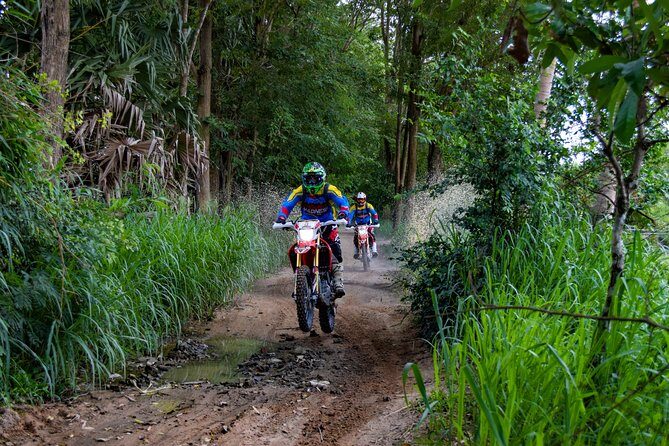
You’ll also want to plan for a moderate physical level. There’s walking involved—especially around the waterfall area and on memorial trails—so wear shoes you can trust on uneven surfaces.
You can also read our reviews of more private tours in Bangkok

Erawan Waterfalls: how to make the most of the 7 levels and swim time
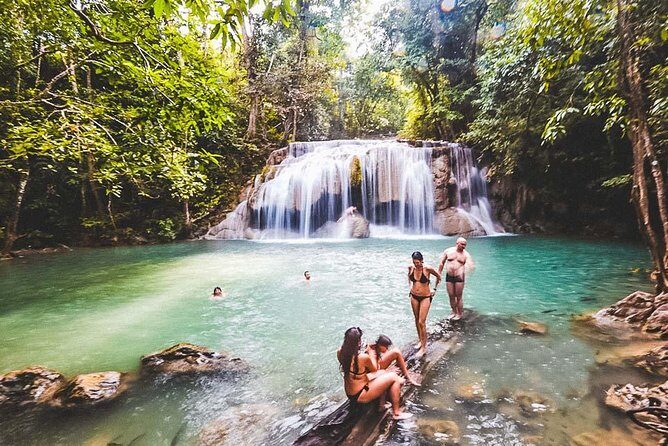
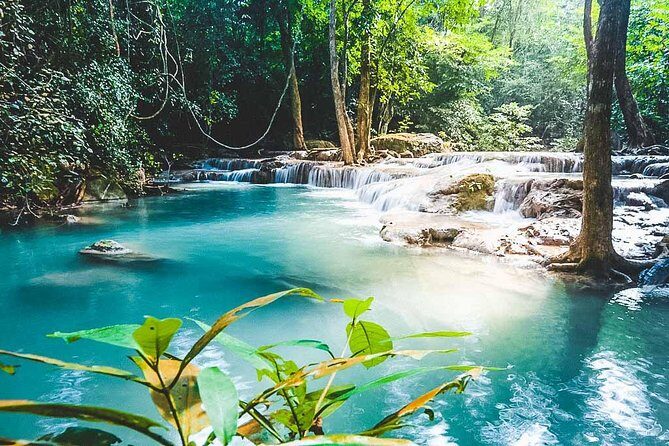
The day starts (after the drive) with Erawan Waterfalls, where you’re given about 3 hours. This is the kind of place where you’ll feel tempted to treat it like a theme park: quick dips, quick photos, done. The smarter play is to commit to the waterfall walk and decide how many levels you want to tackle.
Erawan is known for emerald-green pools and a total of 7 levels. That means the water isn’t just one drop you sprint by; you’re moving between sections of the cascade. You’ll have time to swim in the pools, and that’s the best “reset button” on this itinerary. The WWII stops can be emotionally heavy—swimming at Erawan gives you a natural break.
Practical tips that help:
- Bring a dry bag or waterproof pouch for your phone. Water time is a big part of the experience.
- Go at a steady pace. Three hours sounds long until you’re climbing, stopping, and rinsing off.
- If you’re with kids or anyone who prefers easier walking, aim for fewer levels and focus on enjoying the pools rather than conquering all seven.
The only drawback is time pressure: if you’re determined to do every level, you may feel rushed at the end when your guide calls everyone back. But if you pick a few levels you love, you’ll leave with memories that feel real, not just checklist-based.
Hellfire Pass Interpretive Centre and Memorial Walking Trail
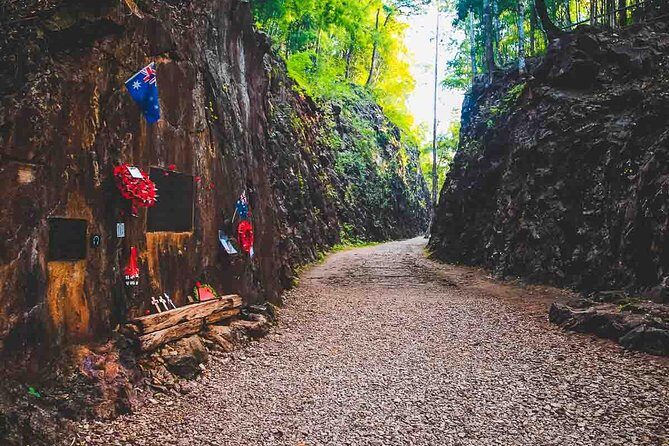
Next comes Hellfire Pass Interpretive Centre and the Memorial Walking Trail—around 1.5 hours. This stop is the heart of the day’s WWII story. You’re shown the context of the Death Railway project and why Hellfire Pass is so tragic: the cutting along the railway cost the lives of more than 16,000 Allied prisoners and countless Asian laborers during World War II.
What makes this stop powerful is the combination of museum time and a walking trail. The memorial walking trail helps you connect the idea of a “cutting” to how brutal the terrain and labor would have been. You’re not just reading panels. You’re moving through the space.
How to get the most out of your time:
- Ask your guide for the story behind what you’re seeing before you start walking. It helps the trail make sense fast.
- Slow down at the key viewpoints. You’ll get the best impact when you’re not rushing for the next photo.
- If your group is the talky type, use your guide’s explanations early. Once you get moving, it’s harder to pause and re-center.
One caution: some people find this part emotionally intense. Plan to take breathers—look, reflect, then continue. It’s a “respect the moment” stop, not a quick-photo stop.
Death Railway Museum and Research Centre: the story keeps moving
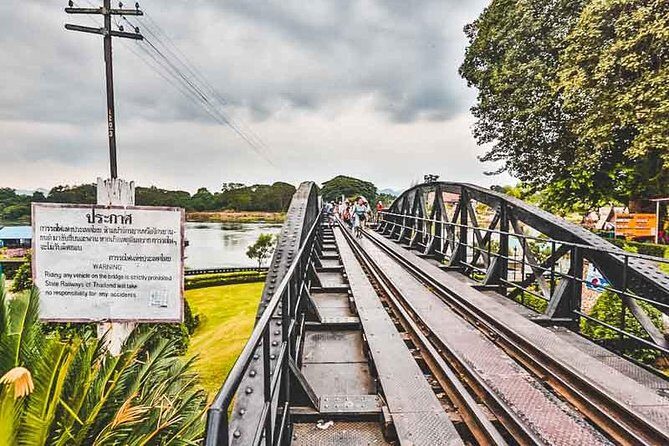
After Hellfire Pass, you head to the Death Railway Museum and Research Centre. Time is shorter—about 30 minutes—so this isn’t a place to expect a full, museum-grade marathon. Instead, it works like a bridge between the memorial cut and the next “physical remains” you’ll see.
Even with limited time, this stop adds clarity. You get more on the railway itself and how the research around it helps keep memory accurate. The location and river setting also matter here. The railway wasn’t abstract; it ran through real terrain and real communities.
For your group, the best approach is simple: use the museum to connect themes—why it was built, what “the cutting” meant, and how the sites you’re seeing later fit into the larger picture. Then you’ll appreciate the later stops more instead of treating them as random landmarks.
Tham Kra Sae Bridge and Kra Sae Cave Buddha image: a small stop with meaning
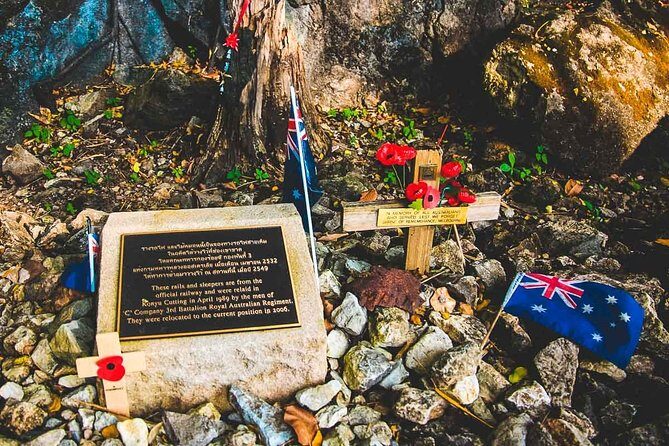
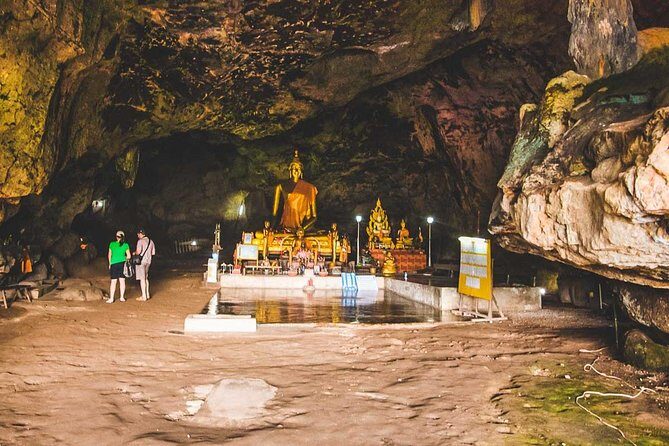
Then it’s Tham Kra Sae Bridge and Kra Sae Cave, where you can spot a Buddha image inside the cave. This is a short stop—about 15 minutes—so don’t treat it like a major attraction day. Think of it as contrast and texture: after WWII memorials and rail history, you get a brief moment of local spiritual presence.
The bridge walk itself is usually a quick stretch-and-look break. The cave is the focused part: you’ll see the Buddha image and get a sense of how places can carry multiple layers of meaning at once.
A practical way to enjoy this stop: keep it light. It’s easy to feel history fatigue around midday. A quick, quiet look inside the cave can be a nice reset before the final big WWII symbol.



River Kwai Bridge: the short walk with the long shadow
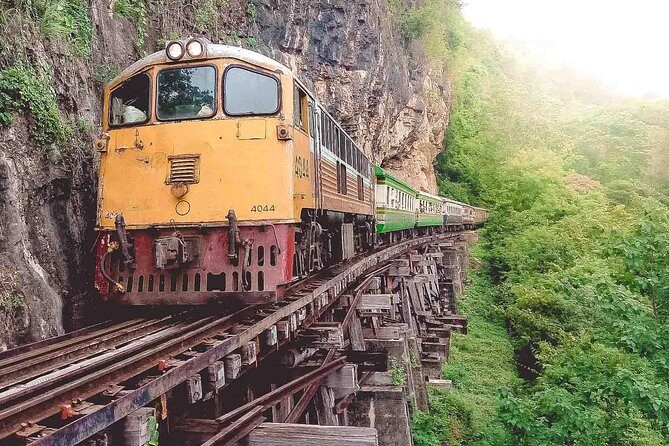
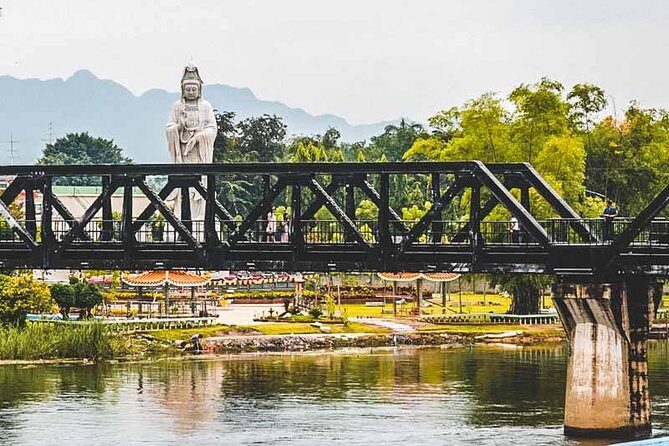
Finally, you arrive at the River Khwae Bridge (often called the Bridge over the River Kwai). This stop takes about 1 hour, including walking time. It’s famous for a reason, but the best way to experience it is to pay attention to what you’re actually looking at: not movie scenes, but a real structure with a past marked by conflict.
Even if you only spend a portion of the hour walking the bridge area, the weight of WWII symbolism can hit fast. You’ll also have time to step back, look at the river setting, and understand why this bridge became such a cultural reference point.
How to make it worthwhile:
- Slow down for a moment mid-walk. Let the setting land before you start taking photos.
- If your guide offers historical context, listen on the first pass. You’ll remember it later when you see details more clearly.
- If you’re with kids, treat it like a “mechanics” moment too—ask what the bridge is doing, not only why it matters.
The main drawback is simple: the bridge is one stop among several. You won’t get a deep, all-day immersion here. But the tradeoff is that the tour gives you a fuller WWII-to-nature mix across the entire day.
Guides, lunch, and small comforts that help a long day
You’ll have a professional guide with you the whole time, and that’s the difference between seeing places and understanding them. The guides named in past groups include people like Bella, Mr Black, Nan, Ying, Peter, Toon, Pookie, and Sie. Different styles, same goal: explain the sites and keep you on schedule.
Lunch is included, and it matters more than it sounds. When the day starts early and ends around the evening (often after the return drive), having food built into the plan keeps you from turning “history and waterfalls” into “history and hunger.” Bottled water is also included, which helps on both hot walks and swim time.
A few real-world comfort points you can plan on:
- The ride is in an air-conditioned vehicle, and the van is described as comfortable in group feedback.
- Restroom stops happen throughout the day, but it’s still smart to bring a few basics (hand wipes, maybe a small towel for after the waterfall).
- Some guides bring helpful extras like tissue paper for restrooms, which sounds small until you’re grateful for it.
If there’s one thing to watch, it’s communication quality. One group reported that their guide’s English wasn’t strong enough to provide much background. So if you care a lot about detailed explanations, don’t be shy about asking follow-up questions early in the day.
Price and value: why $208.90 can feel fair for a private day out
At $208.90 per person, this is not a bargain-basement tour. But for what’s included, it often lands in the “fair value” category—especially if you’re doing this route under your own power, without an organized driver and guide.
Here’s what your money is paying for, based on what the tour includes:
- Private transportation in an air-conditioned vehicle
- Professional guide
- Lunch
- Bottled water
- All fees and taxes
- Entry tickets for Erawan Waterfalls and Hellfire Pass Interpretive Centre (both included)
- Admission noted as free for the Death Railway museum stop, the cave/bridge stop, and the River Kwai Bridge time
Because you’re getting both the nature highlight and the WWII memorial stops in one run, you’re also saving time and logistics. The biggest cost of doing this yourself is not only money—it’s the time and stress of getting between sites early in the day and back late.
When is it especially good value?
- If you want the private pacing and hotel pickup.
- If you’d rather read the story from a guide than figure out details on the fly.
- If your group includes people who benefit from not having to navigate transport.
When might the price feel steep?
- If you only care about one “main” stop and would rather spend extra time there.
- If you dislike long days of driving and would rather split this into shorter trips.
Who should book this tour, and who might prefer a lighter day
This tour is a strong match for you if you want both sides of Kanchanaburi history: the human tragedy of the Death Railway and the calmer sensory reset of Erawan Waterfalls. It also works well if you enjoy a guided day where you can ask questions and get context without constant route planning.
It’s also a good family fit in spirit—at least for families that can handle early mornings and a long schedule. The waterfall is the fun anchor, and the history stops are the educational anchors.
Consider a different plan if:
- You get uncomfortable with long car time.
- You want a slow, unhurried waterfall day with lots of swimming time.
- You have very limited mobility needs, because even with moderate fitness expectations, this itinerary includes walking portions that can add up.
The key is mindset. It’s long. It’s not lightweight. But it’s packed with meaning.
Should you book this Death Railway and Erawan Waterfall tour?
Book it if you’re the type of traveler who likes contrast: cool pools in the morning heat, followed by a memorial trail that forces you to slow down and pay attention. You’ll get Erawan’s multi-level waterfall experience, plus the core WWII learning stops—Hellfire Pass, the Death Railway sites, and the River Kwai Bridge—all in one guided private day.
Skip it (or think about splitting your plans) if you hate long drives or you’re hoping for a short day. This is scheduled for impact, not for comfort at the edges of the timeline.
If you do book, a smart move is to choose your priorities in your group. Decide up front how many Erawan levels you want, and how much time you want to spend quietly at Hellfire Pass. Then the whole day will feel more intentional instead of rushed.
FAQ
What time does the tour start, and how long is it?
The tour starts at 6:30am and lasts about 12 hours.
Is pickup from hotels included, and is this a private tour?
Yes. Hotel transfers are included, and it’s a private tour, meaning only your group participates. You’ll travel in an air-conditioned vehicle.
Is lunch included?
Yes. Lunch is included in the tour price, and bottled water is provided.
Are entrance tickets included for all stops?
Not all stops. Erawan Waterfalls and the Hellfire Pass Interpretive Centre include admission tickets. The Death Railway museum/research centre stop, Tham Kra Sae Bridge area, and the River Kwai Bridge time are listed as free.
Do I need a certain fitness level?
You should have moderate physical fitness. There is walking involved, including memorial walking and time in the waterfall area.
Is there free cancellation?
Yes. You can cancel for a full refund up to 24 hours before the experience start time.