REVIEW · BANGKOK
Yoga in the Park Thailand
Book on Viator →Operated by Yoga In The Park · Bookable on Viator
A quiet morning stretch beats Bangkok chaos. This Yoga in the Park session turns the city’s heat and noise into something calmer, with practice in a quiet corner of Lumphini Park right in the middle of town. I love the small-group vibe (max 4 travelers), because instruction stays personal instead of one-size-fits-all. I also love that the class adapts to your level, from first-timers to people who already know their way through a flow.
One consideration: this experience is weather-dependent, so you’ll want some flexibility if rain or poor conditions force a change.
In This Review
- Key highlights you’ll care about
- Lumphini Park yoga: the setting that makes it feel like a reset
- Your class flow: meditation and breathing first, then strengthening work
- Small group teaching: the difference between doing yoga and learning yoga
- Wildlife, rain, and the real park vibe: what to expect outside a studio
- Meeting point and timing: how to show up ready to flow
- Price and value in Bangkok terms: what $38.88 gets you
- Who this yoga class suits best (and who should plan carefully)
- Should you book Yoga in the Park Thailand?
- FAQ
- How long is the yoga session?
- Where does the class start and end?
- Do I need to be a yoga expert to join?
- What happens during the session?
- How big is the class?
- Is the yoga competitive?
- Is there any weather limitation?
- How do I get my ticket?
- What’s the booking timeline and cancellation rule?
Key highlights you’ll care about
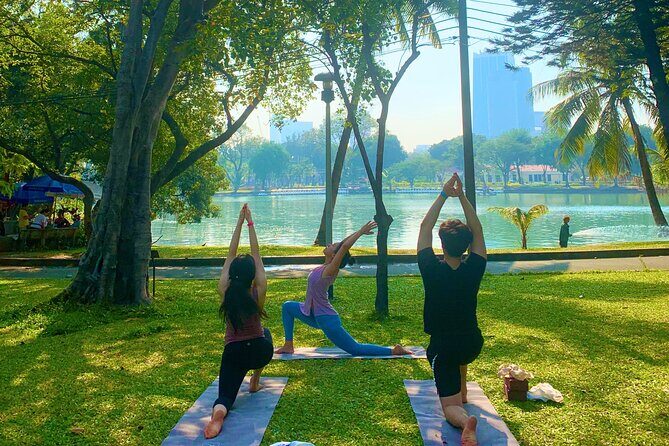
- Tiny class size (up to 4) for more attention and quicker form checks
- Lumphini Park practice spot in a calm area with big wildlife sightings nearby
- 90 minutes that actually covers the basics: meditation, pranayama, then movement and strength work
- Beginners welcome with the option to modify everything to your body
- Instructors Sung and Gift show up repeatedly in feedback for professional, tailored guidance
- Not competitive yoga—you work to feel better, not to win
Lumphini Park yoga: the setting that makes it feel like a reset
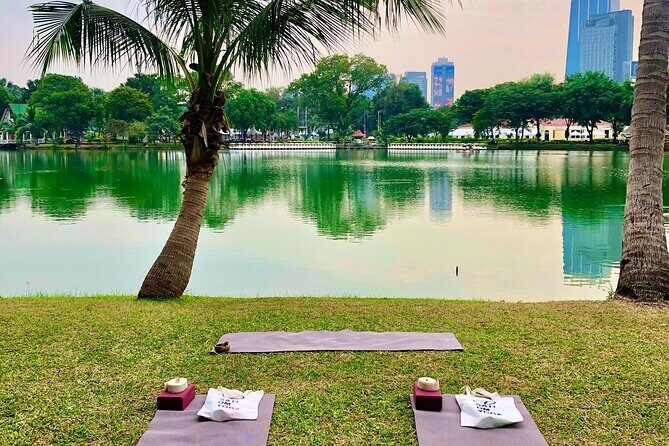
Bangkok can be intense early in the day. This class gives you a different first impression. You meet at the Chai Phatthana Water Aerator Memorial in Lumphini area, and from there the plan is simple: get set up, then step into a quieter pocket of the park for a ~90-minute session.
What makes Lumphini special for yoga is that it’s not a sterile “fitness corner.” It’s a real public park with real life. In the feedback I’m drawing from, people describe seeing animals right around the practice time—big monitor lizards, birds, squirrels, and even turtles. That matters more than it sounds. Wildlife and bird calls keep the experience grounded in the moment. It’s less like a studio class you escape to, and more like you’re practicing alongside Bangkok’s natural side.
There’s also a practical upside: this is morning-focused. That rhythm helps you shake off travel stiffness and gives you energy for the rest of the day. If your plan is temples, markets, and long walks later, starting with gentle movement and breathing can make the whole itinerary feel easier to manage.
You can also read our reviews of more tours and experiences in Bangkok.


Your class flow: meditation and breathing first, then strengthening work
This is not a random “stretch for an hour” session. The structure is clear, and you’ll feel it as you go.
You start with meditation and pranayama (breathing exercises). Even if you’ve never done pranayama before, the point is to help you slow down and control your breath. In Bangkok, that can be a relief—especially if you arrive feeling rushed, dehydrated, or stiff from travel.
After that, the class moves into asana flows (yoga postures linked together). This part is where your body wakes up. Expect a guided sequence focused on how to move safely and efficiently, not just how to hit the prettiest shapes.
Then comes the “stay with me” part: healing and strengthening exercises. Yoga can be gentle and still be effective. The emphasis here is on improving posture, balance, and common aches—think the kind of tightness you get from sitting on planes, rolling luggage over rough sidewalks, and spending hours in transit. The goal is strength you can feel, not strength that leaves you sore the next day.
The class is also described as tailored to different needs because the group stays small. If something doesn’t feel right, you should be able to adjust rather than force it. That’s a big deal for avoiding that common travel-yoga mistake: pushing too hard because you don’t want to be the awkward beginner.
Small group teaching: the difference between doing yoga and learning yoga
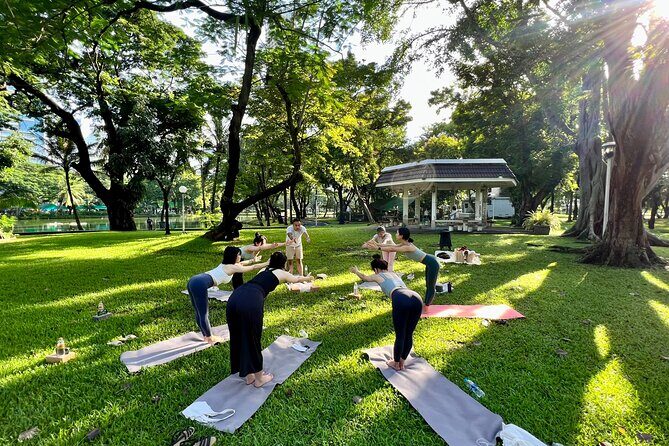
Max 4 travelers is a gift. In larger classes, your teacher may only notice you during the moments when everyone moves together. Here, you’re more likely to get real attention—watching your alignment, suggesting a simpler version of a pose, or cueing your breathing when you lose the rhythm.
That’s why people highlight personalization so strongly. Feedback includes lots of comments about instruction feeling tailored, not rushed, with personalized advice and room to ask questions. Two instructor names show up again and again: Sung and Gift. If you get one of them, you can expect professionalism and guidance that respects different experience levels.
Another subtle but important benefit: when you’re in a small group, you settle faster. You’re not trying to match the pace of a room full of confident yogis. Instead, you can focus on your own body—what feels good, what feels tight, and what needs a modification.
And because the class is explicitly non-competitive, you don’t have to measure yourself against anyone else. That’s how yoga works best on vacation: it should make you feel better and more capable, not stressed.
Wildlife, rain, and the real park vibe: what to expect outside a studio
Doing yoga outdoors in Bangkok means you’re practicing in the same environment as the animals and the weather.
The most positive description is the wildlife. People call out monitor lizards and other animals around the park. You don’t control that part of the experience—but you can control your reaction. If a lizard wanders into view, treat it like a background detail. Keep moving, stay respectful, and let the moment be what it is: nature happening.
Weather is the other factor. The experience is noted as requiring good weather, and one piece of feedback specifically mentioned rain adding to the session. That suggests the instructors aren’t scared of light conditions, but you should still know the basic rule: if conditions are poor, the activity may be changed or refunded.
Practical move: dress like you’re going to be outside. Wear comfortable clothes you can move in. Bring a towel or something absorbent, since humid park air can get sticky quickly. Also, consider water. Your breathing work will be easier if you’re not dehydrated.
Meeting point and timing: how to show up ready to flow
You’ll start at Chai Phatthana Water Aerator Memorial, 192 Thanon Rama IV, Khwaeng Lumphini, Pathum Wan, Krung Thep Maha Nakhon 10330, Thailand, and the class ends back at the meeting point.
The organizers ask you to arrive at least 5 minutes early. That’s not just “polite.” In a park, you need those minutes to find the quiet corner, get settled, and start with the calm mindset the class begins with. If you show up late, you’ll feel it during meditation and pranayama—because you’re trying to catch up while everyone else is already settling.
The tour also notes that it’s near public transportation. Translation: you can plan your morning without building a whole logistics puzzle around a taxi.
One more timing note: the experience is often booked about 15 days in advance on average. That doesn’t mean you must book exactly that far out, but it’s a hint that spots can fill. If you have a tight Bangkok schedule, I’d reserve earlier rather than gamble.

Price and value in Bangkok terms: what $38.88 gets you
At $38.88 per person for about 1 hour 30 minutes, this isn’t the kind of “super cheap” activity where you wonder what you’re buying. You’re paying for a few clear advantages that matter:
- Small group size (up to 4), which directly affects how much attention you get
- Guided structure: meditation, pranayama, flows, and strengthening/healing exercises
- Location value: practice in Lumphini Park, a meaningful Bangkok setting rather than a random street corner
- Level adaptation so beginners can join without feeling lost
If you compare this to the cost of a standard class in a studio, the price feels reasonable—especially because you’re adding the outdoor setting and the personalized attention. The real value is the chance to work on your posture and balance with coaching, not just follow along.
Also, the session is brief enough to fit into a morning itinerary without stealing your whole day. In Bangkok, time is currency. A 1.5-hour reset can be the difference between feeling fresh for the rest of the city and spending your afternoon stiff and cranky.
Who this yoga class suits best (and who should plan carefully)
This experience is built for mixed levels. Beginners are welcome, and advanced practitioners can still benefit because the class is designed to be adaptable. If you’re returning to yoga after a break, this kind of morning session can be a friendly restart: breathing and meditation first, then strengthening work with options.
It also works well if your main goal is practical self-care—better posture, balance, and loosening up pains. The strengthening/healing focus is meant to help your body function better day to day, not just look good in a photo.
You should plan carefully if you have an injury. The guidance is straightforward: let the instructor know about injuries prior to practicing. That’s good advice anywhere, but it’s especially important outdoors where you’ll move through a sequence rather than doing one-off stretches.
And if you’re someone who only likes perfectly controlled studio conditions, you might find the park environment distracting. The tradeoff is the atmosphere and the wildlife. If you can accept some variability, you’ll likely enjoy it.
Should you book Yoga in the Park Thailand?
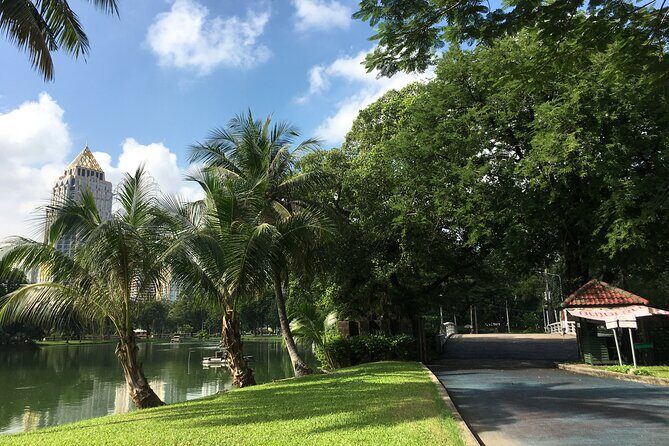
If you want a morning activity that feels calm, human-scaled, and actually useful for your body, I’d book it. The combo of tiny group teaching, a clear meditation-to-movement structure, and the fact that you’ll be practicing in Lumphini Park is exactly the kind of “small choice with big payoff” travel day.
Book it if:
- you’re traveling solo or as a couple and like personal attention
- you want yoga that adapts for beginners and also challenges stronger students
- you’d enjoy outdoor practice with the possibility of wildlife sightings
Consider alternatives if:
- you need a completely weather-proof plan
- you prefer indoor, perfectly silent class settings
Overall, this is a smart way to start a Bangkok morning—especially if your trip includes a lot of walking afterward.
FAQ
How long is the yoga session?
The yoga practice is approximately 90 minutes.
Where does the class start and end?
The class starts at Chai Phatthana Water Aerator Memorial (192 Thanon Rama IV, Lumphini area) and ends back at the same meeting point.
Do I need to be a yoga expert to join?
No. The class can be tailored for people of any experience level, and beginners are welcome.
What happens during the session?
You start with meditation and pranayama (breathing exercises), then move into asana flows, followed by healing and strengthening exercises.
How big is the class?
The group is limited to a maximum of 4 travelers.
Is the yoga competitive?
No. The practice is described as non-competitive and focused on improving yourself inside and out.
Is there any weather limitation?
Yes. The experience requires good weather. If it’s canceled due to poor weather, you’ll be offered a different date or a full refund.
How do I get my ticket?
You’ll use a mobile ticket.
What’s the booking timeline and cancellation rule?
Confirmation is received at the time of booking, and free cancellation is available up to 24 hours in advance for a full refund. If you cancel less than 24 hours before the start time, the amount paid is not refunded.