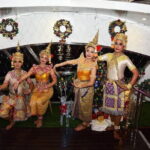
Two museums, one ticket, one big theme. This outing takes you from Thai architecture and mythology straight into the Erawan Museum’s three-headed elephant world. I love the way Ancient City’s five regions are laid out like a time machine through Thailand, and I love the Erawan Museum’s elephant interior for its murals and sacred storytelling. The main catch is logistics: Ancient City and Erawan Museum aren’t near each other, so you’ll need to handle the in-between travel yourself.
If you time it well, this can feel like a full cultural day without hunting for tickets. You can also choose options that include a Thai buffet (depending on the ticket type), and you’ll get a mobile ticket that’s easy to show at entry. My one practical caution is simple: the Erawan Museum’s last entry is earlier than you might expect, so rushing is your enemy.
Plan for walking. The experience is for walking only, and extra rides like golf carts or bicycles cost extra. If you hate long strolls under Thai heat, this may feel like a workout instead of a leisurely museum day.
In This Review
- Key points to know before you go
- Two sights, one ticket: what your 4–6 hours really involves
- Ancient City (Mueang Boran): five regions of Thailand in one park
- Northern Region: Lanna-style temples
- Northeastern Region: Khmer-inspired sanctuaries
- Central Region: royal power and the floating market vibe
- Southern Region: mixed influences in carvings and spaces
- Suvarnabhumi Zone: mythology, Sumeru Mountain, and the Pavilion of the Enlightened
- One important rule
- Erawan Museum: inside the three-headed elephant
- Price and ticket value: is $14.46 a good deal?
- Getting between Ancient City and Erawan Museum: plan for the 11 km gap
- Walking stamina and paid rides on-site
- Rules and timing: costumes, drones, and last entry
- Who this Ancient City + Erawan combo is best for
- Should you book this ticket?
- FAQ
- How long does the Ancient City and Erawan Museum experience take?
- What’s included in the ticket price?
- Is the ticket mobile?
- Do I need hotel transfer to get between the two places?
- Are the two museums close to each other?
- What are the opening hours for Ancient City (Mueang Boran)?
- What are the opening hours for Erawan Museum?
- Is there a walking route only, or can I take a cart?
- Can I wear an outside Thai costume for photos?
- Is drone photography allowed?
Key points to know before you go
- Ancient City is arranged by five Thai regions, so you can follow a clear cultural route
- Erawan Museum is housed inside the three-headed elephant, with murals and religious art to study up close
- No included hotel transfer, and the two sites are not near each other
- Walking is the default, with carts, bicycles, and private trams only as paid add-ons
- Last entry times are strict, especially at Erawan Museum
Two sights, one ticket: what your 4–6 hours really involves
This is a combo that links two separate attractions into one day plan: Ancient City (Mueang Boran) first, then Erawan Museum. The total duration is listed as about 4 to 6 hours, which tells you this is not a slow, sit-and-stroll tour. You’ll move, you’ll read a bit, and you’ll likely focus on the “main stops” rather than trying to absorb every single carving and pavilion at a leisurely pace.
One thing you should plan around: the sites are not near each other. The distance between them is listed as about 11 km, and you’re on your own to get from one location to the other. That doesn’t make the day impossible, but it does mean your schedule should include travel time, not just museum time.
Also, note the building rhythm: Ancient City is open 9:00 AM to 7:00 PM (last entry 6:00 PM), while Erawan Museum runs 9:00 AM to 6:00 PM with inside closure at 5:30 PM and the last entry at 5:00 PM. If you start late, Erawan is the first place to feel the squeeze.
You can also read our reviews of more tours and experiences in Bangkok



Ancient City (Mueang Boran): five regions of Thailand in one park
Ancient City is designed like a cultural map. Instead of one monument, you get a large park filled with recreated landmarks across five regions. That structure matters, because it gives you an easy way to “scan by theme” and not feel lost.
A smart approach here is to pick your priorities before you go in. If you love temples, you’ll naturally gravitate to the Northern and Northeastern areas. If you’re more into palaces and market scenes, you’ll want to focus on the Central and Southern zones. And if you like mythology and symbolism, the Suvarnabhumi zone is where you’ll slow down.
Northern Region: Lanna-style temples
In the Northern Region, you’ll see a Lanna-style Ho Kham Pavilion and the Grand Hall of Wat Maha That. What’s useful about this zone is that it frames the North through recognizable temple architecture. Even if you’re not fluent in Thai history, the style cues help you read what you’re looking at.
Northeastern Region: Khmer-inspired sanctuaries
Head to the Northeastern Region and you’ll meet Khmer-influenced sites such as Prasat Phra Wihan, Phimai Sanctuary, and Prasat Sikhoraphum. This area is a great reminder that Thailand’s cultural story isn’t one straight line. You’re seeing a different architectural “accent,” and that makes the whole park feel more like regional storytelling than one copied style.
Central Region: royal power and the floating market vibe
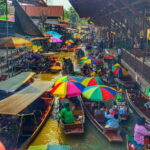
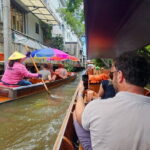
The Central Region is where the mood shifts toward royal grandeur. You can expect Dusit Maha Prasat Palace and Sanphet Prasat Palace, plus the Floating Market scene. If you’re coming from Bangkok and want a different angle on Thai culture, this zone often clicks because it connects palaces and daily life in the same frame.
You can also read our reviews of more city tours in Bangkok
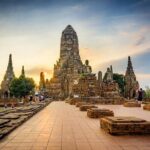

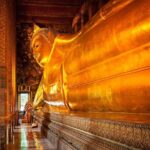


Southern Region: mixed influences in carvings and spaces
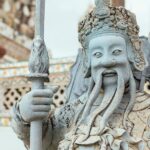
In the Southern Region, you’ll encounter blended influences, including the City Sala and Pallava carvings. This is the zone that can reward patience. The details matter more here, so if you skim, you’ll miss some of the “why is this different?” feeling.
Suvarnabhumi Zone: mythology, Sumeru Mountain, and the Pavilion of the Enlightened
The Suvarnabhumi zone brings in Thai mythology with Sumeru Mountain and the Pavilion of the Enlightened. This is where the park starts to feel less like a history exhibit and more like a symbolic world. If you’re the type who likes spiritual art and cosmic references, you’ll enjoy lingering even after your legs start complaining.
One important rule
No outside Thai costumes are permitted. If you planned a photoshoot outfit, you’ll want to skip that plan. Also, drone photography is prohibited in Muangboran (Ancient City), so keep your aerial plans grounded.
Erawan Museum: inside the three-headed elephant
After Ancient City, you’ll shift to the Erawan Museum, which is known for one dramatic feature: a colossal three-headed elephant that houses the experience. Inside, you’ll find intricate murals, spiritual relics, and celestial designs. The overall effect is that the building itself becomes part of the storytelling.
What I think makes Erawan Museum valuable is the blend of cultural threads: it mixes Buddhist, Hindu, and Thai folklore. You don’t need to know all the details to feel the intention. It’s the kind of place where visuals do a lot of the teaching.
Expect to spend around 3 hours here if you want to read and look carefully. The museum is open 9:00 AM to 6:00 PM, but don’t wait too late—the inside area closes at 5:30 PM, and last entry is at 5:00 PM. If you want calmer pace and better light for studying murals, arrive with time to spare.
Price and ticket value: is $14.46 a good deal?
The price is listed as $14.46 per person, and that’s the part that grabs your attention fast. For that money, you’re getting admission to both attractions, plus options that may include a Thai buffet lunch/dinner depending on the ticket type.
Here’s how I’d judge value:
- If you choose a ticket that includes the Thai buffet, you’re turning this into a smoother “all-in” day. Food becomes part of the planning instead of an extra hunt.
- If you skip the buffet option, you’re paying mostly for entrance fees and time in two major sites. That can still be fair, but you’ll want to budget separately for meals and transport.
Two add-on costs matter for your true day cost. First, there are golf cart fees (400–600 THB total depending on cart size and hours), plus bicycle rental at 150 THB per bicycle. Second, you can hire a private tram (for large groups, 30 PAX) at 1,500 THB per hour, but you have to reserve at least 3 days in advance.
So yes, the sticker price looks low. The real question is how much you’ll spend to reduce walking or to solve the travel gap between sites.
Getting between Ancient City and Erawan Museum: plan for the 11 km gap
This is where the experience can either feel convenient or frustrating.
One key note: these two museums are not located near each other, and you’ll spare sufficient time for transportation. The distance given is about 11 km, and the experience doesn’t include hotel transfer.
A practical clue from outside feedback: the walk from the Chang Awaran BTS skytrain to Ancient City is described as about 15 minutes, and it can be a bit of a trek (details were cut off, but the takeaway is clear). That means if you’re using public transit, you should think in terms of a short walking segment plus whatever ride gets you to the next site.
My advice: treat transportation as a mini itinerary of its own. Don’t build your schedule assuming everything is “one area.” If you want a calmer day, you’ll likely need a taxi or ride between the two.
Walking stamina and paid rides on-site
The experience states that all options are for walking only. That’s a big deal. Ancient City is a large park with multiple zones, and Erawan Museum is an indoor complex where you still tend to move around a lot. If you’re traveling with kids, older relatives, or anyone who gets tired quickly, you’ll want to think ahead.
On-site help is available, but it’s not free:
- 4-seat golf cart: 350 THB for the first hour, 200 THB for the second hour
- 6-seat golf cart: 500 THB for the first hour, 300 THB for the second hour
- Bicycle rental: 150 THB per bicycle
- Private tram: 1,500 THB/hour for 30 PAX (reservation needed at least 3 days in advance)
If you’re deciding between walking and rentals, here’s a simple rule. If you’re visiting when it’s hottest or you’re short on time, pay for the ride. If you’re there early and you enjoy moving at a steady pace, walking can be totally fine.
Also remember this: even if you buy a ticket, you still need to cover the distance between attractions and within the park.
Rules and timing: costumes, drones, and last entry
A few rules can catch you off guard if you’re the type who plans photos first:
- Outside Thai costumes are not permitted. If you’re thinking of wearing a rented costume for pictures, you’ll want to check what’s allowed before you go.
- Drone photography is prohibited in Muangboran (Ancient City).
- Ancient City last entry is 6:00 PM, and it runs until 7:00 PM.
- Erawan Museum last entry is 5:00 PM; inside closes 5:30 PM.
Timing is your friend here. If you start earlier, you can enjoy both places without feeling like you’re sprinting through sacred spaces.
Who this Ancient City + Erawan combo is best for
This is a strong fit for:
- History and architecture lovers who like comparing styles across regions (Northern Lanna, Northeastern Khmer influence, Central royal palaces, Southern carvings)
- Families who enjoy “big picture” places where kids can spot dramatic forms and carvings
- People who like mythology and religious art, especially for the Erawan Museum’s elephant interior and the mix of Buddhist, Hindu, and Thai folklore
It’s less ideal if:
- You want a fully guided, door-to-door flow. There’s no hotel transfer, and you must handle travel between sites.
- You have low walking tolerance. The experience is walking-based, with rentals that cost extra.
Should you book this ticket?
I’d book it if you’re excited by the idea of seeing Thailand’s regional styles in one place and then stepping into the Erawan Museum’s elephant world. The entrance price is low enough that you’re not taking a huge gamble, and the museum combo is a good way to make one day feel substantial.
I wouldn’t book it if you hate planning transportation or you’re depending on included transfers to connect two separated sites. The mixed feedback centers on exactly that point: you’re on your own between Ancient City and Erawan Museum, and the distance is about 11 km. If that sounds annoying to you, pick a different format that includes easier transfers or plan a longer, more flexible day.
FAQ
How long does the Ancient City and Erawan Museum experience take?
It’s listed as about 4 to 6 hours total.
What’s included in the ticket price?
Admission fees are included. Some ticket options also include a Thai buffet lunch/dinner.
Is the ticket mobile?
Yes. You’ll use a mobile ticket.
Do I need hotel transfer to get between the two places?
No. Hotel transfer is not included, and you should plan transportation between Ancient City and Erawan Museum.
Are the two museums close to each other?
No. They’re not located near each other, so you should allow time to get from one to the other.
What are the opening hours for Ancient City (Mueang Boran)?
Ancient City operates daily from 9:00 AM to 7:00 PM, with the last entry at 6:00 PM.
What are the opening hours for Erawan Museum?
Erawan Museum operates daily from 9:00 AM to 6:00 PM. The inside area closes at 5:30 PM, and the last entry is at 5:00 PM.
Is there a walking route only, or can I take a cart?
The experience is walking only. Golf carts, bicycles, and a private tram are available on-site for extra fees (private tram requires advance reservation).
Can I wear an outside Thai costume for photos?
No. Outside Thai costumes are not permitted.
Is drone photography allowed?
No. Drone photography is prohibited in Muangboran (Ancient City).