REVIEW · BANGKOK
Ancient City (Mueang Boran) Entrance Tickets With Hotel Transfer
Book on Viator →Operated by YTS Holidays Co. Ltd · Bookable on Viator
Bangkok can feel like a nonstop blur. A trip to Ancient City (Muang Boran) is a calmer way to see Thai history at big scale. You’re visiting a 100-hectare open-air setup where temples, palaces, ruins, and famous landmarks are rebuilt across a single site. I especially like how the whole place is designed to help you see a lot fast without getting stuck figuring out transport.
What I like most is the match of convenience and freedom. The package includes admission and round-trip hotel transfer, so you can spend your time on the grounds instead of wrestling Bangkok traffic. Inside, you get tools to explore at your pace, including tram shuttles and options like rental bikes.
One drawback to plan around: no tour guide is included. If your driver doesn’t speak English (it can happen), you’ll rely more on the on-site audio guide and your own route choices to make sense of what you’re seeing.
In This Review
- Key highlights to know before you go
- Ancient City (Muang Boran): why this open-air museum feels different
- Getting there the easy way: hotel transfer that protects your schedule
- On the grounds: managing 100 hectares with tram and bike options
- Your visit flow: what happens once you arrive
- What you’ll be seeing: miniatures that still feel real
- Audio guide and language support: using context without a live guide
- Food, breaks, and the half-day reality
- Price and value: is $47 a good deal for Muang Boran?
- Who this fits best (and who should rethink it)
- Should you book Ancient City tickets with hotel transfer?
- FAQ
- How long does the Ancient City visit take?
- What does the ticket include?
- Are hotel transfers one-way or round-trip?
- Is a tour guide included?
- How do I get around once I’m inside Ancient City?
- Do I get an audio guide?
- Is food included?
Key highlights to know before you go

- Muang Boran is built as mini-Thailand so you can cover lots of architectural styles in one visit
- Hotel transfer saves you time versus figuring out your own ride and timing
- You can move by tram or bike to manage the site’s huge size
- A 5-language audio guide helps you connect buildings to story, even without a guide
- Most visits fit 4–5 hours if you plan a loop and don’t get stuck on just one zone
Ancient City (Muang Boran): why this open-air museum feels different
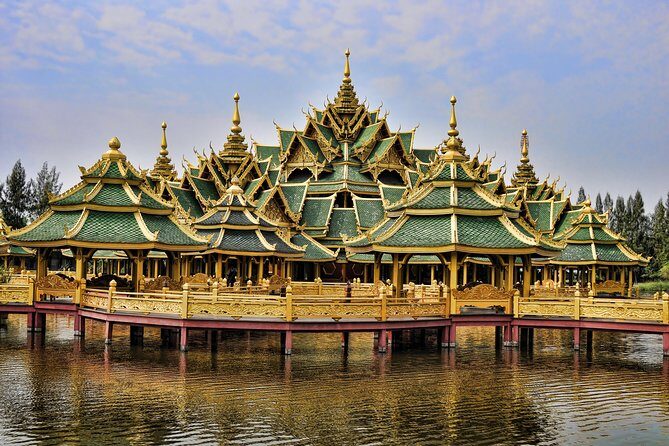
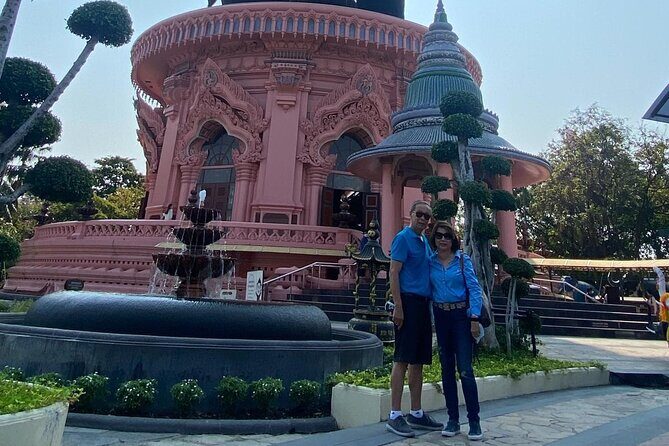
Ancient City isn’t a museum in the usual sense. It’s an outdoor world map of Thai culture, built so the country’s famous buildings are spread across one massive property. The key idea is scale: the replicas are reduced to about one-third of the size of the originals, which makes it possible to see many major structures during a half-day instead of hopping cities.
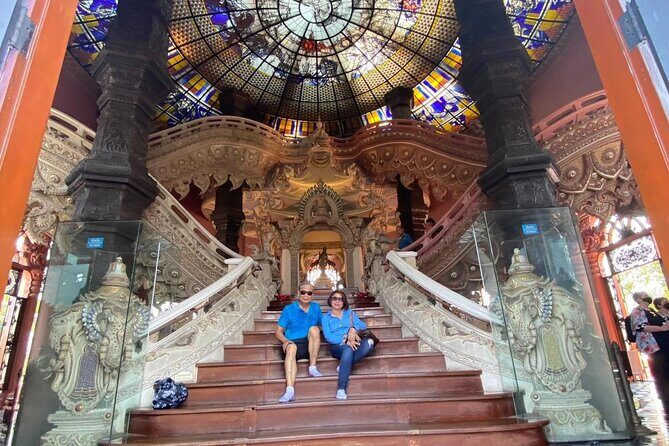
The site layout also changes how you understand architecture. Instead of reading descriptions or staring at photos, you’re walking through a version of Thailand where you can compare temple styles, palace layouts, and the look of historic ruins side by side. It’s a good way to get an overview of Thai history, culture, religion, and arts without needing a deep course first.
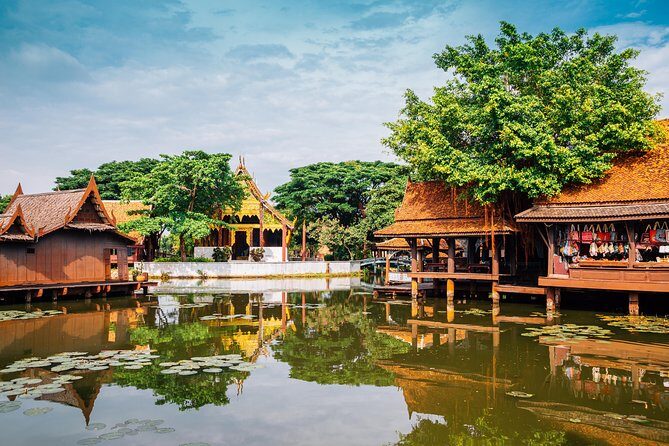
It also has a soothing vibe. Because it’s built outdoors and spread out, it doesn’t feel as crowded as you’d expect from a popular Bangkok attraction. You can slow down, step into courtyards, and pause to take in details without feeling like you’re in a line for the next thing.
You can also read our reviews of more tours and experiences in Bangkok



Getting there the easy way: hotel transfer that protects your schedule
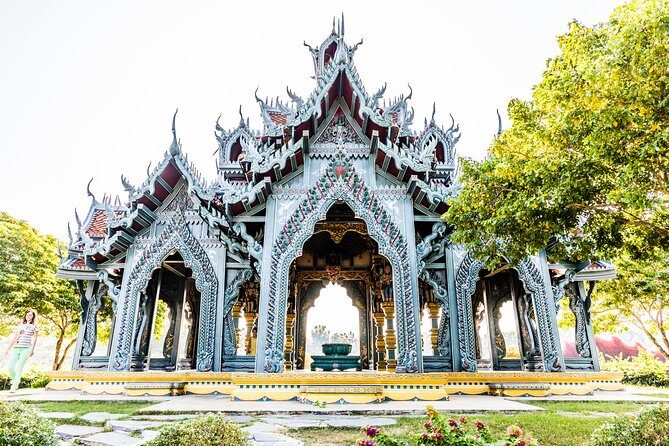
This ticket package is designed to reduce friction. You prebook your admission, and you get round-trip hotel transfer between Bangkok and Muang Boran. That matters because travel time in Bangkok can turn into a surprise tax on your day, especially when you’re trying to fit multiple activities.
Instead of navigating on your own, you start with pickup and a direct trip. That’s a big deal for a 4–5 hour experience. You don’t want half your time used on logistics, then arrive already tired.
The reviews also point to a practical strength: some drivers help you sort things quickly on arrival, including arranging entry smoothly. That’s the kind of small service that keeps your day from feeling technical or stressful.
Still, plan for the one potential rough edge. Since no tour guide is included, you might find yourself needing to communicate basics with your driver. One review mentioned a driver who didn’t know English, and that’s a good reminder: keep your expectations focused on transfer help, not guided interpretation. Once you’re on-site, the audio guide becomes your main context tool.
On the grounds: managing 100 hectares with tram and bike options
Muang Boran is huge. The site is about 240 acres (100 hectares), so “just walking” can turn into a long, sweaty slog if you don’t shape your route. The good news is the place is built for movement. You can get around using the tram shuttle and you can also rent bikes to cover distance more comfortably.
This is where value shows up for you. The architecture is spread out, but you’re not locked into one slow path. You can jump between clusters, slow down in the zones you care about, and still finish within a typical half-day window.
Here’s a practical way to think about it: plan to use the tram to connect major sections, then use bikes (or walking) for the areas where you want to linger. That combo usually works best for seeing more than one “wow” zone without exhausting yourself early.
Some visitors also rent golf carts for extra coverage, and you might see similar rental options while you’re there. If you’re the type who wants to cover the whole property efficiently, it’s worth asking what’s available on-site when you arrive, since the site itself is set up to support different ways of exploring.
Your visit flow: what happens once you arrive

Most of your time happens at the single stop: Ancient City. The experience is built around arriving, entering, and then exploring the different recreated Thai landmarks at your own pace.
You’ll typically want to think in loops. The site is organized so you can visit multiple categories—temples, palaces, ruins—without having to backtrack endlessly. The goal is a “Thailand in one day” feeling: you walk through a compressed overview of the country’s important historic architecture.
If you’re using the tram, start by getting oriented first. Use the first tram rides to orient yourself to where the clusters are, then commit to one or two areas where you want to slow down. If you start by walking straight in without a plan, it’s easy to burn time on the closest zones and then realize you skipped other highlights farther out.
Time-wise, plan for 4 to 5 hours. That’s enough to enjoy several buildings and still take breaks. It’s also short enough that you shouldn’t try to treat it like a full-day marathon unless you truly love architecture.
One more practical note: the experience calls for moderate physical fitness. That doesn’t mean it’s a strenuous hike, but you should be ready for walking, outdoor paths, and navigating a large property.
What you’ll be seeing: miniatures that still feel real
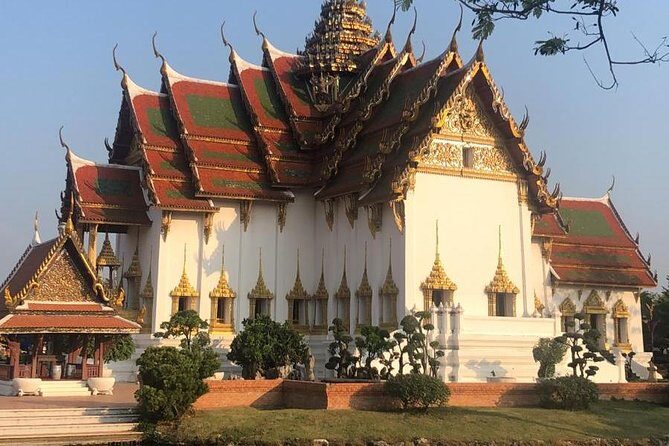
The museum’s central concept is simple and clever. The whole site is shaped like Thailand, and the buildings are replicas scaled down to about a third of the original. That means you can experience the layout of Thai history and architecture like it’s a map.
As you move through the grounds, you’re looking at a mix of:
- Temples with recognizable religious architecture
- Palaces that show royal-style layout and grandeur
- Ruins of ancient cities that give you a sense of decay and historical layers
- Other key landmarks that help connect different regions and styles
The benefit for you is perspective. You start to notice patterns—how roofs curve, how courtyards are structured, how certain building forms show up across different areas. Even if your goal is just “see as much as possible,” the site’s layout helps those visual connections stick.
The audio guide helps here. Since no guide is included, the 5-language audio support is your main way to attach meaning to what you’re looking at. Use it like a companion: listen in the zone you’re standing in, not later. That timing makes a bigger difference than people expect.
You can also read our reviews of more city tours in Bangkok





Audio guide and language support: using context without a live guide
This experience includes a 5-language audio guide. That’s important because the package doesn’t include a tour guide, so you’re not getting someone’s commentary in real time.
You’ll get more out of the audio guide if you treat it like a route tool:
- Put it on when you reach a landmark cluster
- Pause at key viewpoints before moving on
- Follow the order of audio sections in the same area rather than skipping around
If your driver’s English is limited, this becomes even more valuable. Instead of relying on quick explanations during pickup, you can concentrate on understanding the buildings once you’re on-site, where the content support is built in.
Food, breaks, and the half-day reality
Food and beverages are not included. That means you’ll want to plan for water and snacks in your schedule. Since you’re usually out for 4 to 5 hours, hunger and thirst can creep up faster than you expect on a large outdoor property.
Because this is an open-air site, your breaks are part of the experience. You’re not trapped inside a single building. You’ll naturally stop for photos, rest in shaded areas, and take time in courtyards and open spaces between clusters.
A good strategy is to build one planned pause into your route. Pick a moment around the middle of your visit when you’ve already seen enough to feel oriented, then take a longer break before you go back out to finish the remaining zones.
Price and value: is $47 a good deal for Muang Boran?
At $47 per person, this ticket-and-transfer package can be good value, mainly because it bundles the hard part: getting to and from a far-reaching outdoor attraction in Bangkok. If you’ve ever tried to line up transport on your own and match it to a timed day, you know how quickly costs and stress add up.
Here’s what you get that usually drives the price:
- Entrance fee included
- Transfers between your Bangkok hotel and Ancient City
- The on-site experience tools like tram access and bike hire options
- An audio guide in 5 languages
What you don’t get:
- A tour guide
- Private buggy or tram (those are listed as not included)
- Food and beverages
So the question becomes: are you comfortable exploring on your own with audio support? If yes, the price looks fair. If you want a live guide to explain history, tell you what to prioritize, and keep timing tight, you may feel less satisfied with what’s included.
Also keep in mind the site is about half a day. This isn’t a one-hour stop where ticket cost feels trivial. It’s a real chunk of time, so you’ll want to show up with a plan to see at least a few major categories—temples, palaces, and ruins—rather than drifting randomly.
Who this fits best (and who should rethink it)
This tour fits you best if you want:
- An easy day out with hotel transfer
- A big-picture overview of Thai architecture in one place
- Freedom to move by tram or bike
- Context support through an audio guide rather than a live guide
It’s also a solid choice if you’re traveling with someone who likes structure but doesn’t want constant group marching. You’re not stuck in a rigid script once you’re inside.
Where it may not fit as well:
- If you really want a history specialist guiding you point-by-point, you’ll be missing that since a tour guide isn’t included
- If language barriers worry you, your best backup is the 5-language audio guide once you’re on-site
The moderate physical fitness requirement also matters. You don’t need to be an athlete, but you should be ready for outdoors walking across a large site.
Should you book Ancient City tickets with hotel transfer?
I’d book it if you want the simplest route to a half-day highlight: admission plus round-trip hotel transfer, then self-paced exploring inside a huge open-air Thailand replica. The value comes from removing Bangkok logistics so you can use your time where it counts—at the landmarks.
I’d hesitate if you’re the type who needs a live guide to make sense of history, because you’re going to rely on the audio guide and your own choices. In that case, consider pairing your visit with extra guidance elsewhere, or go only if you’re excited to read/listen your way through the buildings on your own.
If you like independence, plan a loop, use the tram to connect zones, and let the audio guide do the talking, Muang Boran is one of the more memorable ways to get an overview of Thai architecture without spending an entire day crisscrossing the city.
FAQ
How long does the Ancient City visit take?
The total experience time is about 4 to 5 hours.
What does the ticket include?
Your package includes the entrance fee, all tax and service charges, and transfer service between your Bangkok hotel and Ancient City.
Are hotel transfers one-way or round-trip?
The included information lists 2-way transfer from your hotel to Ancient City.
Is a tour guide included?
No, a tour guide is not included in this experience.
How do I get around once I’m inside Ancient City?
You can get around the site using the tram shuttle and by rental bikes.
Do I get an audio guide?
Yes. The experience includes a 5-language audio guide.
Is food included?
No. Food and beverages are not included.