REVIEW · BANGKOK
Bangkok Cooking Class : Traditional Thai dishes&Market Trip
Book on GetYourGuide →Operated by Sala Thai BKK · Bookable on GetYourGuide
One great meal starts with a market. This Bangkok experience pairs a local ingredient hunt with hands-on cooking, taught in English by Pat, plus a truck taxi or tuk-tuk ride that makes the whole thing feel like real life in Thailand. I like how you learn practical Thai food habits, not just recipes, and you get a takeaway recipe book so you can recreate it later.
Two big things I like: you cook 4 Thai dishes and 1 drink in one session, and the market stop is guided enough that you learn how to talk and shop for ingredients. One thing to consider is that the day is active and involves walking (with Thai traffic timing), so comfortable shoes and a little stamina help.
Key Highlights at a Glance
- Market trip with guided Thai buying tips, including simple Thai phrases
- Truck taxi or tuk-tuk ride that adds a fun, local texture
- Cook 4 dishes and 1 drink in a small group (up to 8)
- Fresh Thai ingredients used for flavor and technique (like lemongrass, kaffir lime leaves, pandan)
- Take home a recipe book and learn how to adapt dishes to ingredients at home
- Dietary options available: vegetarian, vegan, Halal, Kosher (tell them in advance)
In This Review
- A 3-Hour Bangkok Market-and-Cook Session That Feels Practical
- Finding Sala Thai BKK in Thonburi: The Meeting Point Tip That Matters
- Truck Taxi or Tuk Tuk to the Market: Learning Thai Shopping Skills
- In the Kitchen with Pat: How You Cook 4 Dishes and a Drink
- What You Actually Eat: Flavors, Portion Sense, and Spice Control
- Ingredients You Learn to Spot: From Kaffir Lime to Blue Pea Flower
- Vegetarian, Vegan, Halal, and Kosher Options Without Guesswork
- Price and Value at $38: What Makes It Feel Worth It
- Who This Cooking Class Suits Best (And Who Should Skip It)
- Should You Book This Bangkok Cooking Class
- FAQ
- How long is the Bangkok cooking class and market trip?
- What’s included in the price?
- Do you have to get to the meeting point on your own?
- Is the instructor English speaking?
- Can the class accommodate vegetarian, vegan, Halal, or Kosher diets?
- What should I bring to the class?
A 3-Hour Bangkok Market-and-Cook Session That Feels Practical
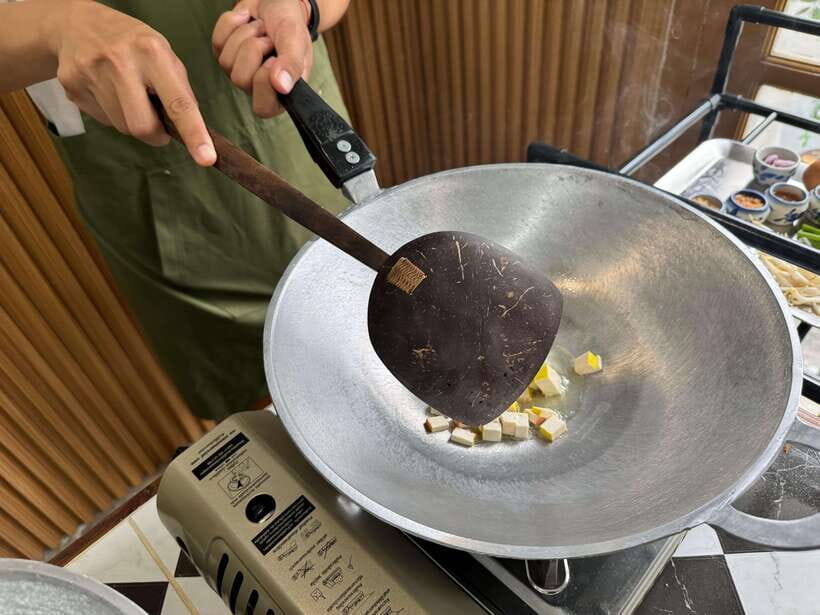
This isn’t one of those cooking classes where you watch someone else do the work. The focus here is hands-on: you go to a local market with your instructor, then you cook four Thai dishes plus a drink back at the studio. It’s short enough to fit into a city itinerary, but long enough that you actually finish meals, not just “taste samples.”
You also get more than food skills. The market portion is where the experience turns useful: you learn how to choose ingredients and how to interact while you’re buying them. One review notes that you even learn how to adapt recipes to the ingredients you’ll find at home, which is the difference between memorizing a dish and understanding how it’s built.
The class runs about 3 hours, and you can pick a morning, afternoon, or evening slot based on your schedule. Since the instructor is in English and keeps groups small (limited to 8 participants), you can ask questions without feeling rushed.
Finding Sala Thai BKK in Thonburi: The Meeting Point Tip That Matters
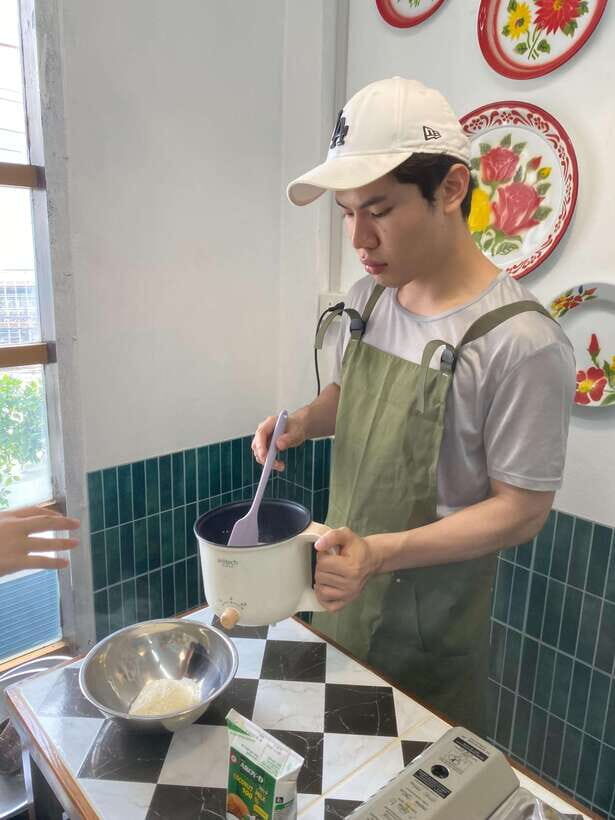
The meeting point is in Thonburi, not downtown. That’s not a problem, but it does mean you should pay attention to the directions and arrive on time.
If you’re walking from BTS Krung Thonburi exit 2, or arriving by car, the instructions are specific: enter Thonburi 5 Alley, then turn into Thonburi 7 Alley. Thonburi 7 is narrow and one way, so using the suggested route helps you avoid stress. If you’re walking from the pier, you can walk into Thonburi 7.
Look for the white building with a dark brown door in the middle of the area. It’s the kind of detail that’s easy to miss if you’re in a hurry, so I’d treat arriving 10–15 minutes early as part of your success plan.
Good to know: transportation to the meeting point is on you. Once the class starts, the market ride is part of the experience.
You can also read our reviews of more shopping tours in Bangkok



Truck Taxi or Tuk Tuk to the Market: Learning Thai Shopping Skills
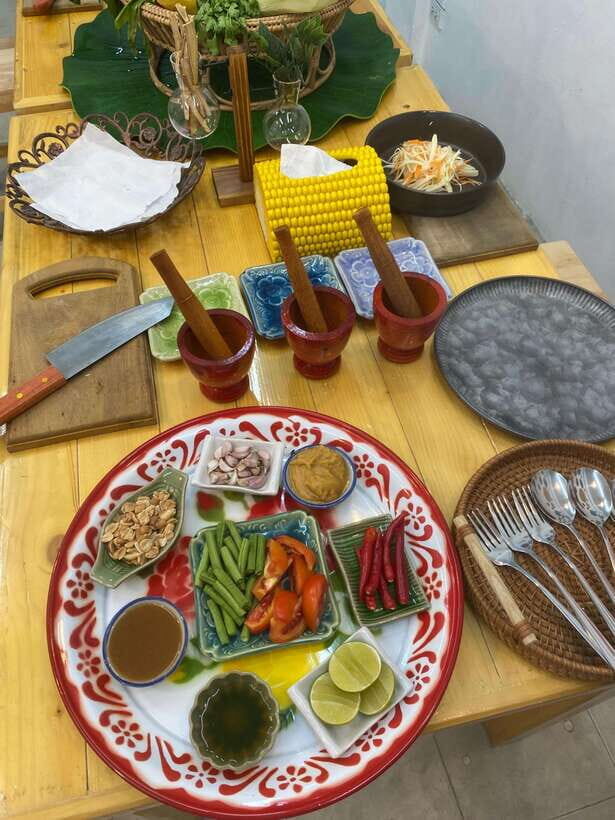
This is one of the best parts because it’s not only scenic. The ride to the market (by truck taxi or tuk-tuk, depending on the day) gives you a fast intro to how locals move around the city.
Then comes the real value: the market visit is guided, and you’re taught how to interact. Multiple reviews mention learning basic Thai phrases for buying ingredients. That’s huge if you’ve ever felt stuck pointing at things and hoping for the best. Here, you get support while you shop, so you can actually learn what you need and why.
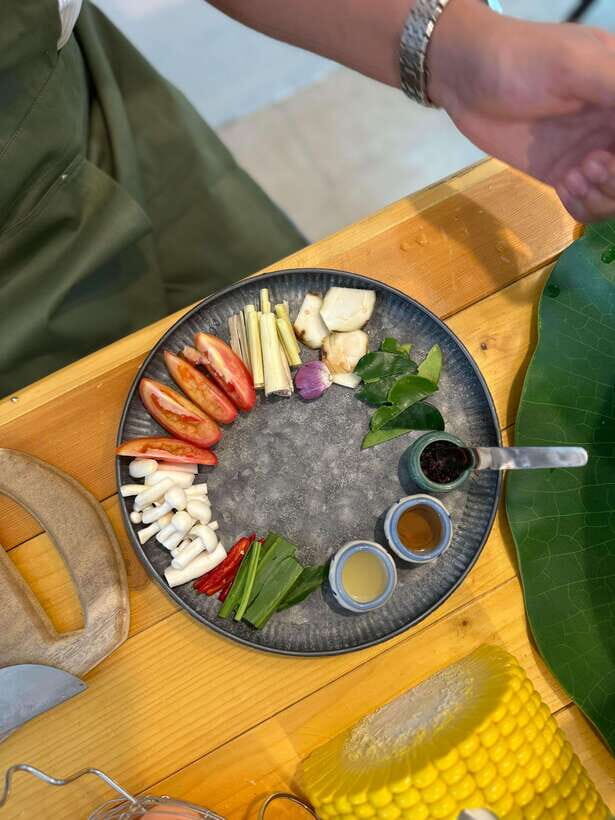
You also get a sense of what Thai cooking relies on. One review calls out ingredients like kaffir lime leaves, pandan, lemongrass, and blue pea flower used for coloring sticky rice. When you see these ingredients up close, it becomes easier to understand why Thai flavors taste so specific, even when you try to recreate them later.
A quick reality check: markets can be busy and you’ll be walking. Wear comfortable clothes and comfortable shoes, and bring water and insect repellent. If you’re heat-sensitive, a sun hat helps.
In the Kitchen with Pat: How You Cook 4 Dishes and a Drink
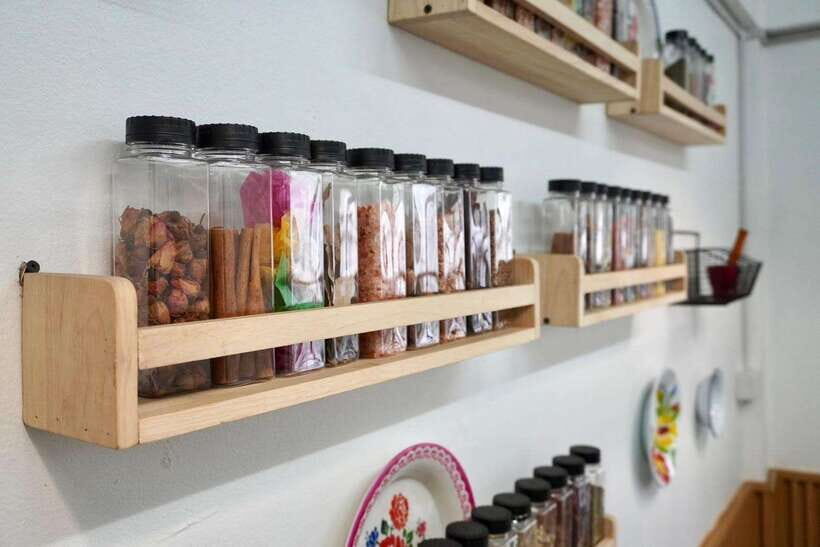
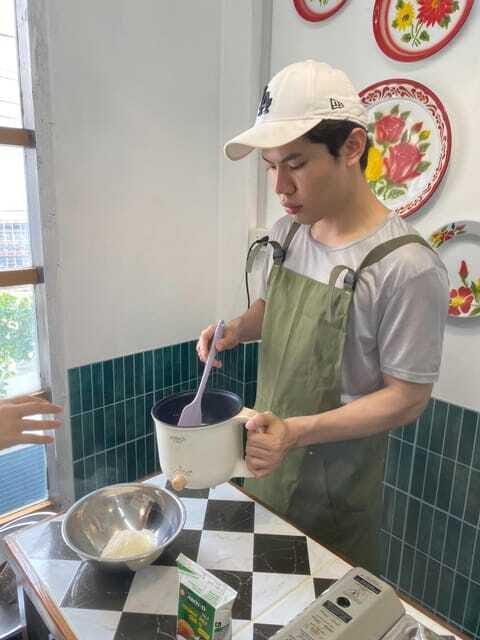
Back at the studio, the lesson turns into active cooking. The class is structured so you can make four courses (the four dishes) plus one drink, with an English-speaking instructor and plenty of guidance.
Pat is the name that shows up again and again in the reviews, often described as patient and engaging. You’re not just handed a list of steps. You get explanations of what each dish is about and how to build flavor in a Thai way. One review specifically praises instruction that includes Thai cuisine culture and even where foods originate.
Here’s what you might cook, based on the dishes mentioned across different sessions:
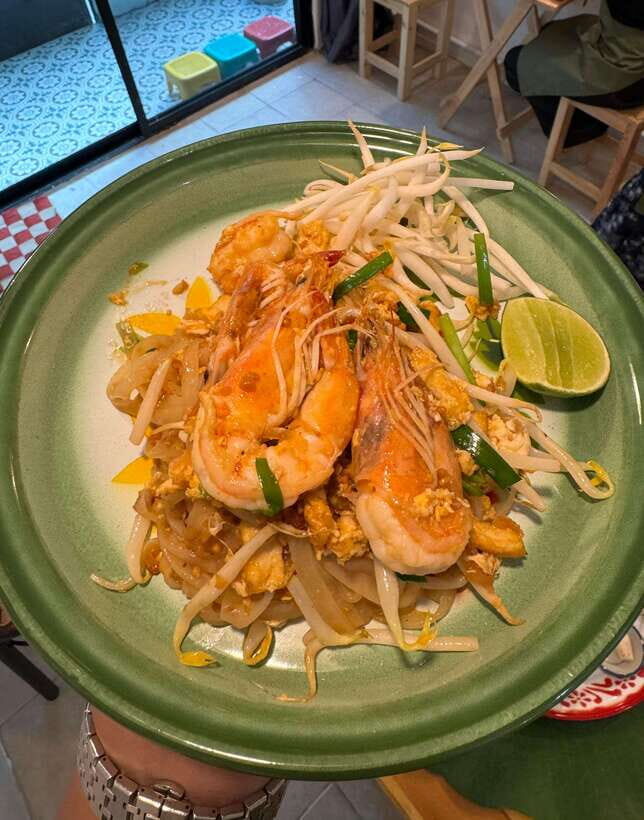
- Pad Thai (a classic stir-fry you can actually learn to balance at home)
- Massaman curry (a milder, richer style that teaches curry building)
- Green curry (which tends to be a great way to learn herb-forward Thai flavor)
- Mango sticky rice (dessert technique and sweet balance)
- Thai tea (the drink component that makes the session feel complete)
The key point isn’t the exact menu. It’s that the class gives you technique you can reuse: how Thai herbs and aromatics work together, how to manage sauce and seasoning, and how to adjust to your spice preferences.
Most importantly, you get to eat what you make, which is both satisfying and practical. It helps you notice what the dish should taste like before you try to reproduce it at home.
What You Actually Eat: Flavors, Portion Sense, and Spice Control
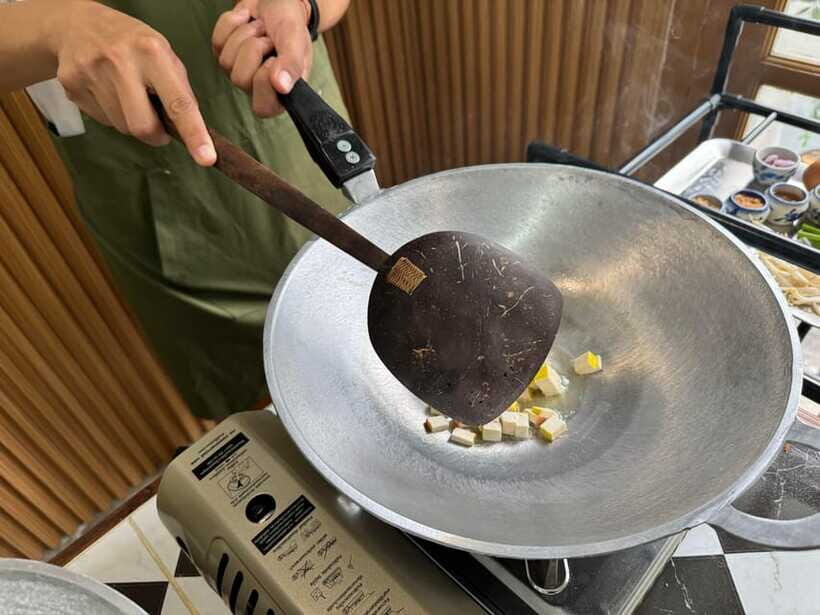
The class includes dining in the venue, and you’ll eat the dishes you cook as part of the experience. That matters because Thai food is about balance. If you only cook and don’t taste, you don’t learn the corrections.
In at least one review, the instructor tailored cooking to a vegetarian guest and adjusted for spice level. That’s a big win for beginners because Thai cooking can feel intense if you’re used to milder flavors. You should plan to tell the instructor about your spice tolerance and dietary needs up front so the class can work for you.
The studio also provides free drinks in class, plus you’ll make your own drink as one of the included items. If you like having a full meal experience rather than a snack-style class, this format fits.
One extra detail that pops up in reviews: some groups receive small take-home items like chopsticks alongside the recipe book. Even if it varies by session, the takeaway materials are consistent—your recipe book is included.
Ingredients You Learn to Spot: From Kaffir Lime to Blue Pea Flower
Thai cooking has a reputation for being hard to replicate abroad, mostly because ingredients are unfamiliar. This is why the market stop earns its place.
When you shop with guidance, you learn what to look for and how those ingredients behave in Thai dishes. The market portion helps you understand what’s essential and what you can substitute later. One review highlights that the host explains how to adapt Thai recipes with ingredients you can find at home, which is exactly what most of us need after returning from Bangkok.
You’ll hear about ingredients that shape flavor and texture, including:
- Kaffir lime leaves for a distinct citrus perfume
- Lemongrass for bright, aromatic depth
- Pandan for aroma and dessert character
- Blue pea flower for natural color in sticky rice
If you’ve never cooked with Thai herbs before, you’ll leave with more confidence. And if you’ve tried cooking Thai at home already, the market experience helps you spot the difference between “close enough” and the real thing.
You can also read our reviews of more tours and experiences in Bangkok




Vegetarian, Vegan, Halal, and Kosher Options Without Guesswork
The class lists dietary accommodations, including vegetarian, vegan, Halal, and Kosher options. The important part is that you should inform them in advance about restrictions, so they can guide your shopping and adjust your cooking.
This is also why the small group format helps. With fewer participants, the instructor can manage substitutions and still keep the class moving smoothly.
If you have allergies, the activity notes that it isn’t suitable for people with food allergies. If that’s your situation, I’d treat the class as a no-go unless you can confirm details directly with the provider.
Price and Value at $38: What Makes It Feel Worth It
At $38 per person for around 3 hours, the price feels fair for a Bangkok activity that includes both education and actual meal production.
Here’s what’s wrapped into the value:
- Market trip (plus a truck taxi or tuk-tuk ride)
- Instruction in English
- Cooking 4 dishes and 1 drink
- Free drinks during class
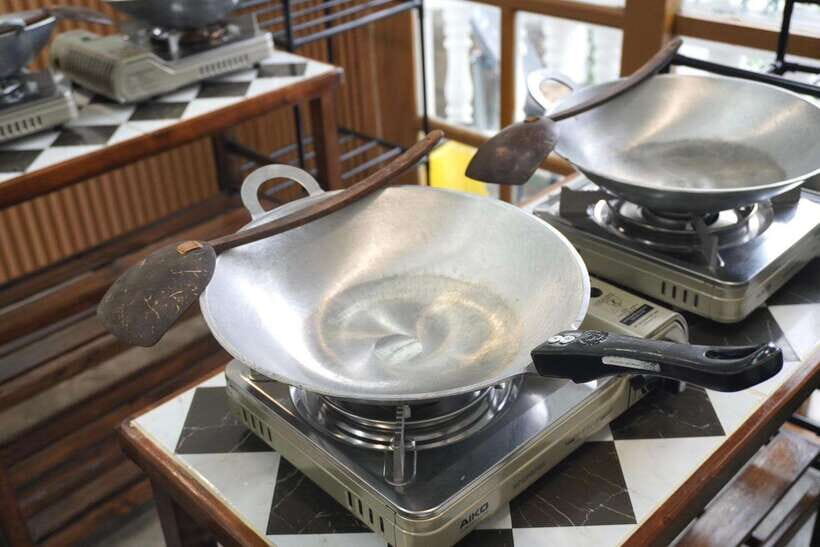
- Ingredients, kitchen equipment, and an apron for use in class
- Dining at the venue
- A take-home recipe book
The “value” angle isn’t just the math. It’s what you walk away with: you learn how to buy ingredients, cook multiple dishes, and take home a reference. Many cooking classes in major cities give you one dish and a nice story. This one aims for a full learning cycle.
If you want a Bangkok highlight that isn’t only about photos, this is one of those experiences that turns into real-world skill. Reviews also repeatedly call out the fun energy of the instructors, which matters because a good class feels easy to participate in.
Who This Cooking Class Suits Best (And Who Should Skip It)
This experience is great if you:
- Want hands-on cooking skills, not watching
- Like the idea of a market visit and learning how to shop for Thai ingredients
- Prefer a small group (up to 8)
- Are excited to cook classic Thai dishes and take recipes home
It’s less suitable if you’re:
- Traveling with kids under 10
- Using a wheelchair (not suitable)
- Over 60 (listed as not suitable for people over 60)
- Visually impaired (not suitable per the activity info)
- Sensitive to altitude and related conditions (listed as not suitable for altitude sickness)
- Dealing with food allergies (listed as not suitable)
The practical part: the class involves walking and active cooking steps, so you’ll want comfortable clothes and shoes.
Should You Book This Bangkok Cooking Class
I’d book it if you want a Bangkok experience that mixes culture and real skills in the same afternoon. The combination of guided market shopping plus cooking four dishes and a drink is a strong ratio for your time.
Book it especially if you’re the type of traveler who likes to understand why food tastes the way it does, not just collect recipes. And if you’re going to spend days hunting street food but not learning how to recreate it, this is one of the few activities that bridges the gap.
Skip it if you have strict needs around allergies, mobility, or accessibility. For most people, though, this is a fun, structured way to leave Bangkok with full bellies and a cookbook that actually helps.
FAQ
How long is the Bangkok cooking class and market trip?
The experience runs for about 3 hours.
What’s included in the price?
It includes the market trip, cooking lessons for 4 courses and 1 drink, free drinks in class, ingredients and equipment, an apron for use during class, dining at the venue, and a recipe book.
Do you have to get to the meeting point on your own?
Yes. Transportation to the meeting point is not included.
Is the instructor English speaking?
Yes, the instructor speaks English.
Can the class accommodate vegetarian, vegan, Halal, or Kosher diets?
Yes, vegetarian, vegan, Halal, and Kosher options are available. You should inform the provider in advance about dietary restrictions.
What should I bring to the class?
Bring comfortable shoes, a sun hat, a camera, water, comfortable clothes, insect repellent, and cash.