REVIEW · BANGKOK
Bangkok: Chao Phraya River Hop-on Hop-off Boat
Book on GetYourGuide →Operated by Chao Phraya Tourist Boat · Bookable on GetYourGuide
The river makes Bangkok easy. I like how this Chao Phraya hop-on hop-off ride keeps you out of traffic while the breeze and river views do the work. You can also aim your photos at famous highlights like Wat Arun without wrestling with streets.
I especially love the practical value: a single all-day ticket gets you access to 11 piers along the route. The boats run frequently (about every half hour), so you spend less time waiting and more time moving between sights.
One thing to plan for: the experience is largely self-guided, with a booklet rather than onboard narration. If you’re not used to Bangkok pier names and boarding spots, signage and timing can feel confusing at first.
In This Review
- Key things that make this river boat pass worth it
- Why the Chao Phraya hop-on boat is an easy win
- How the 11-pier route helps you plan smarter
- A realistic game plan for a 1-day pass
- Timing and frequency: what the 9:00 to 7:15 window means
- Where you start: finding the red ticket booth and boarding fast
- Onboard comfort: decks for views, air-con for survival
- What’s included, what isn’t, and how to budget
- Stop-by-stop: how to use each pier for better sightseeing
- Sathorn pier: a strong starting end
- Iconsiam: a built-in break from Bangkok heat
- Ratchawongse and Rajinee: mid-route hop points
- Wat Arun: the stop you’ll likely plan around
- Tha Chang and Tha Maharaj: riverfront temple-area access
- Prannok: a useful stretch for continuing your route
- Phra Arthit: a strong way to reach the river vibe
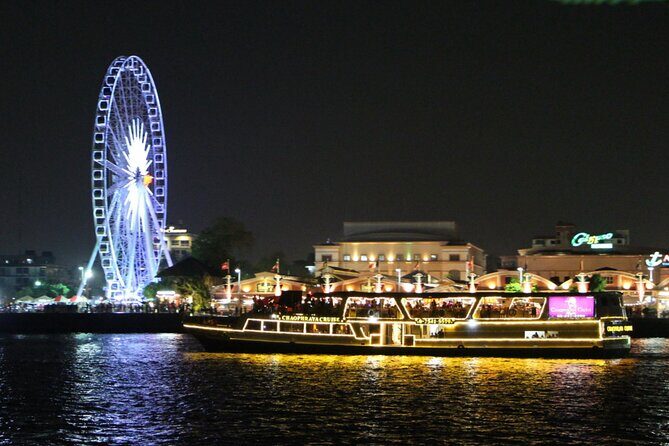
- Asiatique pier in the evening: why the extension is worth it
- Getting around without traffic: the real advantage
- The one catch: navigating boarding and guidance
- Value check: is it really worth about $4.82?
- Weather, crowds, and common planning hiccups
- Who should book this river boat pass
- Should you book this Bangkok river hop-on pass?
- FAQ
- What is included in the Bangkok Chao Phraya hop-on hop-off boat ticket?
- What is not included in the price?
- How long is the ticket valid?
- What are the operating hours?
- How often do boats arrive?
- Where do I meet for the boat?
- Are piers sometimes closed?
- Does it include a guide or narration?
- Can I cancel and get a refund?
- Is it wheelchair accessible?
Key things that make this river boat pass worth it
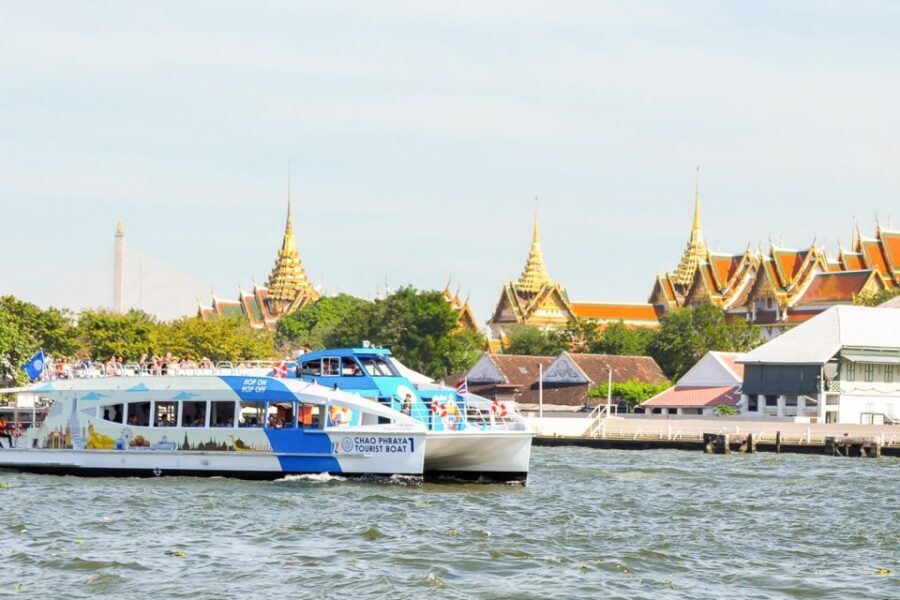
- 11-pier coverage along the Chao Phraya makes temple-hopping and neighborhood-hopping simple
- Frequent service means you’re unlikely to wait more than about half an hour
- Day-to-night flexibility includes an evening extension to Asiatique pier
- Panoramic deck views plus breezes that beat hot bus rides
- Booklet-based info instead of full audio or a structured tour
Why the Chao Phraya hop-on boat is an easy win
Bangkok can be exhausting. You’ve got heat, noise, and traffic that seems to grow the longer you sit in it. This boat pass solves a big chunk of the problem by turning your day into a smooth river route where you choose when to stop.
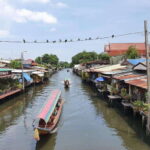
The first payoff is the feel of being on the water. When you sit upstairs, you get open-air views and a better angle on the skyline than you’ll get from most roads. It’s also just cooler. Even when Bangkok is doing its best to steam everything, the river wind helps.
The second payoff is control. You’re not locked into one guided timeline. You can hop at the piers that match your priorities, then continue when you’re ready. That freedom matters in a city where plans change mid-day.
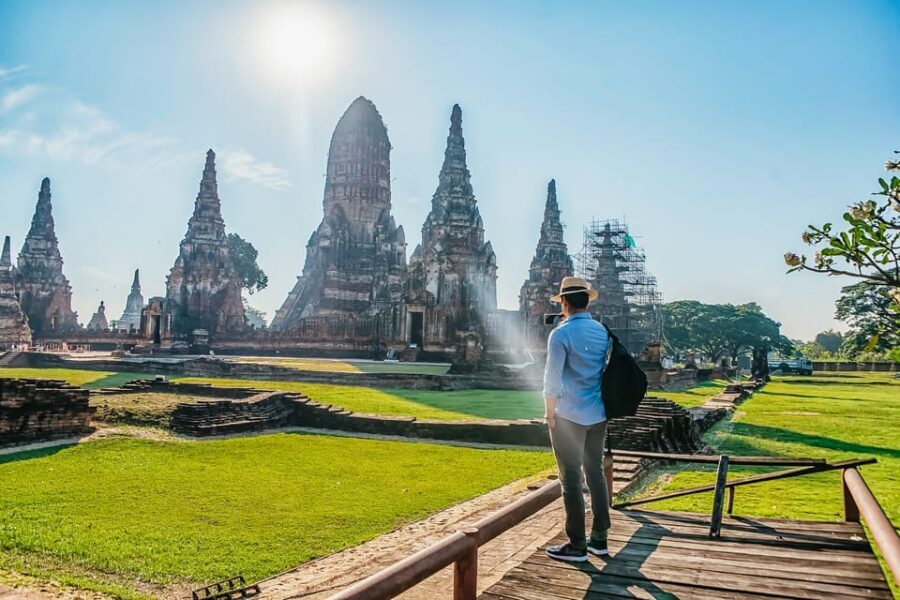
And yes, it’s good for the headline sights. The route is designed to give you simple access to major river temples and landmarks, including the Grand Palace area (via the nearby river stops) and Wat Arun.
You can also read our reviews of more boat tours in Bangkok


How the 11-pier route helps you plan smarter
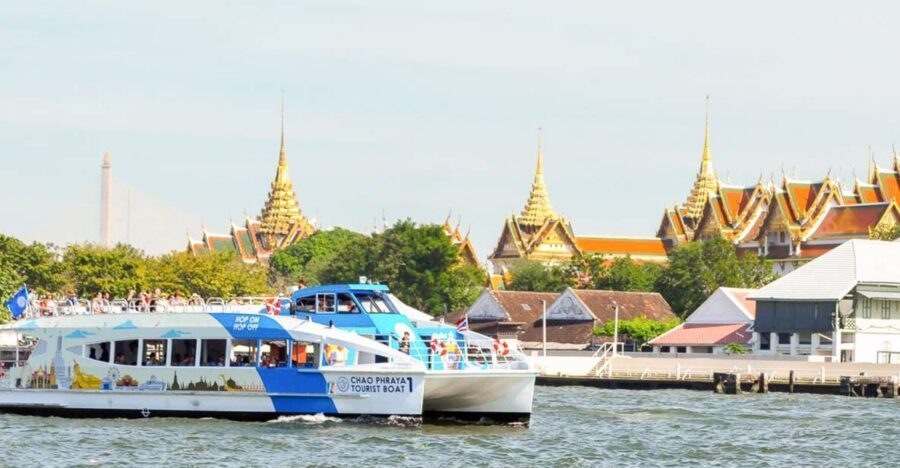
The route covers 11 piers on the Chao Phraya line, with well-known stops spaced so you can hop off close to the action and keep moving. Your named stops include Sathorn, Iconsiam, Ratchawongse, Rajinee, Wat Arun, Tha Chang, Tha Maharaj, Prannok, and Phra Arthit. An evening extension adds Asiatique pier.
Here’s the practical angle: these piers are like a shortcut layer between Bangkok’s districts. Instead of trying to time buses or waiting for taxis at peak hours, you rely on the boat’s rhythm. Once you accept that you’re traveling by river, everything gets easier.
It also helps that the service is frequent. When boats show up about every 30 minutes, you can plan your hops around your energy level instead of around a rigid schedule. If you want to slow down, you can. If you want to sprint between landmarks, you can do that too.
A realistic game plan for a 1-day pass
Because you have all-day validity, you can build a day that matches Bangkok’s mood:
- Morning: hop to temple-heavy river areas before it gets too hot
- Midday: use Iconsiam as a convenient break if you want air-conditioned time
- Afternoon: continue along the river, switching piers based on what you want to see next
- Evening: keep the pass going for the extension to Asiatique pier and the night riverside vibe
This kind of flow keeps you from burning your best hours on transit.
Timing and frequency: what the 9:00 to 7:15 window means
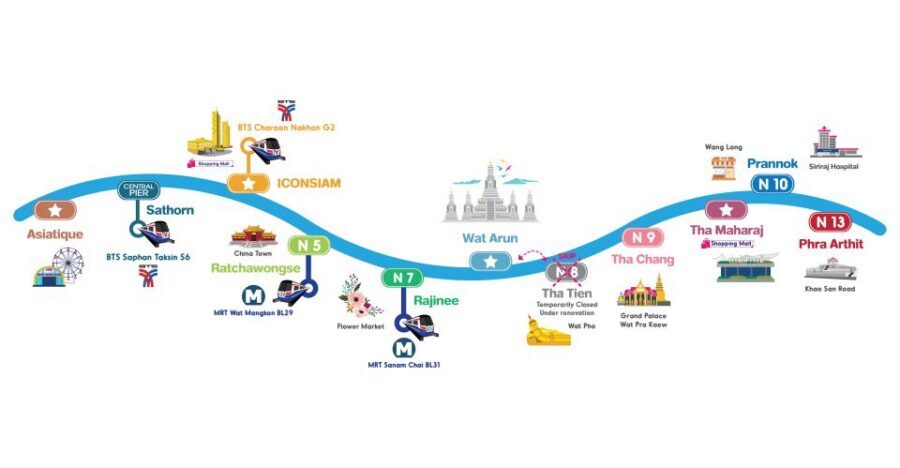
The boat service runs from 9:00 AM to 7:15 PM, with an evening extension that includes a stop at Asiatique pier. That matters because you’re not limited to daytime sightseeing.
The most important detail for planning is the departure interval. Boats arrive around every half hour, and the service is set up so you’re not stuck waiting long. In plain terms: you can hop off, explore, and get back on without constantly checking the clock.
Still, Bangkok loves surprises—weather, pier access, and renovations can change what you can use in a given moment. The route notes mention that piers may close for renovation, so it’s smart to be flexible about which pier you use if you show up and find an area shut down.
Where you start: finding the red ticket booth and boarding fast
You don’t have to stress about one fixed meeting point. You can come to any pier on the route, or start at the Chao Phraya Tourist Boat Sathorn Pier.
Look for the red ticket booth or staff wearing red shirts. This is one of those small details that makes the whole day smoother, especially when you’re stepping off BTS lines and trying to find the river quickly.
One more practical tip: keep an eye on route color signage. There’s at least one report that the boat color on site didn’t match a wayfinding reference. So don’t rely on memory—follow the pier signs and staff directions.




Onboard comfort: decks for views, air-con for survival
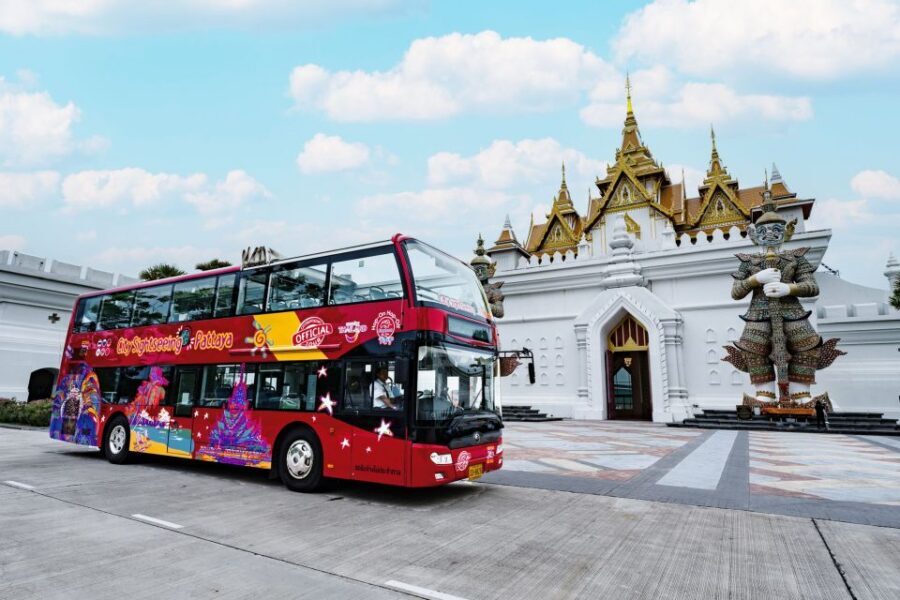
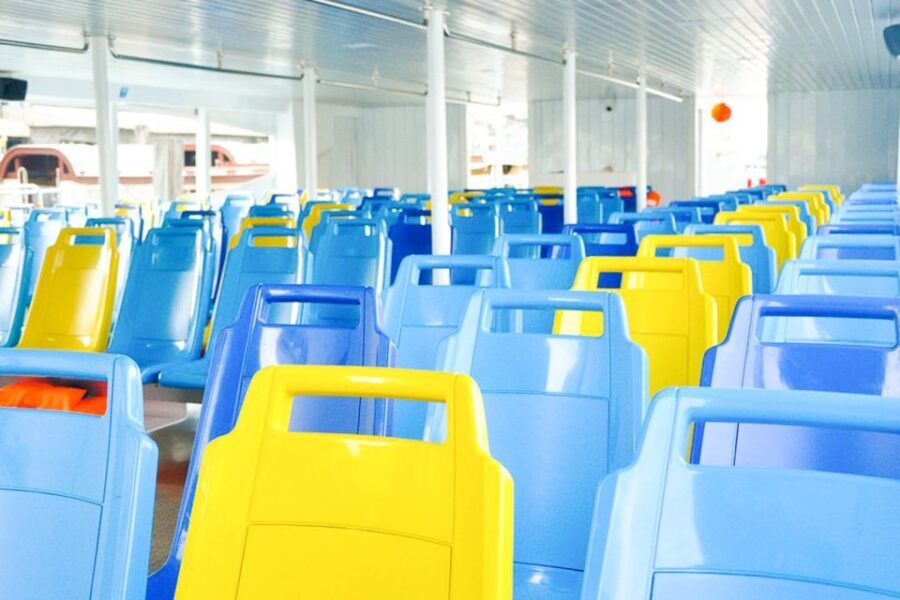
This is a river cruise first, transport second, so how you ride matters. The double-decker setup gives you options.
- Upstairs is your best bet for panoramic views and skyline shots.
- Downstairs can be a lifesaver if the day turns hot and humid, since there can be air-conditioned space.
Even if you’re not a photo person, the ability to switch between open deck time and indoor break time is a big deal. It helps you stay out longer without feeling wrecked.
Also, bring the basic river-ride common sense: protect your phone (sun glare and stray water happen), and consider a light layer if you’re sensitive to cooler air indoors.
What’s included, what isn’t, and how to budget
This ticket is designed to be simple:
Included:
- Hop-on hop-off boat ticket
- Travel guide booklet
Not included:
- Entrance fees
- Food and drinks
- Hotel pickup and drop-off
So think of the pass as your transportation + orientation tool, not as a full “see everything” package with entrances handled. The booklet can help you understand what to do at each stop, but you’ll still pay temple entry fees if the sites require them.
In terms of budgeting, the value is strongest if you actually use the pass repeatedly. Since the route links many piers, it’s easy to get multiple meaningful hop-offs in one day. One review-style takeaway from the experience is that it’s worth it when you ride it several times—not just once.
Stop-by-stop: how to use each pier for better sightseeing
Since the route is hop-on hop-off, the best way to think about the piers is as “access points.” You’re choosing where to start walking from, where to pause, and where to re-board later.
Sathorn pier: a strong starting end
If you’re beginning your day on the river side near Sathorn, you’re set up to head through the most tourist-dense stretches without wasting time on road traffic. It’s a practical launch point if you want your morning to be about movement, not searching.
Iconsiam: a built-in break from Bangkok heat
Iconsiam is one of the most useful stops because it can function as a daytime reset. Reports specifically note an indoor mall stop, which means you can cool off, recharge, and grab food without turning your whole day into a sprint between outdoors.
If you’re visiting in the hottest months, you’ll appreciate having one place on the route where you can duck inside.
Ratchawongse and Rajinee: mid-route hop points
These piers are helpful when you want to reduce walking between neighborhoods and temples. They’re also useful if you decide you don’t want to do one long hike from a single location.
Because the experience is self-paced, these mid-route stops let you adjust on the fly. You might hop off, explore for an hour, and then re-board when you’re ready to keep traveling.
Wat Arun: the stop you’ll likely plan around
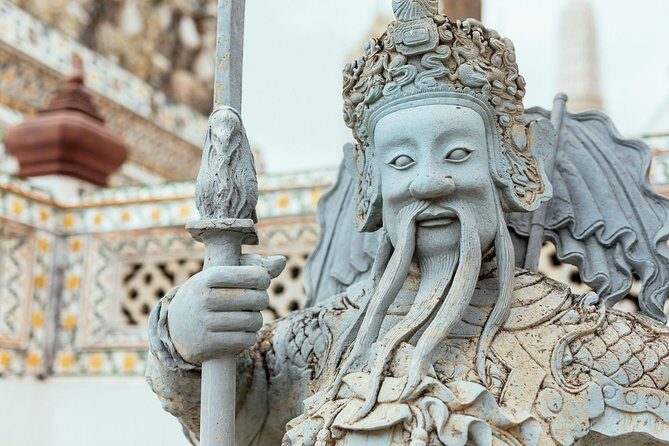
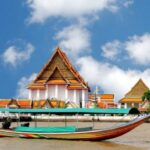
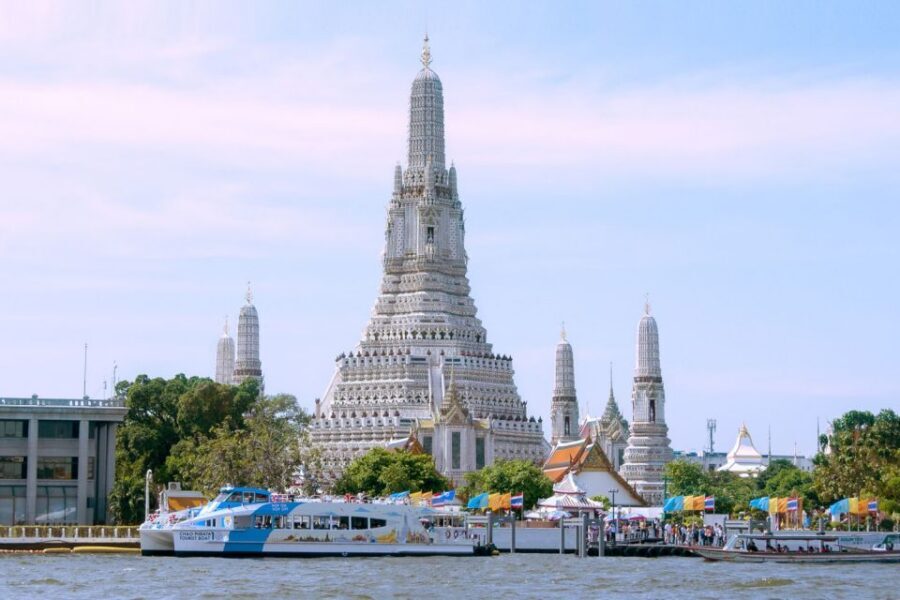
Wat Arun is the obvious temple priority on this list. Hop off here if you want that iconic riverside temple experience without using a road vehicle.
This is also a good example of why the hop-on pass is smart: the route gives you access, but you still get to choose how much time you spend on the ground.
Tha Chang and Tha Maharaj: riverfront temple-area access
Tha Chang and Tha Maharaj are two more piers that help you reach the central river temple zone efficiently. Using these stops can cut down the time you’d spend circling with taxis or feeling stuck in traffic.
A good approach is to hop to one of them, do your temple circuit, then hop again if you want to change perspective or reduce walking in the sun.
Prannok: a useful stretch for continuing your route
Prannok is part of the route that keeps you moving along the river corridor. It’s especially handy if you’re trying to keep your day flowing—hop, ride, hop again—rather than pinning everything on one single monument.
Phra Arthit: a strong way to reach the river vibe
Phra Arthit is another named stop that works well for continuing your sightseeing and positioning yourself for later views. If your plan includes finishing the day with city-light vibes, having a mid-to-late stop on this side helps.
Asiatique pier in the evening: why the extension is worth it
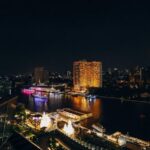
The evening extension adds a stop at Asiatique pier. This is where you can add a night element to what’s mostly a daytime sightseeing ride.
One practical reason to care: it gives you an easy way to keep using the pass when the heat drops. Reports also mention Asiatique as a fun option with things like a ferris wheel and quick bites once you’re docked.
Getting around without traffic: the real advantage
This boat ride isn’t just pretty. It’s time-saving.
If you’ve ever tried to move across Bangkok by car at busy hours, you know how quickly the day disappears. This pass keeps you moving by using the river as your main route, which cuts out a lot of road delay and taxi negotiation stress.
It’s also a confidence builder for first-time visitors. Once you’ve ridden the river a few times, you get your mental map of where things are relative to each other.
The one catch: navigating boarding and guidance
Most of the experience feels self-guided. Even though there’s a host/greeter available and there’s a booklet, you should expect that you won’t always get full narration or structured commentary.
Some departures may have staff who can answer questions, and there are named examples in the experience record like Tom, Aekapohl, and May. Still, don’t plan your day assuming you’ll get a detailed explanation at every stop.
If you’re someone who likes clear step-by-step guidance, read the booklet on the early hop and take 10 seconds to confirm where you’re getting off before you stand up and shuffle toward the exit.
Also, be aware that it can feel confusing at first where to board or offload. The good news: with frequent boats, you can recover. If you miss one, you won’t necessarily lose the whole day.
Value check: is it really worth about $4.82?
For about $4.82 per person, this pass is hard to beat if you’ll actually hop around. The math is simple: you’re buying one day of transport that can connect multiple major points along the river.
Where value spikes:
- You use it for several hop-offs (not just one or two)
- You’re visiting multiple river sites in a single day
- You’d otherwise spend time and energy coordinating taxis or rides between scattered locations
Where value can feel weaker:
- If you only want one stop and you’d rather walk or take a direct taxi anyway
- If you’re the type who needs a guided, narrated tour to feel satisfied
But for most people trying to see Bangkok’s river highlights efficiently, the cost vs. flexibility tends to make sense.
Weather, crowds, and common planning hiccups
Bangkok weather can turn fast. The river helps, but rain and sun still matter. The double-decker design gives you options, and the inclusion of an indoor mall stop like Iconsiam makes it easier to handle a sudden downpour.
Crowds are also real around big-name temples. The best move is to treat the boat as a way to reposition, not as your only sightseeing time. Hop off, explore briefly, then move on if the area feels packed.
Finally, plan for the operational note: some piers may close for renovation. If you hit a closure, adjust your start point next time or use a nearby open stop. With the frequent service, you can usually re-route without drama.
Who should book this river boat pass
You’ll get the most out of it if you:
- Want a low-stress way to see multiple sights in one day
- Prefer self-paced sightseeing over a fixed tour timetable
- Like river views and want the easiest form of transportation that still feels like an experience
- Are visiting during hot weather and want more breeze and less road time
You might skip or pair it with something else if:
- You’re only interested in one major temple and want a direct route
- You need a full narrated tour experience rather than a booklet and staff help
Should you book this Bangkok river hop-on pass?
If you want a practical, scenic way to connect Grand Palace area access and Wat Arun with minimal friction, I think this is a smart booking. The big selling point is not just the price—it’s the combination of frequency, multiple piers, and the ability to keep your day flexible.
Book it if you’re planning a temple-focused day and you’d rather spend your time walking around rather than sitting in traffic. If you’re unsure, don’t overthink it. This is one of those Bangkok activities that’s easy to use well as long as you’re willing to hop off, explore, and re-board with a bit of patience early on.
FAQ
What is included in the Bangkok Chao Phraya hop-on hop-off boat ticket?
The ticket includes the hop-on hop-off boat access and a travel guide booklet.
What is not included in the price?
Entrance fees, food and drinks, and hotel pickup and drop-off are not included.
How long is the ticket valid?
It’s valid for 1 day.
What are the operating hours?
The service operates from 9:00 AM to 7:15 PM, with an evening route extension that includes an additional stop at Asiatique pier.
How often do boats arrive?
Boats arrive about every half hour, and the service is described as not requiring long waits.
Where do I meet for the boat?
You can come to any pier on the route, or start at the Chao Phraya Tourist Boat Sathorn Pier. Look for the red ticket booth or staff wearing red shirts.
Are piers sometimes closed?
Yes. Some piers may be closed for renovation.
Does it include a guide or narration?
You get a travel guide booklet, and there is a host/greeter available in Thai and English. The booking information does not describe full onboard narration.
Can I cancel and get a refund?
Yes. Free cancellation is offered up to 24 hours in advance for a full refund.
Is it wheelchair accessible?
Yes, it’s wheelchair accessible.