REVIEW · BANGKOK
Bangkok Chinatown: Self-Guided Mystery Puzzle Quest
Book on Viator →Operated by Questo · Bookable on Viator
Chinatown becomes a puzzle map. This self-guided outdoor quest in Bangkok’s Chinatown has you solving challenges that point you to real places, where stories about each stop get revealed as you go. I love the step-by-step app directions (no waiting on a guide), and I also like that it’s designed to work offline so your phone stays useful even when signal gets cranky.
One thing to consider: the game depends on clear instructions and accurate location matching. If your phone’s GPS or Google Maps pin is off, you may end up double-checking your bearings, which can feel like extra work.
In This Review
- Key points before you go
- Why this Chinatown mystery quest feels different
- Starting point and how the quest actually works
- Stop 1: Kan Kee Nam Tao Thong and Chinese herbal drinks
- Stop 2: Wat Traimit and the golden Buddha clue
- Stop 3: Eiah-Sae coffee shop and a noisy old-school vibe
- Stop 4: Wat Lokanukroh inside Sampeng Market
- Stop 5: Leng Buai Ia Shrine, built in 1658
- Stop 6: Wat Leng Noei Yi (today’s name) and the dragon motifs
- Food, drink, and timing without losing the plot
- Value check: $6.99 and what you get for it
- The main thing that can go wrong (and how to handle it)
- Who this is best for in Bangkok Chinatown
- Should you book Bangkok Chinatown mystery puzzle quest?
- FAQ
- How long is the Bangkok Chinatown self-guided puzzle quest?
- Can I start at any time and pause during the quest?
- Do I need an internet connection to play?
- Is there a human guide during the experience?
- Where do I start and where do I finish?
- How does group booking work?
- Which places are included in the route?
- What is the cancellation policy?
Key points before you go

- No guide required: follow the Questo app at your pace, with no in-person interaction
- Offline play: you don’t need internet connection while exploring
- 90 minutes on the clock: a compact route that fits well with a Chinatown day
- Historic stops with real local flavor: temples and shrines plus old-school shops
- Smart group option: one person can buy access for everyone in the group
- 12:00 AM to 11:30 PM daily: you can start when it fits your day
Why this Chinatown mystery quest feels different
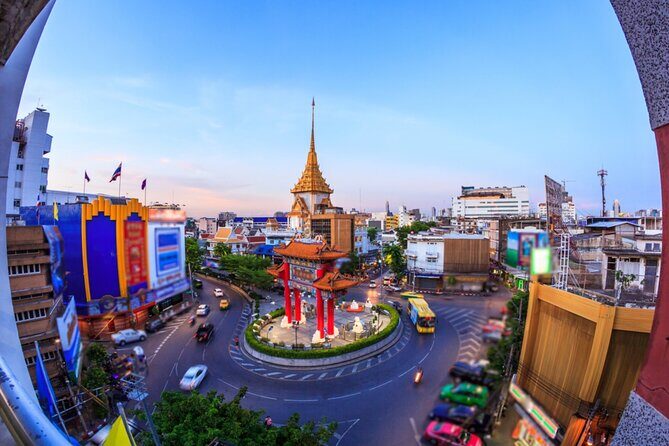
Bangkok Chinatown can overwhelm you fast: narrow lanes, mixed languages, scooters, and the kind of street life that changes every few minutes. This game turns that chaos into a simple mission. You’re not just walking from place to place. You’re hunting for answers in the area around you.
The best part is how the puzzles connect you to specific spots. You’ll be looking closely at surroundings you might otherwise rush past. That includes old shopfronts, small temples tucked into markets, and Chinese shrines with deep roots in Thailand’s merchant history.
You also get a modern travel perk: it’s self-paced. Want a slower walk and a snack break? You can. Want to power through? You can too.
You can also read our reviews of more guided tours in Bangkok


Starting point and how the quest actually works
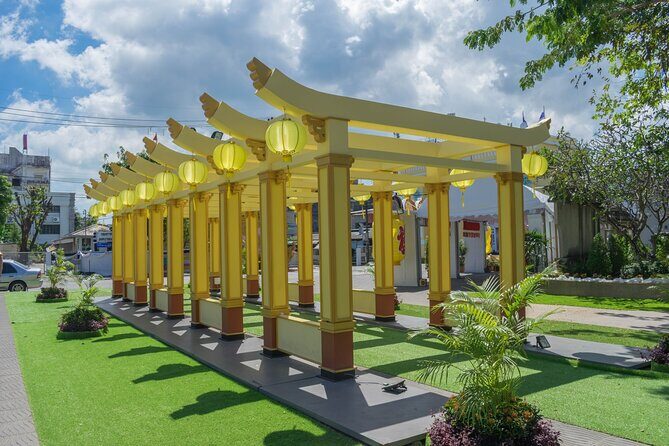
The quest starts at Rong Muang, Pathum Wan, Bangkok 10330, Thailand. From there, the app guides you step by step, with on-screen instructions to reach the Wedding store mentioned in the directions. You finish at 586 ถ. เจริญกรุง in Khwaeng Pom Prap, Khet Pom Prap Sattru Phai, Krung Thep Maha Nakhon 10100.
You’ll use a mobile ticket on your phone. The experience is described as flexible too: you can start at any hour, take a break, and resume later. That’s useful in Bangkok, where heat, crowds, and lunch timing can change your plan.
Practical tip: charge your phone before you start and consider a small power bank. The game requires you to follow directions while you walk, so a dead battery can turn a fun puzzle into a frustrating scavenger hunt.
Stop 1: Kan Kee Nam Tao Thong and Chinese herbal drinks
Your first puzzle stop is Kan Kee Nam Tao Thong, known for making Chinese herbal drinks. The shop is listed as famous and about 100 years old.
What I like about starting here is that it puts you in the local rhythm immediately. You’re in a part of Chinatown where older family businesses still shape what people eat and drink. For your puzzle, you’ll need to look around to find the challenge answer and advance to the next location.
Possible drawback: older streets and shop signage can be hard to read quickly, especially in glare or if you’re moving fast. Go slow enough to notice details, but don’t overthink it. The goal is to observe, not to become a detective with a magnifier.
Stop 2: Wat Traimit and the golden Buddha clue
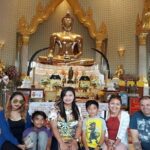
Next up is Wat Traimit, also known as the Temple of the Golden Buddha. This temple is known for housing a seated Buddha statue that weighs 5.5 tonnes. The gold sculpture is dated back to the 13th century, and it’s nearly 5 meters tall.
The temple sits about 450 meters west of Hualampong Railway Station, which makes it easier to fold into other transport plans around the area. For the game, you’ll again be instructed to look around and answer the puzzle before moving on.
Why this stop works in a game: you’re not just admiring the scale. You’re forced to notice your surroundings, which can make your visit feel more connected. It also breaks the walking routine—temples naturally slow you down.
What to watch for: if your plan is to move fast through Chinatown, you may want to allocate extra minutes here. Temples tend to have queues, stairways, and areas where you’ll want a clear view before answering.
Stop 3: Eiah-Sae coffee shop and a noisy old-school vibe
After the temple, the route shifts into everyday Chinatown life with The Eiah-Sae coffee shop. It’s described as almost a century old and passed down through generations, with a homey and noisy atmosphere.
The experience highlights sampling local drinks and food at shops popular with locals. While the puzzle is still the main event, this is exactly the kind of stop where a short pause makes the whole quest more enjoyable. You get a taste of the neighborhood beyond landmark sightseeing.
For the puzzle, you’ll look around again to find what you need to proceed. This is a nice change of pace from temple-focused sightseeing because you’ll be reading signs, noticing setups, and paying attention to storefront details.
Simple tip: if you plan to buy something, do it briefly. You want the food break, not a long detour that ruins your 90-minute flow.
You can also read our reviews of more tours and experiences in Bangkok




Stop 4: Wat Lokanukroh inside Sampeng Market

Next is Wat Lokanukroh, described as one of the smaller temples in Bangkok. The route notes that no monks live here, but many people come to pray and offer ceremonies, even though it’s located in the heart of Sampeng Market.
This is a smart choice for a self-guided puzzle because it tests your patience in a good way. Market areas can be loud and crowded, but they’re also full of visual cues. Your job is to look around, find the answer, and keep moving—without trying to fight the market energy.
The setting also adds context. Instead of only seeing sacred space as a separate, quiet zone, you see how worship happens right in the middle of commerce and everyday life.
Potential consideration: if you’re sensitive to crowd noise or you’re visiting at peak market hours, this stop may feel busy. The upside is that the game structure gives you a reason to slow down and focus.
Stop 5: Leng Buai Ia Shrine, built in 1658
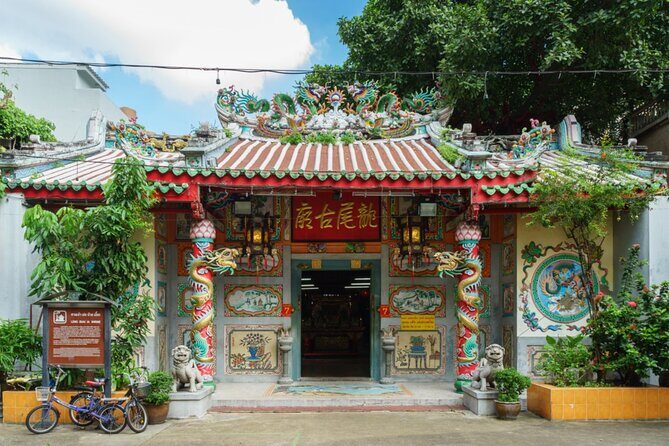
Then you’ll reach Leng Buai Ia Shrine, described as an ancient Tae Chew shrine and the oldest Chinese shrine in Thailand. It was built in 1658, during the Central Ayutthaya period.
This stop adds a deeper layer to what you’re doing. The route explains that Chinese businessmen would come to the shrine for refuge and pray for prosperity for their business. That’s a powerful reminder that these places weren’t only built for worship—they were built for community, safety, and economic hope.
Architecturally, it’s noted for traditional Chinese style. For your puzzle, you’ll again look around and solve your challenge at this location before the next clue takes you forward.
Practical note: shrines can have rules about where you can stand and how you should behave. If you see people praying, pause and give them space. You’re there to learn, not to rush through.
Stop 6: Wat Leng Noei Yi (today’s name) and the dragon motifs
The final temple stop is a place with an identity that changed over time. The route notes it was opened as Wat Leng Noei Yi in the 1870s, serving as an introduction of Mahayana Buddhism in Bangkok. Later, King Chulalongkorn renamed it to its present title.
Visually, it’s described as decorated with animal, floral, and Chinese dragon motifs. The ordination hall includes a gold-colored Buddha.
This is a fitting end for the quest because your puzzle experience reaches a point where your attention has been trained. You’ll likely notice details faster now—patterns, motifs, and the way Buddhist art is displayed in these halls.
One more reason I like this ending: you end with a clear sense of place and meaning. Even if you’re mainly there for puzzles, the finale brings you back to why Chinatown has so many layered religious and cultural stops.
Food, drink, and timing without losing the plot
The experience specifically calls out the chance to sample local drinks and food at shops popular with locals. It’s not a formal guided meal, though. You’re fitting eating into a mission-based route.
My suggestion: plan on quick stops. Take a drink, grab a bite if you see something that looks good, and get back to the app instructions. If you turn each stop into a full sit-down break, you’ll probably feel rushed by the time you reach the later temples.
As for timing, the duration is listed as about 1 hour 30 minutes. That doesn’t mean you must finish in exactly that time. It’s more like a helpful target, especially if you’re pairing this with other Chinatown plans.
If you prefer a relaxed pace, start a bit earlier in the afternoon or early evening. Chinatown looks great in different light, and your brain will appreciate fewer time pressures.
Value check: $6.99 and what you get for it
At $6.99 per person, this is priced like a small adventure, not a big guided tour. The value isn’t just the cost. It’s the format: you’re buying flexibility, independence, and a route design that connects landmarks with puzzles.
A few value multipliers matter here:
- No guide needed means no schedule battles and no group waiting
- Offline play is a big deal in Bangkok, where coverage can be unpredictable
- Start anytime helps you fit Chinatown into your own day plan
- Group buying option can cut the per-person friction for friends traveling together
If you’re traveling solo, you still get the full experience. If you’re traveling with others, one person can purchase access for the group by selecting the total number of people, and everyone plays on their own phone.
On the flip side, the format does require you to actively pay attention. If you want someone to steer you, answer questions, and correct your route on the fly, a self-guided mystery quest may feel less satisfying than a traditional guide-led tour.
The main thing that can go wrong (and how to handle it)
There’s one risk with any app-based walking game: location matching. The experience uses your phone and directions, and if Google Maps pins or your GPS reading are off, you might end up wandering a little longer than expected.
Here’s how you reduce that frustration:
- Give yourself extra time the first time you do it
- Stay calm if you see you’re not quite where the screen expects
- Use street context as your sanity check: look for the actual shop/temple vibe and move from there
Also, keep your phone brightness up enough to read on-screen instructions. This is a quest, so you’re relying on prompts. Bad visibility turns “fun puzzle” into “why can’t I see this small thing.”
Who this is best for in Bangkok Chinatown
This works especially well if you:
- Like walking and solving problems, even light ones
- Want to explore at your own pace
- Prefer avoiding a crowded group tour feel
- Travel with friends but still want independence
It also fits people who enjoy religious and cultural sites but don’t want a lecture. You get story moments tied to real places, then you move on.
If your travel style is more about guided interpretation and deep explanations, you might find this too hands-off. Still, you can treat it as a fun way to visit the highlights, with the app acting like your interactive map.
Should you book Bangkok Chinatown mystery puzzle quest?
If you want a low-cost, low-commitment way to see Chinatown while doing something playful, I’d say it’s worth booking. The route includes major stops like Wat Traimit with its massive 5.5-tonne gold Buddha and smaller, more local-feeling places like Wat Lokanukroh in Sampeng Market. That mix is exactly what makes Chinatown such a great setting for a puzzle game.
If you hate any chance of confusion and you rely heavily on perfect GPS, you should go in with patience. The experience is built to be straightforward, but Bangkok streets can be messy, and app locations aren’t always perfect.
For many people, the sweet spot is simple: use this as your Chinatown mission plan for about 90 minutes, then let the rest of the day be free.
FAQ
How long is the Bangkok Chinatown self-guided puzzle quest?
It’s listed at about 1 hour 30 minutes.
Can I start at any time and pause during the quest?
Yes. You can start at any hour, take a break, and resume later.
Do I need an internet connection to play?
No. You can play offline while exploring.
Is there a human guide during the experience?
No. There is no physical guide, and you follow the app step by step.
Where do I start and where do I finish?
You start at Rong Muang, Pathum Wan, Bangkok 10330, Thailand. The quest ends at 586 ถ. เจริญกรุง in Pom Prap, Pom Prap Sattru Phai, Krung Thep Maha Nakhon 10100.
How does group booking work?
If you’re in a group, one person can purchase access for everybody by selecting the total number of people. Each group member plays on their own smartphone.
Which places are included in the route?
The included stops are Kan Kee Nam Tao Thong, Wat Traimit, Eiah-Sae coffee shop, Wat Lokanukroh, Leng Buai Ia Shrine, and the temple that was opened as Wat Leng Noei Yi and later renamed.
What is the cancellation policy?
You can cancel for free. If you cancel up to 24 hours in advance of the experience start time, you get a full refund. Canceling less than 24 hours before the start time is not refundable.