REVIEW · BANGKOK
Bangkok’s Wireless Road: A Self-Guided Audio Tour
Book on Viator →Operated by VoiceMap Audio Tours · Bookable on Viator
Bangkok can feel like a puzzle on purpose. This self-guided audio walk on Wireless Road, led by local historian Paul Jorgensen, turns that puzzle into a story you can follow step by step. You start and finish at BTS Phloen Chit, take in the embassy area, and loop down toward Lumphini Park and back with an hour of humor, culture, and context.
I like two things a lot. First, you get start-stop freedom: the audio is timed to your location, so you can pause, backtrack, or move on at your own pace. Second, the tour fixes your focus on the stuff you normally walk past—like spirit houses, Hindu gods, the Thai flag, even the meaning people attach to the number nine.
One watch-out: this is audio-on-your-phone, not a guided walk with a person. So you’ll want a charged smartphone, comfortable earphones, and the patience to pay attention on a real city sidewalk.
In This Review
- Key highlights
- Wireless Road with Paul Jorgensen: a one-hour loop with real context
- The VoiceMap setup: offline audio that you can actually manage
- Getting your bearings at BTS Phloen Chit
- Embassy history and the shopping mall you’ll look at differently
- Rain trees by Nai Lert: why shade is a neighborhood story
- The Green Mile walk: from Lumpini to Benjakiti parks
- Hindu symbols and the Trimurti shrine in plain sight
- Thai beliefs in everyday details: spirit houses, motorcycle taxis, and the Thai flag
- Price and timing: what $7.99 buys you in real value
- Who should book Wireless Road as an audio walk
- Should you book this Wireless Road with Paul Jorgensen?
- FAQ
- Is this tour guided by a person?
- Where does the tour start and end?
- How long does the walk take?
- How much does it cost?
- Do I need an internet connection while walking?
- What do I need to bring?
- Are there any museum tickets included?
- How do I follow along during the walk?
- What times is the tour available?
- What happens if I need to cancel?
Key highlights

- GPS-synced audio plays at the right moment as you walk, so you’re not guessing where you are.
- Offline VoiceMap access includes audio plus maps and geodata for smoother walking.
- Paul Jorgensen’s cultural links explain everyday sights like flag symbolism, spirit houses, and belief in plain language.
- Embassy-to-shopping-mall history gives you a reason to look twice at a place you might otherwise ignore.
- Nai Lert’s rain trees turn a “pretty street” into a story about neighborhood design and shade.
- The Green Mile pedestrian link between Lumpini and Benjakiti parks makes the loop feel like more than just errands.
Wireless Road with Paul Jorgensen: a one-hour loop with real context
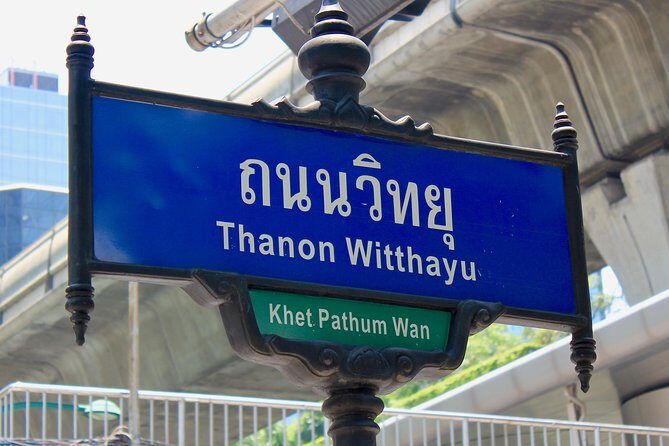
This walk is built around an easy rhythm: start at BTS Phloen Chit, head into the area’s long blocks and familiar landmarks, then return back to the same point. It’s about 50 minutes to 1 hour, which makes it ideal on a day you want to see a lot without locking up half your afternoon.
What makes it more than a simple route is how the narration keeps connecting what you’re seeing to why it’s there. Paul Jorgensen talks about how Bangkok developed, and he also uses smaller clues—like faith symbols and everyday objects—to explain how people think and live. You’re not just collecting trivia; you’re learning how the city’s choices show up in streets, buildings, and even the reasons certain colors and patterns matter.
If you’re the kind of traveler who likes to understand what you’re passing, this fits your style. If you want a strict checklist with museum tickets and set-photo stops, you might find it a bit more “walk-and-listen” than “tourist-site-and-stamp.”
You can also read our reviews of more guided tours in Bangkok



The VoiceMap setup: offline audio that you can actually manage
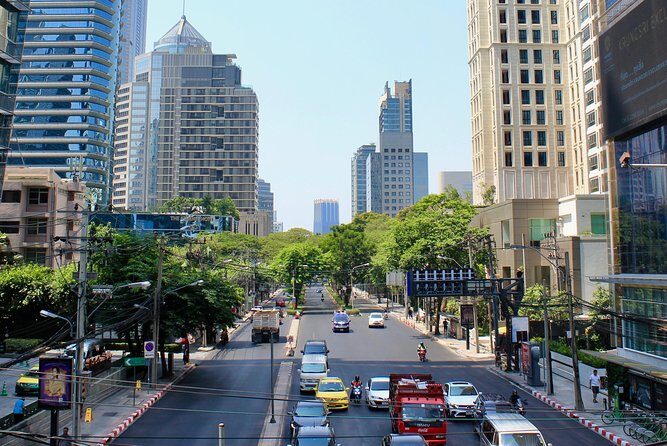
This experience runs through the VoiceMap app, and the big practical win is that it supports offline access for audio, maps, and geodata. That means you don’t have to keep hunting for signal while you’re trying to stay on the path.
I also like that the audio plays automatically at the right time and place as you walk. You get guidance without needing to constantly tap your screen. It’s perfect for those moments when Bangkok traffic, scooters, or crowds make it hard to stop and read.
That said, do one simple thing before you head out: download the tour content while you have a connection, then make sure your phone battery is topped up. This isn’t the moment to trust a low-charge warning and hope for the best.
Getting your bearings at BTS Phloen Chit
Phloen Chit is a good starting point because it’s easy to reach, and it also puts you right into Bangkok’s “between major places” feel—where embassies, offices, and green spaces sit side by side.
Once you begin, the narration steers you through the neighborhood in a way that helps you build a mental map fast. You’ll start noticing the contrasts: the formal presence of embassies and the everyday presence of street life around them. That contrast is a major theme of Wireless Road—how international influence and local belief sit close together.
A small tip that saves time: put your phone in your pocket when you’re walking and rely on the audio cues. You’ll spend less time looking at the screen and more time actually seeing what Paul is pointing out.
Embassy history and the shopping mall you’ll look at differently

One of the more interesting segments is the story behind a shopping mall that grew out of the grounds of the British Embassy. It’s one of those facts that changes the way you interpret a place: suddenly you’re not just passing a mall, you’re walking through a piece of space with layers.
In Paul’s telling, that area becomes a lens for understanding how Bangkok’s development shifts over time—how space gets repurposed, and how international presence can leave an imprint even after the original purpose changes. It also trains your eyes. You’ll start to notice the “implied layout” of older plots—why certain paths feel the way they do, and how large properties shape nearby streets.
The trade-off is that you’re moving through a functional commercial area. You’ll get the story, but you may not get a quiet walkway the whole time. If you dislike crowded sidewalks, choose a calmer time of day.
Rain trees by Nai Lert: why shade is a neighborhood story
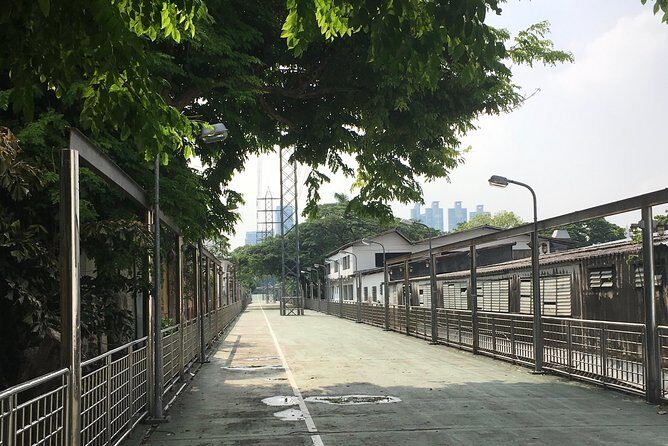
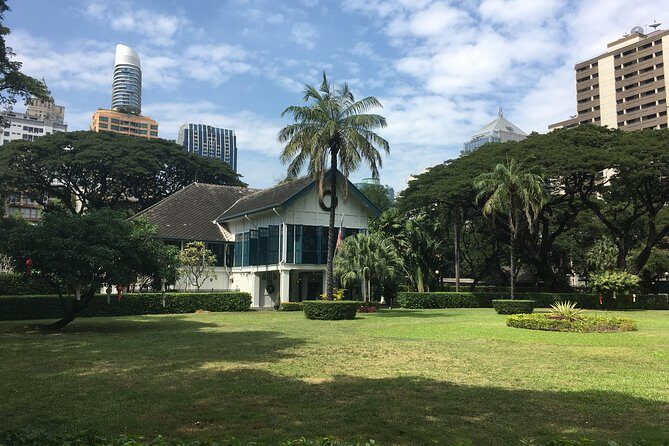
Wireless Road’s green side is a big part of the charm, and one of the standout narrated topics is the rain trees connected to entrepreneur Nai Lert. You’ll hear why these trees became part of the neighborhood’s identity—and why the area feels special when you’re walking under them.
Rain trees aren’t just decoration here. Paul’s narration ties them to the way the neighborhood works as a human space: shade, comfort, and how design decisions show up in daily life. Bangkok can be hot and bright, so anything that makes walking easier quickly becomes more than pretty scenery.
If you’re visiting during the hottest months, listen closely as you approach the tree-covered stretches. You’ll understand why people remember this street not only for buildings, but for what the trees do for the walk itself.
You can also read our reviews of more tours and experiences in Bangkok





The Green Mile walk: from Lumpini to Benjakiti parks
A highlight for your legs and your brain is the Green Mile pedestrian pathway that connects Lumpini and Benjakiti parks. This is the part of the walk that feels like a shift in tempo—less “street frontage,” more breathing room.
You’ll likely notice a change in how the area feels as you transition between parks. The audio helps you see this as a purposeful connection rather than just a convenient shortcut. It’s also a reminder that Bangkok’s planning isn’t only about traffic and buildings; it also includes movement corridors for pedestrians.
Practical note: because this is a park-linked route, conditions can vary with weather and foot traffic. Bring a little water planning in your mind (even if the tour doesn’t include food), and wear shoes that can handle a park-adjacent sidewalk.
Hindu symbols and the Trimurti shrine in plain sight
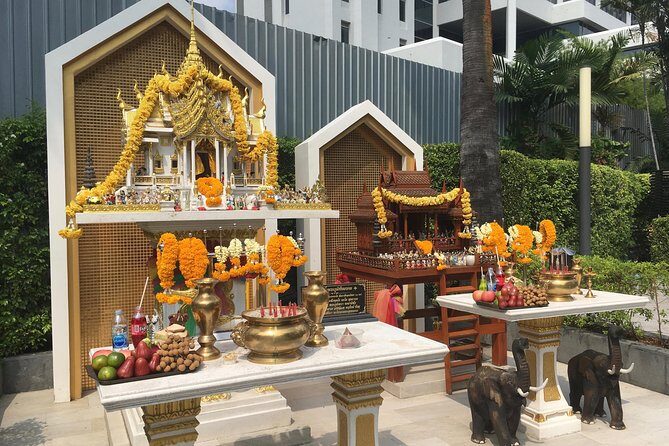
Another segment you’ll remember is the walk through a shrine connected to the Hindu god Trimurti. Shrines and religious symbols can be easy to treat as decoration when you don’t know what you’re looking at. Paul’s narration does the opposite: it tells you why this kind of sacred presence matters.
Even if you’re not deeply familiar with Hindu belief, you’ll come away with better “street reading skills.” You’ll understand that these shrines aren’t random props; they’re tied to the spiritual map people follow in daily life.
If you’re sensitive to religious sites, a good rule is simple: slow down, keep your voice low, and give people space to move around the shrine area naturally. The audio guide helps you look longer without staring.
Thai beliefs in everyday details: spirit houses, motorcycle taxis, and the Thai flag

The tour’s best trick is how it treats everyday objects like they have meaning—because they do. Paul talks about spirit houses, and that detail matters because these small structures show up around homes and businesses. When you understand what spirit houses represent, you start noticing them everywhere with a new kind of respect.
You’ll also hear connections behind “ordinary” street elements like groups of motorcycle taxis and convenience stores. The point isn’t that the city is full of secrets—it’s that city life runs on patterns, and those patterns have histories and social roles.
Then there are the symbolic touches: Hindu gods, the Thai flag, and the number nine. Paul’s approach makes these symbols feel less like trivia and more like a way of understanding values. It’s a nice way to make Thai culture feel readable, not mysterious.
If you only have time for one cultural add-on walk, this is the kind of experience that builds understanding fast.
Price and timing: what $7.99 buys you in real value
At $7.99 per person, this is one of those small-budget experiences that still gives you a lot. For roughly an hour of audio guidance, you’re buying context you can’t get from casual sightseeing. It’s also lifetime access, which means you can repeat the walk later or reuse the audio content on another day if you want.
Consider the planning rhythm too. The tour averages 26 days booked in advance, which hints that people like using it early in their trip—when everything feels new and you want to learn the rules of what you’re seeing.
What’s not included is also part of the value equation. You don’t pay extra for tickets or museum entries, and there’s no transportation included. That’s fine here because the whole point is walking an area you’re already likely to pass through when you’re exploring central Bangkok.
One more practical benefit: the audio is available from 12:00 AM to 11:59 PM. That’s useful if your schedule is messy or you want to do it right after you arrive and get your bearings.
Who should book Wireless Road as an audio walk
This tour fits best if you:
- like learning while you walk, not only when you stop
- want a flexible pace instead of a group schedule
- enjoy cultural explanations tied to street-level details
- want an affordable add-on that doesn’t require tickets
I’d also recommend it if you’re the type who gets bored with long indoor attractions but still wants meaning from what you see outdoors. The loop format, the park connection, and the symbol stories give you variety without forcing you to sprint between stops.
It might be less satisfying if you strongly prefer a live guide answering questions on the spot. This is structured storytelling, not a conversation.
And yes: because it’s self-guided, service animals are allowed, and you’re not locked into a large group setting. It’s described as private for your group, which makes the experience feel a bit more controlled even though you’re walking in public.
Should you book this Wireless Road with Paul Jorgensen?
If you want a low-cost way to understand central Bangkok, I think this is a smart buy. For $7.99, you’re getting timed guidance, offline support, and a clear focus on the meaning behind everyday sights—especially the embassy-area story, the rain trees, the Green Mile link to parks, and the religious symbolism that shows up around the neighborhood.
Book it if you can handle listening to audio while walking and you’ll bring a charged phone. Skip it if you want a ticketed itinerary full of entrances and staff on hand, or if you dislike walking without a live guide to redirect you.
My final take: this is the kind of tour that makes Wireless Road feel like it has a brain, not just buildings. Once you know what to look for, Bangkok’s street details stop being background noise.
FAQ
Is this tour guided by a person?
No. It’s a self-guided audio tour using the VoiceMap app with audio that plays automatically as you walk.
Where does the tour start and end?
It starts and ends back at BTS Phloen Chit station, on Thanon Phloen Chit.
How long does the walk take?
The duration is about 50 minutes to 1 hour.
How much does it cost?
It costs $7.99 per person.
Do I need an internet connection while walking?
You can use offline access for audio, maps, and geodata in the VoiceMap app.
What do I need to bring?
You should plan to bring a smartphone plus earphones to listen to the audio. Transportation and food/drinks are not included.
Are there any museum tickets included?
No. The experience does not include tickets or entrance fees to any attractions en route.
How do I follow along during the walk?
The audio is set to play at the right time and place as you walk, so you can keep moving and just listen.
What times is the tour available?
It’s listed as available every day from 12:00 AM to 11:59 PM.
What happens if I need to cancel?
This experience is non-refundable and cannot be changed for any reason.