REVIEW · BANGKOK
Bangkok: Cook authentic Thai food with Smart Cook
Book on GetYourGuide →Operated by Smart Cook Bangkok · Bookable on GetYourGuide
Thai food tastes different when you make it.
This hands-on class in the Bangkok old city puts you in a real, working neighborhood home built of 100+ year teak wood, not a show kitchen. I love that you get to choose what you cook, and the class is guided in English by a host listed as Snow White, with step-by-step teaching that keeps you in control. One thing to note: it is not suitable for children under 7.
In 210 minutes, you’re not just watching you’re cooking.
You’ll learn what goes into Thai flavor, from herbs and spices to fresh vegetables, then apply it in dishes like spring rolls, curry paste, curry with chicken, and sweet sticky rice with mango. I like that the group stays small (limited to 7), so you get real hands-on time, not a quick photo stop. If you’re hoping to drink during the class, alcohol isn’t included and alcohol isn’t allowed.
In This Review
- Key highlights worth clocking
- Entering Bangkok Old City: Your meeting point near the Giant Swings
- Step into a 100+ year teak home kitchen (indoors and outdoors)
- Choosing your menu: what you cook (and why you’ll like it)
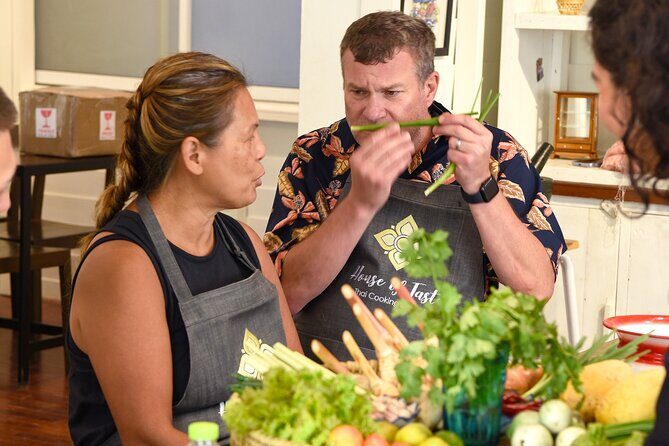
- Thai herbs, spices, and fresh ingredients: the real lesson
- From green curry paste to curry: Pha Naeng and Kao-soi skills
- Spring rolls, stir-fries, and soups: learning flavor balance with every pot
- Spring rolls
- Stir-fries
- Soups
- Sweet sticky rice with mango: the finish you’ll want to repeat
- Price and value at $41 per person: what you’re really buying
- Who should book Smart Cook Bangkok (and who might not)
- Should you book this cooking class?
- FAQ
- How long is the Smart Cook Bangkok class?
- What is the price per person?
- Where do I meet for the tour?
- Is the class taught in English?
- How many people are in the group?
- Do I get to choose what dishes I cook?
- What dishes are included in the class selection?
- Do I receive a recipe book?
- Is beer or alcohol included?
- Is it suitable for young children?
Key highlights worth clocking
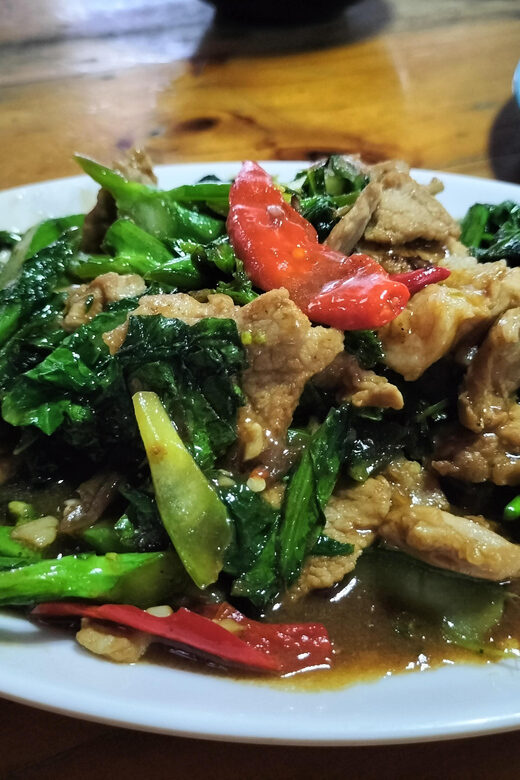
- Small-group attention (up to 7 people) so you actually cook, stir, paste, and fry
- A teak-wood home in the old city area that feels like a local household, not a restaurant set
- Menu choice before you start across spring rolls, stir-fries, soups, curry paste, and desserts
- Hands-on Thai ingredient learning with guidance on herbs, spices, and key vegetables
- Green curry paste, green curry, Pha Naeng, or Kao-soi options you can match to your tastes
- PDF recipe book included so you can repeat the dishes at home
Entering Bangkok Old City: Your meeting point near the Giant Swings
Most cooking classes try to meet you somewhere convenient. This one tries to meet you somewhere real. Your start is near the Giant Swings, one of the landmark anchors in the old city area. From there, you walk to Trok Turk Din alley for about 100 meters. It’s short, but it still helps to arrive early enough to feel calm. Bangkok sidewalks are quick-changing, so a few extra minutes makes the walk easier.
Timing matters here because the experience is built around flow. You’ll move from intro and ingredient explanation into cooking stations, then into cooking cycles that build on each other. Spring rolls, stir-fries, soups, curry paste, and finishing dessert all take real kitchen time. If you show up late, you can miss the rhythm where the instructor explains what to prep and why.
This setting also helps with the vibe. Being in the old city community means the class doesn’t feel like a bubble. Even when you’re focused on your cutting board, you’re still in the Bangkok neighborhood texture—more local, less manufactured.
You can also read our reviews of more food & drink experiences in Bangkok


Step into a 100+ year teak home kitchen (indoors and outdoors)
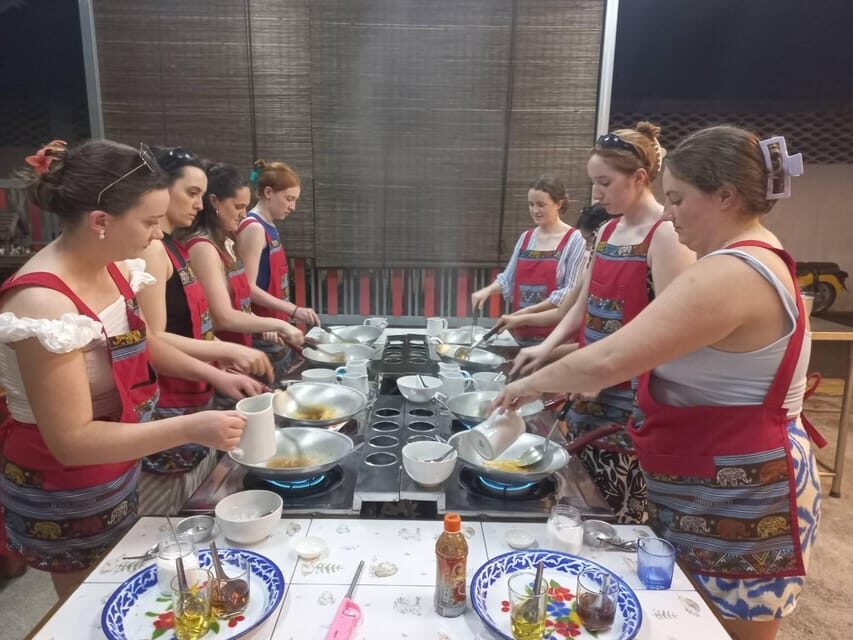
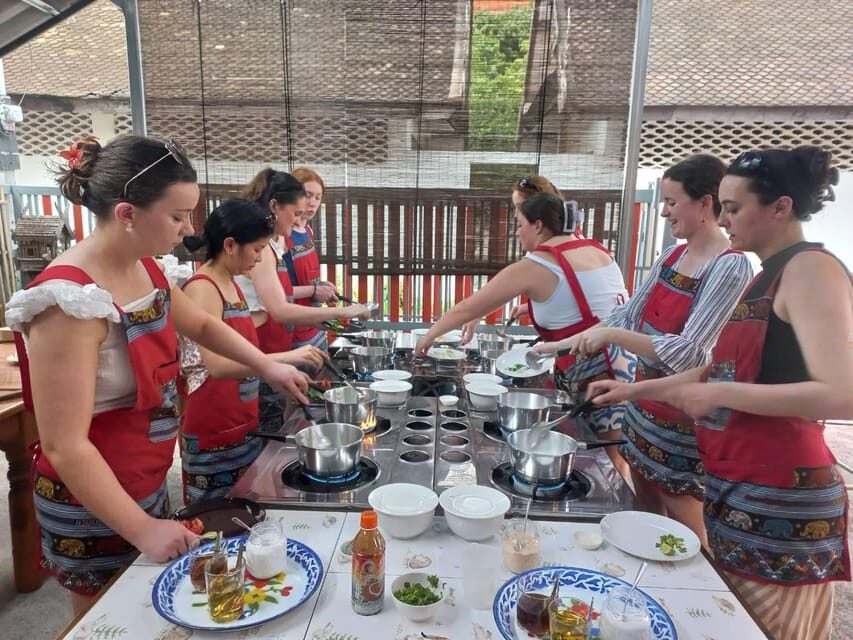
One of the best clues to what you’re paying for is where you cook. You spend your time in a traditional teak-wood home described as over 100 years old, located in the middle of the old city. That choice is not just aesthetic. It shapes the pacing and the feel of the class.
In your kitchen time, you should expect a mix of indoor and outdoor space. That matters more than you might think. Cooking Thai food includes smells—garlic, shallots, toasted spices, coconut milk warming on the stove, and the aroma of curry paste coming alive in hot oil. A kitchen with both indoor and outdoor space tends to keep things comfortable without trapping heat and steam.
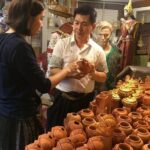
The home setting also pushes you toward a family-style experience. The class is designed as a traditional Thai family cooking moment, where everyone participates at the same time. You don’t just take turns using one pot. You’re learning how ingredients behave—how fresh herbs bruise and perfume, how paste thickens, and how sauces cling.
If you’re the type of person who wants food education without the formality, this is the right environment. You’re in someone’s home space, and that naturally changes how you pay attention.
Choosing your menu: what you cook (and why you’ll like it)
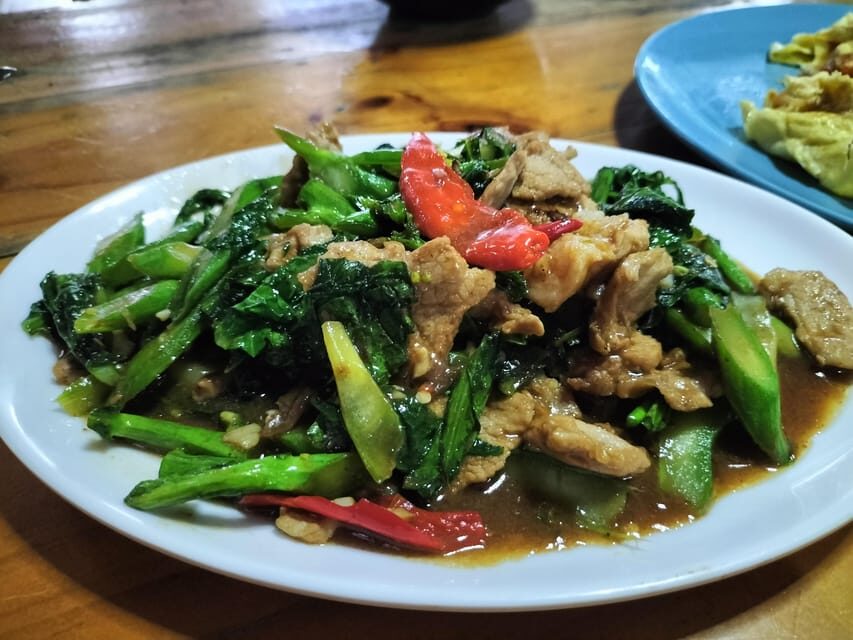
Here’s a big reason this class feels worth it: you get to choose dishes from a set selection. That means you’re not stuck with whatever the instructor thinks everyone should eat. You can aim for the Thai dishes you actually want to learn to repeat.
Your core options include:
- Deep-fried spring rolls
- Stir-fry choices, such as fried rice with chicken, Pad Thai, or fried chicken with holy basil
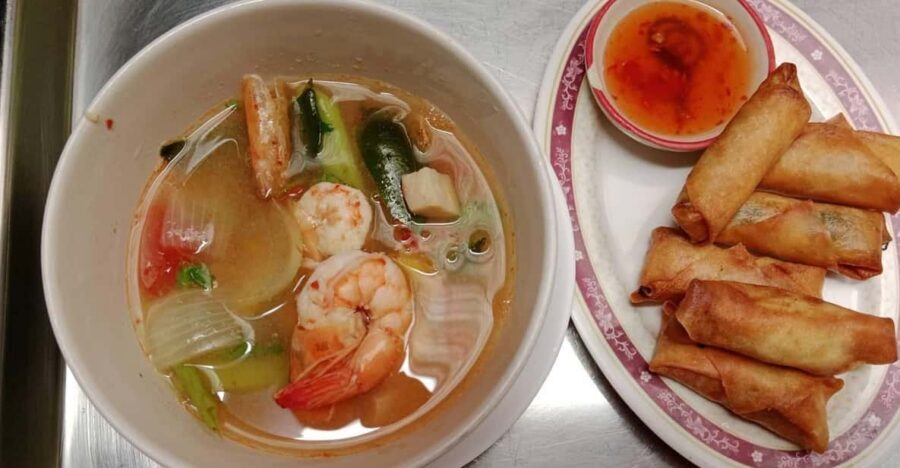
- Soups, including hot & sour prawns soup, chicken in coconut milk soup, or local hot & sour chicken soup
- Curry paste-making, specifically green curry paste for Pha Naeng or Kao-soi
- Curry cooking with chicken, using your chosen paste style (green curry, Pha Naeng, or Kao-soi)
- Sweet sticky rice with mango
This mix is practical. Thai cooking isn’t one skill. It’s a set of skills that work together: frying, stir-frying, simmering, pasting, and balancing sweet, sour, salty, and heat. By letting you select from multiple categories, you end up with a home-cookable skill set, not just one impressive dish.
It also helps with motivation. When you pick spring rolls because you love them, the frying part stops being scary and starts being satisfying. When you pick curry paste, you understand why Thai curry isn’t just curry powder—it’s fresh aromatics converted into paste.
The class is listed at 210 minutes, so you should expect a full schedule, but not rushed chaos. Menu choice keeps it enjoyable, not exhausting.
Thai herbs, spices, and fresh ingredients: the real lesson
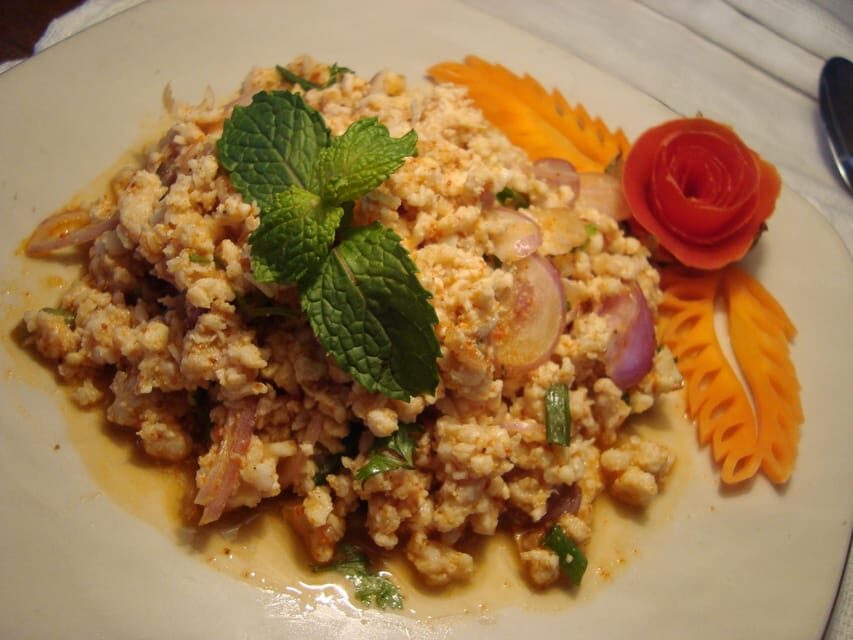
Thai food can look straightforward on a menu. The trick is that it’s built from layers: herbs, spices, aromatics, and fresh vegetables used at the right moment. This class makes you learn those building blocks.
You’ll spend time introducing and understanding Thai herbs, spices, and important ingredients for Thai cooking. You also learn how to use vegetables and fresh ingredients as part of a healthy Thai meal—fresh and tasty is the goal here, not heavy shortcuts.
What you should look for during the ingredient section: the way the instructor links ingredients to flavor behavior. Spices aren’t just “hot.” Some add fragrance. Some add body. Some add brightness. Herbs aren’t decoration. They become aroma and freshness when used properly.
The cooking style you’ll follow is described as individual and hands-on. So you’re not just reading about ingredients. You’re using them—measuring, chopping, crushing, and adding to the pan or pot based on the method you’re taught.
A small-group format helps this learning land. With limited to 7 participants, the instructor can correct technique and help you adjust timing. That matters because Thai cooking is fast and sensitive to heat. Even one minute can change a stir-fry’s texture.
From green curry paste to curry: Pha Naeng and Kao-soi skills
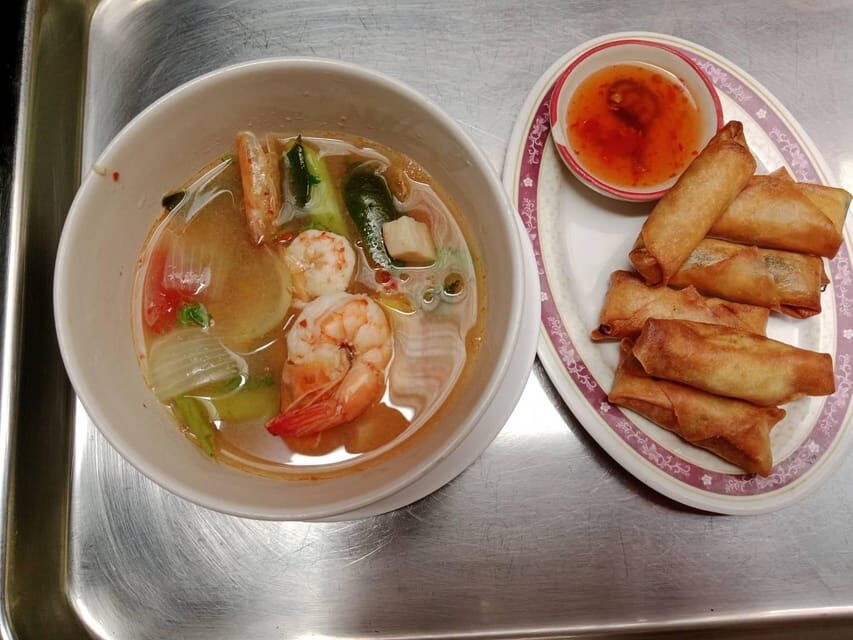
If you want the kind of Thai cooking skill you can brag about later, curry paste is it. This class specifically includes making green curry paste, with options connected to Pha Naeng or Kao-soi.
Making curry paste is where Thai food stops being “a dish” and becomes “a method.” You’re turning fresh aromatics and spices into a paste that clings, perfumes, and dissolves into sauce. Once you learn that process, you can understand why curries taste alive even when the ingredients list looks simple.
Then you move into cooking the curry with chicken. Depending on your chosen option, you’ll cook:
- Green curry with chicken
- Pha Naeng curry with chicken
- Kao-soi curry with chicken
This step teaches more than flavor. It teaches how paste behaves in heat—how it blooms, how coconut milk changes the texture, and how sauce thickens without becoming heavy.
It also gives you a useful comparison. If you choose one paste style over another, you can taste how the same core technique leads to different outcomes. That’s how real skill-building works: patterns, then variations.
And since the class includes learning the paste-making part, you’re not stuck with the idea that curry is something you buy pre-made.
You can also read our reviews of more tours and experiences in Bangkok



Spring rolls, stir-fries, and soups: learning flavor balance with every pot
Not every cooking class gives you variety. This one does, and that variety is useful. You’re not just learning how to cook one thing. You’re learning how Thai flavor changes across cooking styles.
Spring rolls
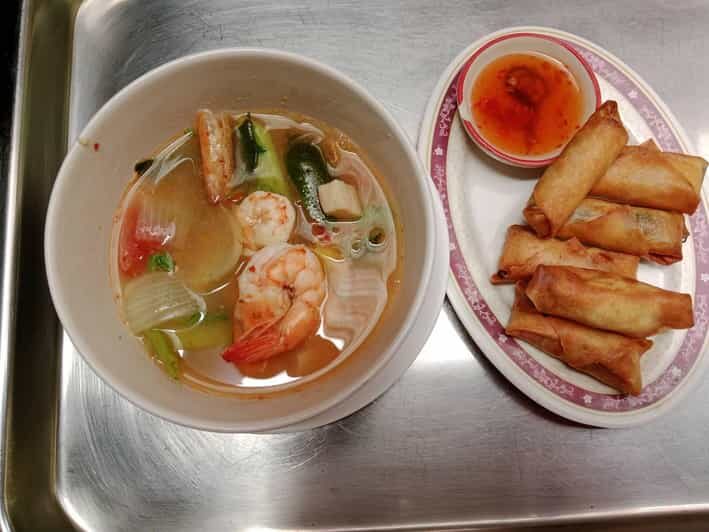
Your spring roll choice is pretty clear: everyone makes deep-fried spring rolls. The value here is technique. Frying isn’t just heat. It’s consistency, timing, and how you handle filling. You’ll also get practice assembling and frying a familiar Thai favorite.
Stir-fries
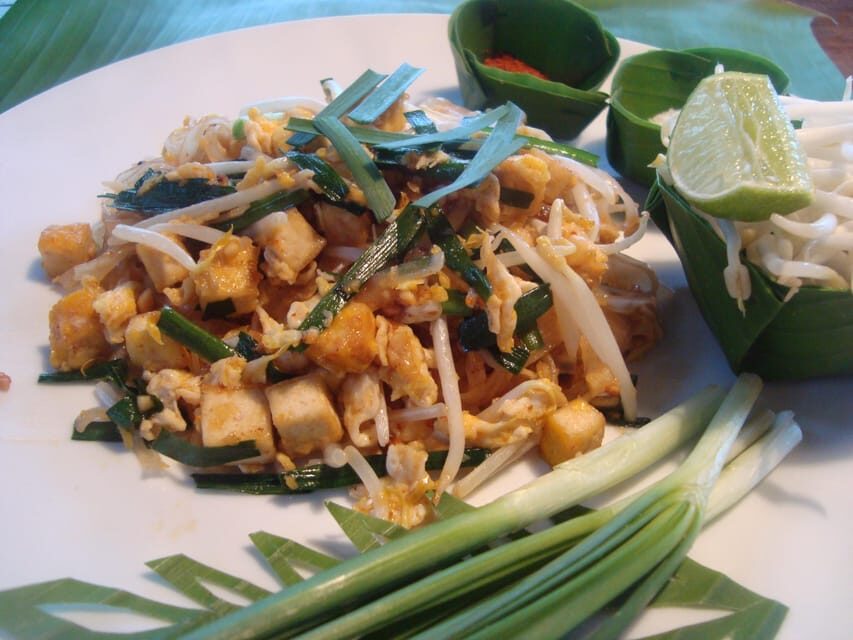
For stir-fries, you can pick from fried rice with chicken, Pad Thai, or fried chicken with holy basil. This is great for learning because stir-frying is a speed game. Ingredients need to go in at the right time to keep the right texture. Holy basil, in particular, teaches you that aromatics can be a whole flavor engine, not just something you sprinkle.
Soups
Your soup options bring in different Thai flavor directions:
- Hot & sour prawns soup
- Chicken in coconut milk soup
- Local hot & sour chicken soup
Learning hot & sour is valuable because it requires balance. It’s not only heat. It’s sour, salty, and aromatic. Coconut milk soup brings in a contrast: smooth richness and rounded flavor. When you cook both styles, you understand why Thai cuisine can feel both sharp and comforting.
You’ll likely leave with a better sense of how Thai seasoning works in real cooking, not just in theory.
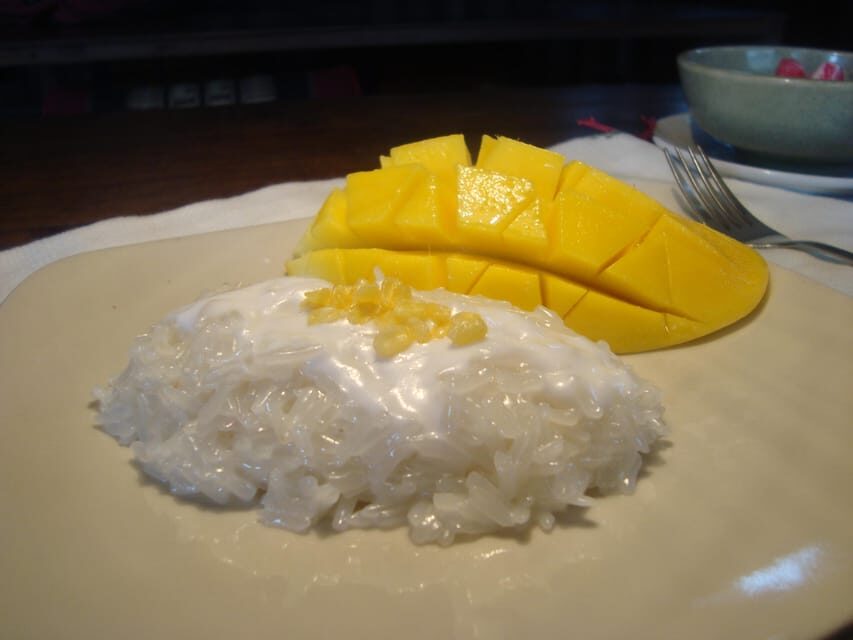
Sweet sticky rice with mango: the finish you’ll want to repeat
Every meal needs a finish that sticks in your brain. In this class, that finish is sweet sticky rice with mango.
Desserts in Thai cooking often rely on texture and temperature. Sticky rice has to be treated correctly to get the chewy, not-soggy bite. Mango gives the fruit-side sweetness and brightness, balancing the richness.
This is one of the most practical parts of the class for you at home because it’s hard to fake well. If you can nail sticky rice and sauce proportions, you’ll feel confident making dessert without depending on pre-made mixes.
Also, finishing with dessert helps the cooking class pacing. You start with herbs and pastes, go through savory cooking, and end with something that feels like closure. It’s the right structure for a 210-minute experience.
Price and value at $41 per person: what you’re really buying
At $41 per person for 210 minutes, the headline price is only part of the story. The real value is what’s included and what you’re walking away with.
You get:
- A hands-on cooking experience with a local master Thai chef instructor
- Cooking across multiple dish categories (not just one menu item)
- A traditional over 100 years old teak-wood home setting
- Learning time for herbs, spices, and ingredients
- A PDF recipe book online so you can re-create the dishes at home
You’re also capped at a small group of up to 7, which tends to reduce the classic problem of big classes: you do a little, watch a lot, then leave without enough technique. Here, the format is designed to keep you active.
One more value factor: you can choose dishes ahead of time. That means your money maps to your taste. You’re not paying for someone else’s menu.
The only potential mismatch is if you expect an alcohol-inclusive meal. Beer and alcohol are not included, and alcohol is not allowed. If you want Thai food paired with drinks, you’ll need to plan that separately.
Who should book Smart Cook Bangkok (and who might not)
This class fits best if you want real Thai cooking skills. You’ll enjoy it if you like food that’s built on fresh aromatics, you want to learn curry paste rather than just assemble a dish, and you’re willing to do hands-on work.
It’s also a good pick for small-group travelers who hate feeling like they’re standing out of the way. The English instruction helps, and the small group format keeps explanations clear.
You might skip it if you’re traveling with children under 7, since it’s listed as not suitable for that age group. You might also think twice if you have strict dietary needs, since the menu options include items like chicken and prawns and the class content is focused on those choices.
For everyone else, it’s an easy yes when your goal is practical skills, not a photo-heavy tourism stop.
Should you book this cooking class?
If your goal is to leave Bangkok able to cook Thai food with confidence, I think this class is a strong choice. You’re paying for technique: herbs and spices, curry paste, and multiple dish styles, all taught by an English-speaking instructor listed as Snow White. The setting—a 100+ year teak home in the old city—adds an authentic feel without making the class stuffy.
Book it if you like menu choice and you want the PDF recipe book to actually be usable at home. Skip it if you’re looking for a laid-back sightseeing tour with minimal cooking, or if you need child-friendly accommodations under age 7.
If you want your next Thai meal at home to taste like the real thing, this is one of the most direct paths in Bangkok.
FAQ
How long is the Smart Cook Bangkok class?
The class duration is listed as 210 minutes.
What is the price per person?
The price is listed as $41 per person.
Where do I meet for the tour?
You meet from the Giant Swings and walk to Trok Turk Din alley about 100 meters.
Is the class taught in English?
Yes, the instructor language is listed as English.
How many people are in the group?
The class is listed as a small group limited to 7 participants.
Do I get to choose what dishes I cook?
Yes. You choose from a selection of dishes, including spring rolls, stir-fries, soups, curry paste options (Pha Naeng or Kao-soi styles), curries with chicken, and sticky rice with mango.
What dishes are included in the class selection?
The selection includes: deep-fried spring rolls; stir-fry options (fried rice with chicken, Pad Thai, or fried chicken with holy basil); soups (hot & sour prawns soup, chicken in coconut milk soup, or local hot & sour chicken soup); making green curry paste for Pha Naeng or Kao-soi; cooking curry with chicken (green curry, Pha Naeng, or Kao-soi); and sweet sticky rice with mango.
Do I receive a recipe book?
Yes. You get a PDF version recipe book online after the class.
Is beer or alcohol included?
No. Beer and alcohol are not included, and alcohol is listed as not allowed.
Is it suitable for young children?
The tour is listed as not suitable for children under 7 years old.