REVIEW · BANGKOK
Bangkok Backstreets Food Tour with 15+ Tastings
Book on Viator →Operated by A Chef's Tour · Bookable on Viator
Street food in Chinatown, on foot. This tour is built for the tight back alleys where normal sightseeing plans don’t reach, and you get to sample Thai-Chinese flavors while your guide explains what you’re eating and why it matters. I especially like the small-group pace (8 or fewer) and the way the route is designed around real neighborhoods, not set-piece restaurants.
I also like the sheer amount of food you get for the money. The promise is 15+ tastings, spread across multiple stops, so you leave full instead of just “interested.” If you’re the type who thinks a single bite is not a plan, this tour is your kind of ticket.
One thing to think about first: this isn’t a fit for everyone. Diet and allergy limits are real on street food, and the tour is not suitable for vegetarians, pescatarians, no pork diets, or severe allergies like shellfish or peanuts.
In This Review
- Key Things I Think You’ll Care About
- Why Yaowarat Backstreets Beat Big-Group Food Stops
- Price and Timing: Is $59 Good Value for 4 Hours?
- Meeting at Shanghai Mansion: How the Tour Starts and Stays Moving
- Stop 1 in Yaowarat: First Tastings and Getting Oriented
- Stop 2 in Chinatown: Thai-Chinese Influence You Can Taste
- Stop 3 Back at Yaowarat: Sweet Finish and Easy Ending
- Guides, Explanations, and Why Two Staff Changes Everything
- What Foods You’ll Likely Try (and How the Variety Works)
- Spice, Seating, and Eating Comfort: What to Expect on the Ground
- Diet Limits and Allergy Reality Checks (Read This Before You Go)
- After the Tour: What to Do With the Rest of Your Day
- Should You Book This Bangkok Backstreets Food Tour?
- FAQ
- How long is the Bangkok Backstreets Food Tour?
- How many tastings are included?
- What’s included in the price?
- Where does the tour start and end?
- How big is the group?
- Are alcoholic drinks included?
- Is pickup and drop-off included?
- Is this tour suitable for vegetarians or pescatarians?
- What is the cancellation policy?
Key Things I Think You’ll Care About
- 15+ tastings in a small group: 4 hours that actually fills you up.
- Guide plus assistant: 2 staff means less waiting and smoother transitions.
- Backstreets where tuk-tuks can’t go: more local streets, fewer big-road shortcuts.
- At least 2 Michelin-listed street food venues: you’re not guessing.
- Chinatown’s Thai-Chinese food story: noodles, stir-fries, sweets, and more with cultural context.
Why Yaowarat Backstreets Beat Big-Group Food Stops
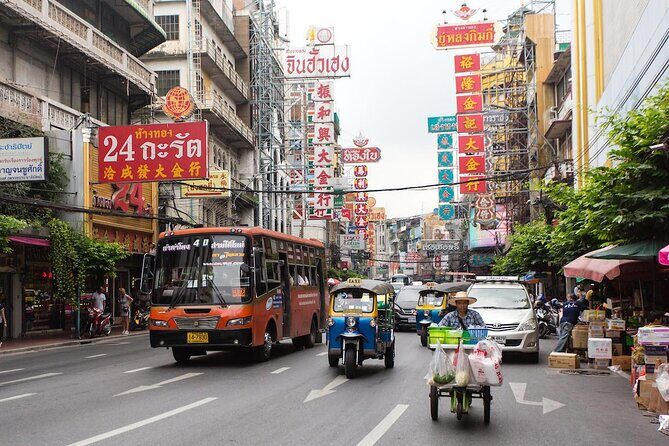
Bangkok’s Chinatown, especially around Yaowarat Road, is the kind of place where a map looks confident and reality looks chaotic. This tour solves that problem by walking you into the places you’d likely miss if you just followed a main road. You also get access to backstreets where tuk-tuks can’t go, so you experience the neighborhood at street level.
The small group size matters more than it sounds. With a maximum of 8 travelers, you’re not stuck behind a crowd while vendors rush to move the next table. It’s easier to hear your guide, easier to ask questions, and easier to stay together.
And because the tour includes a guide plus an assistant, the logistics feel more controlled than most street-food walks. You’re not constantly waving your arms to get attention. The handoff between stops is built in.
You can also read our reviews of more food & drink experiences in Bangkok

Price and Timing: Is $59 Good Value for 4 Hours?
At $59 per person for about 4 hours, the best way to judge value here is simple: what you’d pay for comparable street-food meals across a bunch of locations. You’re not just buying a walking ticket. You’re buying a structured route with 15+ tastings, bottled water, and a team managing the flow.
Also, the time-to-food ratio is strong. Street food in Bangkok can be easy to start and hard to finish well. This keeps you moving through 8–9 stops with minimal dead time, so you get variety instead of repetition.
If you’re comparing this to a single restaurant meal, it’s less about comfort and more about quantity and variety. You’re paying for access (the right vendors and the right order) and for someone to translate the food into something you can actually understand and remember.
Meeting at Shanghai Mansion: How the Tour Starts and Stays Moving
The meeting point is Shanghai Mansion Bangkok, 479, 481 Yaowarat Rd. The tour ends back at the start point, so you don’t have to plan a second trip across town just to wrap up.
You’ll also be in a part of Bangkok that’s easy to reach by public transportation. That matters because you can keep your travel day flexible around the tour, instead of building your whole schedule around a remote hotel pickup.
Expect a walking tour with frequent short transitions between stops. Comfortable shoes are not optional here. You’ll want rain gear too, since this is street-level food and weather can change fast.
Stop 1 in Yaowarat: First Tastings and Getting Oriented
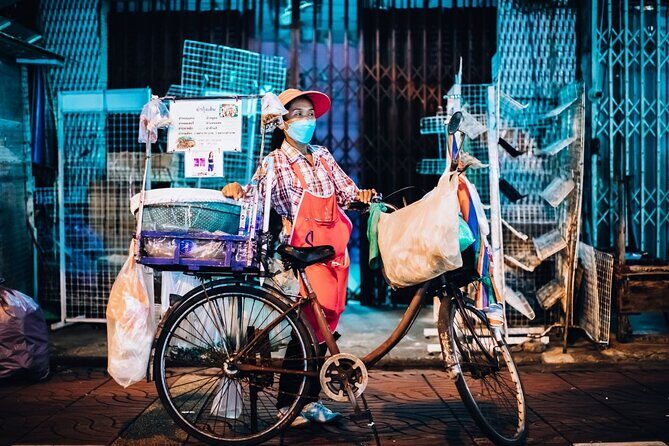
This tour kicks off in Chinatown/Yaowarat, around the kind of lanes that make you slow down without realizing it. Your guide starts by setting expectations: what you’re about to try, how street-food portions work, and how Chinatown flavors differ from Thailand’s more familiar restaurant style.
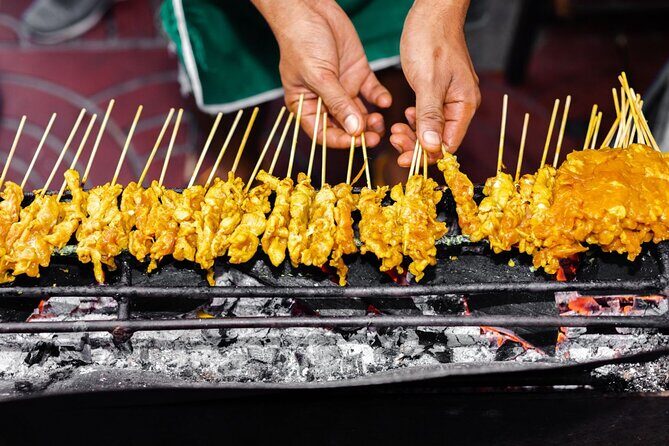
This first phase is about getting your taste buds calibrated. In other words, you’re learning how to read the food in real time. You’ll get samples such as Thai curry, chicken satay, and noodles, which are good anchors because they show up in different forms across Chinese-Thai cooking.
A practical tip: treat stop 1 like the foundation. If you don’t understand what you’re tasting here, later stops can blur together. Ask your guide what to pay attention to—texture, sweetness, acidity, or spice level—so the whole walk becomes a guided food lesson rather than just eating.
Stop 2 in Chinatown: Thai-Chinese Influence You Can Taste
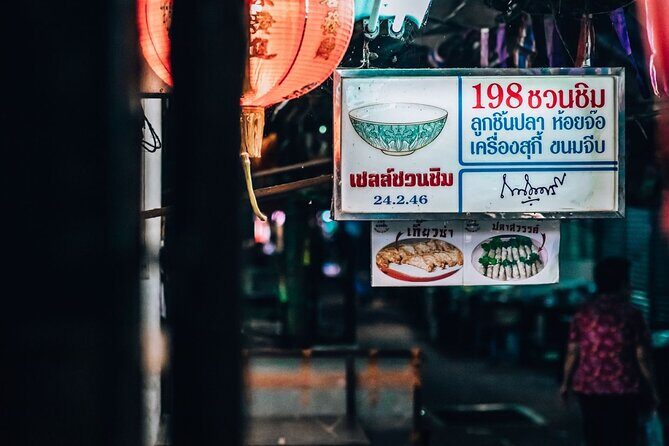
Chinatown food in Bangkok has a long backstory, and this stop is where it becomes obvious. The tour frames the experience around China’s influence on Thailand, showing up in noodles, stir-fries, and the way flavors balance savory, sweet, and sometimes funky notes that don’t fit Western expectations.
This is also where you’ll likely hit some of the standout stops people rave about, including venues described as Michelin-listed street food. You may see items like shrimp dumplings and other Chinese-influenced bites that are classic in this area and hard to track down if you’re just wandering.
One more smart thing your guide helps with: how to order street food in a way that makes sense. On your own, you might aim for something safe and miss what locals actually crave. On this tour, you’re guided through variety—soups, mains, and eventually sweets—so you get the full “street-food day” arc.
You can also read our reviews of more tours and experiences in Bangkok
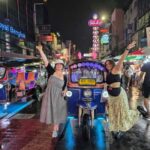
Stop 3 Back at Yaowarat: Sweet Finish and Easy Ending
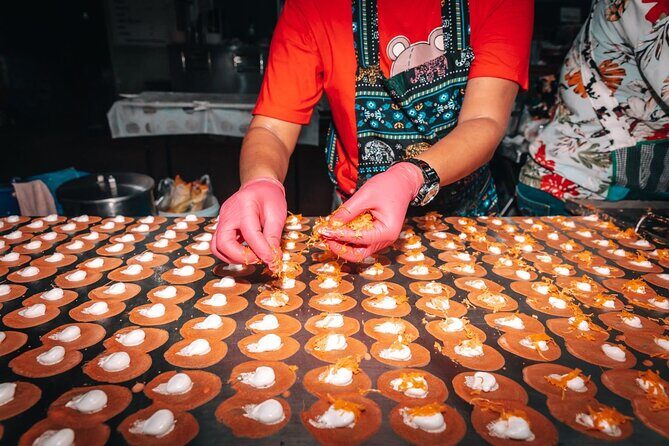
The tour winds back toward the start point at Shanghai Mansion Bangkok along Yaowarat Road, where the neon and motion of the street becomes the final scene. This last stretch is often when you feel the biggest shift: the food starts aiming for comfort and dessert, not just variety.
From the food you’re told to expect, you can also plan for dessert classics like mango sticky rice. Some guides also lead people toward unusual-but-very-real Chinatown sweets, including something described as soy sauce ice cream. It sounds odd on paper. It makes more sense once you taste it and your guide explains the flavor logic.
The practical win: you end back where you started. That means you can take a breather, check your photos, and decide what Bangkok’s next chapter is without dealing with a tricky end location.
Guides, Explanations, and Why Two Staff Changes Everything
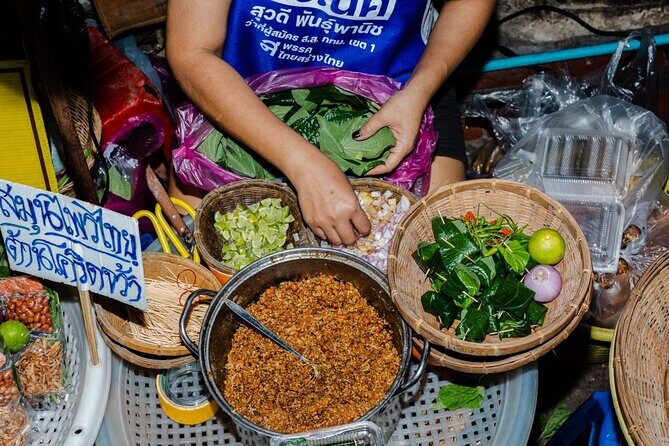
This tour’s biggest “service difference” is the team structure: one professional foodie guide plus one assistant. That extra staff time shows up in small ways that matter: making sure people are seated, handling the flow between stops, and keeping you from standing around while food is being prepared.
The guides can include names like Annie, Rach, Ant, Bew, Wan, Ploy, Noa, and Windy—and the consistent theme is energy plus clear explanations. You’ll hear why certain ingredients matter, how dishes are prepared, and how Chinatown and Thai culture blend in everyday eating.
One detail I love for first-timers: your guide talks about food recognition systems tied to Thailand, including references to the Thai equivalent of Michelin style recognition (like the Green Bowl idea mentioned in guide explanations). Even if you’re not chasing awards, it helps you understand why these vendors are worth seeking out.
What Foods You’ll Likely Try (and How the Variety Works)
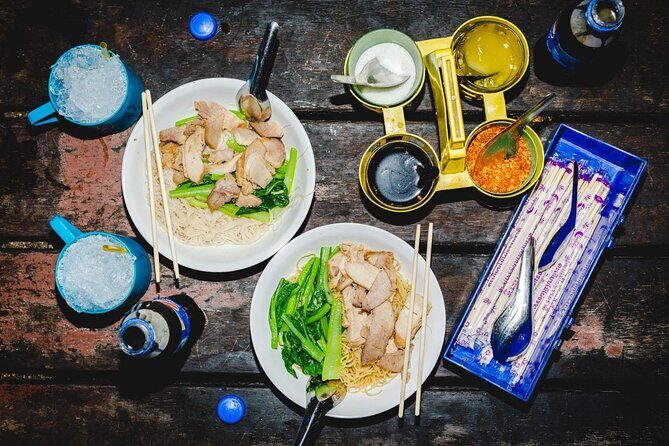
The tour is structured around multiple categories, so the “15+ tastings” doesn’t feel like the same pattern repeated. You’re sampling both savory and sweet, plus a mix of textures—soups, stir-fries, skewers, and dessert items.
Based on what you’re told to expect, you’ll see items such as:
- Thai curry and noodle dishes
- Chicken satay
- Street-style snacks and sweets
- Desserts like mango sticky rice
- Possibly unusual Chinatown sweets like soy sauce ice cream
- Items from Michelin-listed street venues (at least two across the route)
- Finishers like drinks or water (bottled water is included)
The reason this variety is valuable is mental. If you only eat one dish style, you won’t learn much. If you taste across categories, you start noticing patterns—how sweet balances heat, how salty sauces carry aroma, and why certain noodle textures are so prized.
Spice, Seating, and Eating Comfort: What to Expect on the Ground
Street food comes with variables: some stalls are quick, some take a little longer, and crowds can shift block to block. The tour helps by keeping the pacing tight. Many people also highlight that the assistant helps make sure seats and food are ready as you arrive, so your time stays focused on eating, not waiting.
As for spice, street food in Chinatown ranges widely. You’ll be able to taste differences across dishes, and your guide can help with what to expect. If you’re cautious about heat, tell the guide early so they can steer you toward the right bites first.
Come hungry is the rule. Even if you’ve had breakfast, you’ll probably want to adjust your plan. This tour aims for you to leave fully satisfied, not just full of excitement.
Diet Limits and Allergy Reality Checks (Read This Before You Go)
This is important: the tour is not suitable for vegetarians, pescatarians, or no pork diets because street vendors have limited alternatives. That also means some dishes may be skipped for other dietary needs.
Allergies are treated seriously here. The tour notes it’s not suitable for shellfish or peanut allergies, and it also warns about severe allergies, with trace and cross-contamination risk. It’s also not suitable for halal and celiac disease due to that same cross-contamination reality.
If you have any allergy or strict diet, don’t assume you can wing it. The safe approach is to ask directly what can be handled. Street food is flexible for many things, but allergies and dietary rules are not things you want to improvise.
After the Tour: What to Do With the Rest of Your Day
Because the tour ends back at Shanghai Mansion, you can treat it like an easy anchor on your itinerary. Plan for a relaxed next step: a nearby drink of water, a short walk for photos, or a low-key meal later that doesn’t compete with what you just ate.
Also, think of this as more than snacks. You’ll get street-level context about Chinatown eating habits and the Thai-Chinese flavor blend. That makes the next market stop you hit feel less random and more readable.
Should You Book This Bangkok Backstreets Food Tour?
Yes—if your goal is to eat your way through Chinatown with less guesswork and more guidance. I think it’s a strong choice for first-timers because it mixes variety, cultural context, and a route you’d be unlikely to assemble on your own.
Skip it (or at least ask tough questions before booking) if you’re vegetarian, pescatarian, no pork, or dealing with shellfish/peanut allergies or severe dietary restrictions. Street food can be amazing, but this one is not built for strict menus.
If you love small groups, clear explanations, and the feeling of discovering places you wouldn’t find wandering, this is a good value use of $59. You’ll likely be full, happy, and more confident eating around Yaowarat afterward.
FAQ
How long is the Bangkok Backstreets Food Tour?
The duration is about 4 hours.
How many tastings are included?
You get 15+ food tastings included.
What’s included in the price?
The tour includes 15+ food tastings, bottled water, 8–9 stops, and guiding from 1 professional foodie guide plus 1 assistant. It also includes exploration of backstreets where tuk-tuks cannot go.
Where does the tour start and end?
It starts at Shanghai Mansion Bangkok, 479, 481 Yaowarat Rd, and ends back at the same meeting point.
How big is the group?
The maximum group size is 8 travelers.
Are alcoholic drinks included?
No. Alcoholic drinks are excluded.
Is pickup and drop-off included?
No. Pick up and drop off from your hotel is excluded.
Is this tour suitable for vegetarians or pescatarians?
No. It’s not suitable for vegetarians or pescatarians due to limited alternatives available.
What is the cancellation policy?
You can cancel for a full refund up to 24 hours in advance. If you cancel less than 24 hours before the experience starts, you won’t receive a refund.