REVIEW · BANGKOK
Bangkok: Cooking Class with Market Visit & Tuk Tuk Ride
Book on GetYourGuide →Operated by Sabieng Cooking · Bookable on GetYourGuide
Bangkok has a way of pulling you toward food fast. This 3.5-hour cooking class from Sabieng Thai Cooking in Sukhumvit 22 pairs a fresh-market ingredient hunt with a tuk-tuk ride and then turns it into a hands-on lunch you can actually cook at home.
What I love most is the mix of real shopping and real cooking: you’re guided through ingredients first, then you make curry paste from scratch and finish with four classic dishes. I also like the small-group setup (about 8–12, limited to 10), because you’re not just watching—you get attention at your station.
One thing to consider: the class is built for learning (and some prep is done for you), so you might not chop everything from scratch or get long back-and-forth time with the chef. Timing matters too—if you arrive late, you can miss the market part.
In This Review
- Key highlights at a glance
- Why a market + tuk-tuk Thai cooking class makes sense in Bangkok
- MRT meeting point and timing: how not to miss the market
- Bangkok’s biggest fresh market: what you’ll learn to spot
- The tuk-tuk ride back to Sukhumvit 22
- Inside Sabieng Thai Cooking: how the class is set up
- The cooking lesson: curry paste from scratch and three more classics
- What you’ll eat: four dishes in one group meal
- Dietary options: what’s included, what costs extra, and what you must tell them
- Price and value: is $48 a good deal for Bangkok?
- Who should book this class, and who might want a different style
- Should you book Sabieng Thai Cooking in Sukhumvit 22?
- FAQ
- How long is the cooking class?
- Where do I meet for the class?
- What’s included in the price?
- What dishes will I learn?
- What dietary options are available?
- Is alcohol included?
- What happens if I’m late?
Key highlights at a glance
- Bangkok’s largest fresh market with guided ingredient scouting
- Tuk-tuk ride back to the modern cooking school in Sukhumvit 22
- MasterChef Thailand Season 3 finalist instruction plus experienced chefs
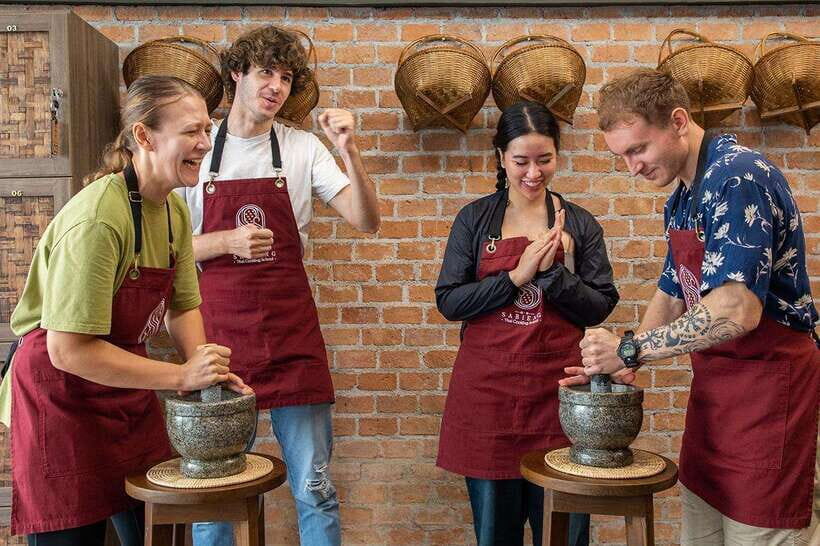
- Hands-on cooking for four dishes, including curry paste from scratch
- Dietary flexibility (vegetarian, halal, kosher on request, plus food allergies with notice)
- Multilingual support alongside English (中文/ไทย/한국어 translation)
Why a market + tuk-tuk Thai cooking class makes sense in Bangkok
If you only do one food activity in Bangkok, make it something that teaches you how Thai cooking starts—not just what it tastes like. This class does that by taking you out into the market first, then bringing you into the kitchen right after. You’re basically learning the “why” behind flavors: what ingredients matter, how Thai cooks think about balance, and how spice and texture show up on the plate.
It’s also practical. In about 3.5 hours, you get a full flow: walk, ride, cook, eat. Tracy from the UK summed up the appeal well—market walk, quick tuk-tuk hop, and then a four-dish lunch with a small group. If you’re short on time but still want something authentic, this structure is a good fit.
There’s no pretending this is fine dining with white tablecloth vibes. This is about technique and confidence. You leave with digital recipes, so the next time you’re shopping for groceries at home, you know what to look for—and what to skip.
You can also read our reviews of more shopping tours in Bangkok



MRT meeting point and timing: how not to miss the market
Logistics in Bangkok can be easy or annoying depending on timing, so read this part carefully.
You meet at the MRT Queen Sirikit National Convention Centre station, Exit 1, at street level (outside the underground exit). Important detail: it’s not the actual convention center building that shares the same name—use the MRT exit as your anchor point.
The class runs about 210 minutes, and late arrivals have consequences:
- If you’re more than 10 minutes late, you’ll need to go directly to Sabieng Thai Cooking School. You will likely miss the market visit.
- If you’re one hour late, it’s marked as no-show and is non-refundable (and won’t be rescheduled).
That sounds strict, but it’s common for market-based activities. The market portion runs on a real schedule; once you’re late, the group moves on. My advice: build in buffer time to get from your hotel to the MRT. If you’re coming from somewhere far in traffic, show up early enough that you can still find the right exit calmly.
Also note what’s not allowed: weapons/sharp objects, oversize luggage, and baby strollers or baby carriages. And this experience isn’t set up for wheelchair users or people with mobility impairments.
Bangkok’s biggest fresh market: what you’ll learn to spot
The market stop is the centerpiece for ingredient context. You’ll visit Bangkok’s largest fresh market area with an instructor guiding you through what Thai cooking actually depends on.
You’re not just walking past stalls. The point is to connect ingredients to the dishes you’ll later cook. Expect explanations tied to flavor building blocks—fresh herbs, aromatics, and staples that show up across Thai meals. You’ll see how vendors present produce and how cooks choose ingredients by texture and smell, not just looks.
Here’s the real value: when you cook later, you won’t feel lost staring at a bowl of mystery items. Even if you’re a beginner, you’ll recognize many ingredients from the market walk and understand what they do in Thai dishes.
One caveat from the way this class is designed: the market experience may be more about learning than about deep chats with vendors. In at least one case, the market walk was described as having explanations but fewer moments interacting with merchants. That doesn’t make it bad—it just sets expectations. If you want vendor-style bargaining or long conversations, this class isn’t trying to be a market tour in that style. It’s trying to be a cooking-class market primer.
Tip I’d use: come hungry, and bring curiosity. You can also ask your instructor practical questions during the market walk about which ingredient versions taste different, especially if you’re planning to cook at home later.
The tuk-tuk ride back to Sukhumvit 22
After the market, you’ll ride back to the cooking school by tuk-tuk. This part is short, but it adds Bangkok texture to the day—street sounds, the feel of being out in the city, and that quick sense of transition from “ingredient hunt” to “kitchen time.”
A practical note: traffic can affect how long the ride feels. One participant described a route that was only about 2 km but slowed down by congestion. So treat it like transportation with a side of fun, not a sightseeing tour.
Still, it’s worth having the ride included. It keeps the day moving and reduces the effort of figuring out transit while you’re already juggling a scheduled class and a market visit.
Inside Sabieng Thai Cooking: how the class is set up

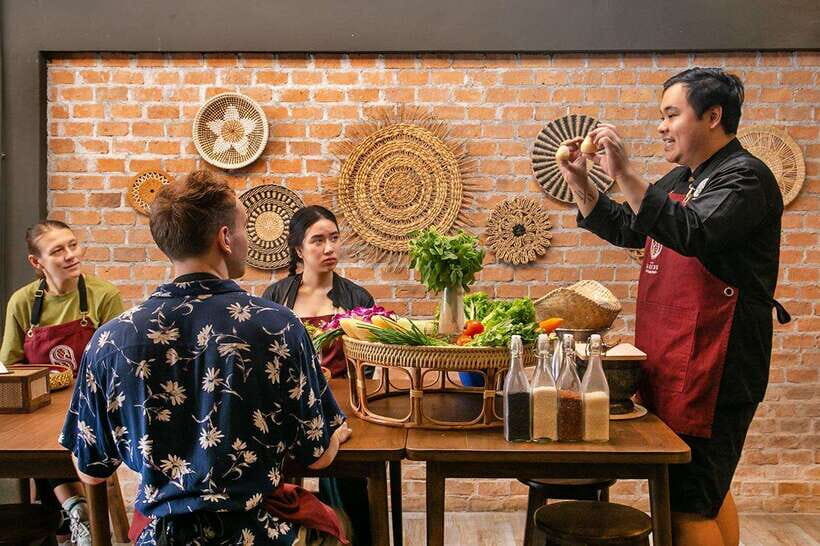
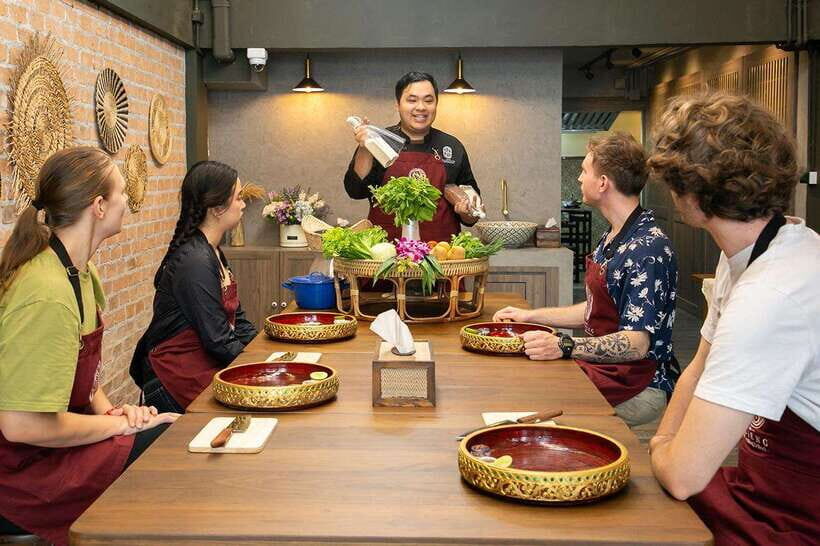
The cooking school is modern and air-conditioned, with professional-grade stations and modern amenities. That matters in Bangkok. Hot kitchens drain energy fast, and this is designed to keep you comfortable and focused while you cook.
Class size stays small—typically 8–12, with the experience capped at 10 participants. In cooking classes, that’s the difference between cooking and waiting. You’ll have enough room to work, and instructors can correct your technique without shouting over a big crowd.
Instruction is primarily in English, with 中文/ไทย/한국어 translation available. That’s a strong setup if you’re not fully confident in English cooking vocabulary. You don’t need to be a Thai cuisine expert to follow along.
Also helpful: the class uses digital recipes and includes a special souvenir. The souvenir part isn’t the reason to book, but it does give you something to take home that matches what you learned.
You can also read our reviews of more tours and experiences in Bangkok



The cooking lesson: curry paste from scratch and three more classics
You’ll cook four Thai dishes during the session. A key standout is that you’ll learn to make curry paste from scratch. That single skill is huge, because curry paste is where Thai flavor starts—before the curry itself ever hits the pot.
What you’ll likely notice is the pacing. This class isn’t built around doing every task for yourself without help. Some ingredients may be prepped ahead, and your role is heavier on cooking: wok work, combining components, and hands-on finishing touches. One participant felt they did more cutting and wok cooking than full “from zero” prep, which matches how many well-run cooking schools keep things moving for groups.
Expect your instructor to guide the flow step by step:
- You’ll start with ingredients and paste basics.
- You’ll move into cooking methods that show how Thai dishes are built around aromatics, herbs, and spice balance.
- You’ll shape your final dishes for serving together as a group.
Spice is something you control. You’ll choose your preferred heat level (so you don’t have to guess if you’ll regret it later). Just remember: choosing mild spice doesn’t mean losing flavor. Thai “not too spicy” food still tastes like Thai food—it just lets your palate pick up herbs and aromatics instead of only heat.
If you like learning technique: ask questions about paste texture and aroma. Curry paste should smell fragrant and feel cohesive; if it’s too dry or uneven, that usually comes from paste grinding and proportions. Getting that right makes the whole curry taste better, even after you add coconut milk or stock.
What you’ll eat: four dishes in one group meal
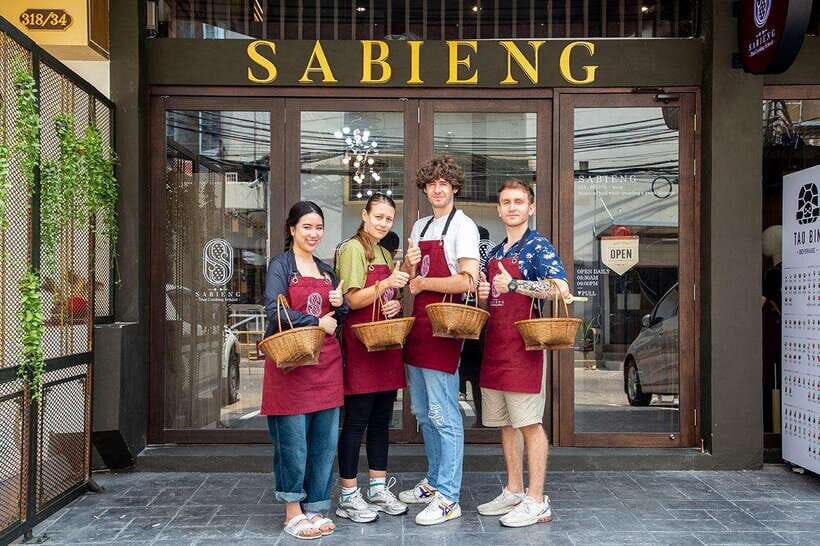
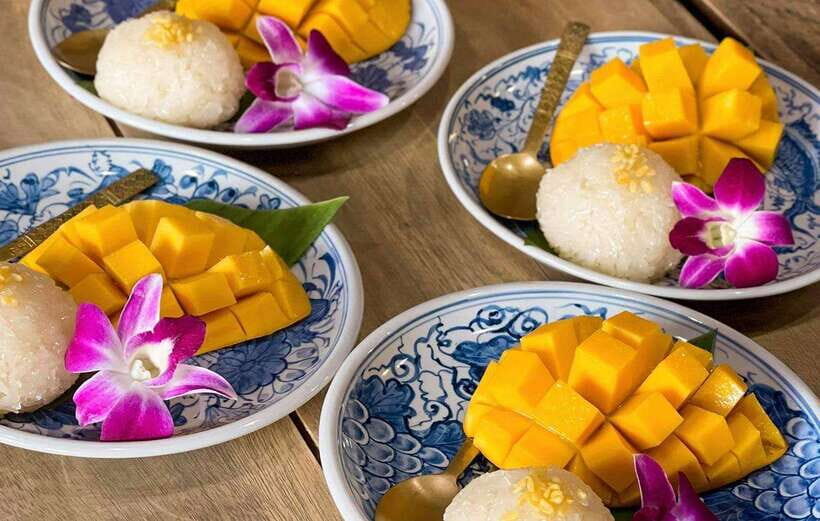
This is a lunch format, not a snack-and-sip lesson. Your group meal typically includes one appetizer, two mains, and one dessert served together.
That structure matters because it gives you a complete Thai-food “arc” in one sitting. You’ll taste how sweetness and acidity balance across the meal, not just within a single dish. Dessert also turns this from a cooking demo into a real food experience.
One practical tip: this class can be filling. If you show up early in the day and don’t plan a real meal afterward, you might find you’re suddenly done with cravings for hours. If you’re doing other Bangkok activities the same day, plan light.
Dietary options: what’s included, what costs extra, and what you must tell them
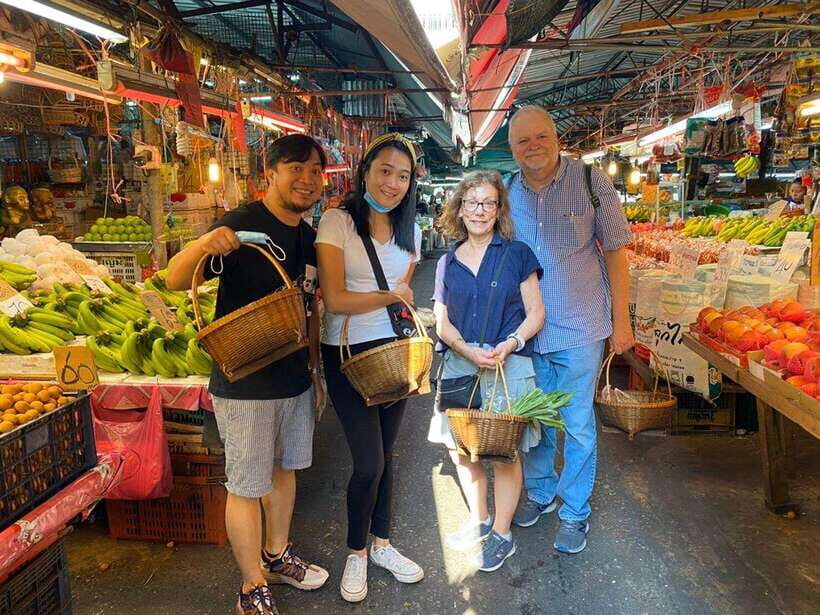
Sabieng Thai Cooking is built to handle real needs. You can choose regular, vegetarian, halal, and kosher options, and they also support food allergies—as long as you notify them at least 24 hours in advance.
Two kosher-specific details are worth knowing:
- Kosher ingredients may cost extra upon request.
- New kosher equipment may also carry an extra charge, and you’d keep the equipment.
So if kosher is important for your diet, message ahead early enough to avoid last-minute surprises. If you have allergies, the 24-hour window is your key to a safe plan.
Also, because the menu is taught as Thai classics, vegetarian and halal adjustments may still follow the same flavor logic (herb aromatics, spice balance), just with ingredient swaps. That tends to make the cooking experience feel cohesive instead of like a separate, simplified class.
Price and value: is $48 a good deal for Bangkok?
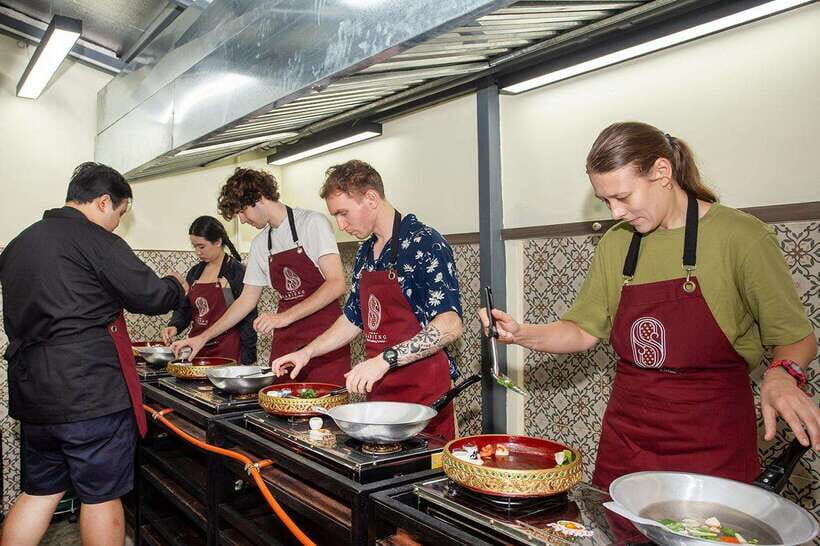
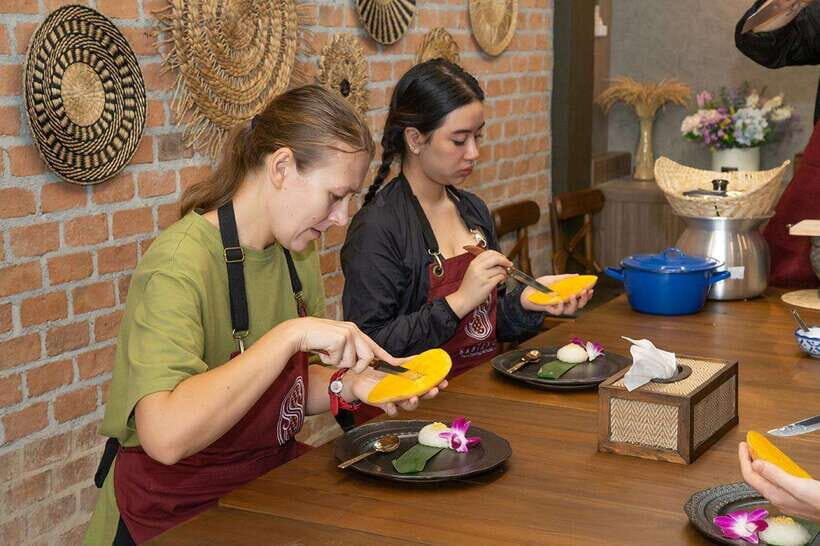
At $48 per person for about 210 minutes, you’re paying for more than cooking time. The value comes from the whole package: market visit, transportation by tuk-tuk, hands-on instruction for four dishes, ingredients and equipment, unlimited drinking water, welcome seasonal fruits, and digital recipes.
If you’ve done cooking classes elsewhere, you’ll know the market component is often what makes this one feel worth it. You’re learning where the ingredients come from in the city—then cooking with that knowledge minutes later. That turns the class into a skill-building activity rather than a one-off meal.
That said, expectations should match the format. If you’re expecting a super technical class where you chop everything from scratch with lots of instructor hovering, you might feel the hands-on parts lean more toward cooking than prep. In one described experience, a participant expected more chef interaction and more time making choices about product quality. If that’s your priority, go in ready to ask questions and focus on technique rather than deep vendor negotiation.
Overall though, for most people—especially beginners who want Thai cooking fundamentals—this price feels fair for what you get.
Who should book this class, and who might want a different style
This is a strong choice if you:
- Want a Thai cooking class that includes a market visit (not just a grocery list)
- Are a beginner or intermediate cook who wants guided technique
- Prefer a small group environment
- Want ingredient-based learning you can repeat at home
- Need dietary flexibility for vegetarian, halal, or kosher, or you have allergy requirements
You might choose something else if you:
- Want lots of close-up conversation with vendors or very long market time
- Expect every step of cooking to be fully taught from the first chop to plating without pre-prep
- Need a class that’s extremely mobility-friendly (this one isn’t set up for wheelchair users)
- Are very sensitive to timing rules (late arrivals can miss the market)
Should you book Sabieng Thai Cooking in Sukhumvit 22?
I’d book this if you want the best of Bangkok food in one afternoon: market sense, Thai technique, and a meal you’ll remember. The curry paste from scratch piece alone is a practical takeaway. And the small-group setup plus English-first instruction (with translation options) makes it easier to actually learn, not just eat.
If you’re the type who likes deep market shopping or long chef mentoring, go in with the right expectations: this is a structured cooking class with a market primer, not an all-day wandering food expedition. Show up early, come hungry, and ask your instructor what you want to know while you’re cooking.
If that sounds like your style, this is an easy yes.
FAQ
How long is the cooking class?
The class lasts about 210 minutes (around 3.5 hours).
Where do I meet for the class?
Meet at the MRT underground station named Queen Sirikit National Convention Centre, Exit 1, at street level (outside the underground exit). Use the exit as your reference point, not the convention center building.
What’s included in the price?
You get a market visit and tuk-tuk ride, cooking sessions for four Thai dishes, all ingredients and equipment, unlimited drinking water, welcome seasonal fruits, digital recipes, and a special souvenir.
What dishes will I learn?
You’ll cook four classic Thai dishes, including curry paste made from scratch.
What dietary options are available?
You can choose regular, food allergy support, vegetarian, halal, and kosher options. For food allergies, notify the provider at least 24 hours in advance. Kosher ingredients and possibly kosher equipment may have extra cost upon request.
Is alcohol included?
No. Alcoholic drinks are not included.
What happens if I’m late?
If you arrive more than 10 minutes late, you should go directly to Sabieng Thai Cooking School and you may miss the market visit. If you’re one hour late, it’s marked as no-show and is not refundable or reschedulable.
If you want, tell me your travel dates and whether you prefer the morning or afternoon session. I can help you plan the rest of your day around that schedule and food timing.