REVIEW · BANGKOK
Bangkok Electric Tuk Tuk: Thonburi, Wang Lang & Food Tour
Book on Viator →Operated by Intrepid Urban Adventures - Thailand · Bookable on Viator
Electric tuk-tuks make old Bangkok feel fresh. This half-day tour strings together Thonburi backstreets with markets and a few history stops, all under the guidance of a local English-speaking guide. I like that it’s not just sightseeing—it’s built around what you can see, smell, and snack on.
Two parts I’d put at the top: the Wang Lang Market food tastings and the chance to learn hands-on at the Baan Bu stoneware pottery community. You also get a boat segment and a riverside break, so the day doesn’t feel like nonstop walking or trapped-in-a-van tourism.
One thing to consider: there’s no hotel pickup, and you’ll do about 1.5 km of walking plus roughly 2 hours in the tuk-tuk. If you dislike crowds or hate being on a schedule at markets, plan your expectations for pacing—especially at Pak Khlong Talat.
In This Review
- Key highlights worth planning for
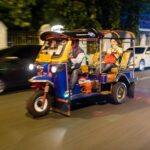
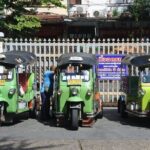
- Electric tuk-tuk through Thonburi’s backstreet Bangkok
- Wat Arun area and temple viewing without the full-day commitment
- Sanam Chai meeting and the half-day timing that shapes the whole experience
- No hotel pickup means you should plan your arrival
- Thonburi Station: steam locomotives and a quick history lesson
- Baan Bu community pottery: where craft is the attraction
- Why this stop makes the food tour feel smarter
- Wang Lang Market: street food tastings with real choices
- How much food do you actually get?
- Dietary needs
- Riverside café and the boat segment that keeps the pace sane
- Pak Khlong Talat: finishing with flowers at 24/7 scale
- Timing and pacing reality check
- Price and value: is $65 a fair deal?
- Group size, guides, and what makes this tour feel personal
- Who should book this (and who might skip it)
- Should you book Bangkok Electric Tuk Tuk: Thonburi, Wang Lang & Food Tour?
- FAQ
- How long is the Bangkok Electric Tuk Tuk tour?
- Do I need to pay extra for tickets during the tour?
- Is hotel pickup included?
- What food is included, and is it enough?
- Can the tour accommodate vegetarian diets?
- How big is the group?
- How much walking is involved?
Key highlights worth planning for
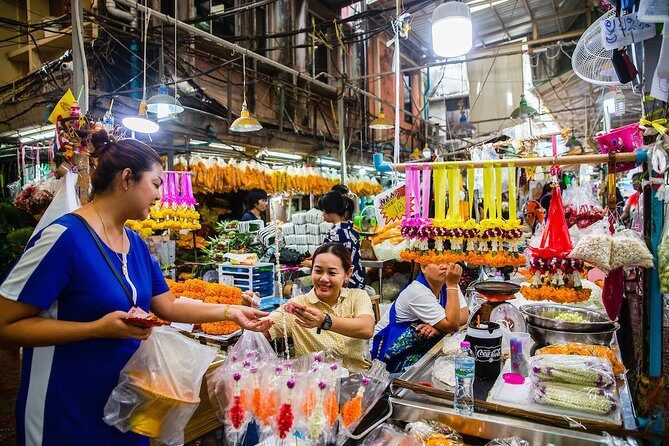
- Electric tuk-tuks in old-city streets: quieter ride than typical tuk-tuks, designed for short, local loops.
- Wang Lang Market tastings plus palace-view payoff: you eat and then look across the river at the Grand Palace area.
- Baan Bu pottery, built over 200 years: you’ll see how stoneware work fits into daily community life.
- Train-station stop with steam-locomotive context: you get a quick, specific history moment at Thon Buri Station (1906).
- Pak Khlong Talat flower market at the end of the tour: it’s open 24/7, and you finish right where the action is.
Electric tuk-tuk through Thonburi’s backstreet Bangkok
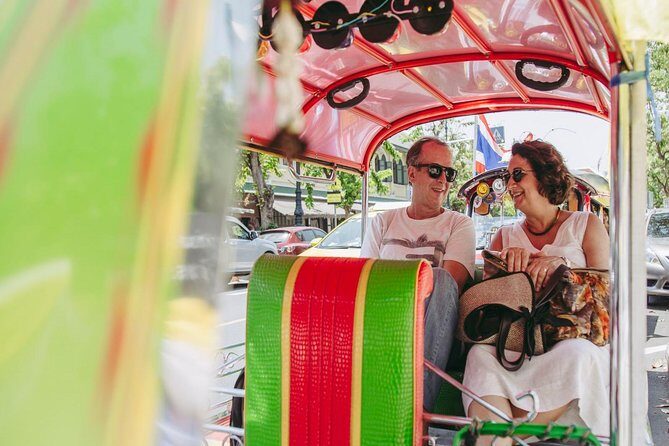
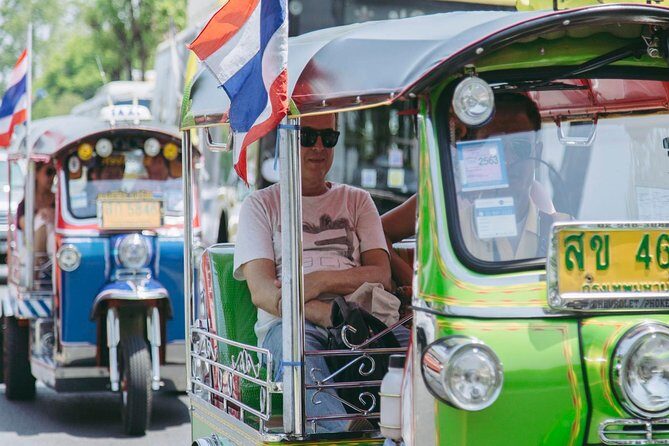
This tour is built around one smart idea: you’re in Bangkok’s older, tighter neighborhoods, where a tuk-tuk can actually get you close to the places that matter. You start in the Sanam Chai area, then climb aboard an all-electric tuk-tuk for a loop through Thonburi.
Thonburi is the river-side sibling to the more famous Bangkok core. The vibe is less postcard and more lived-in: temples, local streets, and small business flow. Your guide uses the ride to point out what you’d miss if you were just hopping from stop to stop by taxi. One of the best reasons to do it this way is simple—you’ll spend less time negotiating transport and more time paying attention to what’s right around you.
You can also read our reviews of more food & drink experiences in Bangkok


Wat Arun area and temple viewing without the full-day commitment
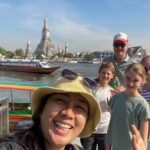
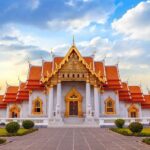
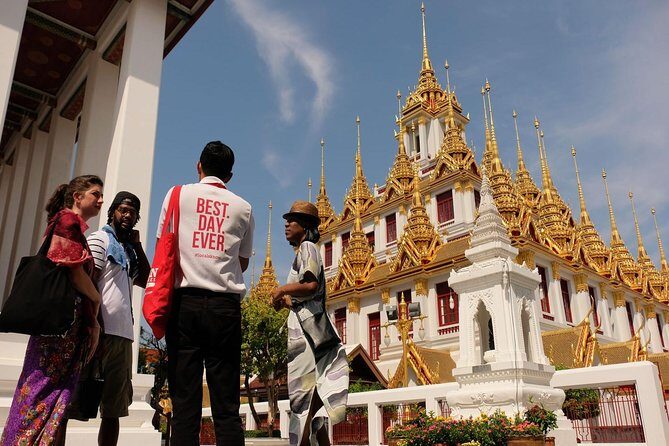
You pass notable temples, including Wat Arun (Temple of Dawn). You’re not doing a long temple marathon here. The goal is to get context and impressions—enough that you can decide later what to revisit. That’s a good match for a 4-hour afternoon tour.
Sanam Chai meeting and the half-day timing that shapes the whole experience
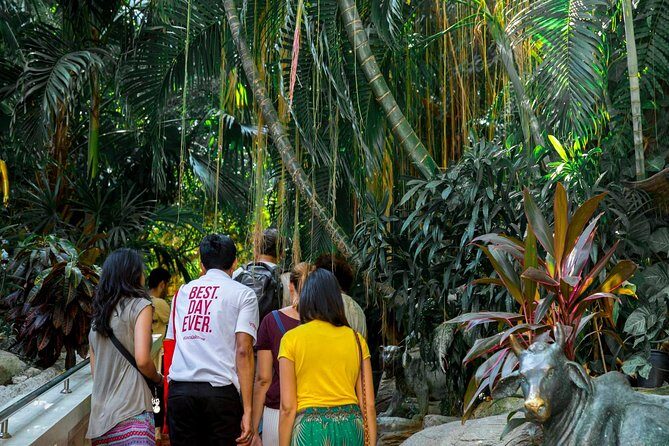
The tour starts at Sanam Chai (meeting point in the Sanam Chai/Khlong San area) at 2:00 pm. Since it’s an afternoon start, you’re likely to hit a different slice of the city than morning tours—more market energy and late-day river movement.
You’ll also want to remember the pace math. The tour covers about 2 hours of tuk-tuk ride and roughly 1.5 km (about 1 mile) of walking. That walking is not the big factor; it’s the small bits between locations—junction-to-junction style, plus a walk back to Pran Nok Pier for the boat segment.
No hotel pickup means you should plan your arrival
This is where a lot of your comfort will come from: hotel pickup is not included. You’ll need to get yourself to the Sanam Chai meeting area. In the real world, Bangkok traffic and distance can be unpredictable, so I recommend giving yourself more buffer than you think you need.
Thonburi Station: steam locomotives and a quick history lesson
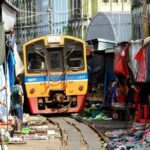
One of the most specific stops is Thon Buri Train Station, opened in 1906. You get a short visit (about 15 minutes) to see historic steam locomotives housed at the station and learn why they mattered—both for transport and for Bangkok’s development.
Is it a long, museum-style experience? No. But it’s memorable in a different way: it anchors the tour in the infrastructure behind the city’s growth. And the timing works. After riding and temple viewing, a focused station stop gives your brain a break from markets while still keeping the story moving.
You can also read our reviews of more tours and experiences in Bangkok


Baan Bu community pottery: where craft is the attraction
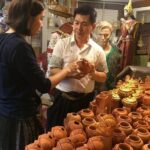
The Baan Bu traditional community is one of the best reasons to choose a guided tour. This isn’t just a photo opportunity; you’re set up to understand what people do day to day. The community is known for stoneware pottery made for over 200 years, and the background is explained as part of your stop.
You’ll also see a pottery demonstration during the tour. Even if you’re not a craft person, this tends to land well because it’s practical: you watch the process, then connect it to the idea of generational skill.
Why this stop makes the food tour feel smarter
A lot of “food tours” skip the context and end up as a snack parade. Here, the craft stop gives you something to compare against the markets. You start to notice that Bangkok street food and Bangkok objects come from the same ecosystem: people producing for local demand, not just for tourists.
Wang Lang Market: street food tastings with real choices
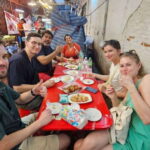
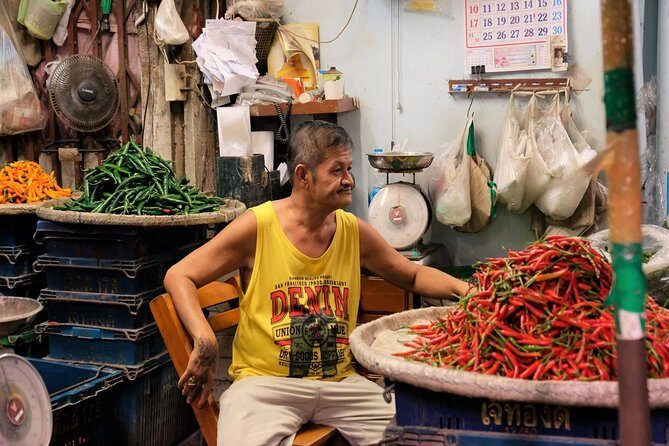
Your longest food stop is Wang Lang Market (about 1 hour). This is where you sample authentic local cuisine from vendors. The tour includes tastings such as fried pork with sticky rice, Thai desserts, and kanom bueng.
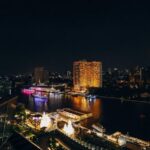
You’ll also get one of the best visual rewards of the afternoon: views of the Grand Palace area from across the Chao Phraya River. That combination—eating first, then looking across the water—helps the whole experience feel like a connected story instead of unrelated stops.
How much food do you actually get?
The total amount of included food is described as the equivalent of a full meal. Portions can vary by season and where you stop, but the point is that it’s not just a couple bites. This matters because at $65-ish for a 4-hour tour, value hinges on whether the “food” is real food.
Dietary needs
If you’re vegetarian, the tour can cater for you. It does not list other dietary adaptations, so if you need more than vegetarian options, check directly before booking.
Riverside café and the boat segment that keeps the pace sane
After Wang Lang Market, you take a breather at a riverside café. You’ll be able to relax over coffee or tea while taking in the river views. This is a small stop, but it’s important. It breaks the day up so you’re not moving non-stop between busy markets.
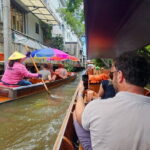
Then you walk back to Pran Nok Pier and cross the river by Chao Phraya Express Boat (ticket included) to Sapan Phut Pier. The boat ride is about 20 minutes, and it does two jobs:
- it gets you across without wrestling with traffic
- it gives you a moving viewpoint of the city rather than another “stand still and look” moment
Pak Khlong Talat: finishing with flowers at 24/7 scale
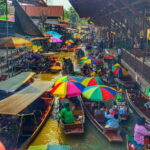
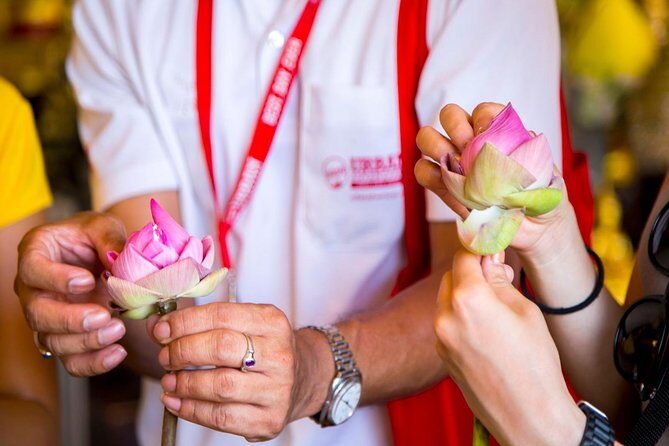
You end at Pak Khlong Talat, the biggest flower market in Thailand, and it’s open 24 hours a day, 7 days a week. Your stop is about 30 minutes, and it’s timed to leave you ready to head back into Bangkok from there.
What you’ll notice right away is scale. This market isn’t just a place where people buy arrangements for home. It functions as a distribution center, with flowers shipped and transferred onward to other cities around the country. Even in half an hour, you can feel that “moving goods” energy.
Timing and pacing reality check
Because the flower market stop is not long, you’ll want to arrive with a plan: pick a few areas you care about, and don’t try to see everything. If you’re the kind of person who needs extra time to browse slowly, you may want to do a quick revisit later on your own.
Price and value: is $65 a fair deal?
At $65.03 per person for about 4 hours, this isn’t a $20 street-food sampler. But it does include several value drivers:
- an electric tuk-tuk for around 2 hours
- a local English-speaking guide
- pottery demonstration at Baan Bu
- food tastings that add up to about a full meal
- coffee or tea at a riverside café
- an express boat ticket across the river
That mix matters. Many Bangkok tours only “show” you a neighborhood. This one also feeds you and provides transport that’s tailored to the river-and-old-city layout.
That said, not everyone will feel it’s worth it. One criticism you’ll hear is that the tour can feel a bit short at certain market moments, and a couple stops may not hit the top tier for everyone. If your main goal is heavy shopping or long browsing at one market, you might find the pace a little tight.
Group size, guides, and what makes this tour feel personal
The group is capped at 9 travelers, with a private option also available. That small size tends to help in places like Thonburi backstreets, where you want enough space to move without turning the group into a parade.
Guide quality is a standout theme in the feedback. Names that came up include Pam, Pat, Bo, and Pe-pae. The common thread: guides who explain what you’re seeing in clear English and keep a friendly, attentive pace. If you care about understanding the “why” behind temples and markets, this is where the tour’s edge shows.
Drivers are part of the experience too since the tuk-tuk ride is the main “transport texture.” When it works well, the ride feels like a convenient street-level shortcut, not just a novelty vehicle.
Who should book this (and who might skip it)
This is a great fit if you want:
- a half-day introduction to old Bangkok districts, not a full-day grind
- street food with structure and guidance
- a craft and market combo (Baan Bu + Wang Lang + Pak Khlong Talat)
- small-group attention, not a large bus-and-line tour
You might want to think twice if:
- you hate set schedules or short market stops
- you strongly prefer deep time for one place (like spending a long stretch in Pak Khlong Talat)
- you don’t want to handle getting to the meeting point on your own (since pickup isn’t included)
Should you book Bangkok Electric Tuk Tuk: Thonburi, Wang Lang & Food Tour?
I’d book it if you want Bangkok’s river-and-market feel in a compact package. The electric tuk-tuk, the Wang Lang food tastings, and the Pak Khlong Talat finish work together well as an afternoon plan. It’s also one of those tours where the guide can genuinely change the experience—good explanations turn “seeing” into “getting it.”
I’d skip or adjust expectations if you’re mainly chasing long shopping time at markets or you need a slow, unstructured browsing style. In that case, you can still enjoy many of these areas independently—but the tour’s included food, boat segment, and craft stop are the hard parts to replicate cheaply.
If you do book, arrive on time for Sanam Chai. Wear comfortable shoes. And come hungry. You’ll use that appetite more than once.
FAQ
How long is the Bangkok Electric Tuk Tuk tour?
It runs for about 4 hours.
Do I need to pay extra for tickets during the tour?
The itinerary lists admission tickets as free for the stops, and the Chao Phraya Express Boat ticket is included.
Is hotel pickup included?
No. Hotel pickup and drop-off are not included, so you’ll need to get to the meeting point on your own.
What food is included, and is it enough?
You’ll sample local dishes at Wang Lang Market, including items such as fried pork with sticky rice, Thai desserts, and kanom bueng. The total amount included is described as equivalent to a full meal.
Can the tour accommodate vegetarian diets?
Yes. The tour can cater for vegetarians. Other dietary requirements are not listed as available.
How big is the group?
The tour has a maximum of 9 travelers.
How much walking is involved?
You’ll cover about 1.5 km (1 mile) of walking total, plus about 2 hours of tuk-tuk riding.