REVIEW · BANGKOK
Bangkok History Temples Markets and Food Tasting
Book on Viator →Operated by Best Local Experiences · Bookable on Viator
Bangkok can feel big and confusing on day one. This 4-hour tour turns that first-day chaos into a clear route through temples, river travel, and market food. It starts at Wat Pho, then moves you through the Grand Palace area, a local pier market stop, and finishes with Wat Arun on the west bank.
I like that the pacing makes sense. You get real sightseeing time at Wat Pho, then food tasting that actually teaches you how to spot good street eats on your own later. One practical caution: Grand Palace access may be limited right now, with the tour noting you might only view it from the outside due to the King Rama 9 funeral period.
I also like that you’re not stuck in just one lane of Bangkok. You shift from temple details to ferry views to the kind of street-side snacking that helps you understand what locals do day-to-day. A downside to plan around: dietary options can be limited, so if you’re vegetarian/vegan/gluten-free, remind the operator before booking.
In This Review
- Key things you should know before you go
- A 4-hour Bangkok route that mixes temples, ferry views, and street snacks
- Wat Pho (Wat Phra Chetuphon): the reclining Buddha and why the order matters
- The Grand Palace area: big symbolism even if you only see it from outside
- Tha Chang Pier: a ferry crossing and a market snack lesson
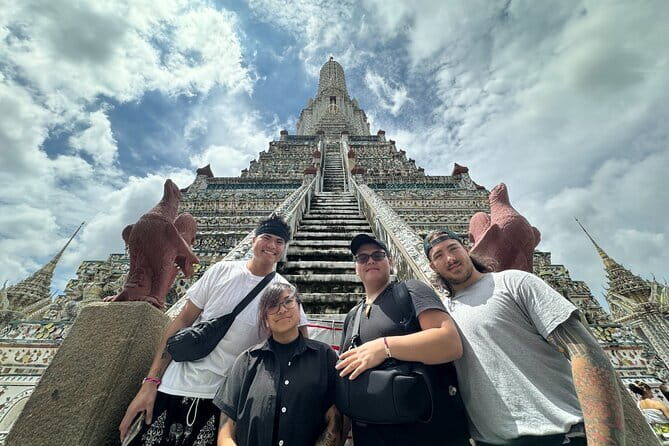
- Wat Arun (Temple of Dawn): riverside views and a temple that photographs well for a reason
- Price and logistics: why $51.82 can feel like a bargain
- Dress code and what to wear so you don’t get delayed
- Who this tour is best for (and who should pick something else)
- A note on timing: current conditions can change palace access
- Should you book this Bangkok Temples, Markets, and Food Tasting tour?
- FAQ
- How long is the Bangkok History Temples Markets and Food Tasting tour?
- What’s included in the price?
- Are temple admission fees included?
- Does the tour include entry into the Grand Palace?
- What’s the dress code for temple stops?
- Are vegetarian, vegan, or gluten-free options available?
- Where does the tour start and end?
Key things you should know before you go
- Wat Pho focus first: You start with the reclining Buddha temple complex, so you’re not rushing it later
- Outside-looking Grand Palace (possibly): The tour notes a current situation where you may only see the palace from outside
- Tha Chang Pier snack stop: Ferry crossing plus market browsing for local bites
- Wat Arun timing for river views: It’s set up for the riverside atmosphere near sunset-style light
- Guide-led food strategy: You’ll be shown how locals choose food, not just what to eat
- Dress code is real: Shoulders and knees need coverage in temple areas
A 4-hour Bangkok route that mixes temples, ferry views, and street snacks
This tour is built like a smart first-day plan. You’ll see major sights without losing half your time to finding entrances, navigating transit, and figuring out where to eat. The whole experience runs about 4 hours, with transport between stops handled for you, plus bottled water and snacks.
It’s also a value play, especially if you want structure. Temple admissions are not included, but you’re paying for the parts that save time: a licensed local guide, guided movement between sites, and the market segment where you learn how to choose food. At $51.82 per person, it’s the kind of tour that can make your next Bangkok day easier because you’ll know the city rhythm better.
A small logistics note: the tour can run with a maximum of 300 travelers. That doesn’t mean you’ll be in a huge crowd at every moment, but it does mean you should treat the start time and meeting spot like they’re important. It’s a “show up on time so you don’t sprint later” kind of tour.
You can also read our reviews of more food & drink experiences in Bangkok

Wat Pho (Wat Phra Chetuphon): the reclining Buddha and why the order matters
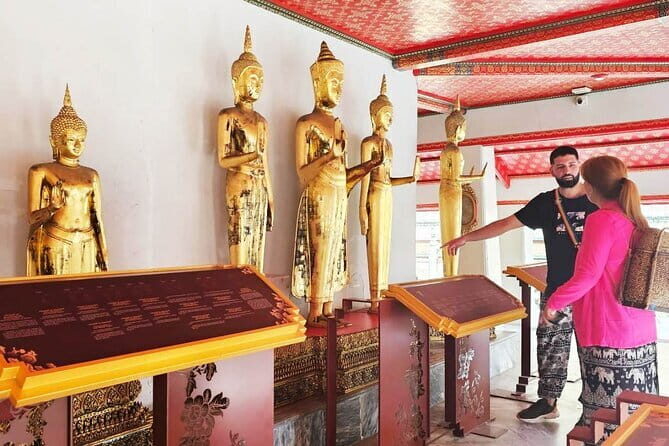
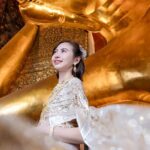
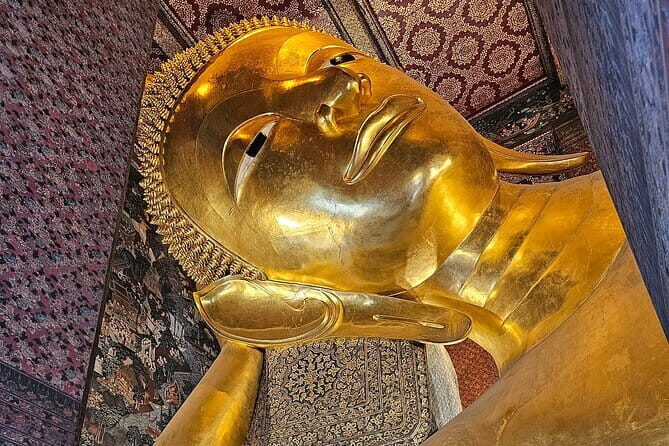
You begin at Wat Pho, also known as Wat Phra Chetuphon, often called the Temple of the Reclining Buddha. This is one of those places where the first impression is so strong that it sets the tone for the rest of your day. The complex is associated with King Rama I, who rebuilt the temple complex on an earlier site, which helps explain why it feels both historic and carefully maintained.
Your visit here is about 45 minutes, and that’s a good length for a first timer. You won’t see every corner of the sprawling grounds, but you will get the highlights and the story your guide frames around them. The reclining Buddha is the obvious must-see, but what surprised me in the way guides explain Wat Pho is how they connect temple art and layout to the larger Bangkok tradition—so you’re not just looking at gold statues, you’re learning how the site “works.”
Admission fee: 300 THB per person (not included).
Practical tip: Wear clothing that keeps you comfortable in warm weather while still meeting temple rules. If you’re already thinking ahead about Wat Pho, you’ll have less stress later at the Grand Palace and Wat Arun areas.
The Grand Palace area: big symbolism even if you only see it from outside
The next stop is the Grand Palace. Even if your current day doesn’t include interior access, the setting is still a major part of Bangkok’s identity. The palace was built in 1782, tied to the royal era and the way Bangkok consolidated power after the city’s founding period. Later, by 1925, it’s noted that the king, royal family, and government were no longer permanently settled there.
Your tour time here is listed as 1 hour 30 minutes, which signals that this isn’t meant to be a quick photo stop. Still, the tour includes a clear note: due to the Queen mother funeral of King Rama 9, the Grand Palace may be outside-only.
Here’s how to think about that as a traveler:
- If you were hoping for a full interior palace circuit, outside-only will feel shorter and less immersive.
- If you’re mainly after the historical sweep and the overall palace presence, you can still get something meaningful—especially because your guide ties it back to the broader timeline from 1782 to today.
Admission fee: 500 THB per person (not included).
Important: If access is limited on your date, you’ll still get the sightseeing framing without the interior ticket.
If you want the best experience on the day you book, don’t gamble mentally. Treat it like a palace-area overview plus stories, and save a separate deep-dive for a day when interior access is available.
Tha Chang Pier: a ferry crossing and a market snack lesson
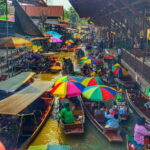
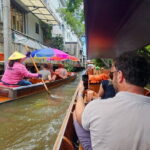
Between temples, you’ll step into a more everyday Bangkok scene at Tha Chang Pier. This is where the tour shifts gears in a smart way. Instead of more temple walls, you get river movement and a local market environment where food is the center of gravity.
You’ll cross by ferry and spend about 45 minutes exploring the market area for snacks. Admission here is free, and this stop is included as part of the guided food experience.
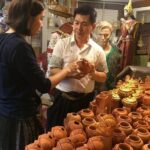
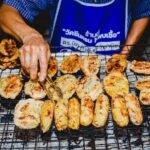
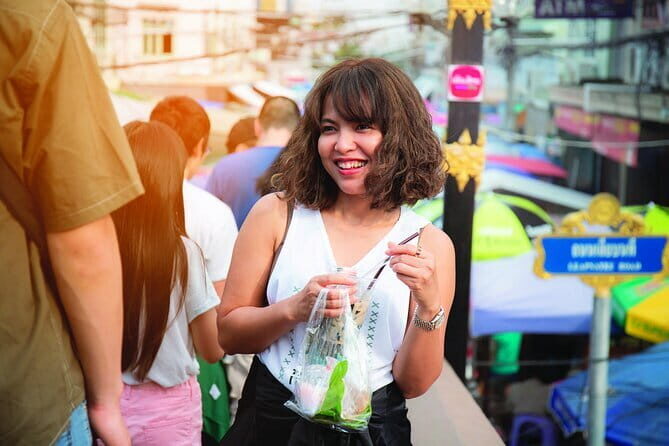
What makes this segment valuable is the guide’s role. The tour is explicit that this is not just a random food crawl. The idea is to help you learn basic “how to choose good food” skills in Thai street settings. That means you should walk away knowing what to look for—like how vendors handle busy orders, how food is served, and what kinds of dishes sell consistently.
Food warning, so you can plan: dietary options can be inconsistent. The tour notes that only a few vendors may have vegetarian/vegan/gluten-free options, and not all will. If you need specific accommodations, remind the operator before you go.
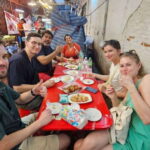
This is also where you may get the kind of meal setting you won’t find from pure tourist wandering. One review-style detail that matters: some groups get taken into a small restaurant feel where local students are part of the scene. That’s the kind of environment that makes a snack stop feel like part of city life rather than a staged tasting.
Wat Arun (Temple of Dawn): riverside views and a temple that photographs well for a reason
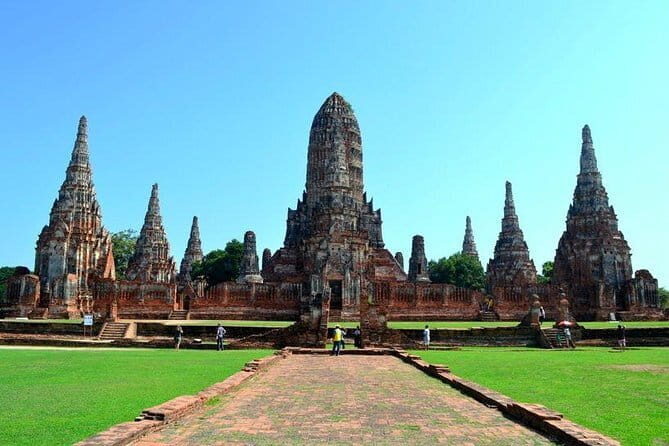
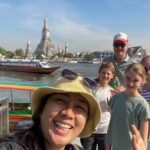
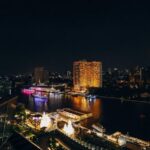
After the pier and market, the route heads across to Krung Thonburi area and ends at Wat Arun, also known as the Temple of Dawn. The tour frames Wat Arun as one of the best temple sights for a sunset-style experience. The big point is the location: it’s a riverside temple, and the river light changes how everything looks.
Your Wat Arun time is about 1 hour. You’re getting enough time to see the main features without rushing, and you’ll likely appreciate why Wat Arun is one of Bangkok’s most recognizable silhouettes from across the water.
Admission fee: 200 THB per person (not included), and the tour notes you may see it from outside depending on current conditions, so expect the experience to center on views and exterior temple areas rather than a full interior circuit.
What to focus on here:
- The temple’s shape and how it stands out against riverbank views
- How your guide explains the temple’s meaning in Thai culture
- The timing: aim for the late part of the afternoon when light makes river photos look less flat
Even if you’re not a “temple person,” Wat Arun is the kind of stop where the setting carries the experience. You get Bangkok’s water geography, not just temple architecture.
You can also read our reviews of more tours and experiences in Bangkok
Price and logistics: why $51.82 can feel like a bargain
Let’s talk value in plain terms. You pay $51.82 per person, and you get:
- A professional licensed guide
- Snacks and bottled water
- All transport from the itinerary
- A structured route that stitches together major sights and food
Temple admissions are separate. The noted fees are:
- Wat Pho: 300 THB
- Grand Palace: 500 THB
- Wat Arun: 200 THB
So your “all-in” day cost depends on whether your Grand Palace access is limited and what you actually pay on arrival. Still, even with admissions, the guide-led itinerary is what makes the money feel worth it. Bangkok can be easy to navigate, but it’s also easy to waste time. This tour compresses the best-known temple stops and the most practical food tasting moment into one loop.
Also, you’re getting a mobile ticket, and that can reduce friction at check-in. On a day when you’re already dealing with heat, walking, and temple rules, fewer steps is a win.
One more practical advantage: the tour notes it’s “booked 20 days in advance on average.” That suggests popularity. If you want this specific route, don’t wait for the last minute.
Dress code and what to wear so you don’t get delayed
Temple dress code can be the difference between an effortless morning and a late start. The tour provides clear rules:
- Male: T-shirt that covers the shoulders, plus long trousers until covered ankles
- Female: Blouse or T-shirt with covered shoulders, plus long trousers or a dress/skirt that reaches at least half-knee length
- Shoes: all kind of shoes are fine
If you’re traveling light, this is where you plan early. Carrying a light layer that helps you keep your shoulders covered is easier than trying to buy something on the spot.
You can still wear comfortable walking shoes. This is a walking day, plus ferry and transit time, so avoid anything that makes your feet angry.
Who this tour is best for (and who should pick something else)
This tour is a strong fit if you want:
- A short, structured Bangkok introduction
- A guide to connect the timeline from 1782 to the present into a route you can remember
- Temple highlights without spending the day in ticket lines and navigation stress
- A food segment that teaches how to choose street snacks, not just where to find them
It’s also great for first-timers who want a mix that keeps energy up. One review-style theme is how well the day balances temple time with food tasting. Another standout point: people like the “real Bangkok” feel, including market areas that don’t feel like a museum.
Who might not love it:
- If you only care about deep palace interiors, outside-only Grand Palace could feel limited.
- If you have strict dietary needs, the notes about inconsistent availability mean you should communicate early and set expectations.
A note on timing: current conditions can change palace access
The tour specifically mentions that during the Queen mother funeral of King Rama 9, the Grand Palace portion is outside-only. That’s an important heads-up because it affects what you can do with your limited tour time.
What I recommend: before you go, treat the itinerary as a route plan, and expect that the palace experience may be adjusted. Your guide should still provide the history framing and help you make sense of what you can see.
Should you book this Bangkok Temples, Markets, and Food Tasting tour?
If you want a smart first Bangkok day, I’d say yes—especially if you like history with practical city experiences. The strongest reasons to book are the temple-to-food-to-river flow, the guide-led balance between sightseeing and snacking, and the fact that you’re not left alone to guess where to eat.
Think of it like this: the temples teach the story of Bangkok, and the market stop teaches how to live in Bangkok for a few hours. You come away with both memories and useful habits.
Skip or reconsider if you’re traveling only for full palace interiors or you need guaranteed vegetarian/vegan/gluten-free options. In that case, you can still enjoy parts of the day, but you’ll want to plan separately for food needs and confirm what access looks like for your date.
FAQ
How long is the Bangkok History Temples Markets and Food Tasting tour?
It runs for about 4 hours.
What’s included in the price?
The tour includes a professional licensed guide, snacks, bottled water, and all transport from the itinerary.
Are temple admission fees included?
No. Wat Pho is 300 THB per person, the Grand Palace is 500 THB per person, and Wat Arun is 200 THB per person.
Does the tour include entry into the Grand Palace?
A note says the tour may only visit the Grand Palace from the outside during the King Rama 9 funeral period, so you should expect limited access on certain dates.
What’s the dress code for temple stops?
Male visitors should cover shoulders with a T-shirt and wear long trousers; female visitors should have shoulders covered and wear a dress/skirt or long trousers that reaches at least half-knee length. Shoes are flexible.
Are vegetarian, vegan, or gluten-free options available?
Only a few food vendors may have vegetarian, vegan, or gluten-free options, and not all do. Remind the operator before booking if you need specific options.
Where does the tour start and end?
It starts at the Golden Place (Tha Chang Pier Branch) at Tha Chang Pier area, and it ends at Tha Tian Pier near Wat Pho.