Michelin bites, delivered by tuk-tuk. This small-group evening pairs Rattanakosin old-city sightseeing with smart, timed stops at Michelin recommended eateries, so you eat your way across Bangkok without the hassle of getting around. You also get a hotel meet-up with a name signboard, then hop in a tuk-tuk for the food run.
I especially like two things about this tour. I love the small group (max 8) pace, which keeps the stops friendly instead of rushed. I also love that you’re handed 10+ Michelin-Guide dishes (not just a couple of snacks), with an English-speaking guide who explains what you’re eating and why it matters.
The main thing to consider: you’ll be eating a lot in about 3 hours 30 minutes, so don’t plan a big meal beforehand. Wear shoes for walking at temple areas and crowded streets, especially at night.
In This Review
- Key highlights at a glance
- Tuk-tuk hotel pickup that saves you from Bangkok logistics
- Rattanakosin old-city start at Wat Ratchanatdaram Worawihan
- Kor Panich mango sticky rice at an institution since 1932
- Pad Thai Fai Ta Lu: Michelin-star street noodles with fire show energy
- Krua Apsorn on Dinso Rd: Thai classics with family recipes
- Chinatown Yaowarat at night: tea, donuts, and street-level chaos in a good way
- What 10+ Michelin-Guide dishes feel like on this kind of route
- Group size, timing, and street-smart tips for a smooth evening
- Price and value: what $89.68 buys you in Bangkok
- Who should book this tuk-tuk Michelin food crawl
- Should you book? My practical call
- FAQ
- What is the price per person?
- How long is the tour?
- Does the tour include hotel pickup and drop-off?
- What transport is used during the tour?
- How many people are in the group?
- What food is included?
- What are some of the main stops?
- When is hotel pickup for this departure?
- Is there a mobile ticket?
- What is the cancellation policy?
Key highlights at a glance
- Hotel pickup with name signboard: your driver meets you in the lobby before the tuk-tuk ride starts.
- Kor Panich sticky rice since 1932: one of the city’s most classic mango sticky rice stops.
- Pad Thai Fai Ta Lu with a ring-burner fire show: food comes with showmanship, not just presentation.
- Rattanakosin old-town sights: you’ll pass major landmarks while moving between bites.
- Yaowarat Chinatown at night: tea and Chinese donuts land here, with plenty of street energy.
- Michelin recommended dining stops: 4+ eateries, plus 10+ dishes included.
Tuk-tuk hotel pickup that saves you from Bangkok logistics
This tour is built for people who want the food without the map anxiety. Your pickup happens at 4:30 pm, and the driver meets you at your hotel lobby holding a sign with your name. That little detail matters. Bangkok can be chaotic at street level, and a clean handoff from hotel to driver means you spend more time tasting and less time hunting.
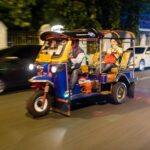
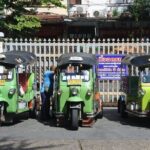
Then you’re off by tuk-tuk, the mode of transport that turns ordinary streets into a mini city tour. You’re not just riding for the photo. The route is part of the experience: it connects Rattanakosin (old Bangkok) to Chinatown, in a way that feels natural for an evening food crawl.
One practical note: tuk-tuks can be bumpy, and getting in and out takes a bit of coordination. The tour keeps things organized, but if you’re sensitive to tight seating or quick curb steps, plan to move slowly and listen to your guide and driver.
You can also read our reviews of more food & drink experiences in Bangkok

Rattanakosin old-city start at Wat Ratchanatdaram Worawihan
You begin with a temple stop at Wat Ratchanatdaram Worawihan. It’s not just a quick photo stop. The tour gives you around 30 minutes there, with an admission ticket included, so you can actually look around instead of rushing past details.
This is also where the tour sets context. Rattanakosin is old Bangkok, the section of the city where many of the most famous landmarks cluster. As you travel by tuk-tuk, you’ll pass notable sights like the Grand Palace area, which gives you a fast, high-level orientation for your next moves on foot and in the food lanes.
If you’re visiting temples for the first time, this start is a good warm-up. It gets you into the right mindset: Bangkok food isn’t random street eating. It’s tied to place, culture, and tradition, and the guide’s explanations usually land better after you’ve seen the old-city setting.
Dress smart. Even if the night is humid, you want to be comfortable and cover appropriately for temple areas. Lightweight layers usually work best.
Kor Panich mango sticky rice at an institution since 1932
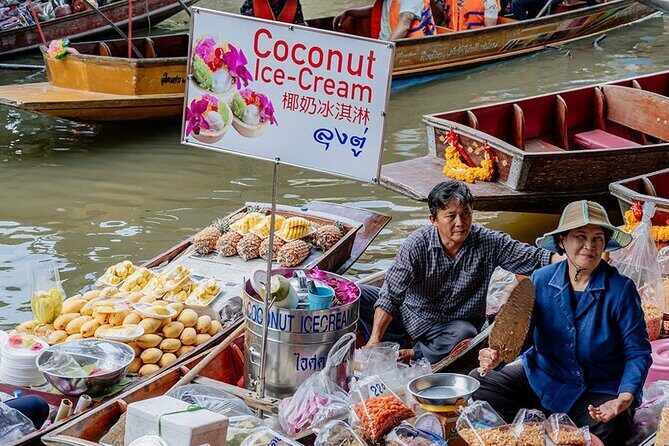
Next up is K. Panich Sticky Rice (often referred to as Kor Panich), the classic mango sticky rice stop. The shop has been open since 1932, and it’s known for that simple, perfect combination: sweet mango, glutinous sticky rice, and coconut richness.
This stop is about 20 minutes, and it’s one of the places that makes the whole tour feel grounded. You’re eating something you could technically find on the street, but here you’re tasting a long-running institution. There’s a difference between ordering a dish and understanding why a dish became the dish.
Mango sticky rice is a good test of quality. If the sticky rice is too dry or the coconut flavor is flat, you feel it fast. If it’s done right, the whole bowl tastes balanced: creamy rice, ripe fruit sweetness, and that salty-sweet coconut finish.
One practical tip: mango sticky rice can be heavy. Don’t panic if you feel full quickly. The tour’s designed so you still have enough space for the rest of the Michelin-Guide dishes.
Pad Thai Fai Ta Lu: Michelin-star street noodles with fire show energy
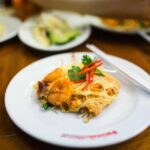
Your next stop is Pad Thai Fai Ta Lu on Dinso Road. This place has earned a Michelin star for the past five years, and it comes with a memorable moment right away: you’re welcomed with a fire show from the kitchen’s ring-burner.
It’s a fun jolt after temple time and sticky rice. But the real value is what follows the spectacle. Pad Thai is Bangkok’s most famous noodle dish, and when it’s made by cooks who know the craft deeply, you can taste the difference in balance—sweet-sour-salty, and that signature wok aroma.
This stop runs about 20 minutes, with admission ticket included, so it’s tight enough that the evening doesn’t drag. You’ll eat, get your guide’s explanation, and then move on before the next neighborhood builds too much crowd pressure.
If you’re a pad thai fan, this is the place to pay attention. Notice the texture and how the flavors line up. That’s the part you’ll use later when you compare other pad thai spots in Bangkok.
Krua Apsorn on Dinso Rd: Thai classics with family recipes
Then you head to Krua Apsorn on Dinso Road. This stop is recommended by Michelin, but the bigger reason it works on a tour is pacing and variety. You get another full dish experience, not just a snack.
The tour gives you about 45 minutes here, and admissions are included. It’s described as a classic Thai kitchen with a straightforward exterior, but with unique dishes tied to family recipes. That “simple outside, careful inside” vibe is common among Bangkok’s respected eateries.
This is also where the guide’s food talk becomes more useful. Krua Apsorn is the kind of place where you can easily miss what makes the dish special unless someone points it out. On a food tour, you get that layer of context: what to look for in the sauce, what the flavors are trying to do, and why these combinations survive through time.
If you have dietary restrictions, this is a good stop to ask questions and confirm what you can safely eat. Some guides have helped adjust for needs like gluten-free alternatives, but you’ll still want to ask directly so you don’t guess.
You can also read our reviews of more tours and experiences in Bangkok
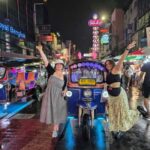
Chinatown Yaowarat at night: tea, donuts, and street-level chaos in a good way
After Dinso Road, you shift gears to Chinatown, also called Yaowarat. The tour spends about 1 hour here, and there’s no admission ticket mentioned, because the neighborhood itself is the experience.
Yaowarat is where Bangkok food energy peaks. You’ll feel it in the streets: lights, people moving, and that constant smell of frying and simmering that pulls you forward. This is also where you sample treats that feel very Chinese-Bangkok, not just Thai.
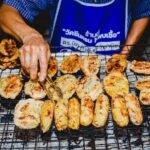
Among the foods connected to this stop are chrysanthemum tea and Chinese donuts. One highlight that comes up often is the donuts served hot with a choice of sauces, including options like custard or caramel. If that’s on the menu that night, it can be the moment you remember most clearly: crisp outside, soft inside, and sweetness that’s not just sugary, but rounded.
A practical tip: Chinatown can be loud. If you’re easily overwhelmed, stay close to your guide when crossing streets and wait your turn before you snack. The tour structure helps you avoid getting lost in the noise.
What 10+ Michelin-Guide dishes feel like on this kind of route
This tour isn’t a sampler of tiny bites. It’s a full “eat-and-walk” evening. You’re promised 10+ Michelin-Guide dishes and 4+ unique Michelin-Guide eateries, and the food, transport, and guide are fully included.
From the dishes connected to the experience, you can expect a mix like:
- Mango sticky rice
- Pad Thai
- Thai soup and curry-style plates such as tom yum and massaman curry
- Chrysanthemum tea
- Chinese donuts with sauce choices
That mix is the real value. It’s not only repeatable favorites. You also get variety in textures: noodles, sticky rice, creamy coconut sweetness, fried dough, and aromatic sauces. And because you’re moving neighborhood to neighborhood, each bite lands in a different setting.
One thing you’ll notice fast: the tour’s pace is built to keep you satisfied, not stuffed into a food coma. You’ll still end full, so go in hungry. People have shared that skipping lunch and showing up ready pays off. If you want to feel comfortable, plan for a lighter day beforehand.
Group size, timing, and street-smart tips for a smooth evening
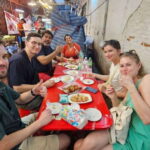
This runs as a maximum of 8 travelers, which is a big deal in Bangkok. Smaller groups mean less waiting at restaurants and more time for the guide to answer questions. It also makes tuk-tuk transfers less stressful.
You start at 4:30 pm pickup, then move through temples and restaurants with short stops—typically 20 to 45 minutes each depending on the venue. Total duration is about 3 hours 30 minutes, so you’re not spending all night on the road.
Here’s how to make it smoother:
- Come hungry. You’ll likely have more than you expect for an evening out.
- Wear comfortable shoes for temple areas and nighttime foot traffic.
- Be ready for heat in short bursts. Bangkok evenings can still feel warm.
- Follow your guide closely at transitions, especially when entering or leaving tuk-tuks.
If you’re picky or have dietary needs, talk early. Some guides have helped with requests like gluten-free alternatives, and one guide has been known to accommodate add-ons based on what participants wanted. Still, don’t assume any extra food is guaranteed. Ask and plan to be flexible.
Price and value: what $89.68 buys you in Bangkok
At $89.68 per person, this isn’t a budget street snack tour. It’s paying for three things you’d otherwise spend time coordinating yourself:
- Hotel pickup and drop-off (round-trip)
- Tuk-tuk transport during the evening
- Food + guide built around Michelin recommended dining stops
Because food, transport, and guidance are included, you’re not doing the math on entrances, travel time, and meal planning. You’re also buying the ability to skip long lines at popular places, and you’re gaining context so you know what you’re eating instead of just consuming it.
When I evaluate value, I look at whether the experience saves me stress and time. This tour does. You get a structured route across old Bangkok and Chinatown, plus more than 10 dishes in one evening, with a guide who helps the stops make sense.
If you want one “high-effort, high-reward” evening in Bangkok that feels organized but still local, this price is easier to justify.
Who should book this tuk-tuk Michelin food crawl
This tour is a strong fit if you:
- Want Michelin recommended bites without planning your own route
- Like a small group experience rather than a big bus crowd
- Enjoy food with context—where history and technique show up in the guide’s stories
- Want to see Rattanakosin and Yaowarat in the same evening
It’s also a good option for your first Bangkok trip when you want quick orientation and you don’t have days to experiment with neighborhoods.
You might rethink it if:
- You dislike eating lots of food in a short window
- You want total freedom to roam at your own pace for hours
- You’re very sensitive to street noise and crowds (Chinatown can be intense even in a short stop)
Should you book? My practical call
If you’re the type who likes eating well-planned meals and you want a tuk-tuk night that doesn’t require transportation homework, I’d book this. It’s built around Michelin-guide dishes, a smart old-town-to-Chinatown route, and a tight group size that keeps the whole evening fun instead of chaotic.
My key advice is simple: show up hungry, wear comfy shoes, and let the guide do the navigating. You’ll get an evening that feels like Bangkok street food and restaurant craft, tied together with history and location. That mix is hard to replicate on your own in a single night.
FAQ
What is the price per person?
The price is $89.68 per person.
How long is the tour?
It lasts about 3 hours 30 minutes.
Does the tour include hotel pickup and drop-off?
Yes. Round-trip transfers from Bangkok hotels are included.
What transport is used during the tour?
You travel around by tuk-tuk, with transport arranged for the route.
How many people are in the group?
The maximum group size is 8 travelers.
What food is included?
The tour includes all food, with 10+ Michelin-Guide dishes and visits to 4+ Michelin-guide eateries. Personal expenses are not included.
What are some of the main stops?
You visit Wat Ratchanatdaram Worawihan, Kor Panich Mango Sticky Rice, Pad Thai Fai Ta Lu, Krua Apsorn, and Chinatown (Yaowarat).
When is hotel pickup for this departure?
Pickup is at 4:30 pm, with the driver meeting you in the hotel lobby.
Is there a mobile ticket?
Yes, the tour uses a mobile ticket.
What is the cancellation policy?
Free cancellation is available up to 24 hours in advance of the experience start time for a full refund. If canceled less than 24 hours before, the amount paid is not refunded.