REVIEW · BANGKOK
Bangkok Night Food Tour By Tuk Tuk
Book on Viator →Operated by Justxplore · Bookable on Viator
Bangkok after dark has a way of feeding your curiosity fast. This tuk-tuk night food tour strings together temples, markets, and actual local-style meals over about 4 hours, so you get the sights and the eating without planning your route. I love the small group limit of 10, because it keeps things moving and makes it easier to ask questions as you go. I also love that dinner, snacks, and alcoholic drinks are included along with entrance tickets. One drawback to keep in mind: the pace and start time can vary, and a few departures have run late or moved quicker than you might want.
You’ll meet your licensed guide and hop into private transport for a night route that hits Wongwian Yai, Wat Prayurawongsawat Worawihan, Pak Khlong Talat, Rattanakosin, a local dinner stop, Bangkok Chinatown, and then a final riverside-style bar stop for a sip and view. In the feedback I saw, guide names like Suzie, Look Moo, and Nina come up often for being patient, friendly, and focused on making sure everyone finds good food fast.
In This Review
- Key things to know before you go
- Why tuk-tuks at night make Bangkok easier (and better)
- Price and what you actually get for $80.07
- Your stop-by-stop route: temples, flowers, Chinatown, and a river sip
- Stop 1: Wongwian Yai night market (about 20 minutes)
- Stop 2: Wat Prayurawongsawat Worawihan (about 30 minutes, temple admission included)
- Stop 3: Pak Khlong Flower Talat (about 30 minutes, free admission)
- Stop 4: Rattanakosin / Bangkok Old City drive-by (about 30 minutes, free admission)
- Stop 5: Khrua Khun Kung local dinner restaurant (about 40 minutes, dinner admission included)
- Stop 6: Chinatown Market (about 45 minutes, admission included)
- Stop 7: River Vibe Bar & Restaurant (about 45 minutes, admission included)
- The guide effect: why your night improves when the pacing is right
- Timing and group pace: the part to plan around
- Logistics that matter: where you start, where you end, and how to get home
- Food expectations: how to get the most from included dinner and snacks
- Who this tour is best for
- Should you book the Bangkok Night Food Tour by Tuk Tuk?
- FAQ
- How long is the Bangkok Night Food Tour By Tuk Tuk?
- What is included in the tour price?
- Are alcoholic beverages included?
- Can you do a vegetarian version?
- Where does the tour end?
- What is the maximum group size?
Key things to know before you go
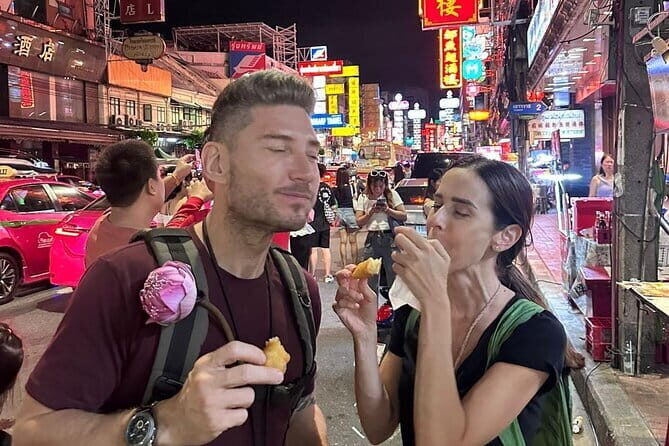
- Small group (max 10) helps you get answers in real time instead of shouting over a crowd.
- Tuk-tuk + private transport saves you from the worst of nighttime traffic and parking headaches.
- Dinner, snacks, and alcoholic beverages are included, so the $80.07 price feels more like an all-in deal.
- You cover classic Bangkok stops like Pak Khlong Flower Market (open 24 hours) and Chinatown Market.
- Temples at night are part of the route, and that visual contrast is a big part of the appeal.
- Vegetarian option can be arranged if you note it during booking.
Why tuk-tuks at night make Bangkok easier (and better)
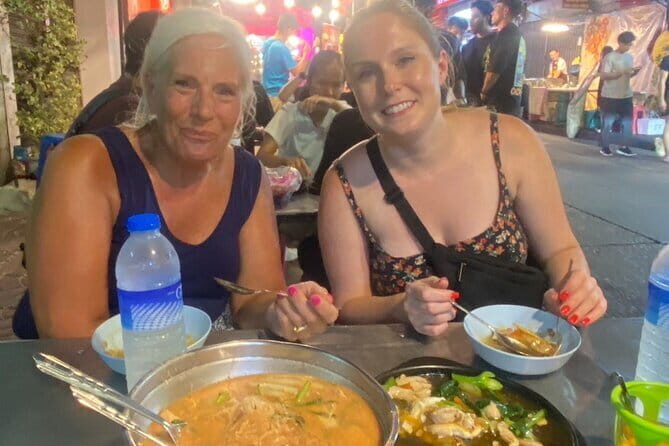
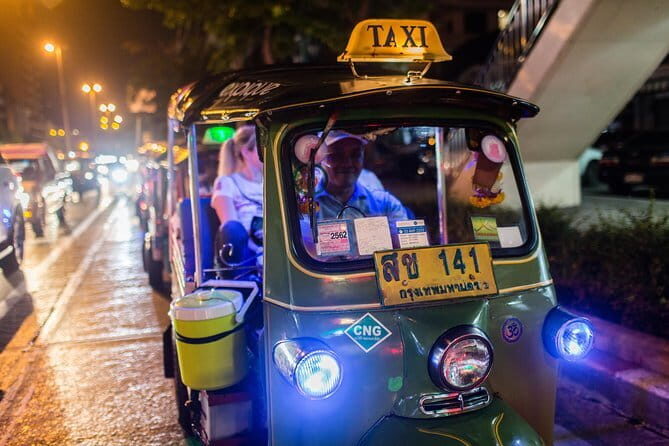
Bangkok nights move fast. Roads get crowded, sidewalks get packed, and it is easy to spend half your evening figuring out where to go next instead of eating well. This tour is built around short hops in private transportation, then walking where it matters most: the market lanes.
The tuk-tuk angle matters because it turns the night into a series of quick, scenic transitions. You are not stuck in one area all evening. You also get a more local rhythm: temple stop, flower market stop, dinner stop, then Chinatown when the food energy really kicks in.
And because the group size is capped at 10, you usually feel less like you are being herded and more like you are joining a small team moving through the city.
You can also read our reviews of more food & drink experiences in Bangkok
Price and what you actually get for $80.07
At $80.07 per person for around 4 hours, the cost only makes sense if the meal and logistics are handled. This one does that.
Here is what is included:
- Dinner
- Snacks
- Alcoholic beverages
- Private transportation
- Licensed tour guide
- Entrance tickets
So you are paying for more than food. You are paying for a guide who ties stops together, transport that keeps you from spending time between neighborhoods, and entrance fees where they apply. If you tried to copy this alone, you would still end up paying for transport and you would spend extra time scouting.
Where value can shift is the quality and variety of the tasting stops. The tour includes multiple food moments across different areas. Still, if a day is extremely busy and schedules tighten, the exact emphasis can change.
Your stop-by-stop route: temples, flowers, Chinatown, and a river sip
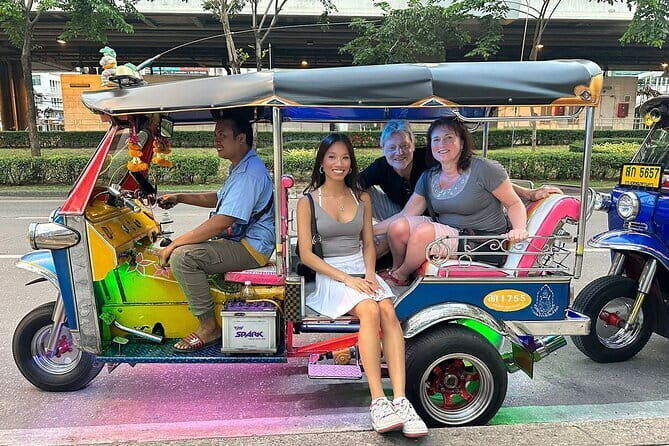
You are looking at a structured night with defined time at each stop. That structure is what keeps the tour from turning into a loose food crawl.
Stop 1: Wongwian Yai night market (about 20 minutes)
You start in the Wongwian Yai area with a night market stop. This is your warm-up: you get the nighttime sights and the food energy right away, and you get your bearings for how the route will feel.
The upside of this shorter time slice is momentum. You will not feel like you are trapped in one place before the tour really begins. The possible downside is simple: 20 minutes can be tight if you want a slow stroll and a long look at every stall.
Stop 2: Wat Prayurawongsawat Worawihan (about 30 minutes, temple admission included)
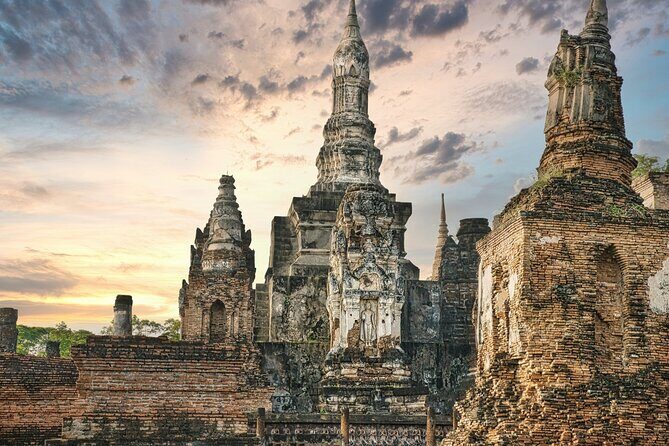
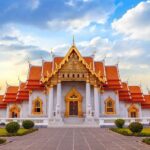
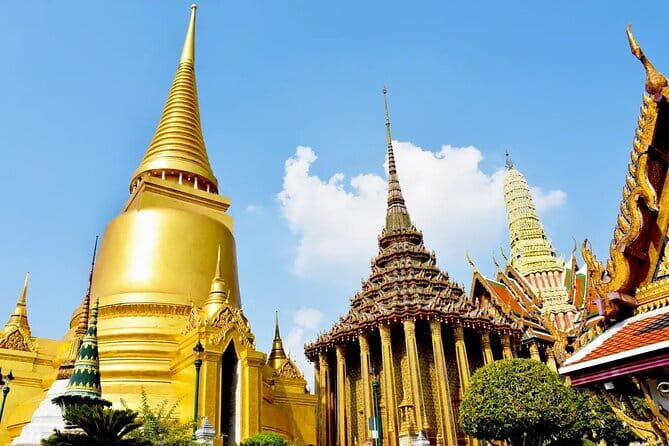
Next comes Wat Prayurawongsawat Worawihan, a local temple with strong heritage, visited at night. Temples at night have a different mood than daytime. You get the architecture, the lighting, and the nighttime calm around a busy city.
This stop is also where a good guide really shows their skills. You get context for what you are seeing, not just a quick photo stop.
One thing to keep in mind: temples can demand a bit of patience. If you are trying to eat quickly through everything, you might find yourself slowing down here on purpose, which is the point.
You can also read our reviews of more tours and experiences in Bangkok
Stop 3: Pak Khlong Flower Talat (about 30 minutes, free admission)
Then it is onto Pak Khlong Flower Talat, the famous flower market. It is open 24 hours, and it is easy to see why people connect it with Bangkok’s daily rhythms. The big draw is the sensory mix: color, fragrance, and constant movement of people buying flowers and supplies.
This stop works well because it breaks up the food-only flow. You are training your senses for the rest of the night, and it gives you a Bangkok detail beyond street food.
Stop 4: Rattanakosin / Bangkok Old City drive-by (about 30 minutes, free admission)
After the flower market, you move through the Rattanakosin area. This is the road corridor associated with Bangkok’s older core, including routes that lead toward landmarks like the Grand Palace and other historical temples.
At evening hours, many temples are closed, so the tour does not try to sell you on late entry. Instead, you pass by and focus on what you can actually see after dark.
If you love history, it still helps your understanding of where everything sits. If you are hoping for inside views everywhere, adjust expectations for nighttime access.
Stop 5: Khrua Khun Kung local dinner restaurant (about 40 minutes, dinner admission included)
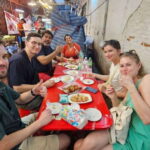
This is the main meal stop at Khrua Khun Kung, and it is longer than the market moments. A big reason that matters: eating in Bangkok takes room. You need time to order, eat, and still enjoy the flow without feeling rushed.
The dinner portion is one of the strongest value pieces of the tour because dinner is included. You are also more likely to get a proper sit-down meal here than at a stall.
The trade-off: you might not get the same hands-on variety you see in a pure market-only crawl, because a restaurant dinner is one consolidated sitting.
Stop 6: Chinatown Market (about 45 minutes, admission included)
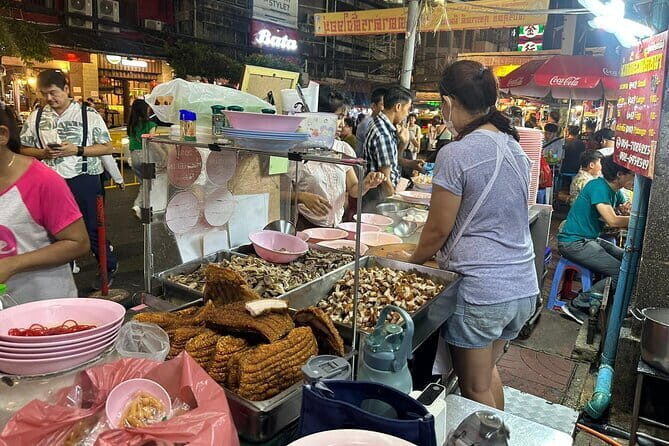
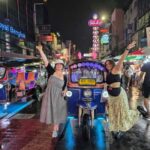
Then comes Chinatown. This stop is all about the street-level atmosphere: narrow lanes, lots of signage, and food everywhere you look. As dusk falls, the area feels like it is turning up a volume knob.
Chinatown is one of those places where a guide helps a lot, because it can be overwhelming when you first arrive. You do not just get shown where to stand. You get pointed toward options that fit the tour pace and the style of eating the group is doing that night.
If you are someone who wants to keep tasting for as long as possible, the 45 minutes may feel just about right. If you prefer to browse slowly, it can feel like the schedule keeps you moving.
Stop 7: River Vibe Bar & Restaurant (about 45 minutes, admission included)
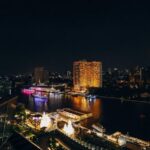
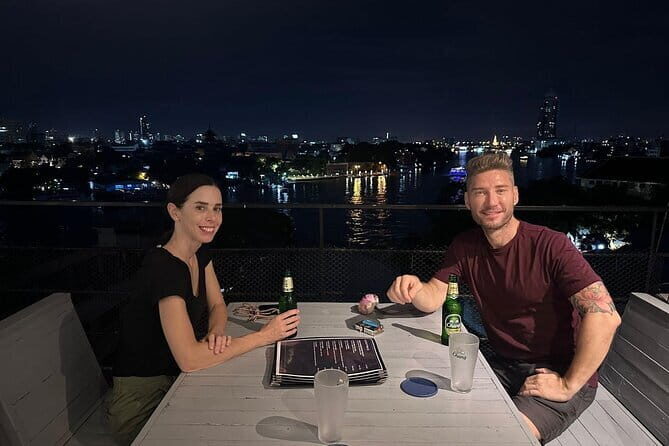
The last stop is a bar/restaurant stop called River Vibe Bar & Restaurant for a sip and a view. This is your wind-down moment, where the tour shifts from eating everything on the street to relaxing while you take in the area.
It is also a smart structure choice: ending away from peak market chaos makes the night feel smoother, and it gives you a landing spot before you move on to getting home.
There is one practical note to consider. If the city is extremely busy on certain dates, exact experiences can shift. You want to stay flexible with the ending if you are traveling during peak seasons.
The guide effect: why your night improves when the pacing is right
This tour is built around a licensed tour guide, and that is not a small detail. Night markets are loud. Street food is visual, not always labeled the way tourists expect. A guide helps with three big things:
- Speed to good food: you spend more time eating, less time scanning menus.
- Cultural context: you get background for temples and markets, which makes photos and views feel less random.
- Group coordination: when you are moving through crowded areas, someone has to keep everyone together.
In feedback, certain guide names come up with praise for being patient and supportive. Suzie, Look Moo, and Nina appear often, and the common thread is attention to the group and the ability to explain what you are seeing.
Possible drawback: not every guide communicates at the same speed. One report described a guide speaking too fast to follow. If you are hard of hearing or just prefer slower explanations, it is worth telling your guide early that you want time to process.
Timing and group pace: the part to plan around
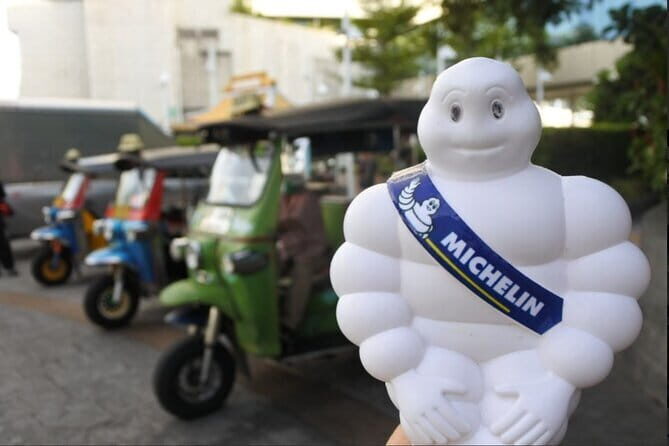
The tour runs for about 4 hours. It also uses specific time blocks per stop, which keeps the night organized. That structure is great—until a day gets crowded.
I saw hints that start times can slip and that some stop plans can change when Bangkok is exceptionally busy. New Year timing came up as an example of when routes may tighten. In those cases, your best move is simple: treat this as a flexible experience, not a rigid checklist.
If your flight, dinner reservation, or show has a hard deadline, plan buffer time around the tour window. If you are traveling with a group, you might also want to coordinate your own plans so you are not rushing out the door at the end.
Logistics that matter: where you start, where you end, and how to get home
You meet at PFCW+J3, Bangkok, Thailand (a Google Maps pin). The tour ends at PGR6+R3, Bangkok, Thailand, and you are dropped at Wat Mangkon MRT Station.
Two helpful details:
- The meeting point is described as near public transportation, so you should not be completely dependent on a pickup.
- For private group bookings, the drop-off can go to a hotel or given location.
Also, you get a mobile ticket, which usually makes check-in smoother.
Food expectations: how to get the most from included dinner and snacks
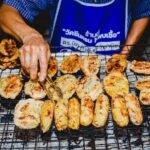
You are not only walking through markets. You are eating. The tour includes dinner plus snacks, and it also includes alcoholic beverages. That means you should expect to leave full.
My advice for enjoying it without getting overwhelmed:
- Think of the night as a mix of restaurant meal + market bites, not a single endless tasting buffet.
- If you have a dietary constraint, request a vegetarian option during booking so the plan can be adjusted from the start.
- Come hungry, but don’t assume you will be able to sample everything. The route is designed for a set number of tasting moments across multiple neighborhoods.
If you are sensitive to spicy food, this is the sort of tour where you should ask your guide to steer you toward milder choices at the stalls. The tour format gives you a real chance to do that on the spot.
Who this tour is best for
This fits best if you want:
- A first-time Bangkok night plan that avoids getting lost in crowded areas.
- A food and sights combo (temples, flower market, Chinatown) in one evening.
- A tour where you do not need to haggle for transport or figure out entrance fees.
- A small group setting where you can ask questions and keep moving.
It may not be the best match if you strongly dislike group pacing, want a fully self-directed tasting list, or need a very slow, long explanation at each stop.
Should you book the Bangkok Night Food Tour by Tuk Tuk?
Yes, I would book it if you want an efficient, guided way to eat in Bangkok at night while still seeing key neighborhoods like Chinatown and Pak Khlong Flower Talat. The included dinner, snacks, and alcohol make the price feel more grounded than tours that only throw in a few bites. The small group size is also a big deal for comfort and conversation.
Hold off or book with extra flexibility if you are picky about timing, dislike fast-paced explanations, or are traveling during a very crowded holiday period where routes can get tightened. If that is your situation, treat it as a fun food-and-sights night with some natural variation, not a perfectly fixed sequence.
FAQ
How long is the Bangkok Night Food Tour By Tuk Tuk?
The tour lasts about 4 hours.
What is included in the tour price?
Dinner, snacks, alcoholic beverages, private transportation, a licensed tour guide, and entrance tickets are included.
Are alcoholic beverages included?
Yes, alcoholic beverages are included as part of the tour.
Can you do a vegetarian version?
Yes. Vegetarian options can be accommodated if you indicate your needs at the time of booking.
Where does the tour end?
The tour ends at Chinatown Market area, and everyone is dropped at Wat Mangkon MRT Station.
What is the maximum group size?
The tour has a maximum of 10 travelers.