REVIEW · BANGKOK
Bangkok: River Kwai Day Tour with Jeath War Museum & DeathRailway
Book on Viator →Operated by Bangkok Travel Agency · Bookable on Viator
Death Railway turns history into real walking ground.
This full-day trip from Bangkok takes you to the Bridge on the River Kwai, a WWII POW-built landmark, then into the JEATH War Museum and the Kanchanaburi area tied to the Death Railway. You’ll also stop at a major war cemetery for Allied soldiers and get a train ride along a dramatic slice of the route. It’s heavy material, but the day is structured so you can actually understand what you’re seeing.
I especially like the small group size (up to 15) and the fact that you get an English-speaking guide plus air-conditioned transfers. I also like the mix of places: museum context first, then the bridge, then the cemetery, and finally the train and lunch near Wang Po station.
One caution: it’s a long day that starts early, and timing can get squeezed by traffic. If your guide’s English is tough to catch, that can make the story harder to follow.
In This Review
- Key highlights at a glance
- From Bangkok at 6 a.m.: how the long day really plays out
- JEATH War Museum: understanding the camp story behind the railway
- Bridge on the River Kwai: walking a landmark with weight
- Death Railway Museum and Tham Kra Sae Bridge: where the story tightens
- Kanchanaburi War Cemetery: a solemn pause that deserves your attention
- The train ride along the Death Railway and lunch at Wang Po station
- Guide quality and small-group comfort: what makes the day feel smooth
- Price and value at $83.68: what you’re really paying for
- Who should book this Death Railway day tour—and who should skip it
- Should you book it?
- FAQ
- How long is the tour?
- Where does the tour start and when?
- Is pickup offered from Bangkok hotels?
- How many people are in the group?
- What’s included in the price?
- Is lunch included, and what kind?
- Which attractions have admission included?
- Are any stops free?
- Is the guide English-speaking?
- What if the weather is bad?
- Is there mobile ticketing?
- Can I cancel for a full refund?
Key highlights at a glance
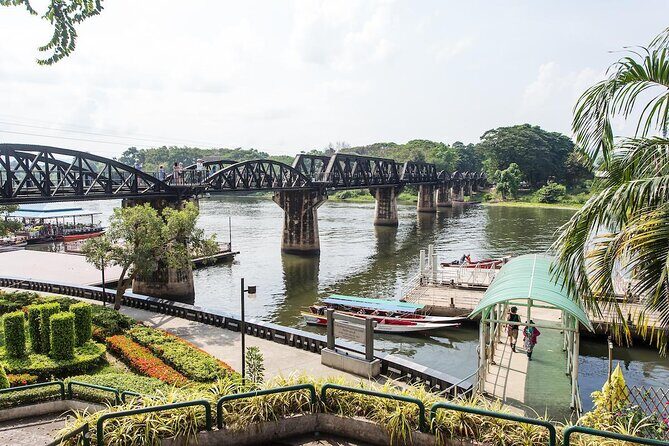
- JEATH War Museum helps you visualize the WWII camp conditions behind the Death Railway story
- Bridge on the River Kwai walk puts your feet on a world-famous landmark
- Death Railway Museum and Tham Kra Sae Bridge keep the focus on the railway and the prisoners who built it
- Kanchanaburi War Cemetery is a solemn stop with free admission
- Train ride on the Death Railway section turns the narrative into a moving experience
- Buffet lunch at Wang Po station gives you a solid break near the Burmese-border area
From Bangkok at 6 a.m.: how the long day really plays out
This tour runs about 13 hours, and it starts early, at 6:00 a.m. That early departure matters, because you’re crossing from Bangkok into Kanchanaburi, where the history sites are spread out. You’ll be in an air-conditioned vehicle the whole way, and the tour includes round-trip transfers, so you don’t have to figure out trains, buses, or guides once you’re on the road.
The day also has a natural rhythm: you begin with museum context (so the facts land), then you move to the bridge (so the scale clicks), then you shift back to railway and camp history (so the pieces connect). The last chunk includes the train ride and a buffet lunch at Wang Po station.
Now for the practical part: the itinerary can move slower or faster depending on road traffic. One reviewer noted that a 13-hour plan felt shorter on their day, and another felt the pacing sometimes got rushed. Either way, plan to stay flexible. Bring water, expect heat and humidity once you’re outside, and wear shoes you can walk in comfortably—there’s a bridge walk, plus time spent moving between stops.
Also, the group max is 15 travelers. That usually means you can hear the guide better and get a smoother schedule than big bus tours.
You can also read our reviews of more museum experiences in Bangkok

JEATH War Museum: understanding the camp story behind the railway
The JEATH War Museum is where the tour starts stacking meaning. It’s split into two main areas: one side focuses on the construction of the Death Railway, and the other recreates bamboo-hut quarters used by POWs. In other words, it’s not just photos and dates—it’s built to show you how a prisoner camp might have looked and how the railway operation worked.
This is a good first stop because it sets expectations. Without this grounding, the later stops can feel like separate movie locations. With it, you see the bridge, cemetery, and railway structures as part of one system: POW imprisonment, forced labor, and the railway network that connected Thailand and Burma.
What I like here is the clarity of purpose. JEATH isn’t trying to be subtle. It leans into visuals and reconstruction so you can grasp the living conditions and labor backdrop quickly. If you’re the type who likes to understand how things worked—who did what, where they stayed, why the railway mattered—this stop delivers.
The drawback to note is condition and pacing. One comment mentioned the museum could use more maintenance, and another felt the overall flow might have been hurried to make up time lost in traffic. If you’re the kind of person who needs time to read every label, give yourself permission to skim and focus on the sections that match your interests: railway construction on one side, camp quarters on the other.
Bridge on the River Kwai: walking a landmark with weight
The River Kwai bridge stop is simple on paper: you walk across the bridge over the river. That simplicity is the point. It’s one hour, and you’re on the structure itself. This is one of those moments where a famous name becomes a physical experience: the height, the rail details, the river below—your senses do the remembering.
This stop is also a reality check. The bridge is widely known from pop culture, but here it’s framed through WWII history and prisoner labor. It’s not just a photo opportunity. The guide’s job is to keep the story anchored in the human cost of building something that was both strategic and deadly to those forced to construct it.
Practical tip: plan for sun and glare. Bridge railings and river reflections can be bright, and you’ll likely want a few steady photo moments. Bring a hat, and don’t wear anything you’ll regret on a hot morning walk.
One-hour timing is fair if your expectations are right. If you want a long, slow wander, you won’t get it. But if you want the bridge walk to function as a meaningful stop—not a detour—this is a good length.
Death Railway Museum and Tham Kra Sae Bridge: where the story tightens
After the bridge, you head into railway-specific territory. The plan includes the Death Railway Museum and Research Centre for about an hour. This is where the railway’s scope comes forward. The tour frames it as the Burma Railway—also known by several names—built as a 415-kilometer railway between Ban Pong and Thanbyuzayat.
Then you visit Tham Kra Sae Bridge for an hour. This bridge is commonly associated with the Death Railway and is described as a historic railway structure built by war prisoners of WWII. It’s also one of those stops that helps you connect the dots between the broad concept of a railway and the specific structures you can still see.
Why these stops matter: they turn the story from a single bridge into a network. Seeing one bridge is memorable, but seeing how the railway route is represented—through museums, bridge structures, and later the train ride—gives you the “how it functioned” understanding.
The bridge stop is marked as free admission, which is nice value-wise. And because both sections are about an hour, they keep the day moving without dragging.
The main consideration here is your focus level. If WWII history is not your thing, you might find yourself moving through interpretive displays quickly. But if you’re curious about how forced labor shaped a region and how rail infrastructure still shapes travel and geography today, this part of the tour is one of the strongest.
Kanchanaburi War Cemetery: a solemn pause that deserves your attention
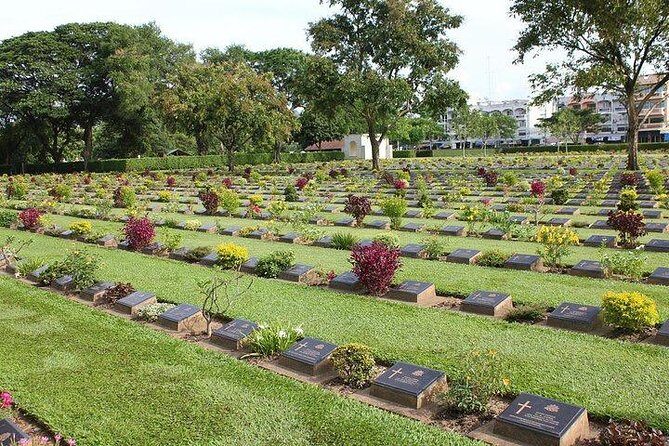
Next comes Kanchanaburi War Cemetery, locally known as Don-Rak War Cemetery. This is a free-admission stop and about one hour long. The tour notes that this cemetery is a main POW cemetery for victims of Japanese imprisonment while building the Burma Railway, with about 9,000 Allied soldiers laid to rest.
This isn’t the kind of place you rush through for photos. You go to reflect. The one-hour time slot works best when you treat it like a quiet reset in the middle of an otherwise busy schedule.
I like that the tour includes it after the bridge and before the train and lunch. It gives your brain a chance to shift from structures and reconstructions back to people. It’s easy to get caught up in scale and engineering. The cemetery pulls you back to what those structures cost.
If you’re sensitive to heavy topics, be prepared: this day won’t sugarcoat it. But that’s also why it feels more grounded than a purely sightseeing itinerary.


The train ride along the Death Railway and lunch at Wang Po station
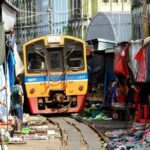
The overview includes a thrilling train journey along a breathtaking section of the Death Railway. Even if you already know the story, there’s something uniquely human about experiencing the route by train. You’re moving through the corridor the railway was meant to serve. The landscape rolls past instead of staying stuck behind museum glass.
You also get buffet lunch after arriving at Wang Po station, which is near the Burmese border. That matters for two reasons. First, it builds in a proper break between stops. Second, Wang Po station ties the meal to the railway setting rather than dropping you into a random restaurant far from the story.
A few practical notes so you’re comfortable:
- Expect a warm day before and after lunch. Heat is real here.
- Keep an eye on what’s next in the schedule so you don’t get separated during a train or station transition.
- If you’re traveling with a camera, plan for quick photo windows rather than long stops.
This train-and-lunch pairing is where the tour feels most like a complete experience: history, movement, then food. It also helps justify the price, because you’re not just paying for entrances—you’re paying for the whole transportation-and-timing package that makes the train happen in a structured day.
Guide quality and small-group comfort: what makes the day feel smooth
The tour includes an English-speaking guide and an air-conditioned vehicle. Guide quality can make or break history tours, and the feedback you’ll hear around this route often focuses on storytelling and pacing.
In particular, names that come up include guides like Rach and Oom. The common theme is that the guide work is active: clear explanations, helpful visuals, and an effort to keep you engaged rather than bouncing from stop to stop with silence.
Small group size (max 15) also helps. It’s easier to hear instructions, easier for the guide to notice if you’re lagging, and easier to maintain momentum when you’re moving between bridge areas, museums, and station time.
That said, one real caution is language clarity. One comment mentioned difficulty understanding a guide’s English. If you know you struggle with certain accents or fast speech, it can help to sit where you can hear best during key moments.
For most people, this tour hits a sweet spot: guided enough to understand the significance, not so overbearing that you feel trapped in a classroom.
Price and value at $83.68: what you’re really paying for
At $83.68 per person, this tour isn’t a “cheap and casual” day. But it’s also not purely a guided sightseeing bus, either. You’re paying for several things bundled together:
- Round-trip transfers from Bangkok (big deal if you don’t want to plan transport)
- An English-speaking guide
- Air-conditioned vehicle comfort
- Lunch (buffet at Wang Po station)
- Admission tickets included for major stops like JEATH War Museum, the River Kwai Bridge walk, and the Death Railway Museum and Research Centre
- Free admission for Tham Kra Sae Bridge and Kanchanaburi War Cemetery
If you were to try to assemble this on your own, the biggest cost often isn’t admission—it’s transport coordination and timing across multiple sites plus the extra effort of finding the train option the same day. That’s why the structured itinerary tends to feel like value, especially if you only have a short window in Thailand.
So who is this best for? People who want the “most important parts” of Kanchanaburi WWII history without turning the trip into a logistics project. It’s also a good fit for couples, solo travelers, and small groups who want a guide but don’t want to be swallowed by a huge crowd.
If you dislike long days, you’ll feel it. If you want total freedom to linger at each museum, this is more time-boxed. But if you want a guided, historically focused day that actually connects the bridge, the railway story, and the cemetery—this price starts making sense.
Who should book this Death Railway day tour—and who should skip it
I think this tour is a strong pick if you want:
- A guided WWII itinerary with clear stops and story flow
- The bridge experience plus museum context
- A train ride tied directly to the Death Railway route
- A day that includes both interpretive learning and a solemn cemetery visit
You might skip it if:
- You want a relaxed day with minimal walking and minimal emotional weight
- You need lots of free time at each stop
- You struggle with the idea of tightly scheduled history stops that can feel rushed during traffic
Also, consider your stamina. It’s an early start, a long day, and you’ll be outdoors during parts of it. Bring sun protection and comfortable shoes, and keep expectations realistic about how much time you’ll have per location.
Should you book it?
If your goal is to see the River Kwai bridge, understand the WWII POW camp concept behind the Death Railway, visit a major war cemetery, and ride a train along the route—all in one organized day—this is a practical way to do it. The guide-led setup and the included lunch plus transfers are what make it feel worth the money, even though the subject matter is heavy.
If you’re comfortable with long days and want a structured, meaningful history experience rather than a free-form outing, go ahead and book. If you prefer lighter travel days or deep, slow museum time, you’ll probably want a different pace.
FAQ
How long is the tour?
It’s listed as approximately 13 hours.
Where does the tour start and when?
The start time is 6:00 am, with the activity ending back at the meeting point.
Is pickup offered from Bangkok hotels?
Yes. Pickup is offered from various hotels in Bangkok.
How many people are in the group?
The tour has a maximum of 15 travelers.
What’s included in the price?
Round trip transfers, an English-speaking guide, lunch, and an air-conditioned vehicle are included.
Is lunch included, and what kind?
Yes. You’ll have a buffet lunch at Wang Po station.
Which attractions have admission included?
Admission tickets are included for the JEATH War Museum, the River Kwai Bridge stop, and the Death Railway Museum and Research Centre.
Are any stops free?
Yes. Tham Kra Sae Bridge and Kanchanaburi War Cemetery are listed as free admission.
Is the guide English-speaking?
Yes, the tour includes an English-speaking guide.
What if the weather is bad?
The tour requires good weather. If it’s canceled due to poor weather, you’ll be offered a different date or a full refund.
Is there mobile ticketing?
Yes, the tour offers a mobile ticket.
Can I cancel for a full refund?
Yes. You can cancel up to 24 hours in advance for a full refund.