REVIEW · BANGKOK
Bangkok by Night Food Tour with 10+ Tastings in Chinatown
Book on Viator →Operated by Secret Food Tours · Bookable on Viator
Street food turns the city into a story.
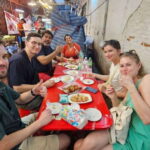
This Bangkok by Night Food Tour is built around 10+ tastings and a small group size (max 12, with 10 or fewer on the walk), so you get real access to stalls and explanations instead of just trailing behind. I like the mix of classic Thai favorites (papaya salad, satay, basil stir-fry) with Chinatown-style bites, plus a guide who helps you understand what you’re eating and why it matters.
The main drawback is timing and pace. It’s a walking tour at night, and with the mix of stops beyond Chinatown, you’ll need comfortable shoes and a little patience when crowds and traffic get close.
In This Review
- Quick take: what makes this tour worth your time
- Bangkok by Night Food Tour: street food, Chinatown stories, and a tight 3-hour plan
- Price and value: is $46.99 a fair deal for 10+ tastes?
- Small group energy: the guide matters more than you think
- Your Bangkok night route: from MBK to Chinatown to Jim Thompson House
- Stop 1: MBK Center, a giant indoor landmark (about 30 minutes)
- Stop 2: Asiatique The Riverfront (about 30 minutes)
- Stop 3: Chinatown – Bangkok, the real flavor engine (about 30 minutes)
- Stop 4: Siam Paragon (about 30 minutes)
- Stop 5: Bang Rak (about 30 minutes)
- Stop 6: Jim Thompson House (about 30 minutes)
- What if the tour includes extra temple or sit-down moments?
- What you’ll taste: papaya salad, basil chicken, dumplings, satay, noodles, and the Secret Dish
- Thai classics you’ll recognize fast
- Chinatown-friendly bites
- Dessert and warm drinks
- The Secret Dish
- How to prepare: shoes, appetite, and handling spice or seafood
- Wear comfortable shoes
- Expect spice to vary by dish and stall
- Seafood and fruit swaps might be possible
- Traffic and close streets are part of the experience
- When this tour isn’t the perfect fit
- Practical value extras: photos, small adjustments, and a smoother night
- Should you book this Bangkok by Night Food Tour in Chinatown?
- FAQ
- How long is the Bangkok by Night Food Tour?
- How much does the tour cost?
- How many tastings are included?
- What group size should I expect?
- Where do I meet, and where does the tour end?
- Is hotel pickup and drop-off included?
- Can the tour accommodate dietary requirements?
- Can I bring a pet on the tour?
Quick take: what makes this tour worth your time
- 10+ tastings across savory, sweet, and drinks, with an exclusive secret dish
- Max 12 people, which helps the guide keep things moving and handle questions fast
- Chinatown core plus cultural moments like temple customs you can follow with the group
- Stops at major sights like MBK Center and Jim Thompson House (ticket-free as part of the route)
- Day-dependent menus, with Monday getting a different set of dishes than Tue–Sun
Bangkok by Night Food Tour: street food, Chinatown stories, and a tight 3-hour plan
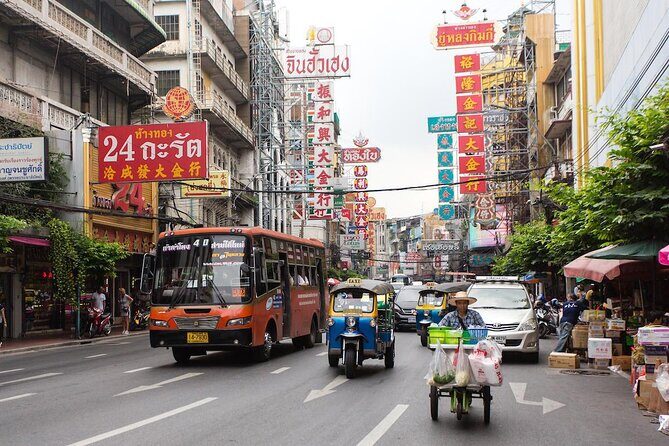
Bangkok at night has a different rhythm. The sidewalks feel busier, the smells get louder, and suddenly street food stops being something you just look at from across the road.
This tour is designed to solve two problems fast: you don’t have to guess what’s worth ordering, and you don’t have to figure out how to move through busy areas without losing the group. The walk is about 3 hours, and the stop list lines up neatly with that timing, so you’re not stuck watching clocks while other people finish early.
What makes it feel special is the combo of food plus place-based storytelling. You’re not only sampling pork, dumplings, and noodles. You’re also picking up context about Chinatown and the wider city districts you pass through, which helps the whole evening feel connected instead of random.
You can also read our reviews of more food & drink experiences in Bangkok

Price and value: is $46.99 a fair deal for 10+ tastes?
$46.99 sounds reasonable for a city like Bangkok once you picture what you get in return. This isn’t a single-meal event. It’s a guided, small-group route with multiple included dishes, plus drinks, over about 3 hours.
Here’s what’s explicitly included, depending on the day:
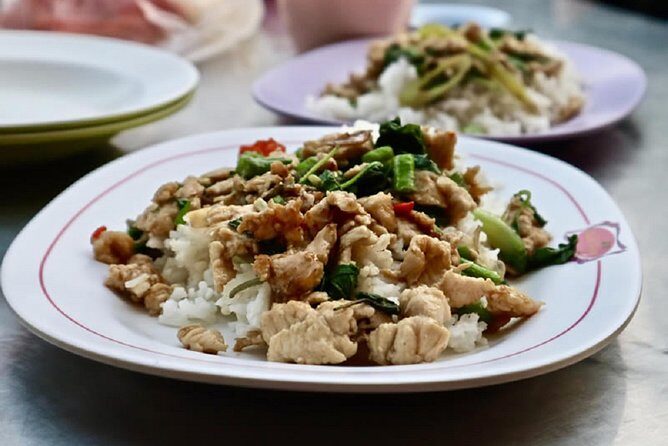
- Spicy basil chicken with fragrant jasmine rice (Tue–Sun) and classic spicy basil stir-fry (Mon)
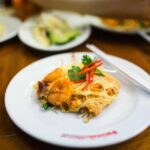
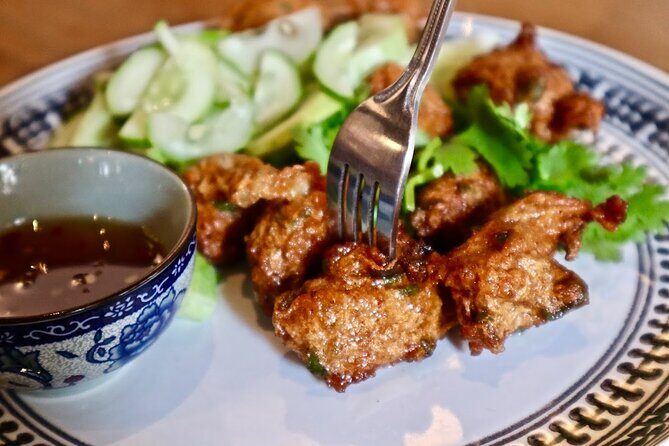
- Juicy shrimp dumplings (All tours)
- Steamed buns filled with red pork (Tue–Sun) and fluffy steamed buns (Mon)
- Fresh papaya salad (All tours), including the kind people often call som tam in conversation
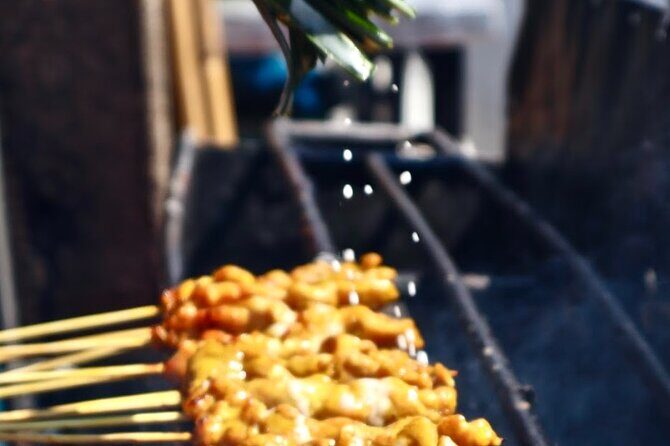
- Pork or chicken satay with creamy peanut sauce (Tue–Sun)
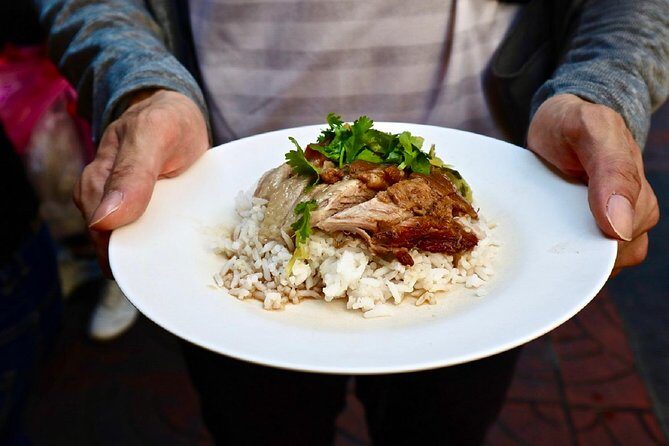
- Duck noodle soup (Tue–Sun)
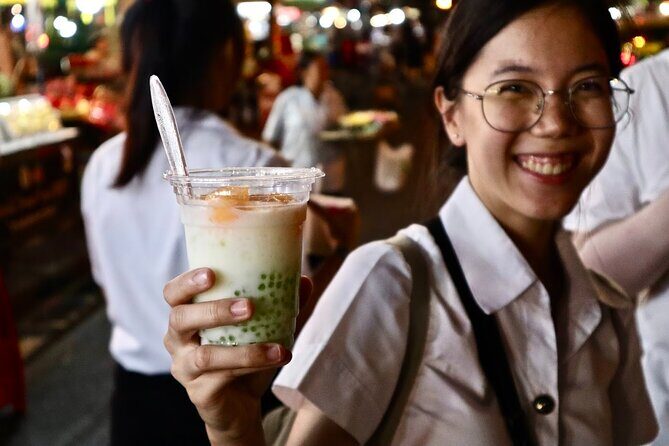
- Black sesame dumplings in warming ginger tea (Tue–Sun)
- Tender stewed pork knuckle with rice (Mon), plus other Monday-only items
- Seasonal fresh fruit (Mon)
- Rolled noodle soup with pork belly (Mon)
- Thai coffee and Thai beer are part of the overall sampling described for the tour
- One exclusive Secret Dish (All tours)
Even if you’re not counting every dish as a full meal, the quantity and variety matter. You’ll likely finish the tour comfortably full, and the best part is you’re eating from different stall styles rather than repeating one food type all night.
Small group energy: the guide matters more than you think
In a food tour, the guide isn’t just a translator. They’re the traffic controller, the crowd wrangler, and the person who can point to the right stall without drama.
This tour runs with a maximum of 12 travelers, and it’s set up for a group of 10 guests or less. That’s a big deal in Chinatown, where lines form and streets get tight. A smaller group also makes it easier to ask questions and for the guide to adjust the flow if someone needs a slower moment.
The guide names that show up again and again include Jan and Ton. Jan is frequently praised for making quick, smart routes through busy streets and for keeping the mood fun while still explaining what you’re eating and where you are. Ton is described as bringing a deeper spiritual and cultural angle, including Buddhist context, and also keeping the group comfortable and engaged.
One practical benefit: guides here don’t just point at food and say good luck. Some guides even help vendors directly when the group would otherwise wait too long, which keeps the evening from turning into a long queue.
Your Bangkok night route: from MBK to Chinatown to Jim Thompson House
This tour’s route includes several named stops. Not every stop is a full-time sightseeing block, but you do get a structured walk and orientation across key Bangkok areas, with Chinatown as the food focus.
Stop 1: MBK Center, a giant indoor landmark (about 30 minutes)
MBK Center is an eight-storey mall with a huge number of shops and food options. As a first stop, it works as a big meeting anchor and a helpful way to settle the group before heading into the more chaotic streets outside.
Why it’s useful: you start the evening in a predictable place, which helps if you’re arriving from different parts of the city.
Possible downside: if you expected the whole tour to be purely outdoor street food, this first mall stop may feel like a warm-up, not the main event.
You can also read our reviews of more tours and experiences in Bangkok
Stop 2: Asiatique The Riverfront (about 30 minutes)
Asiatique sits on the former docks of the East Asiatic Company and faces the Chao Phraya River. It’s an open-air style location, so the vibe shifts from indoor mall energy to more night-street atmosphere.
Why it’s useful: it gives you a sense of Bangkok’s riverfront presence without needing a full day trip.
Possible downside: you’re not coming here just for browsing for hours, so keep expectations realistic about how much time you’ll spend.
Stop 3: Chinatown – Bangkok, the real flavor engine (about 30 minutes)
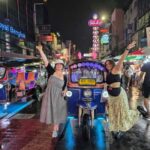
This is where the night really turns food-forward. Chinatown is described as one of the world’s biggest Chinatowns and today it’s strongly tied to Chinese culture and food.
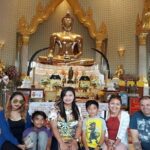
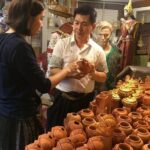
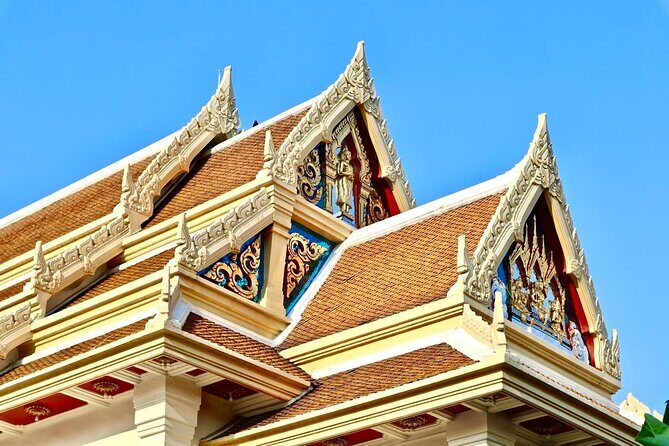
In addition to eating, the tour can include temple moments tied to Chinese religious customs. People mention activities like using fortune sticks at a Chinese temple and even learning a lotus-folding style craft. That’s not only a cute photo moment. It’s also a way to understand how food culture sits next to belief and community routines.
Why it’s useful: you get the best mix of street food energy and cultural context in the same place.
Possible downside: Chinatown is busy. If you don’t like crowds at night, you’ll still experience that closeness because the route is part of the point.
Stop 4: Siam Paragon (about 30 minutes)
Siam Paragon is one of Thailand’s major malls. This stop feels like the contrast piece: after street-level Chinatown energy, you’re given a quick look at Bangkok’s big, polished retail side.
Why it’s useful: it helps you see the city’s extremes in one evening.
Possible downside: it can feel like a stop that isn’t directly tied to food, depending on how much time the group spends walking through.
Stop 5: Bang Rak (about 30 minutes)
Bang Rak is a district that can mean village of love, and it’s popularly associated with marriage registration, especially around Valentine’s Day.
Why it’s useful: it adds a Bangkok-life layer beyond just eating.
Possible downside: it’s likely more of an orientation stop than a deep dive, so don’t expect long cultural performances.
Stop 6: Jim Thompson House (about 30 minutes)
Jim Thompson House is a museum space focused on the art collection of Jim Thompson, an American businessman and architect. The tour includes free admission for this stop.
Why it’s useful: it’s a calm, structured finish after the street-food motion.
Possible downside: if you’re hoping for only food-stall time, a museum stop can feel like a time split.
What if the tour includes extra temple or sit-down moments?
Some people describe a temple stop and also time at sit-down meals. That can be a plus if you enjoy context, but it can also slow the pace compared with a strictly street-food-only style.
What you’ll taste: papaya salad, basil chicken, dumplings, satay, noodles, and the Secret Dish
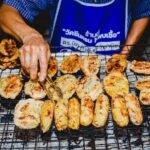
The heart of this experience is the sequence of tastings. The tour promises 10+ tastings, and the included list is specific enough that you can plan around it.
Here’s the lineup by category, with what it signals about Thai and Chinese-influenced Bangkok food:
Thai classics you’ll recognize fast
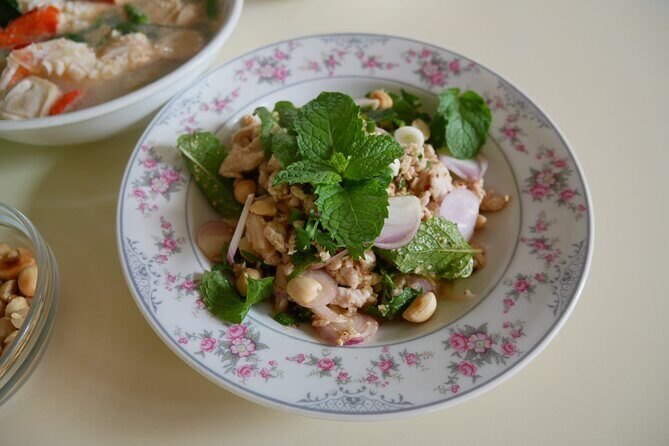
- Papaya salad (fresh and zesty). This is the dish many people come for because it shows Thai balance: sweet, sour, salty, and heat.
- Spicy basil chicken with fragrant jasmine rice (Tue–Sun) or spicy basil stir-fry (Mon). Basil stir-fry is a strong Bangkok go-to because it tastes bold even in a small portion.
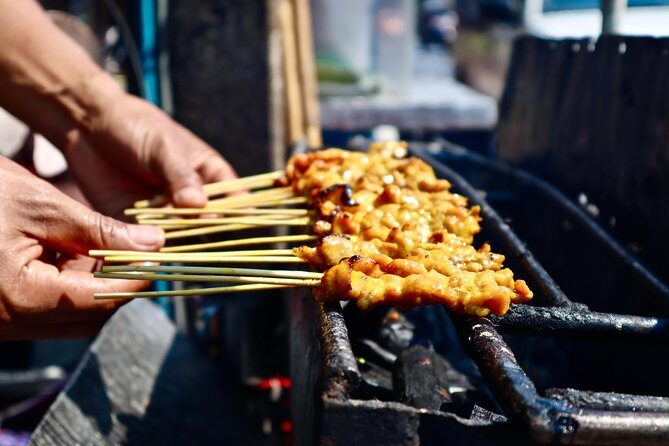
- Pork or chicken satay with creamy peanut sauce. Satay is comforting, and the peanut sauce helps tame the heat if you want that.
Chinatown-friendly bites
- Shrimp dumplings and steamed buns filled with red pork. These are the type of comfort foods that show how Chinese styles blend into Bangkok’s everyday eating.
- Duck noodle soup (Tue–Sun) and rolled noodle soup with pork belly (Mon). Noodle soups are a practical night food: warm, filling, and easy to share.
Dessert and warm drinks
- Black sesame dumplings in warming ginger tea (Tue–Sun). It’s soothing and not overly sweet, which helps you reset after spicy-savory bites.
- Seasonal fresh fruit (Mon).
- Thai coffee and Thai beer are part of the sampling described for the tour, so the evening feels like more than a snack crawl.
The Secret Dish
Every tour includes an exclusive Secret Dish. You shouldn’t expect to guess it correctly from the menu list, and that’s part of the fun. It’s also one reason this tour can feel more memorable than checking off a set list on your own.
How to prepare: shoes, appetite, and handling spice or seafood
This tour works best if you come with an empty stomach and a good mindset for walking.
Wear comfortable shoes
One of the most consistent pieces of advice is simple: wear comfortable shoes. You’re walking an entire evening route, and you’ll eat enough to need it.
Expect spice to vary by dish and stall
Some people feel certain dishes lean mild. Others love the heat. If you’re sensitive, contact the operator in advance so they can plan dietary requirements as best they can. The tour also notes that dietary accommodations are possible, but you need to reach out ahead of time.
Seafood and fruit swaps might be possible
There are mentions of group tailoring for dislikes like seafood, spicy foods, and fruit. You can’t assume every swap is guaranteed on every departure, but it suggests that the guide can handle basic preference requests when communicated properly.
Traffic and close streets are part of the experience
At least one person notes that the route can feel like you’re playing chicken with traffic at times. Your guide should keep the group safe, but you should still expect Bangkok roads to be active and loud, especially at night.
When this tour isn’t the perfect fit
This is a great choice for many people, but it’s not flawless.
Here are the realistic tradeoffs:
- Not every tasting hits the exact flavor intensity you want. One person felt the food was a bit bland and expected a more purely Thai dessert direction like mango sticky rice instead of a banana roti with chocolate sauce.
- Some time gets spent outside street-food-only mode. Temple time and sit-down meals can take longer than you might imagine if you’re craving only quick stall bites.
- You might want more seafood, depending on your tastes. Seafood is included through shrimp dumplings, but if you’re expecting a bigger seafood share, be aware the menu list doesn’t promise an all-seafood route.
- The route includes big-name stops beyond Chinatown. That’s a feature for people who want city context, but it can feel less focused if your priority is a pure Chinatown food crawl.
Practical value extras: photos, small adjustments, and a smoother night
A lot of food-tour value is invisible until you’re on it: being moved quickly from stop to stop, getting the right portion size, and not spending the evening stuck asking where to go next.
People mention that some guides take lots of photos and videos and share them after the tour. You might also see hands-on help at food stalls if a vendor needs assistance to keep the line short.
And the biggest advantage is confidence. One key theme is that a guide helps you eat street food without the usual hesitation. You’re not just choosing randomly. You’re being guided to dishes and orders that work.
Also, a quick heads-up for planning: the tour ends back at the meeting point, and the walking time runs close to the 3-hour mark, though night schedules can stretch depending on crowds and timing.
Should you book this Bangkok by Night Food Tour in Chinatown?
Book it if you want a structured, small-group way to eat across Chinatown and surrounding districts, with 10+ tastings and a guide who explains what you’re eating. It’s a strong first-evening option because you’ll also see a mix of Bangkok landmarks like MBK Center, Siam Paragon, Bang Rak, and the Jim Thompson House area.
Skip it if you’re the type who wants only street stalls with no temples, no museum stop, and no mall-style landmarks. Also skip if walking at night and sharing tight streets with crowds will annoy you.
If you like your travel days organized, you like food you don’t have to translate, and you enjoy a guide’s stories alongside the dishes, this is a very good fit.
FAQ
How long is the Bangkok by Night Food Tour?
The tour lasts about 3 hours.
How much does the tour cost?
It costs $46.99 per person.
How many tastings are included?
The tour is described as having 10+ tastings, and it includes multiple specific dishes plus an exclusive Secret Dish.
What group size should I expect?
The group is limited to a maximum of 12 travelers, and it’s described as a group of 10 guests or less.
Where do I meet, and where does the tour end?
The meeting point is Hua LamphongRong Mueang, Pathum Wan, Bangkok 10330, Thailand, and the tour ends back at the meeting point.
Is hotel pickup and drop-off included?
No, hotel pickup and drop-off are not included.
Can the tour accommodate dietary requirements?
You should contact the operator in advance for any dietary requirements so they can cater for them as best as possible. Dietary substitutions are mentioned as possible.
Can I bring a pet on the tour?
No, pets can’t be accommodated on the food tours.