REVIEW · BANGKOK
Bangkok Self-Guided Audio Tour
Book on Viator →Operated by Uvamai Niche Tourism · Bookable on Viator
Temple time, at your speed.
This self-guided Bangkok audio tour strings together 12 of the city’s big names, from Wat Traimit to modern art at MOCA, while letting you start and stop whenever you want. I like the flexibility built into the format, and I also like that the audio lives behind a simple link system with a matching Google My Maps board of stops.
One thing to watch: at least one past buyer felt the audio is general and translation quality may be uneven. If you were hoping for deep, classroom-level detail at every stop, you might end up wanting to supplement it.
In This Review
- Key things to know before you go
- A Bangkok tour with no schedule police
- Get set up: SoundCloud links + an interactive My Maps route
- Price and what you’ll still pay at temples
- Wat Traimit, Chinatown, and Wat Pho at human pace
- Stop 1: Temple of the Golden Buddha (Wat Traimit)
- Stop 2: Chinatown – Bangkok
- Stop 3: Wat Phra Chetuphon Wimon Mangkhalaram Rajwaramahawihan
- Wat Arun, the Grand Palace, and Wat Phra Kaew: royalty and sacred legends
- Stop 4: Temple of Dawn (Wat Arun)
- Stops 5–6: The Grand Palace + Temple of the Emerald Buddha (Wat Phra Kaew)
- National Museum, Golden Mount, and the Marble Temple
- Stop 7: The National Museum Bangkok
- Stop 8: The Golden Mount (Wat Saket)
- Stop 9: Wat Benchamabophit (The Marble Temple)
- BACC, Lumpini Park, and MOCA for a modern Bangkok finish
- Stop 10: Bangkok Art & Culture Centre (BACC)
- Stop 11: Lumpini Park
- Stop 12: Museum of Contemporary Art (MOCA)
- How to pace the 3-hour plan without feeling rushed
- About that audio: great structure, maybe not deep detail
- Who this $9 Bangkok audio tour suits best
- Should you book it?
- FAQ
- FAQ
- How much does the Bangkok self-guided audio tour cost?
- How long is the experience?
- How do I access the audio guide and map?
- Can I listen to the audio tour offline?
- What do I need to use the audio?
- Are entry tickets included for the attractions?
- Can I start and end the tour whenever I want?
- How long do my access links stay valid?
- Is the tour refundable if I cancel?
Key things to know before you go
- $9 per person buys access to audio and an interactive stop map for 12 attractions
- Offline-capable listening is available, so your phone can survive Bangkok’s signal mood swings
- SoundCloud audio links let you play one stop at a time or the whole tour plan
- Interactive Google My Maps points jump you from location to the matching audio guide
- Some stops are free (notably Wat Pho, BACC, and Lumpini Park)
- You control the pace, so you can linger at the parts you actually like
A Bangkok tour with no schedule police
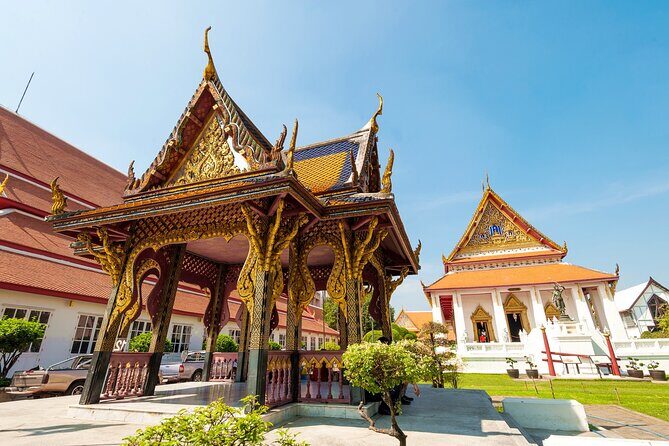
This tour is built for independent sightseeing, but it’s not just a list of spots. You get an audio guide for each major stop, organized so you can follow a suggested order or hop around. It’s like having a guide in your pocket, except you’re the one choosing when to press play.
For $9, the value isn’t in a “tour operator bus ride” or a fancy package. It’s in structure: 12 recognizable Bangkok landmarks, each paired with an audio track, plus a map that helps you find them fast. And because it’s a mobile ticket experience and described as private (only your group), it works well if you want a calmer day than the usual guided herding.
The itinerary is designed around short hits—about 10 minutes per stop—which is perfect for a first pass. You’ll still need time to walk between places, take photos, use the bathroom, and pause when Bangkok heat or crowd flow says so.
You can also read our reviews of more guided tours in Bangkok


Get set up: SoundCloud links + an interactive My Maps route
After you book, you receive confirmation, and before your start time you get two links by email: one for the audio and one for the map. The audio link is described as a secure SoundCloud web link, where you can play individual attraction guides or the whole tour.
The second link is a Google My Maps itinerary map. Each pin on the map corresponds to one stop, and each pin links directly to its audio. In practice, this is what keeps the day from feeling chaotic. Instead of searching and guessing, you use the map to get your bearings and then click the matching stop as you arrive.
Two practical notes from the tour description:
- The audio is available offline.
- Your access links are valid for up to 6 days, so you can adjust plans if your schedule shifts.
Price and what you’ll still pay at temples
At $9 per person, this is cheap for what you get: audio for 12 attractions plus a linked route map. But temple and museum days in Bangkok always have extras, and this tour is honest about that.
What’s not included:
- Entry fees (wherever required)
- Transport (no pickup or drop-off)
- Audio devices like earphones, plus internet/Wi‑Fi
- Food and drinks
That matters because some stops are free and others are not, and you’ll feel the difference in your budget. The tour info specifically marks these as free:
- Wat Phra Chetuphon Wimon Mangkhalaram Rajwaramahawihan (Wat Pho)
- Bangkok Art & Culture Centre (BACC)
- Lumpini Park
Everything else is listed as not included for admissions. So your all-in cost depends on what you choose to enter, not just what you listen to.
My advice: treat the $9 as paying for your “guide system,” not your museum pass.
Wat Traimit, Chinatown, and Wat Pho at human pace
This early chunk focuses on Bangkok’s spiritual heart and its street-level energy.
Stop 1: Temple of the Golden Buddha (Wat Traimit)
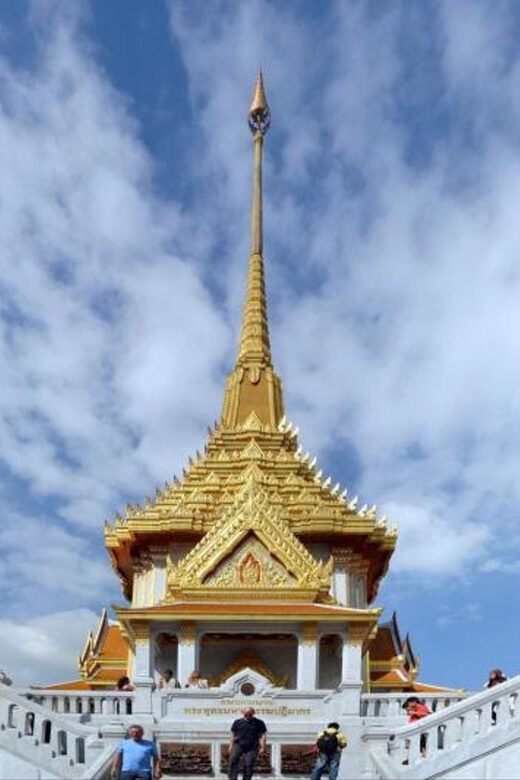
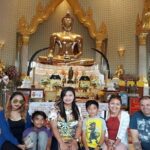
You start with Wat Traimit, famous for the world’s largest solid gold Buddha statue. The audio guide’s hook here is the story of its accidental discovery, plus the temple’s significance in Thai Buddhism. This is a good opener because it gives you a strong image to hold onto before you move on to the rest of the day.
Tip for timing: plan to stand back for photos first, then step in once you can see the details clearly.
You can also read our reviews of more tours and experiences in Bangkok



Stop 2: Chinatown – Bangkok
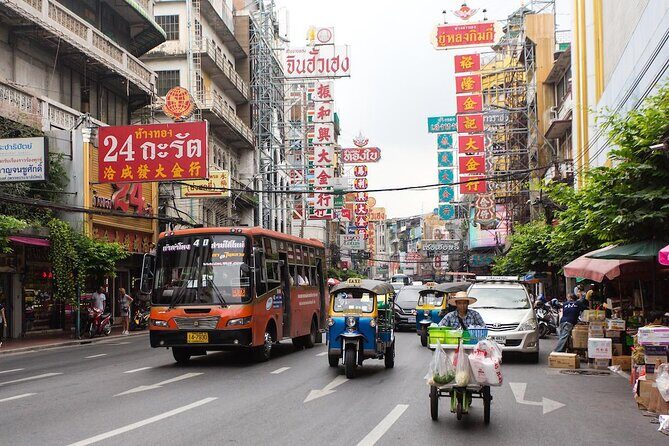
Next is Chinatown, where the audio nudges you toward the area’s cultural heritage and the market-and-street-food side of Bangkok’s Chinese community. This is also where a self-guided format helps. You can pause for snacks, duck into side streets, or skip anything that’s not your style.
If you hate shopping crowds, just move with purpose and treat the audio as your context tool, not your chore list.
Stop 3: Wat Phra Chetuphon Wimon Mangkhalaram Rajwaramahawihan
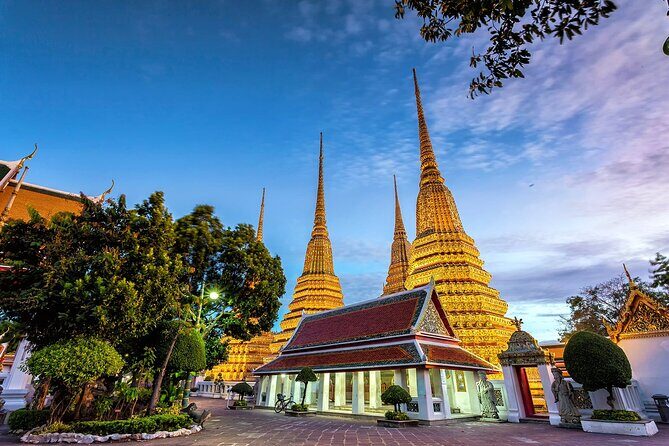
Then you land at Wat Pho, described as Bangkok’s oldest and largest temple complex. The highlights called out are the Reclining Buddha and the temple’s connection to traditional Thai medicine and massage.
This stop is marked as free for entry. That’s a great match for an audio tour: it’s big, meaningful, and you don’t want your day’s budget to get crushed before the real buildings and views kick in.
Wat Arun, the Grand Palace, and Wat Phra Kaew: royalty and sacred legends
Now the day shifts into the “don’t rush this” zone. These are the Bangkok icons most people come for, and you’ll get more out of them if you slow down.
Stop 4: Temple of Dawn (Wat Arun)
Wat Arun is all about architecture. The audio focuses on its intricate porcelain decorations, plus the symbolism in Thai Buddhism and how the temple evolved through different historical periods. Even if you only have a short visit, this kind of context makes the details easier to notice.
Stops 5–6: The Grand Palace + Temple of the Emerald Buddha (Wat Phra Kaew)
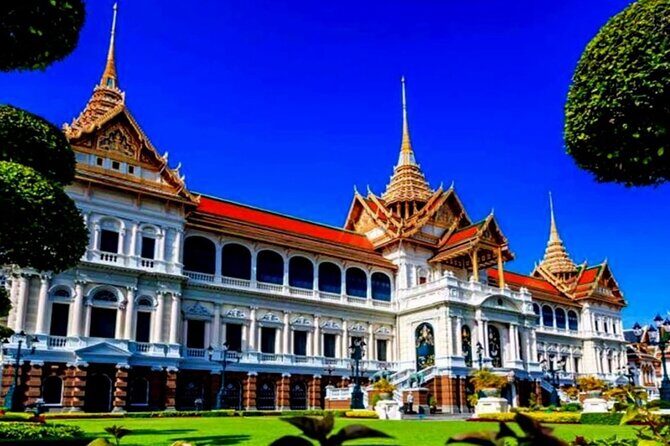
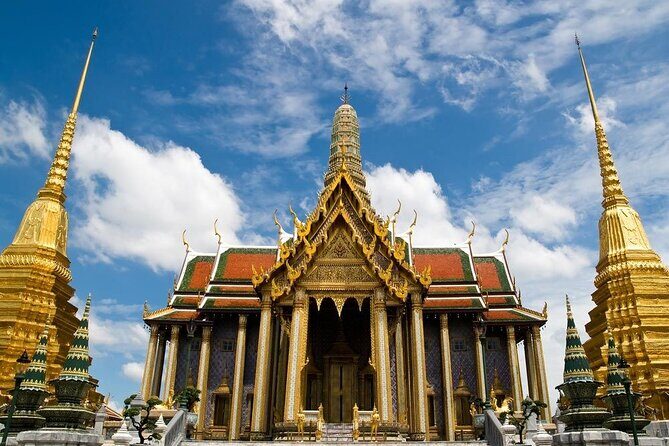
The tour brings you into the Grand Palace, described as the heart of Thai royalty, with its buildings and its role in Thai history and governance. Right inside that complex is Wat Phra Kaew, Thailand’s most sacred Buddhist temple, centered on the legend of the Emerald Buddha.
These are intense places: sights everywhere, rules everywhere, and a lot of visual “noise.” That’s where the audio can help you focus on key ideas without you needing to guess what you’re seeing.
Practical pacing: give yourself extra time here even though the suggested plan is about 10 minutes per stop. Short audio segments are great, but the buildings don’t vanish if you stay another five minutes.
National Museum, Golden Mount, and the Marble Temple
After the palace zone, you pivot to history, views, and a different style of Thai royal architecture.
Stop 7: The National Museum Bangkok
The National Museum Bangkok is positioned as a journey from prehistory to the Bangkok period. The audio guide’s promise here is a sweep across Thai history, with artifacts that tell the story of Thailand’s heritage.
If you like museums but don’t want to read every label, this kind of “guided overview by audio” can be a solid way to avoid a total information overload. If you want deep detail, you’ll likely still want to spend time on individual artifacts.
Stop 8: The Golden Mount (Wat Saket)
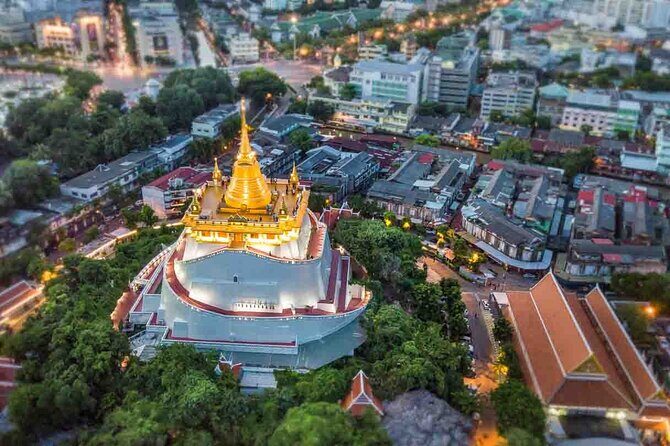
Next is Wat Saket, also known as Golden Mount. The tour highlights that it’s an artificial hill, connected to its construction during the Ayutthaya period, and it matters in Thai Buddhist cosmology. The audio’s framing is useful because it turns a climb into something more than just views.
Stop 9: Wat Benchamabophit (The Marble Temple)
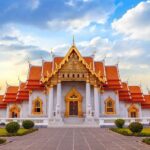
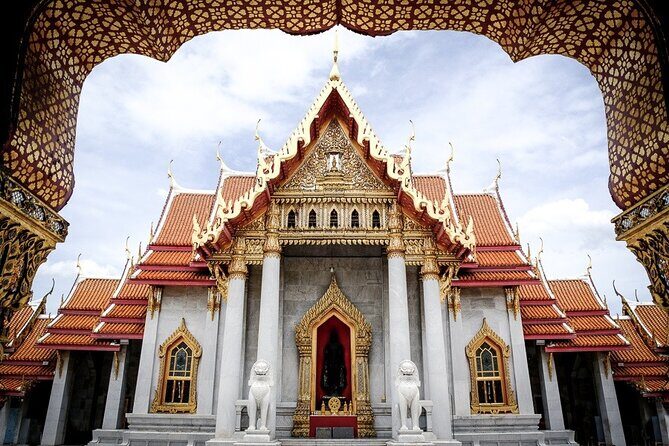
Then you hit Wat Benchamabophit, built with Italian marble. The audio calls out the blend of Thai and European architectural styles, which is exactly the kind of contrast that’s easier to appreciate when you have someone explaining what you’re looking at.
BACC, Lumpini Park, and MOCA for a modern Bangkok finish

This is where the tour stops being only about temples and starts covering contemporary Thai culture.
Stop 10: Bangkok Art & Culture Centre (BACC)
At BACC, the guide focuses on contemporary Thai art and culture, plus how Thailand’s art scene is evolving and its place in the global contemporary art world. This stop is marked as free for admission.
Even if you’re not an art critic, I like ending a sightseeing day with modern work because it changes your mental picture of Bangkok. You’ve spent hours on stone and gold; now you get something current.
Stop 11: Lumpini Park
Then you get a breather: Lumpini Park, described as a green oasis. The audio includes its history as a royal gift to the city and its role as a recreation space for Bangkok residents. This is a smart reset point if you’ve been walking temple-to-temple.
Stop 12: Museum of Contemporary Art (MOCA)
Finally, the tour ends at MOCA, described as Thailand’s largest private museum of contemporary art. The audio guide’s themes are modern artistic movements and their cultural significance.
The big value here is variety. You finish with a different Bangkok story than you started with.
How to pace the 3-hour plan without feeling rushed
The tour gives you an approximate 3 hours total, with about 10 minutes per stop in the suggested order. That’s not a hard rule, but it’s a helpful baseline.
Here’s how I’d pace it:
- Use the audio as the structure for your first pass.
- If a stop grabs you, extend it and simply skip the next one’s audio.
- If you’re tired, play shorter segments and cut your walking time.
Because the access includes a map where each point links to the right audio track, you can adjust on the fly. You can also split the tour across multiple days, since the audio links last up to 6 days.
Also, the tour is described as near public transportation. That’s useful if you decide midway that you don’t want to keep walking.
About that audio: great structure, maybe not deep detail
One of the only direct feedback points you should take seriously is the criticism that the audio can feel superficial and that translation may be poor. Another concern raised is that the audio gives general information, so it might not beat what you’d get from quick reading.
So how do you use the tour smartly?
- Treat the audio as context and a compass, not as the final word.
- If you’re detail-hungry, plan to spend extra time inside the places anyway and use your own reading on the side.
- If translation quality annoys you, switch strategies: listen only for the parts that match what you’re looking at, then move on.
Even with that caution, the map-and-audio system is still practical. It’s a good way to keep your day organized, especially when Bangkok’s streets are doing their usual thing.
Who this $9 Bangkok audio tour suits best
This tour fits best if you want:
- Flexibility over a fixed group schedule
- A low-cost way to cover major sites
- A simple navigation tool that points you to each attraction and its audio
You’ll probably love it if you’re the kind of traveler who likes to wander, skip what you don’t care about, and return to the audio when you’re ready.
You might not love it if:
- You expect highly detailed commentary at each stop
- You’re sensitive to translation issues in audio guides
- You want a guided experience with explanations tailored to a specific walking pace
It also makes sense for small groups or couples, since the experience is described as private and only your group participates.
Should you book it?
If you’re visiting Bangkok for the first time and you want a smart, inexpensive way to hit big-name sites in a self-guided style, I think this is worth considering—especially because some stops are free and the map makes navigation straightforward.
If your priority is deep, polished audio history at every stop, this might disappoint you. In that case, you might want to use the audio as a quick overview and bring other sources for extra detail.
Either way, it’s one of those tours where the format is the product. At $9, you’re paying for structure and convenience, not a premium guide voice.
FAQ
FAQ
How much does the Bangkok self-guided audio tour cost?
It costs $9.00 per person.
How long is the experience?
The duration is about 3 hours.
How do I access the audio guide and map?
Before your starting time, you’ll receive an email with two links: one to access the audio guide on a secure SoundCloud web link, and one to an interactive Google My Maps itinerary map.
Can I listen to the audio tour offline?
Yes. The tour is described as allowing you to listen offline.
What do I need to use the audio?
Audio devices are not included, so you’ll want earphones. The listing also notes internet/Wi‑Fi is not included.
Are entry tickets included for the attractions?
No. Entry fees are not included. Some stops are marked as free, including Wat Pho, BACC, and Lumpini Park.
Can I start and end the tour whenever I want?
Yes. Since it’s self-guided, you decide your starting point and ending point within Bangkok.
How long do my access links stay valid?
Your access links are valid for up to 6 days.
Is the tour refundable if I cancel?
No. The experience is non-refundable and cannot be changed for any reason.