REVIEW · BANGKOK
Bangkok: Street Food Tour in China town
Book on GetYourGuide →Operated by EM JOURNEY CO.,LTD · Bookable on GetYourGuide
Sunset photos, ferry vibes, then street food hits. This Bangkok Chinatown tour works because it strings together two things people usually do separately: a Wat Arun sunset stop and a guided street food run through one of the city’s most intense food neighborhoods. I especially like the built-in flow from river views to night energy, plus the small-group feel where you’re not stuck in a crowd shuffle.
One thing to keep in mind: this is a lot of walking and tasting, and it’s not a good match if you’re vegetarian/vegan or dealing with food allergies. (It also isn’t suitable for wheelchair users or people with mobility impairments.)
In This Review
- Key Highlights You’ll Feel Right Away
- Setting Off From BTS Saphan Taksin (5:30 PM) and Why the Timing Works
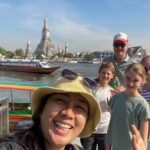
- Ferry to the River, Then Wat Arun at Sunset for Real-Photo Conditions
- The Tuk-Tuk Night Ride: Your Fast Pass Through Big Sights
- Chinatown Street Food Tasting: How to Eat a Lot Without Feeling Lost
- The Short Walk to the Finish at Wat Mangkon
- Price and Value: Is $69 Worth It?
- Who This Tour Suits Best (and Who Should Skip It)
- Should You Book This Bangkok Chinatown Street Food Tour?
- FAQ
- FAQ
- Where is the meeting point and what time does the tour start?
- How long is the Bangkok Chinatown street food tour?
- What transportation is included?
- What food and drinks are included?
- Are alcohol or drugs allowed on the tour?
- What should I bring?
- Where does the tour end?
- Is this tour suitable for vegetarians, vegans, or people with food allergies?
- Is the tour wheelchair accessible or suitable for mobility impairments?
Key Highlights You’ll Feel Right Away
- Wat Arun at sunset: you get a dedicated photo stop and a walk before the night crowds roll in
- Ferry crossing from BTS Saphan Taksin area: a quick, scenic start to the evening
- Tuk-tuk night ride: pass landmarks like the Grand Palace and Giant Swing
- Chinatown food tasting: guided stops with snacks, dessert, and non-alcoholic drinks included
- Small group capped at 9: easier pacing, better photo moments, less chaos
Setting Off From BTS Saphan Taksin (5:30 PM) and Why the Timing Works
This tour starts at 5:30 PM at Sathorn Pier, right by BTS Saphan Taksin (Exit 2, downstairs). That timing matters more than it sounds. In Bangkok, late afternoon is when you’re between day heat and full-on night. You’re catching the river light before it turns into full streetlamp glow.
You’ll also appreciate the rhythm from the start: you don’t just jump into Chinatown right away. You begin with a ferry crossing (about 30 minutes) that sets the scene and helps you feel like you’re moving like a local, not just being transported.
Practical tip: bring comfortable shoes and plan to keep your camera handy. You’ll want it, and you won’t want to fumble when the sun starts dropping.
You can also read our reviews of more food & drink experiences in Bangkok

Ferry to the River, Then Wat Arun at Sunset for Real-Photo Conditions
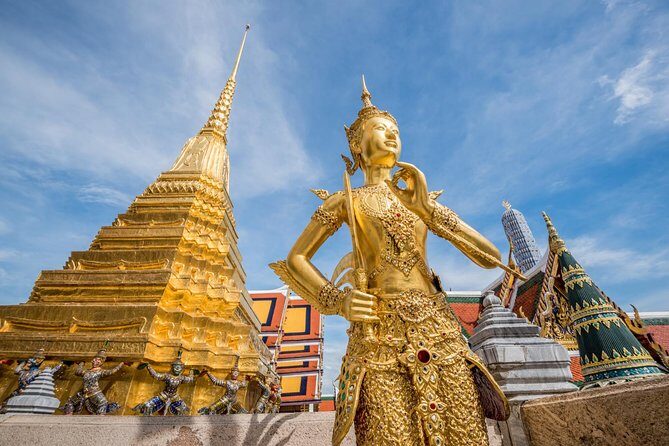
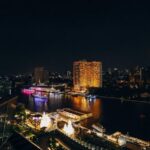
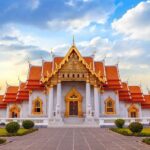
The heart of the first chapter is Wat Arun. You get time for a photo stop and a walk, and the tour is timed for sunset—the moment when the temple’s details look crisp and the river light turns warm.
What I like about this part is that it’s not treated like a quick look-and-go. You’re given about 30 minutes for the views, plus time to actually look around as the light changes. The spire begins to gleam, and the golden glow over the river gives you that layered background effect you usually only get with perfect timing.
Why it’s good value: if you try to do this on your own, you’d spend time coordinating transit and figuring out when to arrive. Here, the schedule does the heavy lifting for you.
Small consideration: it’s a sunset window, so wear shoes you can move in confidently. You’ll want to stay steady while shooting and walking.
The Tuk-Tuk Night Ride: Your Fast Pass Through Big Sights
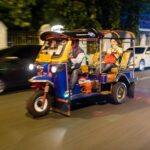
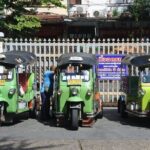
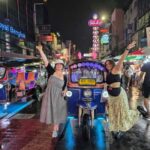
After Wat Arun, you hop into a tuk-tuk for about 30 minutes. This is where the tour turns from photo mission to night exploration mode. You’ll see the city lights come alive and pass major landmarks including the Grand Palace and the Giant Swing.
Even if you don’t get off the tuk-tuk to explore inside, the value is in the contrast. You’re watching famous Bangkok icons slide past while the streets get louder and brighter. It’s a quick way to get your bearings for later, and it feels like Bangkok in motion.
Practical tip: keep your phone/camera secure. Tuk-tuks move differently than cars, and you’ll probably be leaning slightly for photos. Stay balanced and quick—don’t overreach.
Chinatown Street Food Tasting: How to Eat a Lot Without Feeling Lost
The main event is Chinatown, with about 110 minutes of street food time plus a small walking transition at the end. This is where you’ll actually feel the tour earn its money.
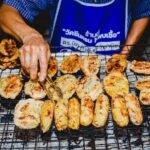
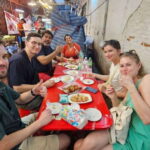
You’re not stuck guessing what’s safe, what’s good, or how much you should order. A licensed English-speaking guide leads you between food stalls and eateries, and you’ll get food tasting, snacks, dessert, and non-alcoholic beverages included. That combo matters because it lowers risk: you can focus on enjoying rather than calculating.
This is also where the guides’ personalities show up. In the experiences people shared, guides like Annie and Peachii were praised for being friendly, fun, and attentive, and for helping guests get the best bites without wasting time. One of the big themes is that the guides know which spots to hit first, so you don’t just end up eating randomly.
How to handle the tasting pace
- Expect to eat more than you think. Chinatown portions are not shy, even when you’re sampling.
- If you’re offered spicy options, go one step at a time. Thai street food can go from mild to serious fast.
- Keep water nearby. You’ll have water provided, which is a smart touch when you’re working through salty, sweet, and fried flavors.
One drawback to be aware of: this tour is not suitable for vegans or vegetarians, and it’s not listed as appropriate for people with food allergies. If you have restrictions, you’ll need to choose a different food tour style that matches your diet safely.
The Short Walk to the Finish at Wat Mangkon
Near the end, you’ll do about 10 minutes on foot and finish around Wat Mangkon. Your tour may also end at Wat Mung Korn MRT Station, depending on the specific routing for your group.
What I like about ending here: you’re not dropped in the middle of nowhere. You’re in an area where you can keep moving on your own if you still have energy, and you can connect back to transit without too much hassle.
Practical tip: if you’re planning anything after the tour, keep it flexible. Chinatown is easy to get distracted in—especially after you’ve had dessert.
You can also read our reviews of more tours and experiences in Bangkok
Price and Value: Is $69 Worth It?
At $69 per person for 210 minutes, the price makes sense if you look at what’s included. You’re paying for:
- Licensed English-speaking guide
- Ferry transport and crossing
- Tuk-tuk ride
- Multiple tastings (snacks, dessert) plus non-alcoholic drinks
- A tight schedule built around sunset at Wat Arun
If you tried to build this trip yourself, the costs add up quickly: getting to the river at the right time, arranging transport, and then paying for guide-led food stops. Here, the guide helps you avoid dead ends and missed chances (especially around what to eat and when to eat it).
Best value if you want a “guided night” but don’t want to plan. Not as good value if you already know the exact Chinatown stalls you want and you’re happy managing transport on your own.
Who This Tour Suits Best (and Who Should Skip It)
This tour is a great fit if you want:
- A night plan that mixes temple views + street food + landmarks
- A guide-led food experience where you’re trying multiple dishes instead of ordering one meal
- A small group setting (limited to 9 participants)
It’s not suitable for:
- People with mobility impairments or wheelchair users
- Vegans and vegetarians
- People with food allergies
If you love food and you’re comfortable with an active evening—walking plus tasting—this is the kind of tour that makes Bangkok feel like Bangkok.
Should You Book This Bangkok Chinatown Street Food Tour?
If you want a straightforward, high-impact Bangkok evening, I’d say yes. The combination of Wat Arun sunset timing, a tuk-tuk night pass of major sights, and a guided Chinatown street food block is exactly the kind of “smart shortcut” you pay for on a guided tour.
I’d especially recommend booking if:
- you’re short on time and want the sunset temple moment without juggling logistics
- you enjoy variety and want to try more than one or two dishes
- you want a guide who can keep things moving (and help with photo moments)
Skip it if:
- you can’t eat anything outside your dietary needs (vegans/vegetarians, and food allergies aren’t supported as suitable)
- you need a fully accessible route
FAQ
FAQ
Where is the meeting point and what time does the tour start?
Meet your guide at 5:30 PM at SATHORN PIER next to BTS Saphan Taksin Station (Sky-train), Exit 2, downstairs.
How long is the Bangkok Chinatown street food tour?
The tour lasts 210 minutes (about 3.5 hours).
What transportation is included?
You’ll use a ferry/crossing boat at the start and a tuk-tuk ride during the tour.
What food and drinks are included?
The tour includes food tasting, snacks, dessert, and non-alcoholic beverages, plus water to help you stay hydrated.
Are alcohol or drugs allowed on the tour?
Alcohol and drugs are not allowed, and smoking is also not allowed.
What should I bring?
Bring comfortable walking shoes and a camera for photos. You’ll have water provided.
Where does the tour end?
The tour concludes in Chinatown or at Wat Mung Korn MRT Station. It’s also listed as finishing at Wat Mangkon.
Is this tour suitable for vegetarians, vegans, or people with food allergies?
No. It is listed as not suitable for vegans, vegetarians, or people with food allergies.
Is the tour wheelchair accessible or suitable for mobility impairments?
No. It is listed as not suitable for people with mobility impairments and wheelchair users.