REVIEW · BANGKOK
Bangkok: Wat Pho and Wat Arun Guided Walking Tour
Book on GetYourGuide →Operated by TripGuru Thailand · Bookable on GetYourGuide
Three hours can feel like a full temple day.
This guided walking tour pairs two of Bangkok’s most important spiritual stops—Wat Pho and Wat Arun—so you get context fast, not just photo stops. I like that it’s built for flexibility with multiple start times, and it runs on a clear pace from pier to temples and back.
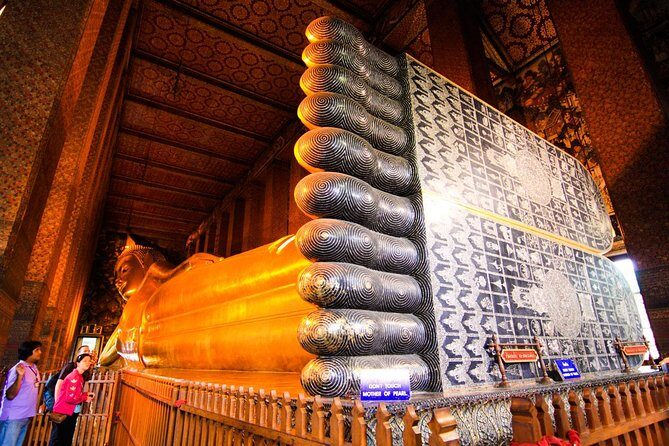
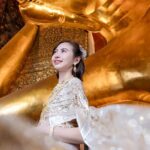
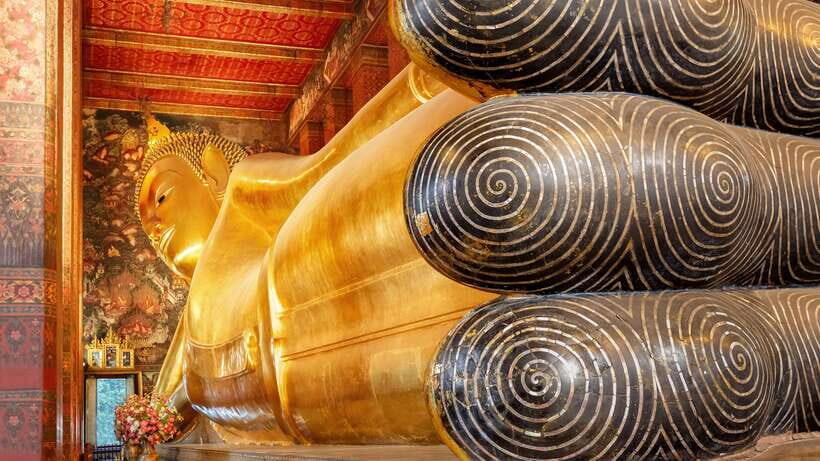
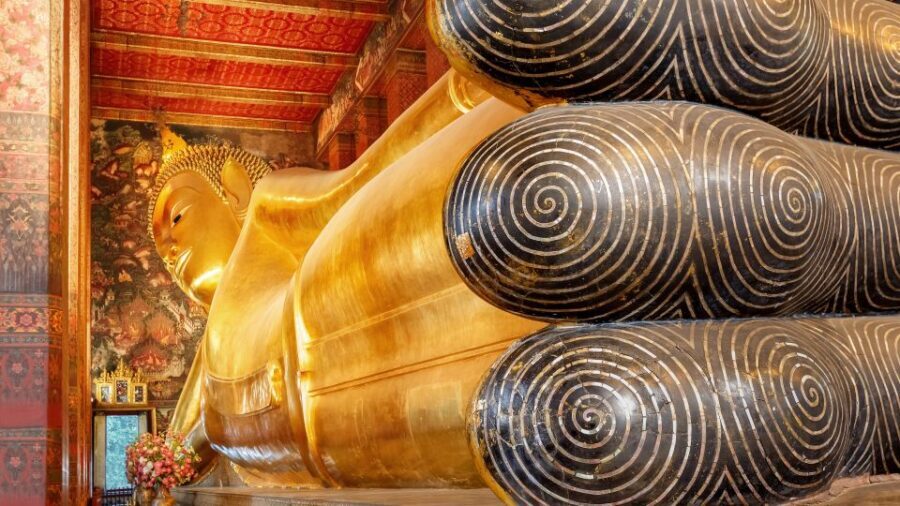
What I really enjoy is the “wow” factor at both ends. At Wat Pho, you’re seeing the famous 46-meter reclining Buddha, plus colorful mosaic details around the temple grounds. Then at Wat Arun, the riverfront chedi is covered in thousands of tiny mosaic pieces that look almost unreal in person.
One heads-up: the temple dress code is strict. If your outfit shows shoulders, underarms, back, or knees, you’ll need a sarong/scarf/sweater to cover up, or you may be turned away at some points.
In This Review
- Key things to know before you go
- Two Temples, One Smart 3-Hour Loop
- Starting at Tha Tian Pier: Getting Oriented in the First 10 Minutes
- Wat Pho First: The 46-Meter Reclining Buddha in Context
- What to watch for at Wat Pho
- Wat Arun Second: The Riverfront Chedi That Looks Like a Photo Filter
- A quick reality check about sound and photos
- What the Tour Includes (and Why It’s Good Value)
- About entry tickets: plan for them
- Dress Code and What to Pack (So You Don’t Lose Time at the Gate)
- Bring the practical stuff too
- Who This Tour Fits Best (and Who Should Skip It)
- Choosing Your Guide: How to Get More Than a Checklist
- Timing Tips: Make This Tour Work With Your Bangkok Plan
- Should You Book the Bangkok Wat Pho and Wat Arun Guided Walking Tour?
- FAQ
- What temples are visited on this tour?
- How long is the Bangkok Wat Pho and Wat Arun guided walking tour?
- Where do I meet the guide?
- Are the entry tickets included?
- What’s included in the price?
- What languages are the guides available in?
- What should I wear or bring for temple visits?
Key things to know before you go
- Tha Tian Pier is the anchor point, so you can start your temple day by the water.
- Wat Pho’s 46-meter reclining Buddha gives you the kind of scale that photos can’t match.
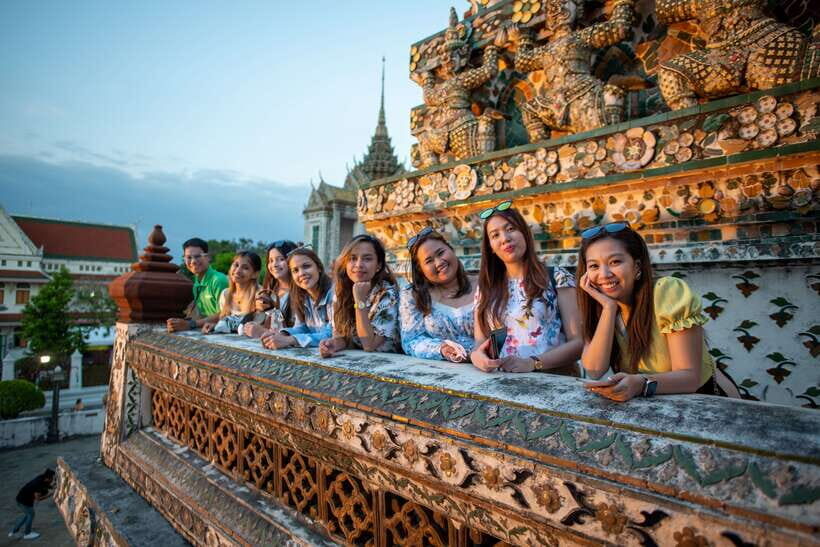
- Wat Arun’s white mosaic chedi is the reason people plan their best photos around river light.
- Coconut water is included, plus you’ll get a break between the two temples.
- The tour is GSTC-certified and designed as a lower-impact way to explore, with offsets included.
- You’ll walk between sites, so comfortable shoes and sun protection matter more than you think.
Two Temples, One Smart 3-Hour Loop

Bangkok can be loud, hot, and chaotic. This tour cuts through that by doing a simple thing well: it connects Wat Pho and Wat Arun with an experienced guide, in a tight 3-hour window.
The best part is the pacing. You’re not sprinting through the grounds, but you also aren’t stuck in one place forever. You’ll get guided time at each temple, with room to look around on your own at key moments.
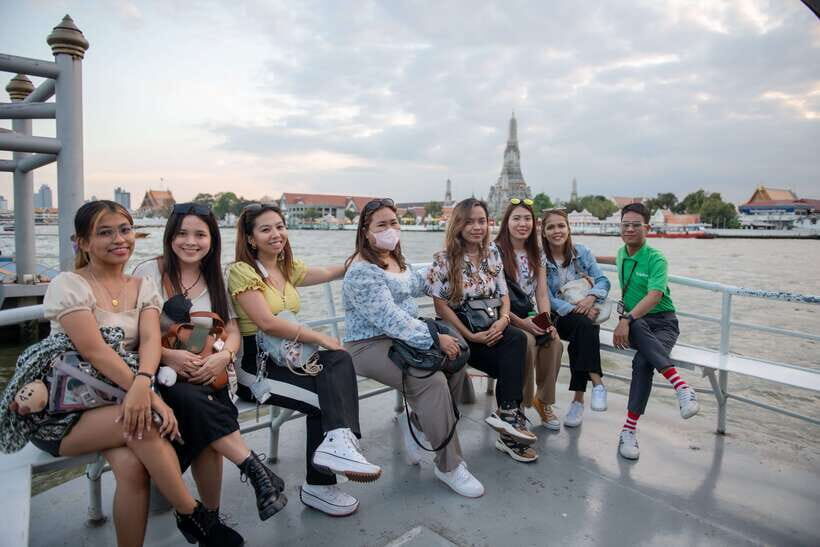
And because the meeting point is Tha Tian Pier, the whole experience has a “river day” feel from the start. Even before you reach the first temple gate, you’re already in Bangkok’s temple-river rhythm.
You can also read our reviews of more walking tours in Bangkok

Starting at Tha Tian Pier: Getting Oriented in the First 10 Minutes
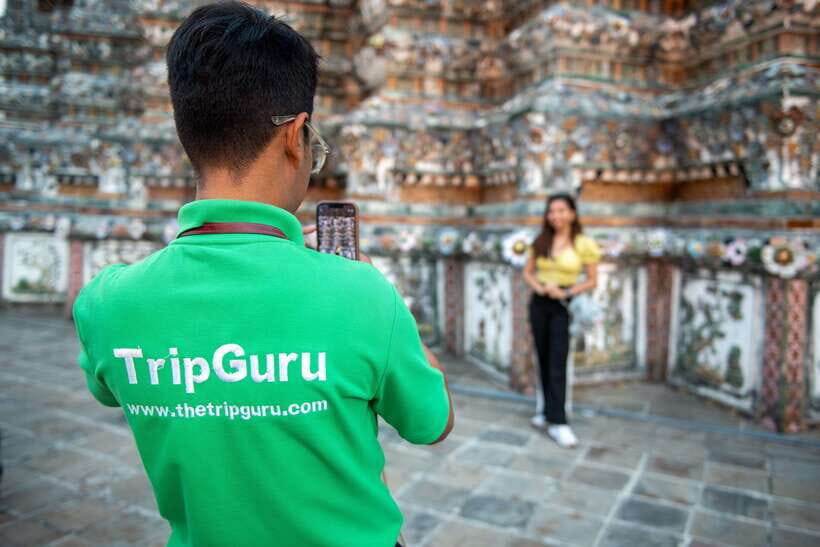
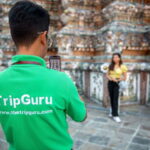
You meet at THA TIAN PIER. The day before, you should receive an email confirming the pick-up time and the meeting point. When you arrive, look for your guide holding a TripGuru sign, and give yourself buffer time—you’ll want to be there about 10 minutes early.
This matters more than it sounds. Bangkok traffic can be slow, and you’ll want to start calm, not stressed. Once you’re with your group, the guide usually helps you get your bearings quickly—where to walk, where to pause, and how to move respectfully through temple areas.
If you’re using public transit, take advantage of it. One practical tip I’ve picked up the hard way in Bangkok: MRT is often easier than trying to muscle through roads and crossings when heat and crowds hit.
Wat Pho First: The 46-Meter Reclining Buddha in Context
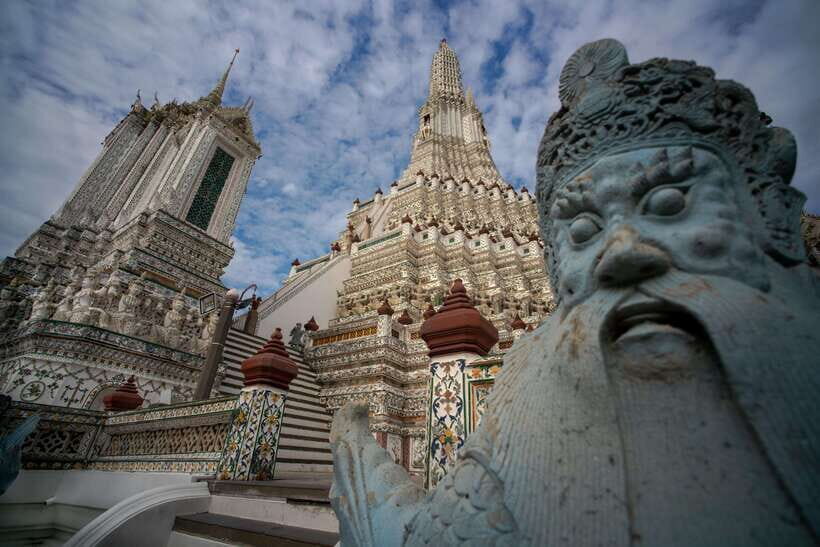
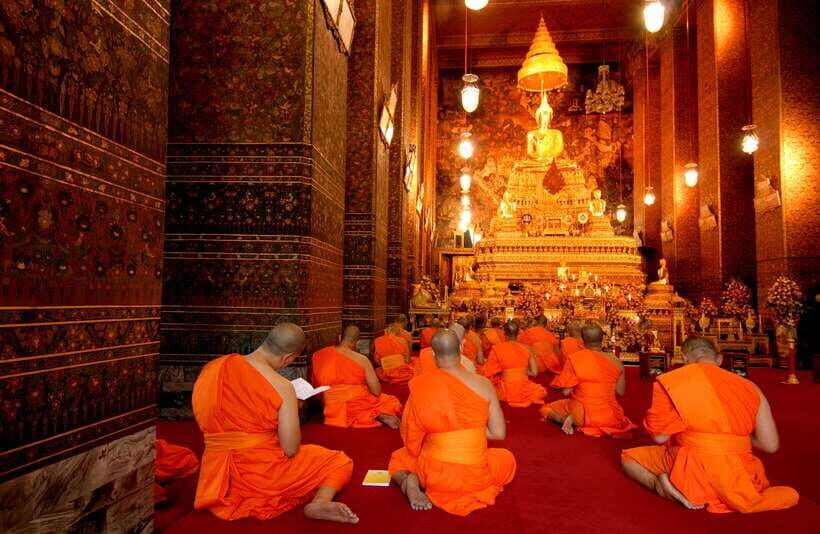
Wat Pho is the kind of temple that makes you stop mid-walk. The grounds feel layered—big spaces, details everywhere, and that unmistakable presence of Buddhism expressed in art and architecture.
You’ll have about 1.5 hours at Wat Pho with guided time and sightseeing. The headline is the 46-meter long reclining Buddha statue. What lands in person is not just the size—it’s the care of the design around it, and how the temple layout is built to help you understand the scene instead of only viewing it from one angle.
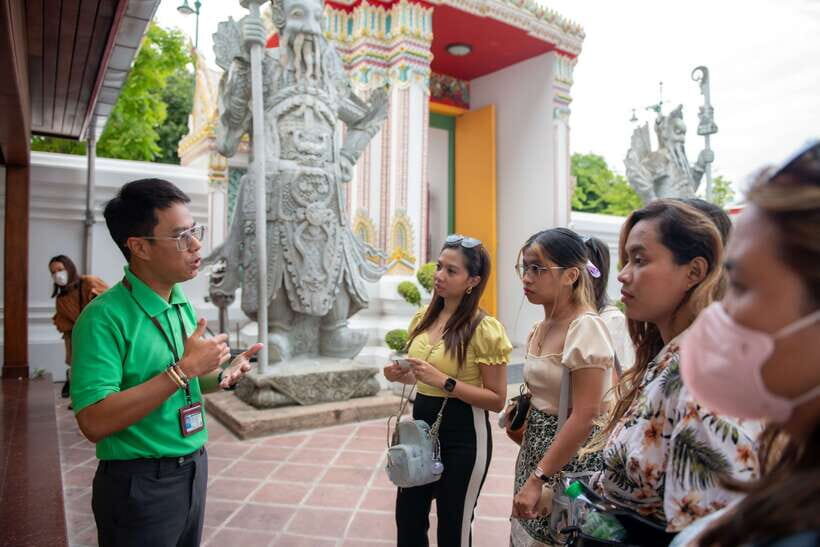
A guide turns this from “pretty statue” into something you can actually read. In previous departures, guides like Nancy, Jack, Angie, and Surina have been praised for explaining what different parts of the temple mean and connecting details to Buddhist practice and Thai culture. Some guides even share practical moments like basic how-to ideas for prayer or how to behave at shrines.
What to watch for at Wat Pho
- The reclining Buddha is your main anchor. Spend a few minutes letting your eyes adjust before you rush for photos.
- The surrounding areas include colorful mosaic shrines and smaller details. These are easy to miss if you treat the temple like a checklist.
- Expect a mix of guided explanation and time to explore. Many guides keep the info paced so you don’t end up information-overloaded.
One small practical note: if you’re wearing thin summer clothes, plan to cover up. The dress code rules in temple areas can change how comfortable you feel. Better to be covered from the start than to hunt for a scarf at the last second.
Wat Arun Second: The Riverfront Chedi That Looks Like a Photo Filter
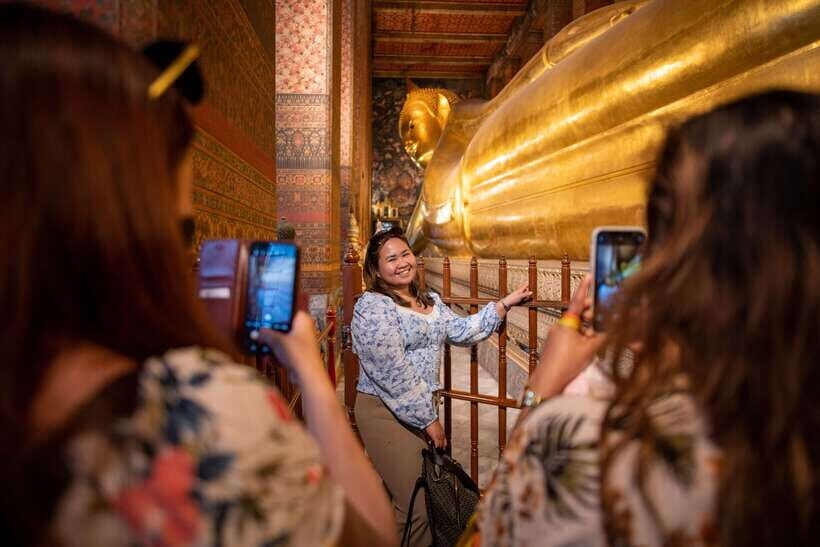
After Wat Pho, you head to Wat Arun. The temple is about 300 years old, and it sits right along the Chao Phraya River, so the views feel instantly Bangkok—boats, water, and temple silhouettes working together.
You’ll also have about 1.5 hours at Wat Arun. The iconic feature is the enormous white chedi inlaid with thousands of colorful mosaic pieces. Up close, it looks like broken glass arranged on purpose—tiny pieces catching light as you walk around.
This is also one of the most instagrammable temple stops in Thailand, but don’t just stand and shoot. Walk. The angles change constantly, and the guide can point you toward spots where the mosaics show depth instead of flattening into a blur.
You can also read our reviews of more guided tours in Bangkok





A quick reality check about sound and photos
Some people find it harder to hear the guide at street level because the noise of the area can swallow explanations. If that’s your concern, simply stay close when the guide is giving key points. It’s also smart to do photos in short bursts, then come back to listen. You’ll get more meaning that way.
What the Tour Includes (and Why It’s Good Value)
At $17 per person, the price is positioned for first-time Bangkok visitors who want two major temples without buying a dozen extras. The tour includes:
- A live guide
- The walking tour
- Coconut water
- Carbon emissions offset credits
That coconut water detail is underrated. Temples in Bangkok come with heat and sun, and having a planned hydration break keeps you from turning the tour into a scramble. In past departures, you may also find a small bottle of water included around the first temple time, but coconut water is the reliable part.
The carbon offsets are also part of the package. The tour is described as a low-impact experience, including water served in glass bottles and offsetting carbon emissions for each tour.
About entry tickets: plan for them
Entry fees are not included. You should expect:
- Wat Pho: 300 Thai Baht
- Wat Arun: 200 Thai Baht
That total matters for value. Still, even with tickets added, you’re paying for a guided experience that saves time and adds context. You’d need to figure out routes, etiquette, and what to look for on your own. Here, the guide does that part.
Dress Code and What to Pack (So You Don’t Lose Time at the Gate)
Temple etiquette is not a “nice-to-have” on this route. It’s a real gatekeeper.
Some sites on the tour have a strict dress code. Clothes revealing shoulders, underarms, back, and knees are not allowed. So I strongly recommend packing a sarong, scarf, or sweater even if you think your outfit is fine. It’s easier to cover quickly than to stand around while you figure out what to do.
Bring the practical stuff too
You’ll be walking and exposed to sun and insects. Bring:
- Comfortable shoes
- Sunglasses
- Hat
- Camera
- Sunscreen
- Insect repellent
- Cash
Also, plan for images. A phone camera works, but good temple photos come from steadiness and timing. The guide can help you get into better spots without crowding people.
Who This Tour Fits Best (and Who Should Skip It)
This is a solid fit for people who want a focused temple introduction without spending a whole day figuring things out. It’s especially good if:
- You like walking but don’t want hours of navigation stress
- You care about understanding what you’re seeing, not only photographing it
- You want a comfortable pace with breaks built in
It may not be the best idea if you:
- Are pregnant
- Have mobility impairments
- Have heart problems
- Have high blood pressure
Even when a tour is “easy walking,” it’s still uneven ground and heat exposure. Bangkok can be unforgiving, so match the day to your body.
Choosing Your Guide: How to Get More Than a Checklist
The guide is the difference between seeing temples and understanding them.
The names that show up again and again in past experiences include Nancy, Jack, Surina, Sun, Tee, Tank, Bond, Angie, Cherry, and Jimmy. The consistent theme is that guides bring a mix of Thai temple explanation plus helpful navigation—and often a friendly tone that makes the tour feel personal.
A few specific strengths I’d look for in the guide style:
- Clear explanations that help you notice things you would miss alone
- Time to explore on your own, not constant talking
- Help with photos, including getting you into the right spot without blocking others
- Patience with slower groups and lots of questions
One extra tip: if you’re the type who asks “why is that there?” questions, this tour usually supports it. Some guides go beyond architecture and talk about Buddhism basics, including how people approach prayer and respect at shrines.
Timing Tips: Make This Tour Work With Your Bangkok Plan
This is a short 3-hour block, which is exactly why it’s useful. You can fit it into a morning temple plan or pair it with other river-area activities.
I also like doing it early in a visit. Wat Pho and Wat Arun are like the key chapters of Bangkok’s temple story. After you understand the basics from this tour, you’ll recognize symbols, patterns, and layout choices when you see other temples later.
Finally, prepare for Bangkok’s temperature. Even with a guide, you’ll feel the heat while moving between areas. Sunglasses, a hat, sunscreen, and insect repellent are not optional. The coconut water break is nice, but it’s not a substitute for good prep.
Should You Book the Bangkok Wat Pho and Wat Arun Guided Walking Tour?
Book it if you want a high-impact, low-stress way to experience two major Bangkok temples in one outing. The value is strong for the price once you consider that you’re paying for a guide who helps you understand what you’re looking at, plus a built-in hydration break and carbon offset credits.
Skip (or choose something else) if strict dress code rules feel like a hassle you can’t handle, or if you need an itinerary designed for mobility and health limitations.
If you’re a first-timer who wants the famous sites done right, this is a smart bet: Wat Pho’s 46-meter reclining Buddha and Wat Arun’s mosaic chedi are the kind of sights that stick with you. And having a guide for both turns the trip from sightseeing into real comprehension—without dragging on all day.
FAQ
What temples are visited on this tour?
You visit Wat Pho and Wat Arun, with guided sightseeing time at both.
How long is the Bangkok Wat Pho and Wat Arun guided walking tour?
The tour lasts about 3 hours total.
Where do I meet the guide?
Meet your guide at Tha Tian Pier (ท่าเรือท่าเตียน). Your guide will be holding a TripGuru sign.
Are the entry tickets included?
No. Entry tickets are not included. Wat Pho is 300 Thai Baht and Wat Arun is 200 Thai Baht.
What’s included in the price?
The tour includes a guide, a walking tour, coconut water, and carbon emissions offset credits.
What languages are the guides available in?
The live tour guide is available in Chinese and English.
What should I wear or bring for temple visits?
Wear clothes that meet the temple dress code (no revealing shoulders, underarms, back, or knees). Bring a sarong, scarf, or sweater to cover up if needed, plus comfortable shoes, sunscreen, hat, sunglasses, insect repellent, cash, and a camera.