REVIEW · CENTRAL THAILAND
Full-Day Historical Park and Countryside Tour in Sukhothai
Book on Viator →Operated by Cycling Tour Sukhothai Thailand · Bookable on Viator
Sukhothai feels friendlier on a bicycle. This full-day ride follows narrow canals through working countryside—rice paddies, small communities, and everyday routines—then pivots into the big-name temple stops inside Sukhothai Historical Park, all with an English-speaking guide and an eco-tour focus on low-impact travel. You’ll also get easy explanations that tie Buddhism and temple architecture to what you’re seeing, plus plenty of photo moments along the way.
I especially like two things: the way the route keeps you away from traffic while still showing real local life, and the guide, often named Mem, who turns architecture and history into simple, clear takeaways you can remember at each site. The second big plus is practical value: mountain bike support (with helmet and insurance), lunch, and admission fees are handled for you.
One drawback to plan around: this is a cycling day in good weather, so if you’re not comfortable riding for several hours, you may feel it. Also, pickup rules depend on distance, so double-check whether your hotel is within the included transfer area.
In This Review
- Key highlights at a glance
- Why this Sukhothai bike-and-temples day feels different
- What you’re really paying for (the value check)
- Getting rolling: 8:00 start, transfer options, and bike setup
- The canal countryside ride: villages, rice paddies, and daily work
- What to expect from the ride itself
- Sukhothai Historical Park: setting the scene for what you’ll see
- Wat Chetuphon: rice-paddy countryside temple complex
- Saritphong Dam: an ancient water system that shaped the city
- Wat Mangkon: Sri Lanka–style chedi and fig-tree shade
- Wat Pa Mamuang: mango forest temple stroll
- Wat Sri Chum: the big Buddha in the monthop
- Wat Mahathat: the most famous temple complex for a reason
- Wat Sri Sawai: Khmer-style prangs and a moat setting
- Lunch and pacing: staying comfortable for the whole day
- Who should book this tour
- Should you book this Sukhothai bike-and-temple tour?
- FAQ
- What time does the tour start and how long is it?
- How much does the full-day tour cost?
- Is hotel pickup included?
- What’s included with the bike?
- Is lunch included?
- Are temple admission tickets included?
- Does the tour use a mobile ticket?
- How big is the group?
- Do I need good weather?
- What is the cancellation policy?
Key highlights at a glance
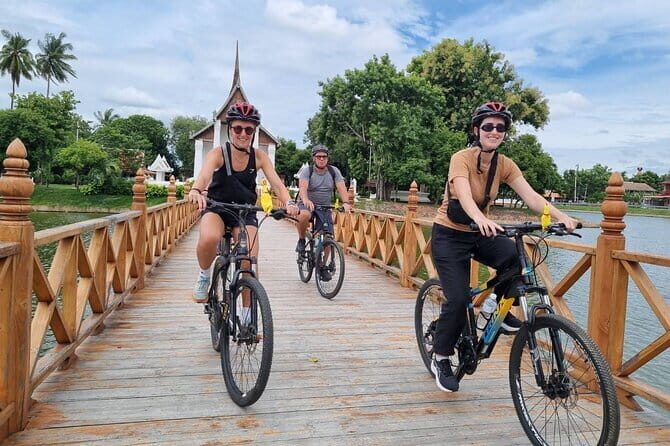
- Canals + countryside rhythm: zigzagging little waterways link farming, washing, fishing, and daily routines
- Small group feel (max 12): easier questions for your guide during both ride and temple time
- Multiple temple styles in one day: from Sri Lanka–style chedi shapes to Khmer-style prangs
- Bike comfort included: mountain bike with 24 gears plus front suspension, helmet, and insurance
- Real refreshment stops: lunch with bottled water, soft drink, and snack during the day
Why this Sukhothai bike-and-temples day feels different
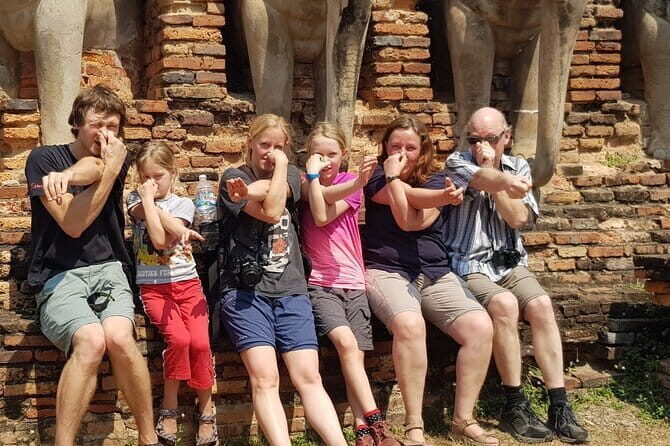
This tour isn’t just temple hopping with a bike. It’s built around the idea that Sukhothai makes more sense when you see the landscape that fed it—canals for daily work, rice fields for food, and towns that grew around both. You start riding along small, traffic-free routes where locals are doing things that don’t show up on a postcard.
Then, when you reach the historical park, you’re not staring at ruins like they’re random rocks. The guide connects the dots with straightforward explanations of architecture, history, and Buddhism, so the temple shapes feel intentional rather than confusing.
I also like that the day is paced like a guided walk-through with breaks, not a forced endurance event. With about 7 hours total, plus multiple short temple visits, you get plenty of stops without feeling like every minute is pedal-to-the-floor.
You can also read our reviews of more historical tours in Central Thailand
What you’re really paying for (the value check)
At $51.92 per person, this can look like a bargain at first. But the better way to judge it is by what’s bundled: an English-speaking cycling guide, a mountain bike with 24 gears and front suspension, helmet and insurance, all fees and taxes, lunch with water/soft drink/snack, and hotel transfers.
On top of that, admission tickets are included at every temple stop listed in the itinerary. In other words, you’re paying once for the full-day package, instead of doing a bunch of separate tickets, bike rentals, and guided-time costs.
One more value detail: you get a mobile ticket, which saves time when you check in.
Getting rolling: 8:00 start, transfer options, and bike setup
The day begins at 8:00 am and runs until around 3:00 pm (about 7 hours). The meeting point is near public transportation, and hotel transfers are included.
If your hotel is outside the included transfer range, pickup/drop-off can cost extra. The tour notes specific add-on van rates for places like Sukhothai Heritage Hotel and for Phitsanulok train station/airport, and it also lists a rate for Sukhothai airport. So if you’re unsure, it’s worth confirming your pickup eligibility before you lock it in.
Once you’re set, you get a mountain bike with 24 gears and front suspension, plus a helmet and insurance. Even if you don’t usually ride, this kind of setup helps you feel steady on uneven surfaces.
The canal countryside ride: villages, rice paddies, and daily work
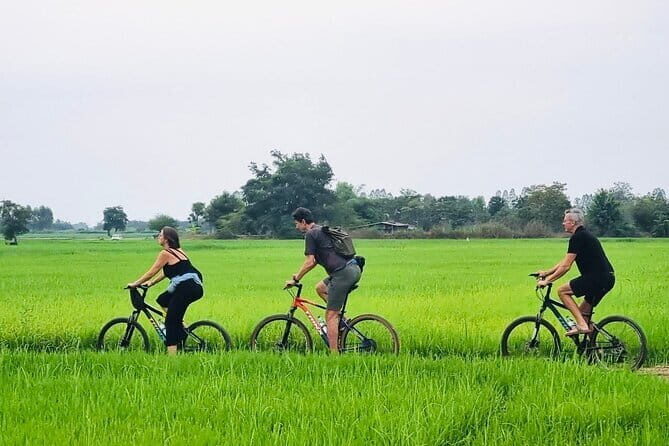
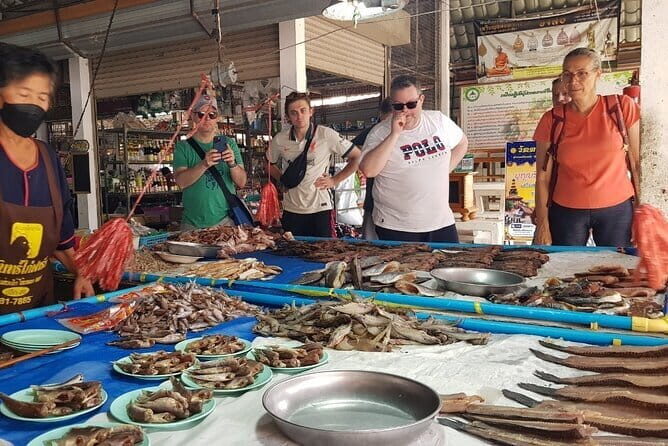
The early part of the day is where the tour earns its keep. You cycle past local villages and rice fields, and you may stop at a market area where you can pick up a sense of farming and agriculture products.
The route follows little canals that zigzag and swing through the landscape. That matters because the canals aren’t scenery here—they’re infrastructure. Your guide points out how these waterways support farming, and also how they’re used for bathing, laundry, and fishing for dinner.
You’ll also get the sense of local industry and handcrafts along the way. And since the roads are described as traffic-free for much of the ride, you can focus on watching life happen instead of thinking about road hazards.
What to expect from the ride itself
The itinerary doesn’t list a precise distance, but it does suggest steady riding plus breaks. Plan to wear comfortable clothing that can handle heat and dust, and bring something for sun protection.
This is a guided day, so you’re not just “going through” the countryside. Your guide’s job is to translate what you see—architecture, temple purpose, and Buddhism—so you’re better prepared for what comes next inside the park.

Sukhothai Historical Park: setting the scene for what you’ll see
After cycling through villages and fields, you spend a long block at Sukhothai Historical Park (about 4 hours total for the first major stop). This is where the day shifts from everyday life to the ancient capital.
What you should look for here is not just which temple is “prettiest,” but how the city’s religious spaces and water-related infrastructure worked together. When the guide explains the logic behind the sites—how Buddhism shaped layout and meaning—you’ll find it easier to follow the mix of styles later in the itinerary.
This part of the park visit is also where you’ll start spotting recurring design ideas. Once you notice them, the smaller temple complexes later in the day feel less random.
Wat Chetuphon: rice-paddy countryside temple complex
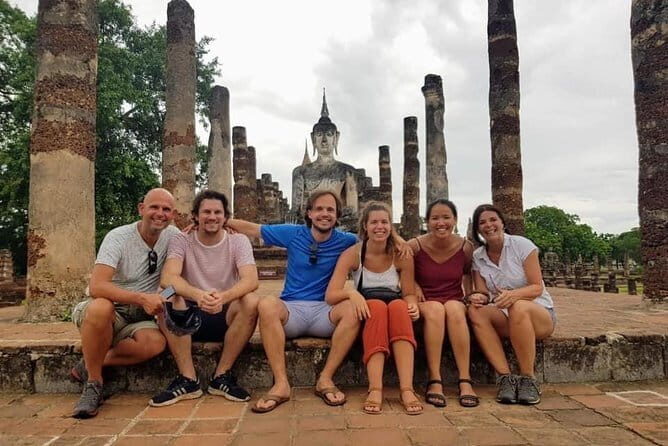
The first temple stop on the list is Wat Chetuphon, described as the biggest temple complex of the southern part of the historical park. It’s located in the countryside and surrounded by rice paddies, so it keeps that same “Sukhothai is a living landscape” feel.
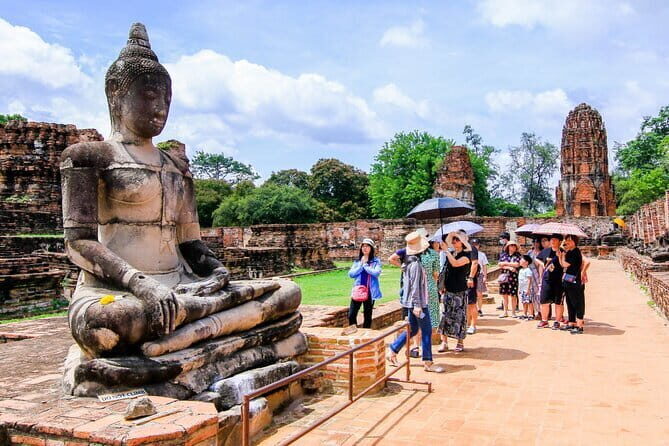
Inside, you’ll see remains of Buddha statues in different positions. That detail matters: the tour doesn’t treat Buddhism as only big monuments; it points you toward how different poses and scenes communicate teachings.
In terms of time, this stop is brief—about 15 minutes. That’s enough for orientation and a few key photos, especially if your guide is actively explaining what to look for.
Saritphong Dam: an ancient water system that shaped the city

Next comes Saritphong Dam, an ancient dam dating back to the Sukhothai era. Your time here is short (about 20 minutes), but it’s an important “why it matters” stop because the dam provided water for the city and surrounding rice fields.
If you liked the canal portion earlier, this is the bridge between that living water and the old water system that powered agriculture. Take a moment here to look at the surrounding mountains and imagine water storage feeding fields downstream.
This is also a good breathing spell in the day—less walking, more viewpoint time, and usually an easier stretch for the group.
Wat Mangkon: Sri Lanka–style chedi and fig-tree shade
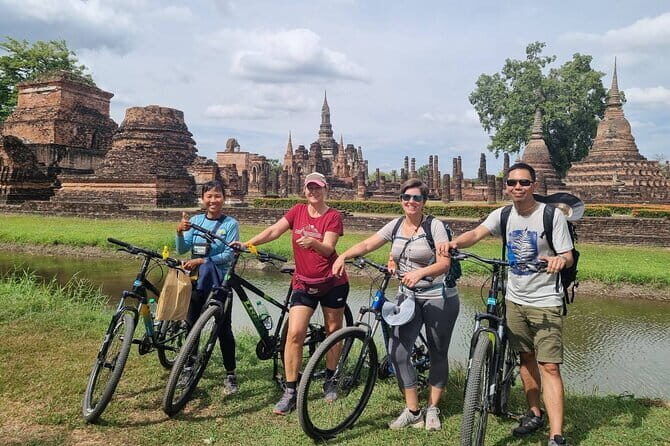
At Wat Mangkon, you’ll see a temple complex that includes a chedi with a Sri Lanka–style shape. It’s also described as heavily overgrown by strangler fig trees.
That makes it a great photo stop, and it’s the kind of place where you can slow down. The contrast between refined temple form and wild plant growth is part of the visual story here. The stop is about 15 minutes, so aim to get one wide shot and one close-up rather than trying to cover everything.
Wat Pa Mamuang: mango forest temple stroll
Then you head to Wat Pa Mamuang, which the itinerary describes as sitting inside a mango forest. In Thai, mamuang means mango, so the name ties directly to the setting.
This stop is about 15 minutes. It’s a nice change of pace from the larger, more crowded-feeling compounds. The guide shows you around with explanations, so even if you’re not a temple expert, you’ll still leave knowing what you just saw and why it’s here.
Wat Sri Chum: the big Buddha in the monthop
One of the most visually striking stops is Wat Sri Chum. It’s located in the north of the historical park, and the key feature is inside the monthop (the Buddha house): a gigantic Buddha statue in the subduing Mara position.
Time is about 20 minutes. If you’re the type who likes details, this is where your guide’s explanation can really land. Subduing Mara is an important moment in Buddhist teaching, so the pose isn’t random—it communicates a turning point in the story.
Wat Mahathat: the most famous temple complex for a reason
Wat Mahathat is named as the most famous and impressive temple complex of Sukhothai’s ancient capital. The itinerary describes it as a mix of different architectural styles, located in the heart of the historical city area.
This stop is about 30 minutes, which is longer than most others. That extra time helps because you’ll likely want to:
- orient yourself with the overall layout
- compare the different style elements
- and grab a couple of photos without feeling rushed
If you only visited one temple complex in Sukhothai, this is the one on the list that people usually have in mind.
Wat Sri Sawai: Khmer-style prangs and a moat setting
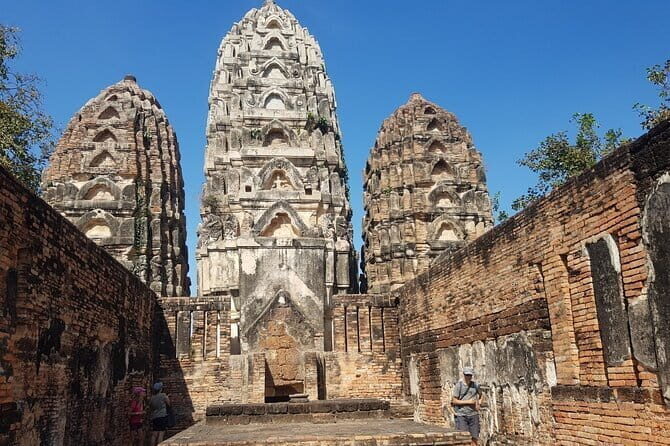
Finally, you’ll reach Wat Sri Sawai, described as a Khmer style temple. It’s made up of a prayer hall and three prangs (tower structures), surrounded by a brick wall and a moat.
This stop is about 20 minutes, and it’s a good “style comparison” moment. By now you’ve seen Thai-influenced and other regional details across the day, so Khmer elements can feel clearer when you can actually look for them.
The moat-and-brick setting also gives you a different kind of photo frame than the open rice-paddy temples. It’s more enclosed, more geometric, and often a little more dramatic.
Lunch and pacing: staying comfortable for the whole day
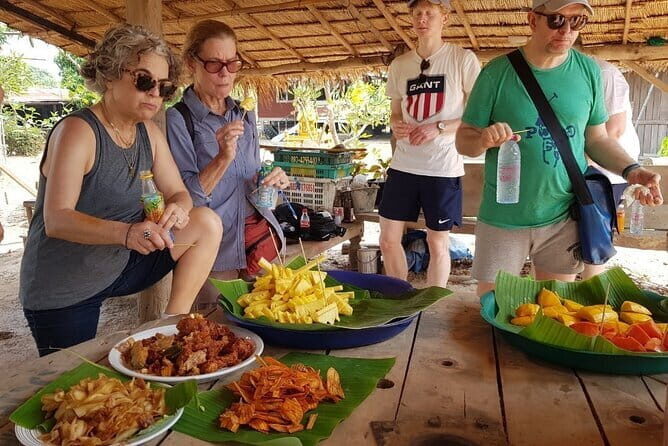
Lunch is included, along with bottled water, a soft drink, and a snack. Since the day runs from morning into mid-afternoon, this coverage helps you avoid the classic cycling mistake: getting dehydrated or hungry early and then feeling cranky later.
In the group-friendly rhythm of the tour, you also get multiple short temple stops rather than one long hike inside the park. That’s a big deal if you’re on vacation and want to keep your energy.
As for how hard it is: the bike has gears and suspension, and you have breaks throughout the itinerary. But because this is still a cycling day, bring a mindset of steady effort, not a casual stroll.
Who should book this tour
This tour is a great fit if you want:
- Sukhothai temples plus the living countryside that supports them
- a small-group day where your guide can explain as you go
- bike time that’s more interesting than just getting from A to B
It’s also ideal if you like mixing viewpoints and photos with short, guided explanations. The day structure is friendly for first-timers, even if you’re new to temple sites.
If you hate cycling or you have knee/back issues, you might find the pace tougher than expected. And because the tour notes it needs good weather, plan for flexibility if rain is on the menu.
Should you book this Sukhothai bike-and-temple tour?
Yes, if your ideal Sukhothai day includes both real daily life and major temple stops—and you like the idea of learning while you ride. The value is strong because the bike, helmet/insurance, lunch, and temple admissions are built in, and the route is designed to keep the focus on countryside, not traffic.
Skip or rethink it if you want a purely temple-centered day with long exploration time, or if cycling for several hours sounds like work you’d rather avoid. In that case, you might prefer a more walking-heavy or site-focused option.
If you’re somewhere in the middle—curious, comfortable with cycling, and ready for a guided mix of canals and ancient temples—this one is an efficient way to see Sukhothai in a day without losing the context that makes it meaningful.
FAQ
What time does the tour start and how long is it?
It starts at 8:00 am and runs for about 7 hours (until around 3:00 pm).
How much does the full-day tour cost?
The price is $51.92 per person.
Is hotel pickup included?
Hotel transfers are included, but pickup/drop-off may not be included beyond 15 kilometers from the starting point. The tour lists extra van fees for specific locations like Sukhothai Heritage Hotel and Phitsanulok train station/airport.
What’s included with the bike?
You get a mountain bike with 24 gears and front suspension, plus a helmet and insurance.
Is lunch included?
Yes. Lunch is included with bottled water, soft drink, and a snack.
Are temple admission tickets included?
Yes. Admission tickets are included for the listed stops, including the temples and complexes in the historical park.
Does the tour use a mobile ticket?
Yes, it includes a mobile ticket.
How big is the group?
The group has a maximum size of 12 travelers.
Do I need good weather?
Yes. The tour requires good weather. If it’s canceled due to poor weather, you’ll be offered a different date or a full refund.
What is the cancellation policy?
You can cancel for free up to 24 hours in advance for a full refund. If you cancel less than 24 hours before the start time, the amount is not refunded.