REVIEW · BANGKOK
Half Day Professional Thai Fruit and Vegetable Carving Class
Book on Viator →Operated by Siam Carving Academy · Bookable on Viator
Fruit carving in Thailand has style.
In this Half Day Professional Thai Fruit and Vegetable Carving Class, you learn the Thai way of turning everyday produce into plate-ready decoration, taught by Master Carver Wan Hertz in a private penthouse studio with city views. You’ll practice classic shapes like tomato flowers and delicate cucumber leaves, then walk away with a skill you can actually use at your own dinners back home.
I like two big things about this class.
First, the instruction is built for real people, not just food artists; Wan’s teaching comes across as patient, skilled, and encouraging. Second, you get a calmer, focused experience with FREE snacks and beverages, plus a carving knife included, so you can concentrate on learning instead of scrambling for supplies.
One thing to consider before you sign up: it’s a hands-on knife-and-knife-technique class.
Also, the session is about 3 hours, so beginners should expect to learn fundamentals and create a few standout pieces rather than a full buffet of carvings. Ages are 12+, and younger kids need an adult with them.
In This Review
- Key things to know before you book
- Thai Fruit & Vegetable Carving in Bangkok: a skill you can bring home
- Siam Carving Academy and a penthouse studio lesson with Wan Hertz
- How the 3-hour carving class actually works
- The carving process: tomato flowers, cucumber leaves, and plate-ready details
- What’s included: snacks, an introduction pack, and a free carving knife
- Choosing your time slot: 9–12 versus 13–16 in Bangkok
- Price and value: why $91 makes sense for a hands-on skill
- Who this class is best for (and who should pause)
- Practical tips to get the best results
- Should you book this half-day Thai carving class?
- FAQ
- How long is the Thai fruit and vegetable carving class?
- Who teaches the class?
- Where does the class meet in Bangkok?
- What time slots are available?
- How many people are in the group?
- What is included in the price?
- What is not included?
- What is the minimum age to join?
- Is the class near public transportation?
- How do tickets work?
- Can I cancel for a refund?
Key things to know before you book
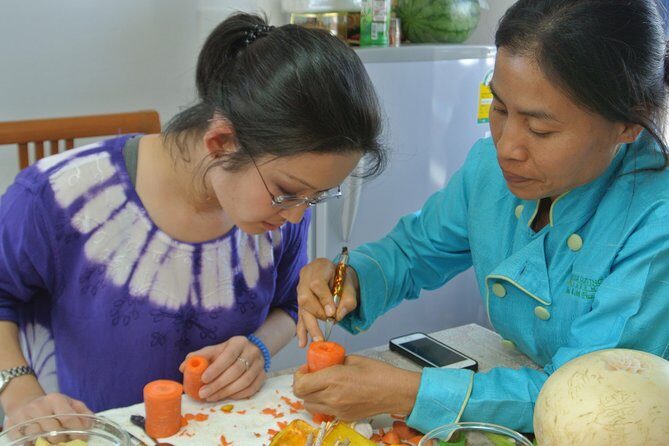
- Master Carver Wan Hertz leads the class and brings a practical, patient approach that works for beginners and more experienced students.
- A small group (max 10 travelers) helps you get more hands-on feedback instead of watching from the back.
- You work with familiar produce like tomatoes, cucumbers, and other everyday vegetables to learn the Thai garnishing look.
- A free carving knife is included, so you can start immediately.
- Light refreshments come with the class, keeping the vibe relaxed while you learn.
- The setting is a private penthouse studio overlooking Bangkok, which makes the whole thing feel special without being flashy.
Thai Fruit & Vegetable Carving in Bangkok: a skill you can bring home

This isn’t a sightseeing tour where you rush from one photo stop to the next. It’s a hands-on Thai food-art lesson, which changes the pace of your day in a good way.
You’ll learn how Thai garnishes are made: flowers, leaves, and decorative plating elements that make a basic meal look intentional. The best part is that you’re not just learning what something looks like. You’re learning how to shape it, so you can repeat it later when you want your own table to feel a little more Thai.
You can also read our reviews of more tours and experiences in Bangkok

Siam Carving Academy and a penthouse studio lesson with Wan Hertz
Your class starts at Siam Carving Academy, in the Soi Rung Rueang area of Huai Khwang. The meeting point is 130/1 Soi Rung Rueang, Khwaeng Samsen Nok, Khet Huai Khwang, Krung Thep Maha Nakhon 10310. The location is also near public transportation, which matters in Bangkok where timing can get messy.
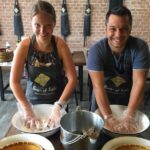
Inside, you’ll be in a private penthouse studio overlooking Bangkok. That’s a big deal for comfort and focus: fewer distractions than a crowded market, and a clean space to learn knife skills safely and comfortably.
The teacher is Master Carver Wan Hertz, and her teaching style stands out for two reasons. She’s described as kind and approachable, and she also comes off as very capable—someone who can slow down when you’re learning and still keep the class moving.
How the 3-hour carving class actually works
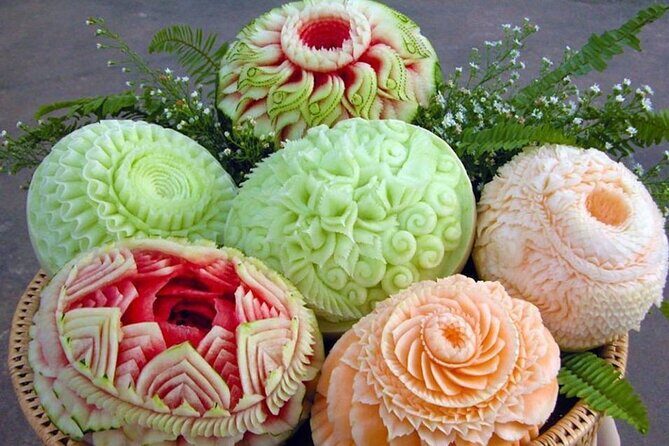
The class is about 3 hours (approx.), and it runs 7 days a week with two possible time windows: 9:00–12:00 and 13:00–16:00. You’ll get an introduction pack, then get to carving.
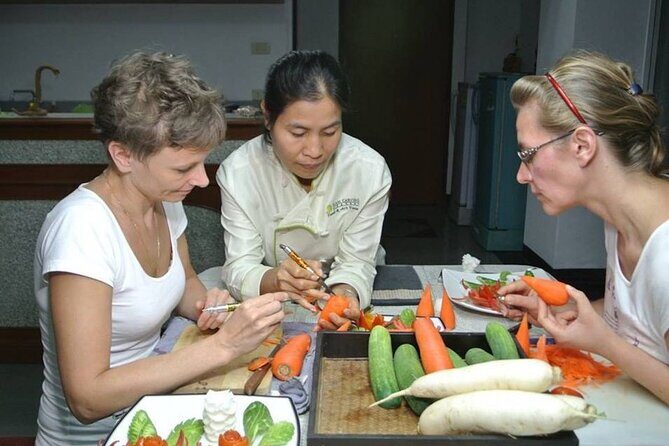
Because it’s a small class (up to 10 travelers), you’re not stuck hoping the instructor notices your questions. You can learn by doing, then get quick correction when needed. For me, that’s the difference between watching someone carve online and actually learning the technique.
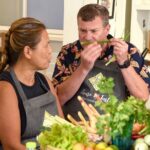
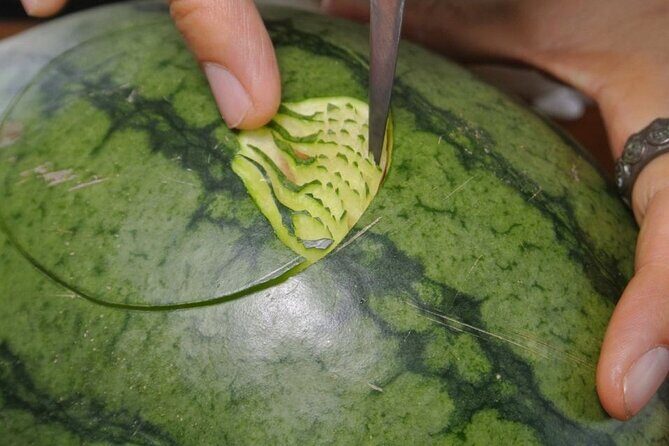
The session is built around classic Thai garnish forms. You’ll practice making flowers from tomatoes, delicate leaves from cucumbers, and other plate-style decorative pieces. The idea is to learn a few core techniques that you can mix and match when you plate food later.
The carving process: tomato flowers, cucumber leaves, and plate-ready details
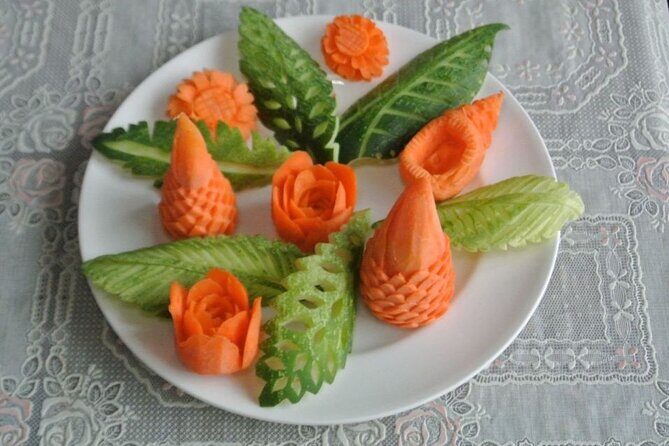
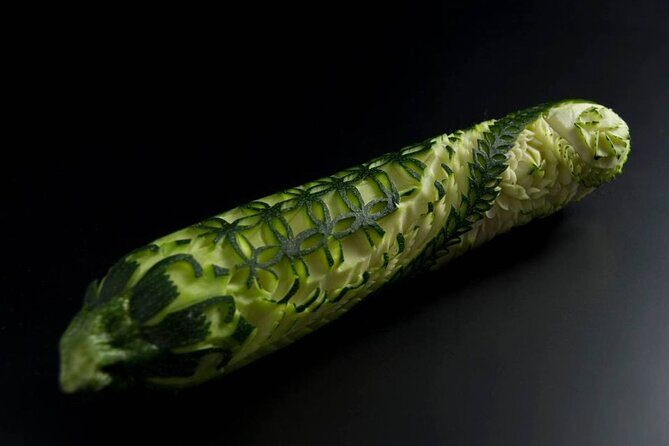
Carving in Thailand is about more than cutting fruit into shapes. It’s about creating a clean look: edges that hold their form, petals or leaves that curve naturally, and designs that sit neatly on a plate.
You’ll start with the basics of Thai fruit and vegetable carving—how to handle the produce, how to use the knife safely and confidently, and how to create the starting cuts that lead to the final shapes. Then you’ll build up your own pieces.
Expect to work with familiar items like:
- tomatoes for flower shapes
- cucumbers for leaves and delicate garnish elements
- other vegetables/produce used for additional plating decorations
The class pacing is designed so you can see the process take shape. You won’t just get one finished masterpiece and leave. You’ll work through the steps as the carvings emerge.
And yes, you’ll likely realize something quickly: the work is part craft, part patience. The good news is that you’re in a structured class, so you’re learning the techniques in order instead of trial-and-error your way through every cut.
What’s included: snacks, an introduction pack, and a free carving knife
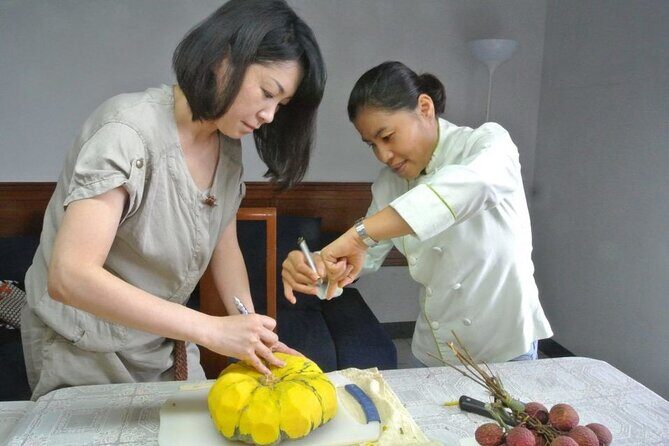
This class has a few smart inclusions that make it feel like real value.
Included:
- the carving class
- snacks and light refreshments
- an introduction pack
- a FREE carving knife included
Not included:
- personal expenses
The included snacks and beverages are more than a nice touch. When you’re focused on fine motor skills, you don’t want to be hungry or tired halfway through. Having refreshments helps keep energy steady so you can actually learn.
The free carving knife is also practical. Even if you’ve carved fruit at home, a proper knife and correct handling makes a big difference. Here, you don’t have to figure out what to buy before you go—just show up and start learning.






Choosing your time slot: 9–12 versus 13–16 in Bangkok
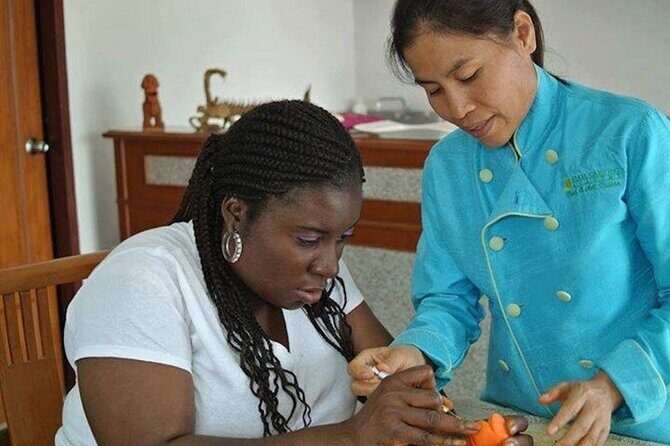
You get two daily options: 9:00–12:00 or 13:00–16:00, with classes running every day. If you like a fresh start, the morning slot can be easier to pair with sightseeing later, since you’ll finish before the late-day rush.
If your trip runs on a slower rhythm, the afternoon slot can work well too. You’ll still get the full lesson, snacks included, and you won’t have to cram your schedule around a single narrow window.
Either way, you’ll want to plan for the class meeting point in Huai Khwang. Bangkok traffic can be unpredictable, so it’s smart to give yourself buffer time to arrive without stress.
Price and value: why $91 makes sense for a hands-on skill
At $91 per person, this is priced like a focused workshop, not a casual demo. The value comes from a few concrete things that you actually use after the class.
You’re paying for:
- structured instruction from a master carver
- hands-on practice with guidance
- up to 10 travelers, meaning you’re not lost in a crowd
- a free carving knife
- snacks and light refreshments
Most importantly, you’re buying a skill. After a few hours, you’ll have a better understanding of how Thai garnishes are built, not just an event ticket. That’s the kind of takeaway that makes a class like this feel worth it, especially if you cook or host meals.
This also helps if you’re traveling with friends or family. It’s memorable and different from the usual Bangkok checklist, and you’ll have something tangible to show for it besides photos.
Who this class is best for (and who should pause)
This class is ages 12+. If you’re bringing kids, they must be accompanied by an adult.
It’s a great fit if you:
- want something cultural that’s still hands-on
- enjoy learning cooking-adjacent techniques
- like the idea of making your own food presentation at home
- prefer small-group attention
You should think twice if:
- you feel strongly uneasy around knife work (this is hands-on and technique-focused)
- you only want passive sightseeing and zero practice
A useful advantage is that the teaching style is described as patient and accommodating, so beginners aren’t expected to arrive as food artists. Still, you’ll get the best experience when you approach it with curiosity and a willingness to practice.
Practical tips to get the best results
Because this is a knife-and-garnish class, show up ready to focus.
A few practical ideas:
- wear comfortable clothes you don’t mind getting slightly messy
- arrive with enough time to settle in before the carving starts
- pay attention to how Wan demonstrates starting cuts, because that’s where your final shape is decided
Small details matter with carving. If you copy the technique the way it’s taught, the results tend to look cleaner and more balanced—exactly the kind of Thai garnish look you’re aiming for.
Should you book this half-day Thai carving class?
I’d book it if you want Bangkok to feel different. You’ll trade a chunk of sightseeing time for a real skill: turning simple produce into elegant plating elements, taught by Wan Hertz in a calm, small-group setting.
Choose it especially if you care about learning from a teacher who can slow down, explain clearly, and correct technique without making you feel rushed. The combo of patient instruction, small group size, and a free carving knife makes the class feel thoughtfully put together for people who genuinely want to learn.
If your trip is tight, the good news is that it’s only half a day. If your schedule is flexible, it’s still easy to slot in, since it runs daily in two time windows.
FAQ
How long is the Thai fruit and vegetable carving class?
The class lasts about 3 hours.
Who teaches the class?
The class is taught by Master Carver Wan Hertz.
Where does the class meet in Bangkok?
The meeting point is at 130/1 Soi Rung Rueang, Khwaeng Samsen Nok, Khet Huai Khwang, Krung Thep Maha Nakhon 10310, Thailand. It ends back at the meeting point.
What time slots are available?
Classes run between 9:00–12:00 and 13:00–16:00.
How many people are in the group?
The class has a maximum of 10 travelers.
What is included in the price?
Included are the carving class, snacks and light refreshments, and an introduction pack. A carving knife is also included for free.
What is not included?
Personal expenses are not included.
What is the minimum age to join?
This class is for ages 12+. Children must be accompanied by an adult.
Is the class near public transportation?
Yes, it is near public transportation.
How do tickets work?
You’ll receive a mobile ticket, and confirmation is received at the time of booking.
Can I cancel for a refund?
Free cancellation is available up to 24 hours in advance for a full refund, based on local time.