REVIEW · BANGKOK
Private Historic River Kwai Death Railway, War Cemetery and Hellfire Pass Tour
Book on Viator →Operated by Idaytrip · Bookable on Viator
That first moment at Hellfire Pass stays with you. This private 10-hour trip from Bangkok brings you to Kanchanaburi for WWII sites tied to the Thai-Burma Death Railway, ending with time near the Bridge over the River Kwai. I especially like the hotel pickup in an air-conditioned vehicle, because it lets you focus on the day instead of the drive.
I also like that the tour takes care of the basics. Lunch is included, along with bottled water, so you do not have to hunt for food early in the morning or between stops. In one review, a guide named Nan was praised for making the history feel clear and human, not just dates on a page.
One thing to consider: the memorial stops are free to enter, so if you mainly want photos and locations, you could potentially spend less by hiring a driver and going on your own. That said, this price buys guided context plus a smooth, timed route that saves you planning.
In This Review
- Key highlights at a glance
- Why the Thai-Burma Death Railway route hits hard
- Bangkok pickup and a long day that starts early
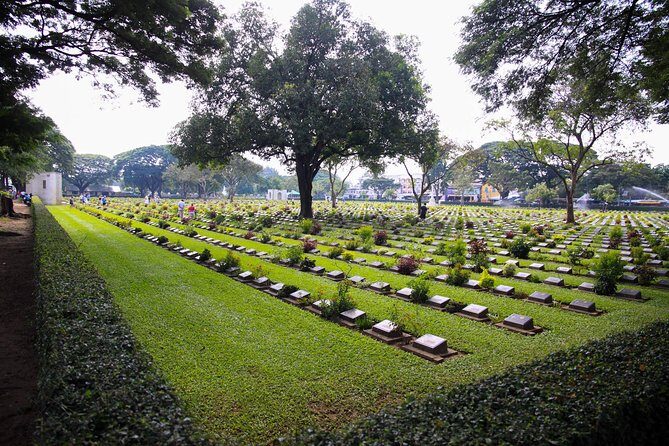
- Kanchanaburi War Cemetery: quiet time with 6,982 names
- Hellfire Pass Interpretive Centre and the Memorial Walking Trail
- Death Railway Museum and Research Centre: seeing the line’s story
- Tham Kra Sae Bridge: a cave, a Buddha image, and POW camp history
- River Kwai Bridge: the famous iron crossing in context
- Price and value: what you pay for at $162.40
- Who this tour fits best (and who might want a simpler plan)
- Should you book this Private Historic River Kwai tour?
- FAQ
- What’s the duration of the tour?
- What sites are included in the day?
- Is hotel pickup included?
- Does lunch come with the tour price?
- Are entrance fees included?
- Is this tour private?
- How much walking is involved?
Key highlights at a glance
- Door-to-door pickup from Bangkok in air-conditioned comfort
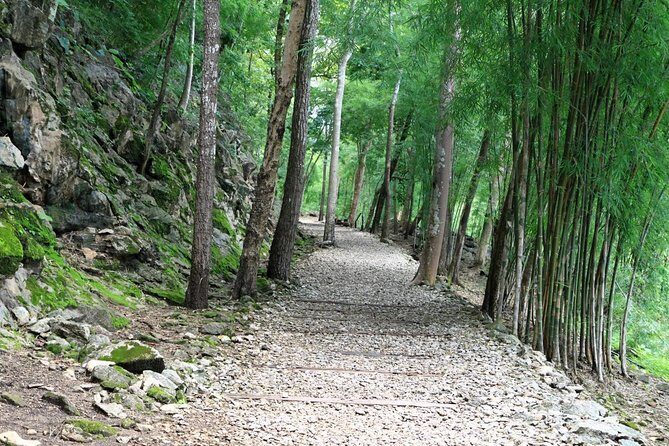
- Hellfire Pass Interpretive Centre and Memorial Walking Trail with included entry
- Kanchanaburi War Cemetery: the graves of 6,982 Allied POWs
- Death Railway Museum and Research Centre plus a walk along the line’s river setting
- Tham Kra Sae Bridge and a cave with a Buddha image tied to POW camp history
- Lunch and bottled water included, so the day stays manageable
Why the Thai-Burma Death Railway route hits hard
This is not a casual sightseeing loop. It is a carefully paced tour of a WWII story written into the ground—rail ties, cuttings, river crossings, and cemeteries. The Thai-Burma Death Railway remains one of the war’s most haunting labor tragedies, and the Kanchanaburi area is where it feels most tangible.
Two details matter right away. At the Kanchanaburi War Cemetery, nearly 7,000 Allied POWs are buried—6,982 in this cemetery—so you are not just learning from exhibits; you are looking at names and dates. Then at Hellfire Pass, the cutting is described as costing the lives of more than 16,000 Allied prisoners and countless Asian laborers. Those numbers are heavy, but a good guide helps you connect them to what you are seeing.
If you come expecting only the famous movie image of the Bridge over the River Kwai, you may still enjoy it—but you will likely leave with a more complete, harder understanding of the system behind it.
You can also read our reviews of more private tours in Bangkok

Bangkok pickup and a long day that starts early
The tour starts at 6:30 am, and that early departure is part of the value. You get an air-conditioned vehicle and private transportation, plus someone handling the timing so you do not waste your morning figuring out connections.
This day is about 10 hours total, and it covers multiple sites across the Kanchanaburi area. In Thailand traffic can stretch plans, and one review specifically praised a driver for handling traffic well. That matters because on a “history day,” you do not want to lose time sitting in a vehicle with no explanation for what you are passing.
You should also plan for a moderate level of physical effort. The walking is not described as extreme, but there is a memorial walking trail at Hellfire Pass. Comfortable shoes are not optional.
Finally, it is a private tour for your group, which changes the vibe. You can ask questions without waiting, and the day feels less like a checklist and more like a conversation with the places.
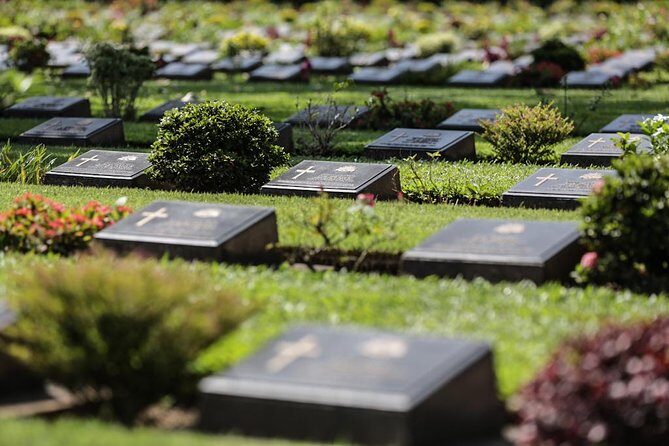
Kanchanaburi War Cemetery: quiet time with 6,982 names
Your first stop is the Kanchanaburi War Cemetery, a free-entry site with a set visit time of about 30 minutes. The cemetery holds the remains of 6,982 Allied POWs who died during the construction of the Thai-Burma Death Railway.
Thirty minutes can sound short, but for a memorial site, it is enough to do something meaningful: slow down, read what you can, and take in the layout. This is the kind of stop where your guide’s role is subtle but important—helping you understand what the cemetery represents and how it fits into the broader WWII railway story.
A drawback to be aware of: this is not an entertainment stop. Some people want to rush through; others need a moment to be still. Either way, you may feel emotionally drained if you treat it like normal tourism. For me, this stop is the anchor of the whole day. It sets the tone before you move on to the cutting, the railway line, and bridges.
Hellfire Pass Interpretive Centre and the Memorial Walking Trail
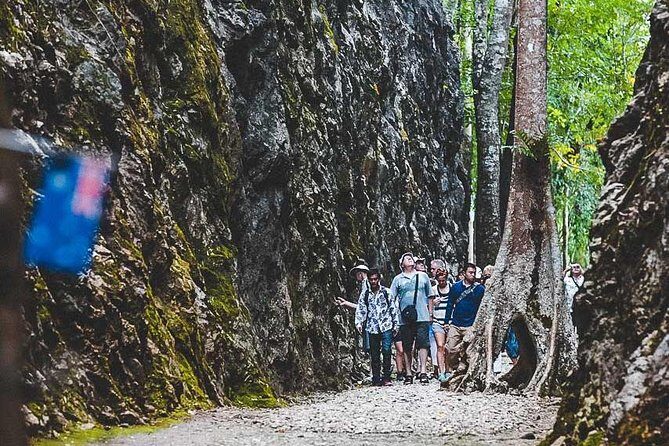
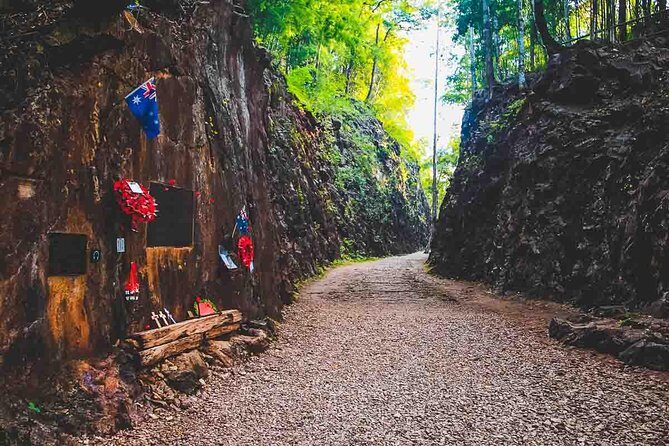
Hellfire Pass is the heart of this itinerary, and the tour gives you time to do it properly: about 2 hours. Admission to the Hellfire Pass Interpretive Centre and the Memorial Walking Trail is included.
The cutting itself is presented as one of the most brutal phases of the railway project, and the description emphasizes the scale of loss: more than 16,000 Allied prisoners, plus countless Asian laborers. When you walk the memorial trail, you are walking near the kind of place where geography and human cost collide.
What I like about this stop is that it is not only about the cutting. The interpretive center helps you understand the broader setting before you step out. Then the trail gives your body a sense of place—your legs connect the museum story to the physical reality outside.
Practical tip: this is one of the more active parts of the day. If you are sensitive to steep or uneven ground, take it slow on the trail. And if you know you will want photos, plan to do them in the quieter moments; it is easy to feel like you are sprinting when you do not pace yourself.
One more thing: the best tours here are the ones where your guide can translate the story without lecturing. In the experience of one group, the guide named Nan was singled out for being both informative and very effective at explaining how harshly prisoners were treated. Even if your guide is different, you’ll still want that same focus: clear context, not just facts.
Death Railway Museum and Research Centre: seeing the line’s story
Next comes the Death Railway Museum and Research Centre. This stop is about 30 minutes and is free to enter, with a short time focused on the railway narrative.
This is where the day shifts from memorials into mechanisms. You get a chance to understand what the railway was, how it was used, and what made this route so notorious. The tour description also points you toward a walk along the Death Railway near the river setting.
Why this stop is worth your time: it helps you picture the railway not as a single bridge moment, but as an entire system—labor, logistics, geography, and control. If you only hit the bridge and Hellfire Pass, you might miss how the story extends across the whole region.
Trade-off: because the visit is short, you will not get every detail. Your guide becomes important again here, connecting what you read to what you will see in the remaining stops.
You can also read our reviews of more historical tours in Bangkok

Tham Kra Sae Bridge: a cave, a Buddha image, and POW camp history
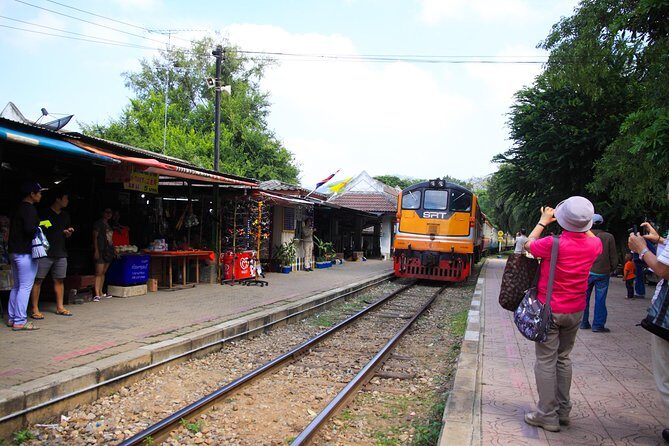
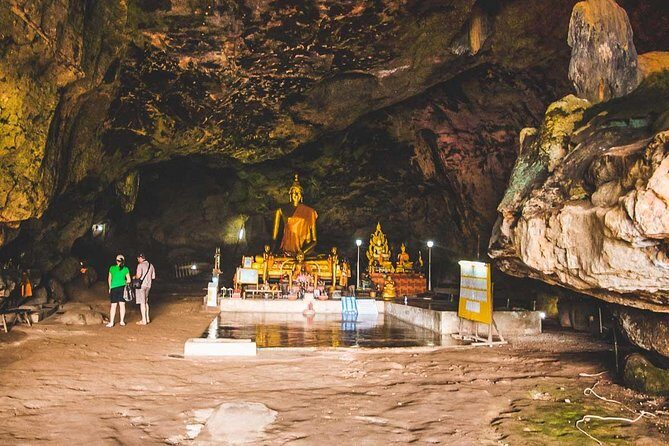
After the museum stop, you visit Tham Kra Sae Bridge with a brief 15-minute stop at a cave that has a Buddha image inside. The cave is described as being formerly a POW camp during the railway construction.
This is one of those moments that can surprise you. You might expect only war memorials and rail-related structures, but the inclusion of a religious image in a former camp setting underscores something you should keep in mind for the whole day: the railway story played out across places people still associate with everyday life and culture.
The short visit length is both a plus and a limitation. It is a quick context stop before you reach the most famous visual landmark later, but you may wish you had more time if you’re really into the specific sites.
If you want to get the most out of this stop, keep your questions simple and direct: how was the cave used, and what does it tell you about daily conditions for prisoners? A good guide can connect the dots fast.
River Kwai Bridge: the famous iron crossing in context
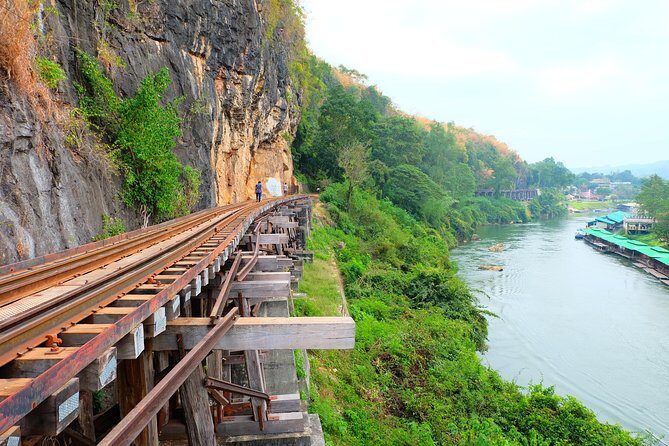
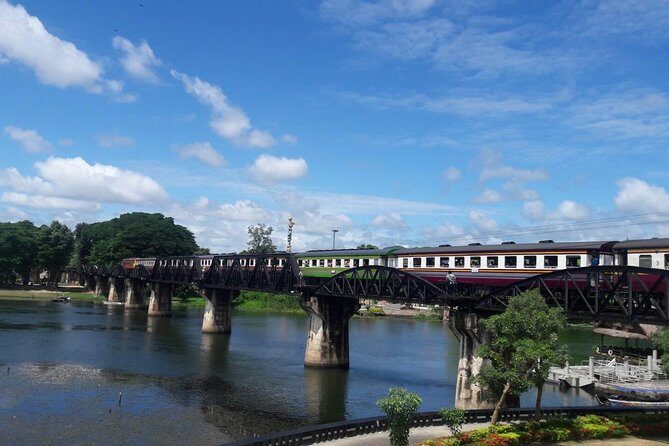
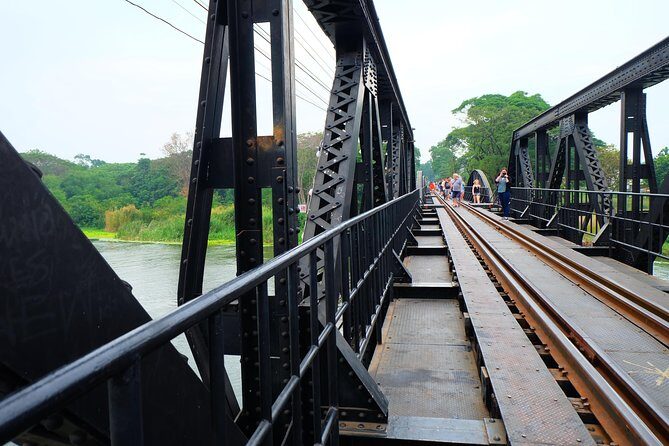
Your last major site is the Bridge over the River Kwai. You get about 1 hour, and the entry is free for this stop. The tour includes time walking along the ironclad bridge and taking in its WWII history.
Even if you already know the bridge name, seeing it after the cemetery and Hellfire Pass can change your reaction. The bridge becomes less of an icon from a story and more of a symbol of wartime coercion—the kind of work that made the railway possible.
I like that the tour does not try to pack this stop with a long walk or too many add-ons. One hour lets you do a practical mix: a slow walk, some photos, and a chance to absorb what you’re seeing in relation to the sites earlier.
Just keep your expectations realistic. This is not a full-day bridge exploration. It is a short walk with context, which is the right match for a day that already carries a lot emotionally.
Price and value: what you pay for at $162.40
At $162.40 per person (with lunch included), you are paying for more than transportation. You are paying for a private guide, an air-conditioned ride, lunch, bottled water, and entrance fees (with included admission at Hellfire Pass).
Here is how I think about the value. The main locations include multiple free-entry sites, so you could reduce the cost by hiring a driver and handling logistics yourself. But you would lose the guided interpretation that ties everything together—especially at Hellfire Pass, where the cutting and memorial trail make far more sense with someone explaining the WWII context.
Also, this is not a tiny group tour run by chance. It is private, which often means you get a better pace for asking questions and less time waiting around.
One more value point: the day is long, and starting early helps you get the sites in a manageable sequence. If you dislike planning, want someone else to manage the schedule, and prefer learning in real time, this pricing can feel fair.
If you prefer independent travel and you are comfortable reading everything yourself, DIY might save money. But for many people, the cost difference is the price of not having to piece the story together on your own while you’re exhausted from a long day.
Who this tour fits best (and who might want a simpler plan)
This tour is a strong match if you:
- Want guided WWII context across several connected sites in one day
- Have limited time in the Bangkok area and want a structured route
- Prefer to avoid planning transport, timing, and what to do at each stop
- Are okay with a sobering theme and a slower emotional pace
It may be less ideal if you:
- Want mostly photos and locations, with minimal explanation
- Do not like early starts and long days
- Plan to do everything at your own speed without a guide’s direction
Because the itinerary includes a memorial walking trail, you should also check your own comfort with walking time and uneven ground. The tour is described as suitable for people with moderate physical fitness, which usually means you can handle short stretches, but you should not expect a completely sedentary day.
Should you book this Private Historic River Kwai tour?
I’d book it if you want a day that goes beyond seeing famous WWII spots and actually explains what you’re looking at. The combination of Kanchanaburi War Cemetery, Hellfire Pass, and the bridge area creates a clear storyline from graveyard to cutting to crossing—so the trip feels coherent instead of random.
Before you decide, do this quick checklist:
- You’re okay with a 6:30 am start and about 10 hours total.
- You want a guide to help interpret Hellfire Pass and the railway story, not just drive past it.
- You’re comfortable with a memorial walking trail and short walks at multiple stops.
- You value lunch and entry fees included, so you do not have to juggle extra planning.
If those boxes fit you, this tour is likely money well spent for the Bangkok area. If you mainly want to save cash and you already know the history you want to see, then a driver-only day could be a reasonable alternative.
FAQ
What’s the duration of the tour?
The tour runs for about 10 hours.
What sites are included in the day?
You visit the Kanchanaburi War Cemetery, Hellfire Pass Interpretive Centre and Memorial Walking Trail, the Death Railway Museum and Research Centre, Tham Kra Sae Bridge, and the River Kwai Bridge.
Is hotel pickup included?
Yes. The tour includes hotel transfers in an air-conditioned vehicle.
Does lunch come with the tour price?
Yes. Lunch is included in the price, along with bottled water.
Are entrance fees included?
Yes. Entrance fees are included. Hellfire Pass has included admission, while several other stops are described as free entry.
Is this tour private?
Yes. It is a private tour/activity, meaning only your group participates.
How much walking is involved?
The day includes a memorial walking trail at Hellfire Pass, and the tour notes moderate physical fitness is recommended.