REVIEW · BANGKOK
Sompong Thai Cooking School
Book on Viator →Operated by Sompong Thai Cooking School · Bookable on Viator
Thai cooking is hands-on here.
Sompong Thai Cooking School turns a morning into real food learning, starting with a local market and ending with you making Thai classics at your own station. The big draw is the homemade curry paste from scratch plus plenty of time to cook, taste, and get coaching. It’s a small-group class, capped at 16 people, so the day feels personal instead of rushed.
What I like most is the teaching style and the market time. June, one of the instructors, has clear English and a funny, easy vibe that makes technique stick. I also like that you get individual equipment and real practice, not just watching while someone else cooks.
One thing to factor in: there’s no pick-up service. You’ll need to get yourself to the Si Lom meeting point, which is fine if you’re comfortable with Bangkok transit or a short ride.
In This Review
- Key highlights at a glance
- Where the day starts: Si Lom and a market-first mindset
- Market tour: spotting herbs, picking ingredients, and learning with your hands
- Your kitchen setup: individual stations and a coach, not a spectator role
- The main event: making curry paste from scratch
- The 4-dish plan: main dishes, dessert, and practical technique
- What you eat: lunch, dinner, and food you actually finish
- Value check: why $61 feels fair for a 4-hour skill session
- Best for who: couples, food lovers, and home cooks
- A realistic heads-up: how to prepare for a cooking day
- Should you book Sompong Thai Cooking School?
- FAQ
- How long is the Sompong Thai Cooking School class?
- How much does the cooking class cost?
- What does the class include?
- What will I cook during the class?
- Is there a vegetarian option?
- Do they accommodate allergies?
- How many people are in the group?
- Is pick-up available?
- Where do I meet and how does the class end?
Key highlights at a glance
- Market tour that teaches you what to buy and why before you start cooking
- Homemade curry paste from scratch, made by you, not poured from a jar
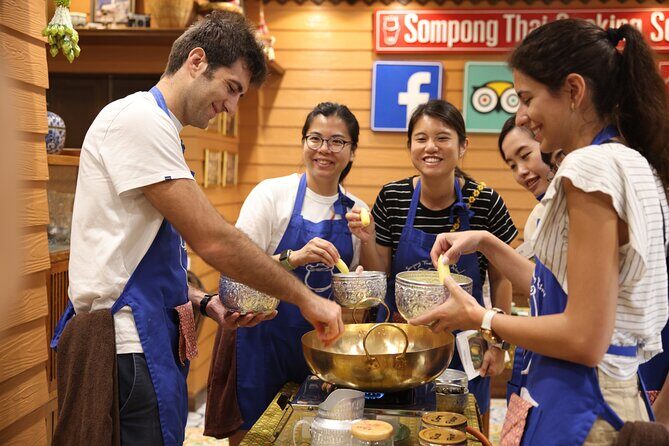
- Individual cooking stations with step-by-step guidance
- 4 dishes total, mixing main dishes, dessert, and curry paste technique
- Tailored instruction for your skill level, plus vegetarian options
- Small group size (max 16) for better attention during cooking
Where the day starts: Si Lom and a market-first mindset
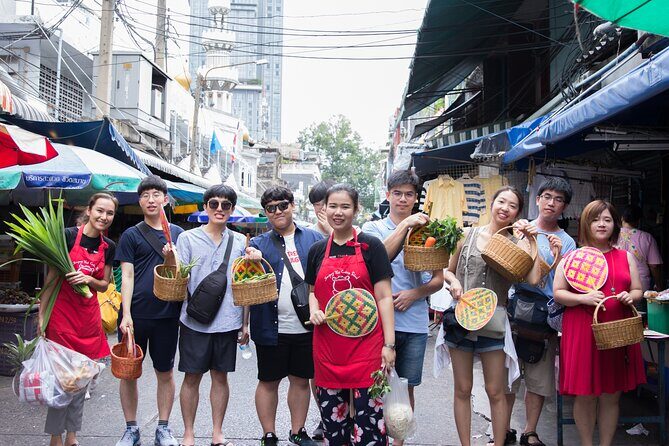
This class is based in Bangkok’s Si Lom area, and it’s smart that the schedule begins with a market stop. Instead of starting with cookware and spices in a classroom-like setup, you start by learning how Thai cooking starts: with the right ingredients, chosen confidently.
You’ll meet at Sompong Thai Cooking School at 2, 6-2/7 Si Lom soi 13. The class ends back at the meeting point, which keeps the plan simple. And because it’s near public transportation, you can usually build your route without needing a complicated transfer plan.
The market visit is more than a quick photo stop. You learn how Thai cooks think about herbs and ingredients in daily meals—what goes into flavor, what affects aroma, and what makes Thai food taste Thai. One review experience that stood out: having a short window for personal shopping. That small freedom matters, because it lets you pick ingredients you’re curious about, instead of feeling like you’re only there to follow along.
You can also read our reviews of more cooking classes in Bangkok
Market tour: spotting herbs, picking ingredients, and learning with your hands
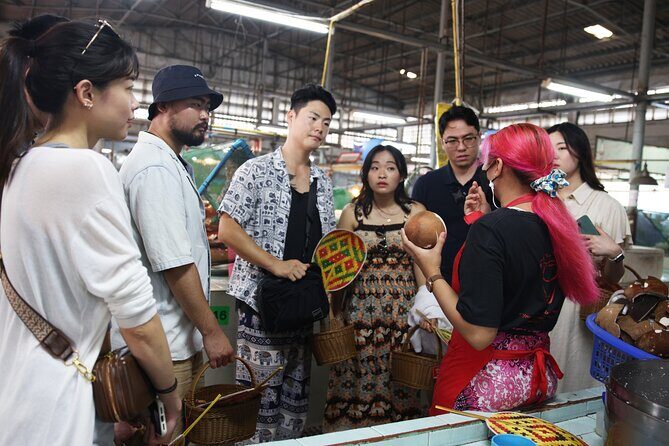
In many cooking classes, the market segment is either too short to matter or too scripted to feel useful. Here, the market visit is tied directly to the recipes you’ll cook later. That linkage changes how you pay attention. You’re not just “seeing Thailand.” You’re learning to shop like a cook.
You’ll go over Thai herbs and ingredients for the day’s dishes, and the guide also shares how the dishes connect to Thai culinary life. The practical value is that you start recognizing key flavors before you ever taste them in food. For example, understanding how coconut milk is made came up in reviews as a memorable learning moment. Even if you never make coconut milk yourself at home, knowing where that flavor comes from helps you appreciate why the dish tastes the way it does.
A small-group market visit also helps you ask better questions. When you’re with just a limited number of participants, you can clarify things like ingredient swaps, how strong a particular herb should taste, or what to look for when you’re shopping later. You won’t just hear an explanation. You’ll connect it to what you’re holding in your hand.
Tip for your own day: go with an open mind and a slightly slower pace. You don’t need to memorize every ingredient name on the spot. Focus on learning what each one is doing in the final dish.
Your kitchen setup: individual stations and a coach, not a spectator role
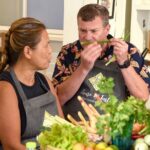
Back at the school, the class structure is designed for doing. You get an individual cooking station and equipment, so you’re not stuck hovering behind someone else’s pot. That’s one of the reasons this class earns such strong ratings: you’re actively cooking throughout, with step-by-step instruction guiding you through the process.
June’s teaching style shows up clearly in reviews. People highlight that her English is clear and that she mixes humor with real technique. That matters because Thai cooking often relies on a few key steps—timing, grinding, heat control—that you can’t fully understand from a quick demonstration.
The instructors also tailor the class to your skill level. If you’re a confident home cook, you’ll still get challenged with technique. If you’re a beginner, you’re not left behind. That balance is a big deal in a 4-hour format, where you need enough guidance to finish the dishes without feeling overwhelmed.
Also keep in mind: they make room for dietary needs. Vegetarian dishes are available, and the school gives special attention to allergies. If you have an allergy, this is the kind of class where you should say it early and clearly, because Thai ingredients can show up in sauces and pastes in ways you might not expect.
The main event: making curry paste from scratch
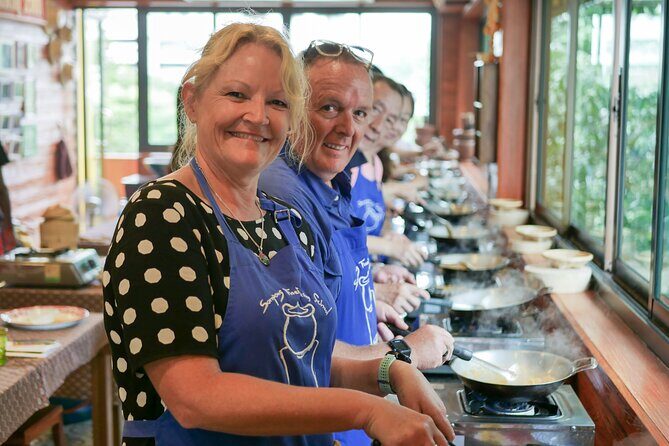
The headliner is the homemade curry paste from scratch. This is where Thai cooking becomes real-world cooking, because paste isn’t just flavor—it’s texture, aroma, and control.
Instead of buying pre-made paste, you make it yourself. That teaches you what ingredients combine to create the base flavor. It also helps you understand why certain curry pastes taste bright one day and deeper the next. The act of grinding and mixing is the lesson. You learn the process and feel how the paste changes as ingredients blend.
Why this matters for you: if you’ve ever tried Thai curry at home and thought it tasted close but not quite right, the issue is often the base. Learning curry paste technique gives you a repeatable skill, not just a one-time meal.
You’ll also be cooking your other dishes during the class, and the curry paste is likely used as part of the overall meal plan. In other words, you’re not just making something to admire. You’re making something that shows up in the food you eat.
The 4-dish plan: main dishes, dessert, and practical technique
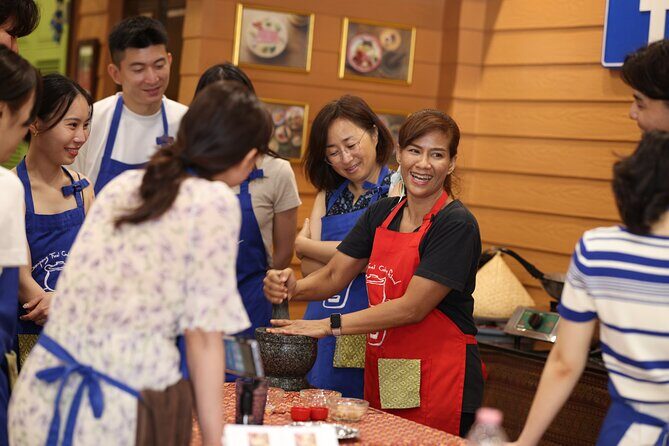
The class is built around cooking 4 dishes in total, including curry paste. The school also describes it as making three Thai main dishes plus a dessert, with curry paste included as a core skill. In practice, the day feels like a sequence: learn the ingredient logic, make the paste, then turn that foundation into multiple finished dishes.
Here’s what that structure does for you:
- It avoids the common “one dish only” problem where you go home knowing just one recipe.
- It gives you a bigger toolkit: different flavors, different cooking techniques, and different ways to balance heat, sour, sweet, and salty.
Even if the exact dish list can vary with the class flow, the technique focus stays consistent. You’ll get step-by-step guidance, and you’ll have time to practice. That practice time is one of the best values in this experience. Thai cooking is not only about ingredients. It’s about how long something simmers, when to adjust seasoning, and how to use your heat without overcooking.
You’ll also see both basic and more advanced techniques mentioned as part of what’s taught. That’s a subtle but important point. A class can be friendly and still teach real skills. If you like learning by doing, this is built for you.





What you eat: lunch, dinner, and food you actually finish
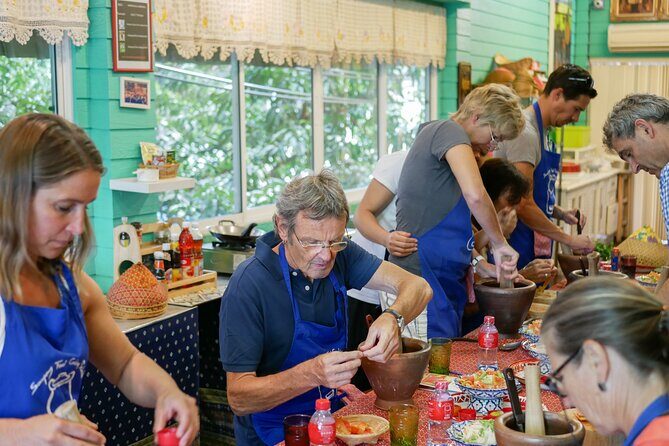
Once you’re done cooking, you eat what you made. The inclusion list is clear on meals: lunch and dinner are included, along with coffee and/or tea (including lemongrass tea) and bottled water.
That meal structure is part of the value. For $61, you’re not just paying for instruction. You’re paying for a full food experience where you consume the results of your work. It’s also a nice built-in check. You can taste right away, then understand how your choices affected flavor.
If you want souvenirs you can taste, the school says you can even take food home. That’s handy if you’re traveling with someone who didn’t join the class or if you want to share your curry paste skills later.
One practical note: go easy on your breakfast. You’ll be shopping, cooking, and then eating more than one meal. Hunger management keeps you focused, and it helps you enjoy the class rather than counting minutes until lunch.
Value check: why $61 feels fair for a 4-hour skill session

Pricing in Bangkok cooking classes can vary wildly. The standout here is that you’re paying for multiple things that add up fast:
- a market tour
- hands-on coaching at your own station
- curry paste technique from scratch
- 4 dishes plus lunch and dinner
- a recipe book
That recipe book matters more than it sounds. You’re going to go home with a reference you can actually use, not just memories. And because you made the paste yourself, you’ll be able to follow the recipe with a better sense of what the paste should look and smell like during prep.
The small group limit (max 16) also supports the value. In a crowded class, one good teacher often becomes a bottleneck. In a smaller class, you get more attention while you cook, which is where the learning really happens.
And yes, the class is about 4 hours. That’s a sweet spot: long enough to learn skills, short enough to fit into a travel day.
Best for who: couples, food lovers, and home cooks
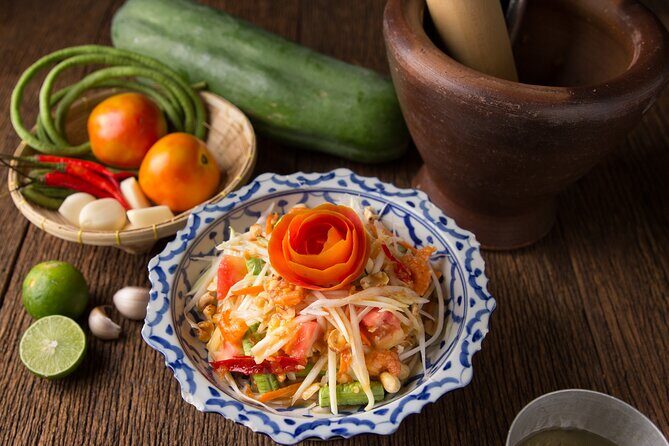
This class suits a few clear types of travelers.
If you’re a foodie who wants something more than eating, you’ll appreciate the market lesson and the hands-on paste-making. If you like structured learning, the step-by-step format and tailored pace for different skill levels will feel reassuring.
It also works well for couples. Reviews mention pairs doing the market and cooking together, and the small-group cap makes it easy to stay engaged without losing your place.
If you’re vegetarian or need allergy attention, you should consider it seriously—vegetarian dishes are available, and the school takes allergies seriously. Still, do make sure you communicate your needs when you book, so they can plan appropriately.
A realistic heads-up: how to prepare for a cooking day
This isn’t a sit-and-sip experience. You’ll be doing tasks: prepping, cooking, tasting, and moving through stations during the flow of the class.
So come prepared with:
- comfortable shoes (you’ll be standing and moving)
- a willingness to get hands-on, including paste work
- questions you actually want answered, not generic ones
Also, since there’s no pick-up service, plan your arrival time. The meeting point is in Si Lom, and because it’s near public transportation, you can usually handle it with transit or a short taxi/ride. Still, build buffer time so you’re not rushing at the start.
And remember the class ends back at the same meeting point. That helps if you like knowing exactly where you’ll be at the end of an activity.
Should you book Sompong Thai Cooking School?
Book it if you want to learn Thai cooking the practical way: ingredients first, curry paste from scratch, then multiple dishes you can eat and replicate later. The combination of market education, hands-on station cooking, and a recipe book makes the $61 price feel grounded in real value, not just a novelty tour.
Skip it only if you strongly prefer hotel pick-up, or if you dislike kitchen work and want mostly observation. With curry paste and multi-dish practice, you’ll be cooking, not watching.
If you’re in Bangkok and you want one activity that actually changes what you can cook at home, this is a very solid choice.
FAQ
How long is the Sompong Thai Cooking School class?
It’s listed as about 4 hours.
How much does the cooking class cost?
The price is $61.
What does the class include?
Coffee and/or tea (including lemongrass tea), bottled water, lunch, dinner, all fees and taxes, a local market tour (morning class), and a recipe book.
What will I cook during the class?
You’ll learn to cook 4 dishes, including making daily homemade curry paste from scratch, plus Thai main dishes and a dessert.
Is there a vegetarian option?
Yes. Vegetarian dishes are available.
Do they accommodate allergies?
The school notes that special attention is made for allergies.
How many people are in the group?
The class has a maximum of 16 travelers.
Is pick-up available?
No pick-up service is included.
Where do I meet and how does the class end?
You start at Sompong Thai Cooking School in Si Lom and the activity ends back at the meeting point. A mobile ticket is used.