REVIEW · HUA HIN
Amphawa Floating Market and Maeklong Train Market Tour
Book on Viator →Operated by Ken Diamond Co.Ltd Tour & Travel · Bookable on Viator
Thai markets hit different in the afternoon. This tour strings together two of Thailand’s best-known market scenes in one smooth day: the Maeklong Railway Market where a real train passes through vendor tables, and Amphawa Floating Market along the canal where daily life still feels woven into trade.
I love the sheer spectacle of Maeklong, because you don’t just see the train—you hear it first and watch everyone reset in seconds. I also like how Amphawa’s boat ride feels practical and grounded, with plenty of small food-stall stops for quick snack-shopping that doubles as souvenirs.
One thing to consider: the day depends on timing and pickup details. Start time is listed as 12:00 pm, but your exact pickup may be shared closer to the tour, so I’d confirm everything in writing before you go.
In This Review
- Key things to know before you go
- From Hua Hin to two famous markets, in one day
- Mae Klong Railway Market: the train you hear before you see
- Amphawa Floating Market by boat: trade meets daily canal life
- Food, souvenirs, and what to actually buy
- Your guide and small-group style (and why it matters)
- Price and value: what you’re really paying for
- Timing and logistics you should double-check
- Who this tour is best for
- Should you book Amphawa Floating Market and Maeklong Railway Market?
- FAQ
- FAQ
- What time does the tour start?
- How long is the Amphawa and Maeklong market tour?
- Is pickup included?
- Are admission tickets included?
- What meals are included?
- What is the group size limit?
Key things to know before you go
- Maeklong Railway Market runs on real railway rhythm: vendors move their stalls as the train arrives.
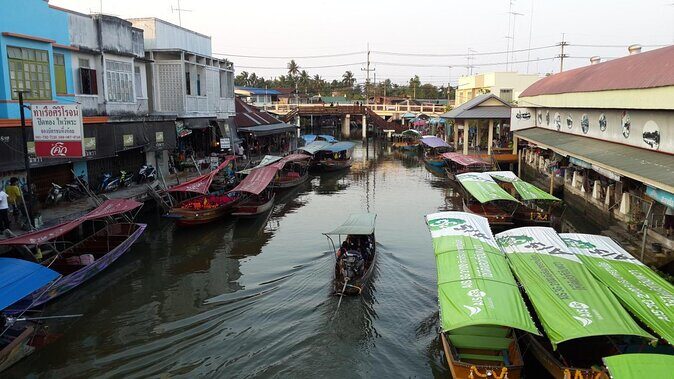
- You’ll get a boat ride on the Amphawa canal: it’s the best way to experience the floating trading.
- Snacks are a big part of the fun: inexpensive, easy to sample and bring home.
- Dinner is included: you’re not scrambling after hours of markets.
- Small group size (max 9): easier questions, less crowd-jostling.
From Hua Hin to two famous markets, in one day
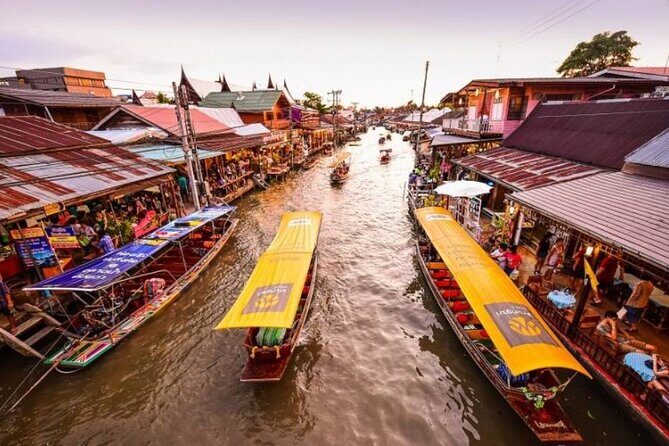
This is the kind of tour that makes sense if you only have so many daylight hours in the Hua Hin area and you want more than one market style. You get land-market drama first, then water-market atmosphere right after, with transport handled for you in an air-conditioned vehicle.
The itinerary is built around two “how is this even working?” moments. Maeklong Railway Market is the famous one: a market that continued after a train line was built through it. Amphawa is the other: a floating-market culture that grew from canal life, with routines still tied to the waterway. If you enjoy seeing how everyday work turns into “tourist magic,” this day fits your taste.
Also, the time of day matters. You’re starting in the early afternoon (12:00 pm) which means you avoid the most brutally hot mid-day sun in most of Thailand—though it can still be warm. Expect a long afternoon stretching into evening, not a quick half-day.
You can also read our reviews of more shopping tours in Hua Hin
Mae Klong Railway Market: the train you hear before you see
Your first major stop is Mae Klong Railway Market, also known as Hoop Rom Market. The market has been operating since 1905 in Samut Songkhram, along the Gulf of Thailand. Fishing used to be—and still is—one of the main livelihoods here, and the market became a way to sell the catch and other goods.
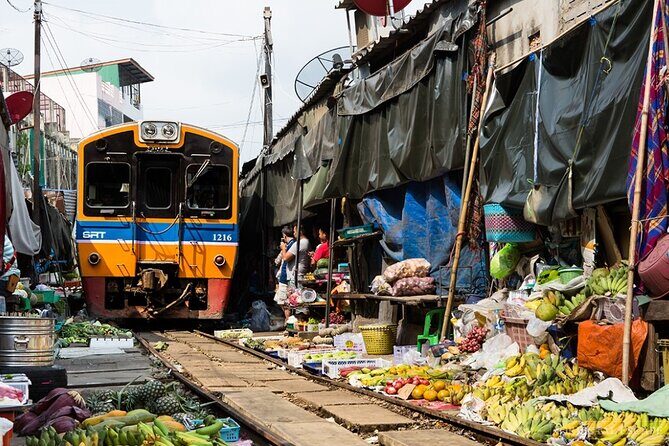
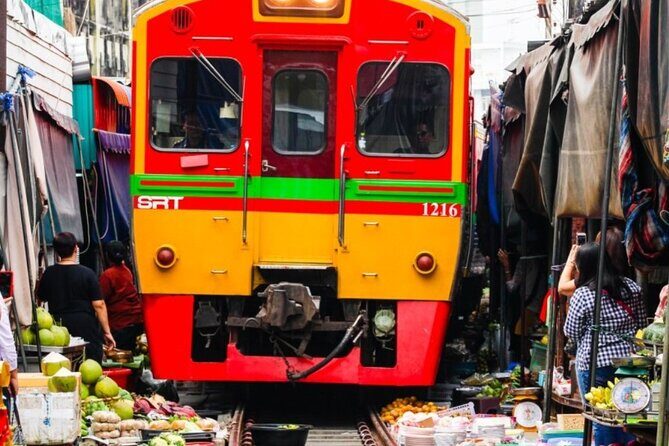
What makes this place instantly different is the railway line cutting right through it. The railway was built to move goods more efficiently to provinces and toward the capital. The market didn’t disappear. Instead, it adapted to the rails.
Here’s the moment you’re really going for: you’ll hear the train long before you see it. Then you watch vendors collectively move items and umbrellas away from the tracks as it barrels through. It feels coordinated, but it’s also clearly learned behavior—people living with the train instead of fighting it.
Practical advice:
- Go early enough to get your bearings before the train moment hits. Once the action starts, everyone focuses fast.
- Keep your camera ready but don’t rush into the middle. The whole point is that the crowd shifts and the vendors clear the line.
- Listen to your guide. They’ll explain what you’re looking at and help you stand where you can actually see the pass.
The biggest “drawback” of Maeklong is also part of its charm: it’s compact and visual. If you dislike tight spaces or crowds, this stop may feel intense. Still, it’s short enough that it rarely turns into a deal-breaker.
Amphawa Floating Market by boat: trade meets daily canal life
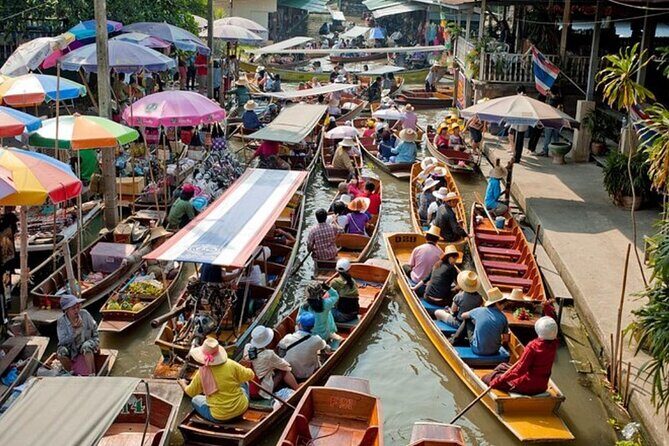
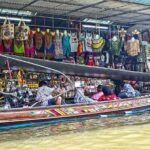
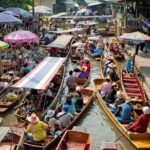
After Maeklong’s rail drama, you shift to water life on the Amphawa Canal. Amphawa is known for being popular with Bangkok weekend crowds, but it’s not just a theme-park look. It’s a canal community where trade and daily routines overlap in visible ways.
You’ll ride a boat along the canal during the floating-market period. This is the right way to do it. Walking up and down can make the market feel random; from the water, the layout and movement make more sense.
A few useful context notes that help you read what you see:
- Amphawa spans about 50 kilometers along the canal.
- In the morning, Buddhist monks paddle to accept alms from villagers.
- People who live on or near the waterfront still rely on the canal for everyday tasks like cleaning and bathing.
- The floating market represents an evolution of trading by boat into modern-day commerce.
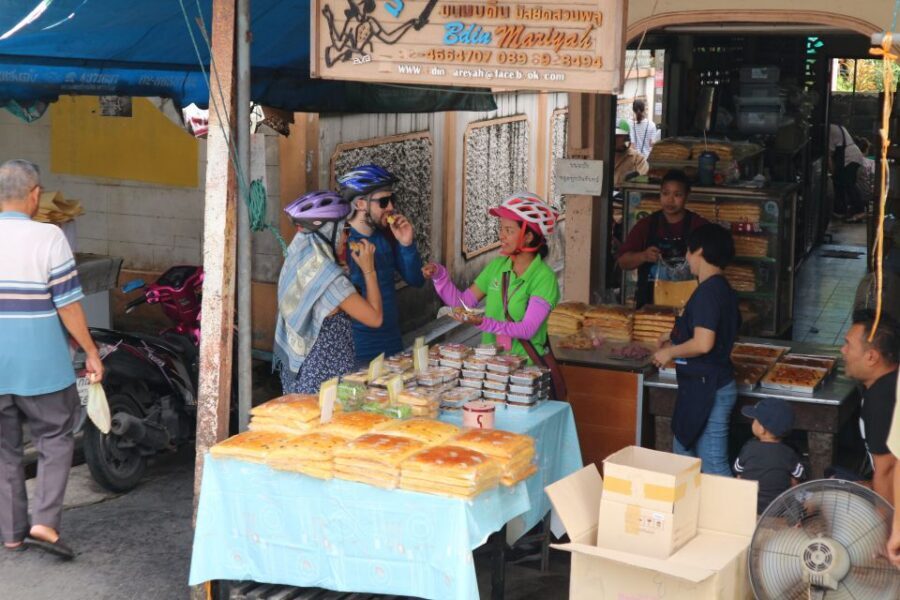
Your tour focuses on the boat experience plus shopping time for snacks. You’ll buy plenty of unique, inexpensive traditional Thai snacks—the kind you can sample on the spot and pack as gifts without breaking your budget.
What to expect on the water:
- The boat ride turns the canal into a “moving viewpoint.” You’re not stuck choosing between the crowd and the view.
- You’ll likely have chances to stop for food buying and to watch sellers working along the canal edge.
One realistic consideration: because this is a canal-based experience, you’re more dependent on conditions than a purely indoor market. The tour also notes that good weather is required, which matters for boat comfort and overall timing.
Food, souvenirs, and what to actually buy
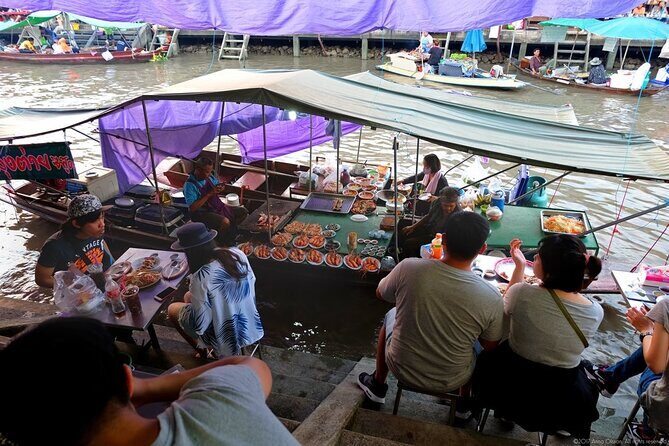
This tour leans hard into food—especially at Amphawa. And that’s a good strategy. Markets are where you get the fastest sense of Thai flavors without committing to a full meal for each stop.
At Amphawa, you’ll have time to pick up snacks that feel traditional and practical as souvenirs. Think of it as edible memory-making: you can buy a variety, share with friends later, and not worry about carrying something fragile.
At Maeklong, the food focus isn’t spelled out as much, but the market vibe still encourages sampling and browsing. Just keep your expectations grounded: this is primarily a market where vendors sell everyday goods, and the train moment is the highlight.
My advice for souvenir shopping on tours like this:
- Buy snacks you can finish within a few days, if possible, because freshness matters.
- If something looks popular and vendors are constantly replacing items, that’s usually a safe bet for “good and not just pretty.”
- Don’t overbuy right at the beginning. Once you see how much choice you get at Amphawa, you’ll be glad you saved space.
Dinner is included, so you’re covered for a proper meal later. I’d still snack as you go, but you won’t be trapped in “market hunger mode” because you’ll have that included dinner to fall back on.
Your guide and small-group style (and why it matters)
This tour is capped at a maximum of 9 people, which changes the feel of the day. With a smaller group, the guide can help you navigate the right side of a crowd, keep everyone near the best views, and answer questions as the moments happen.
The experience also includes an air-conditioned vehicle and bottled water, which might sound basic, but it’s a real comfort upgrade on a market day that runs for about 8 to 9 hours. Market tours can drain you fast; having transport and water handled keeps your energy for the fun parts.
The guide also plays an important role in both stops:
- At Maeklong, you’re watching an event that happens quickly, and it helps to know what you’re looking for.
- At Amphawa, you’re seeing canal life, and a guide’s context makes the scenes more meaningful than just sightseeing.
If you’re the type of person who likes explanations while you walk (not just stand in line for photos), you’ll likely enjoy this structure.
You can also read our reviews of more tours and experiences in Hua Hin
Price and value: what you’re really paying for
The price is listed at $81.23 per person, and the tour includes several items that add up in practice:
- Admission tickets for the stops
- Dinner
- Bottled water
- Air-conditioned vehicle
- Pickup offered
- Mobile ticket
That bundled approach is the main value argument here. You’re not only paying for “entrance fees,” you’re paying for transport between markets, a guided plan, and a dinner stop so the day doesn’t turn into a food scavenger hunt.
Could you do parts of this on your own? Sure—Thailand is flexible. But the specific combination matters. Maeklong and Amphawa are different setups and you’re trying to hit both in one 8 to 9 hour stretch. Organizing that efficiently without wasting time typically costs you either money or stress.
In other words: this is good value if you want the famous moments without spending your day plotting routes, figuring out transport, and stitching together meal plans.
Timing and logistics you should double-check
The tour starts at 12:00 pm. That’s the anchor. Beyond that, pickup details may be communicated close to the departure time, and the tour notes that confirmation comes at booking.
Because one past guest report flagged confusion around pickup timing and contact reliability, I recommend a simple tactic:
- Keep your confirmation message handy.
- Make sure you know the pickup hotel name/address you entered when booking.
- If you need a change, try to request it as early as possible and keep a record of your message.
This isn’t meant to scare you off. It’s just smart for any pickup-based tour. Markets days run on momentum—if pickup slips, you lose the flow.
Also, the tour depends on good weather. On a bad-weather day, you can be offered a different date or a full refund. Since you’re taking a boat ride on Amphawa, that weather condition actually matters.
Who this tour is best for
I’d put this tour at the top of your list if you:
- Want two signature Thai market experiences in one day
- Like guided context while you walk and watch
- Prefer a small group (max 9) over big bus crowds
- Want a food-focused souvenir strategy that’s affordable and easy
It’s also a strong fit for families or couples who want the “big wow” moment at Maeklong and the relaxed shopping vibe at Amphawa. If you strongly dislike crowds or tight viewing spaces, Maeklong may feel a bit hectic, but the stop is a timed slice rather than an all-day ordeal.
Should you book Amphawa Floating Market and Maeklong Railway Market?
Yes, you should book it if you’re chasing both spectacle and atmosphere—and you want the logistics handled. The Maeklong train pass is genuinely memorable, and the Amphawa canal boat ride gives you a different kind of market view that’s hard to replicate without water transport. Add dinner plus admission tickets plus bottled water, and the price starts looking fair.
Skip it (or choose a different format) if pickup timing uncertainty would stress you out, or if you’re the type who hates crowds in compact spaces. Also, if weather conditions look shaky on the day you book, be ready for the possibility of rescheduling.
If you’re flexible, enjoy markets, and like that “watch the culture in motion” feeling, this is a very solid afternoon plan from Hua Hin.
FAQ
FAQ
What time does the tour start?
The tour start time is 12:00 pm.
How long is the Amphawa and Maeklong market tour?
It runs about 8 to 9 hours.
Is pickup included?
Yes, pickup is offered.
Are admission tickets included?
Yes. Admission tickets are included for both stops.
What meals are included?
Bottled water and dinner are included.
What is the group size limit?
The tour has a maximum of 9 travelers.