REVIEW · BANGKOK
Backstreet Bangkok Exploring the Cradle of Thai Cooking
Book on Viator →Operated by Culinary Backstreets Walks · Bookable on Viator
Bangkok’s food stories walk right beside you. This Backstreet Bangkok tour threads together Thai cooking origins with city culture, taking you through classic old neighborhoods and food-heavy stops where flavors make sense in context, not just on a plate. I love the way it links bites to places, and I really like that the experience includes dinner, snacks, and bottled water so you can keep moving without constantly hunting for the next meal. One thing to keep in mind: this is a walking-focused route, and there’s no private transportation, so comfortable shoes matter more than you think.
You start at Sam Yot MRT station at 9:00am, and the tour runs about 5 hours with a small max group size (up to 7). You’ll visit Wat Ratchaburana Ratchaworawihan, cross over to the Rattanakosin Island historic zone, then head into markets like Phahurat Market (Little India) and the narrow lanes of Sampeng Market in Chinatown. Along the way, the route is designed to include more than street stalls—expect restaurants, food factories, a mall, and more—all framed by a licensed guide who keeps the whole day organized.
In This Review
- Key Things You’ll Notice on This Bangkok Food Walk
- Wat Ratchaburana Ratchaworawihan: where the day’s Thai-food story gains roots
- Rattanakosin Island: the historic zone that helps you read Thai cuisine on the street
- Phahurat Market (Little India): how Thai flavors borrow spice routes
- Sampeng Market Chinatown alleys: ingredients, gadgets, and snack-time focus
- The guide makes it: how Lek and Anna turn samples into stories
- What this tour gives you beyond food: history, trade, and why neighborhoods still matter
- Timing, walking style, and what to pack for a 5-hour day
- Price and value: what $125 covers when food and dinner are included
- Should you book Backstreet Bangkok: Exploring the Cradle of Thai Cooking?
- FAQ
- How long is the Backstreet Bangkok tour?
- What does the tour cost?
- Where do I meet the guide, and where does the tour end?
- What time does the tour start?
- What’s included in the price?
- Is private transportation included?
- Can I cancel for a full refund?
Key Things You’ll Notice on This Bangkok Food Walk
- A small group (max 7) keeps questions easy and pacing sensible.
- Dinner + snacks + bottled water + alcoholic beverages are built into the price, so you’re not calculating every stop.
- Wat Ratchaburana adds a temple-and-architecture start to the day’s food theme.
- Phahurat Market brings in the Indian influence that shaped Thai spice culture.
- Sampeng Market gives you the Chinatown alley feel—compact, busy, and ingredient-focused.
- Guides like Lek and Anna are repeatedly praised for going beyond just feeding you.
Wat Ratchaburana Ratchaworawihan: where the day’s Thai-food story gains roots
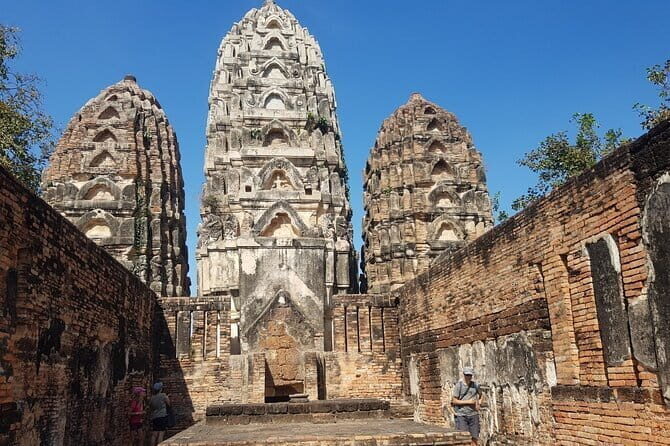
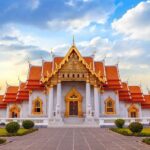
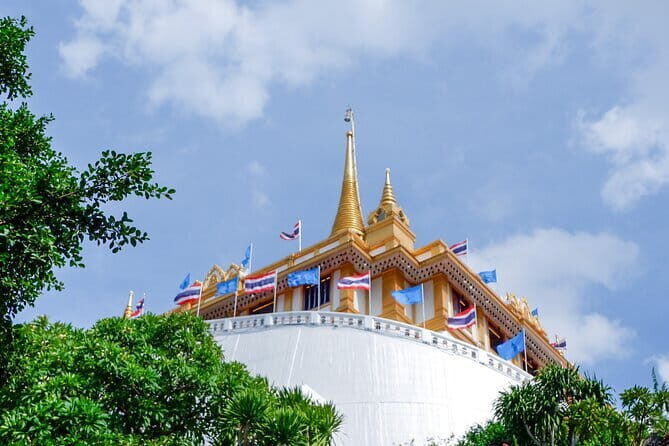
The tour kicks off with Wat Ratchaburana Ratchaworawihan, an ancient temple tied to Bangkok’s older neighborhoods. It dates to the 15th century, and the focus here is architecture and historical significance rather than a quick photo stop. That matters because Thai cooking doesn’t live in a vacuum; it grew alongside religious life, community rhythms, and the way people gathered in specific areas of the city.
When you’re standing in and around older temples, you get a different sense of time. Food culture in Thailand often carries tradition through daily routines—markets, shared meals, and street-level food that feeds both locals and visitors. Starting with a temple gives you a framework for why certain neighborhoods still feel “food-first,” even now.
Admission is listed as free for this stop, which is one of those practical wins that helps the tour feel more complete. Plan for about 1 hour here, enough time to look around without feeling like you’re being rushed toward the next mouthful.
You can also read our reviews of more cooking classes in Bangkok
Rattanakosin Island: the historic zone that helps you read Thai cuisine on the street
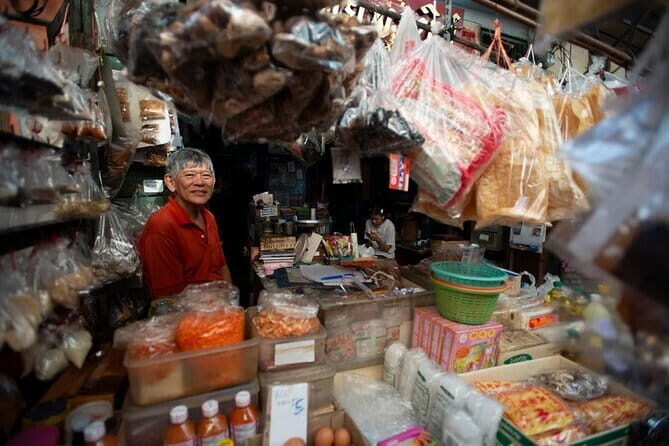
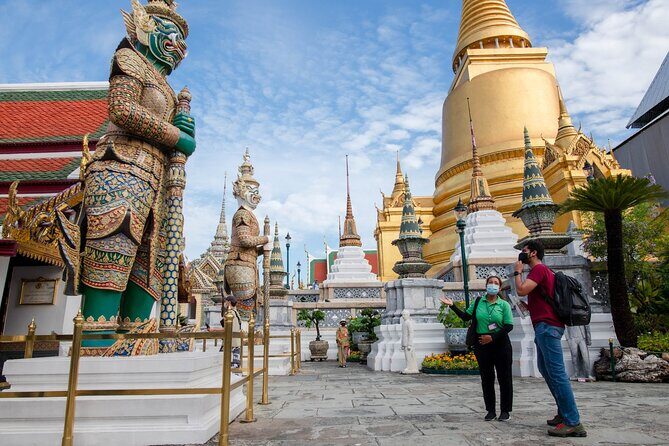
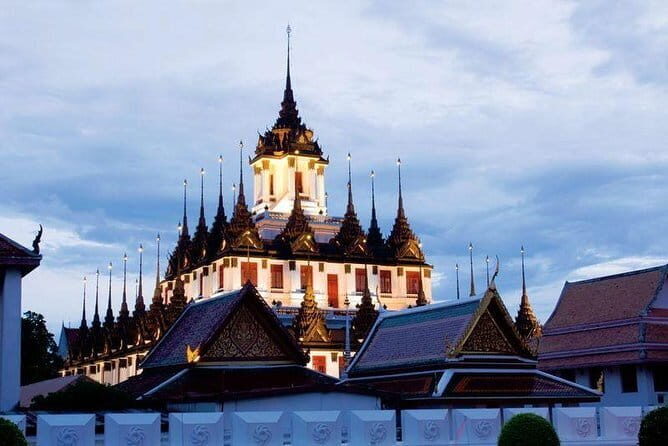
Next up is Rattanakosin Island, the historic core that connects major landmarks in one compact area. This is where you’ll get the big-picture Bangkok context: Grand Palace, Wat Phra Kaew (Temple of the Emerald Buddha), and Wat Pho are all part of the zone you’ll be moving through. These are famous names, but the point on this tour isn’t to “check the famous box.” It’s to use that historic setting to understand how culture and food traditions travel and mix.
In practice, you’ll be walking with your guide through the broader area and using those landmarks as anchors. Think of it like learning the city’s map by landmarks, so later when you hit markets, you understand what you’re looking at instead of just smelling something good.
Admission is also listed as free for this stop. That’s helpful if you’re trying to budget tightly while still getting a structured day. Expect another 1 hour here, which keeps you from overheating on long temple days.
Phahurat Market (Little India): how Thai flavors borrow spice routes
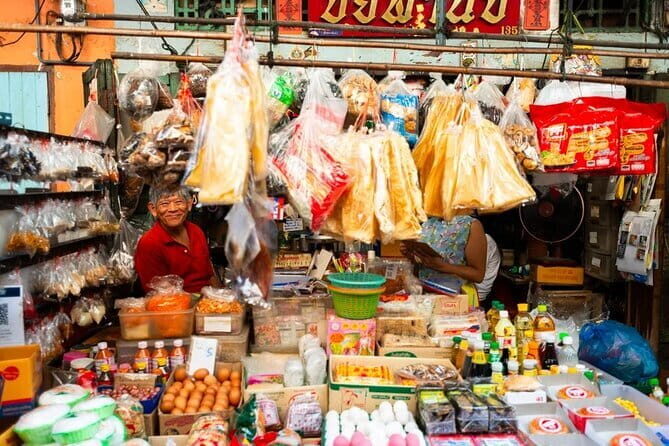
Then you shift gears into a very different mood at Phahurat Market, often called Little India. This market is known for textiles, jewelry, and food, which is a useful detail. When markets sell cloth and accessories next to snacks and ingredients, it tells you a lot about how trade overlaps with daily life.
From a food perspective, Phahurat is where you can start noticing how Indian influence shows up in Thai cooking patterns—especially when it comes to spice, sauces, and the way flavors get layered rather than treated as one-note heat. Even if you’re not aiming to memorize spice names, you’ll come away with a better feel for why Thai cuisine tastes the way it does.
You spend about 1 hour in this area. For me, that’s a good length: long enough to wander, sample, and ask what you’re seeing, but not so long that you spend the whole time just trying to get your bearings. It’s also a great stop if you like the sensation of being in the middle of everyday commerce, where shopping and eating are part of the same loop.
Admission is listed as free here too, which keeps your day’s value strong. You can put your money into memories (and maybe a few things you didn’t plan to buy).
Sampeng Market Chinatown alleys: ingredients, gadgets, and snack-time focus
After Phahurat, the tour moves toward Sampeng Market, a narrow alley that’s part of Chinatown. This stop is described as offering an eclectic mix of goods—from textiles to electronics—and it has deep historical significance. The alley layout matters. It creates a tighter, more walkable feel, where the guide can steer you through the lanes without losing the thread of what you’re seeing.
If Phahurat is where you start noticing spice-influence textures, Sampeng is where you feel the city’s practical side. It’s the kind of place where people come for what they need right now—food supplies, everyday items, and the quick errands that make a neighborhood function. On a cooking tour, that’s valuable because ingredients aren’t abstract; they’re bought, sorted, and sold right where people live and work.
This stop is shorter—about 30 minutes—and that makes sense. Narrow alleys can feel endless if you treat them like a museum. Half an hour is enough to soak in the vibe, learn what’s worth paying attention to, and keep the tour moving at a pace that works for heat and crowds.
Admission is also listed as free, so you’re getting a dense stop without gatekeeping costs.
The guide makes it: how Lek and Anna turn samples into stories
A lot of food tours get stuck at the taste level: you eat, you walk, you move on. This one leans harder into the why. The tour includes a licensed guide, and that shows in the way the day is structured around context—food is treated as culture, not just food.
The reviews you can’t miss in your head are about the guides. Lek repeatedly gets called out for being outstanding and for having deep ties to Bangkok—one person even credited the experience’s level to his Thai background. Anna also stands out in a very direct way: the praise isn’t vague, it’s about her showing you everything and making the pace and portions feel generous but still well managed.
One of the best practical lessons I’d take from how these guides are described is this: you’ll likely try more than you would on your own, and you’ll have someone helping you understand what you’re eating as you go. That’s how a day turns from random sampling into learning.
Also, the included dinner, snacks, and alcoholic beverages matter for the flow of the day. You don’t need to keep stopping to find your next meal, which keeps you from turning your afternoon into a scavenger hunt. Bottled water is included too, which helps in a city where hydration is not optional.
If you want to manage your comfort, it’s smart to go in with an appetite but not an ego. Eat slowly when you can. Let the guide steer. Save room for the final bites, because the day is set up as a gradual build, not a sprint of tiny tasters.


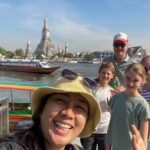

What this tour gives you beyond food: history, trade, and why neighborhoods still matter
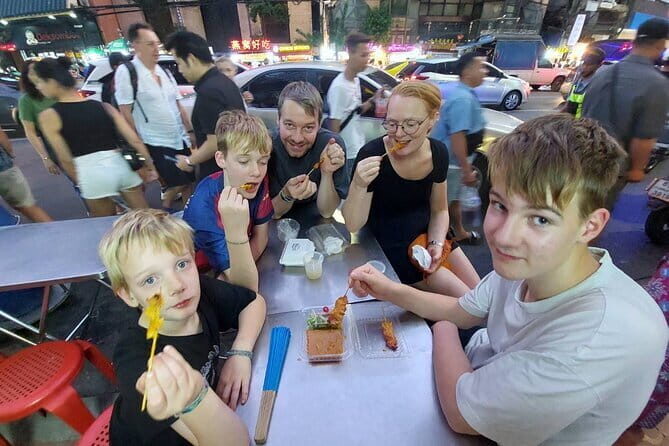
What I like most here is the sense that Thai cooking is tied to geography. You’re not bouncing randomly across Bangkok. You’re moving through specific old areas connected to trade, temples, and everyday life.
The tour design references a mix of places: not just markets and stalls, but also restaurants, factories, a mall, and more. That’s a useful mindset shift. Thai cooking involves more than street-walk meals. It involves supply chains, processing, and the way food businesses organize themselves—then those same flavors return to street corners and family kitchens.
By the time you reach the markets, the city makes more sense. You’ll understand that Chinatown lanes and Little India streets aren’t just color. They’re systems—places where ingredients and ideas meet, then get reshaped into local taste.
And that’s why this feels like more than a checklist. Even if you’ve been to Bangkok before, a structured walk like this helps you notice what you missed the first time.
Timing, walking style, and what to pack for a 5-hour day
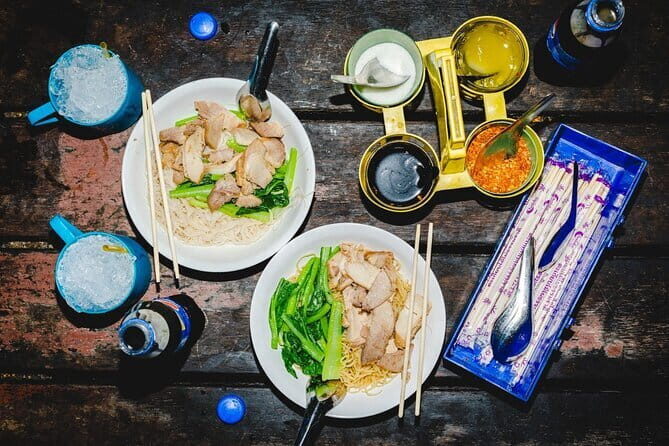
This is an approximately 5-hour experience that starts at 9:00am. Meeting at Sam Yot MRT station is a smart move because it’s near public transportation, so you’re not forced into a complicated arrival plan.
Because private transportation isn’t included, you should plan for real walking. That means comfortable, broken-in shoes and clothing that can handle Bangkok’s heat and sun. I’d also treat this like an eating marathon, not a casual stroll. With dinner and snacks included, you’ll want to be physically ready to keep up.
The group size stays small—up to 7—so you usually won’t feel lost. Still, in narrow market lanes, the pace can tighten. If you’re prone to getting overwhelmed in crowds, it helps to remember that you’re working with a guide who’s used to moving through these exact streets.
You’ll also use a mobile ticket, so make sure your phone battery is healthy before you leave. That’s a small detail, but in Bangkok it can matter.
Price and value: what $125 covers when food and dinner are included
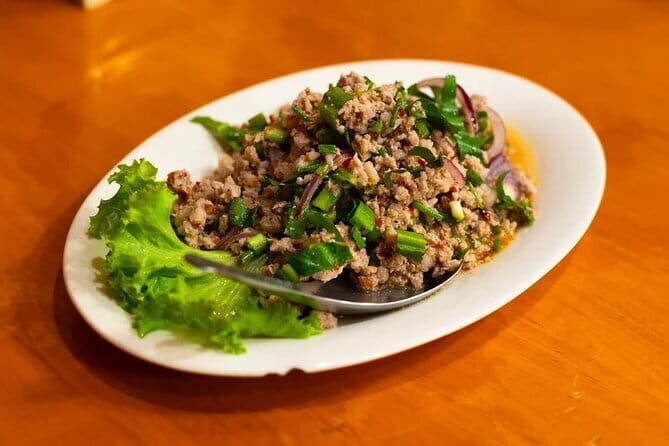
At $125 per person, this isn’t a budget grab, and it shouldn’t be treated like one. Where it starts to look like good value is what’s bundled into that price: a licensed guide, bottled water, snacks, dinner, and alcoholic beverages, plus multiple stops across temples and markets.
If you’ve ever tried to do “food tour style” on your own, you already know the hidden costs: the time wasted figuring out where to eat, the trial-and-error risk, and the way meals and taxis add up. Here, your guide is doing the searching and routing, and your meals are largely handled.
Admission for the major listed stops is free, which also helps the math. You’re mostly paying for the structure: local expertise, pacing, and access to places you might not think to seek out.
The only meaningful potential drawback on value is the same thing that affects comfort: no private transportation. If you hate walking, you’ll feel that more than you would on a driving-based tour. If you’re okay with a walking day, this pricing starts to feel fair for a full half-day with real food included.
Should you book Backstreet Bangkok: Exploring the Cradle of Thai Cooking?
Book it if you want a food day with structure and context. This works best for you if you like the idea of learning through neighborhoods—temples in the morning, then markets and street food energy as the day continues. I also think it’s a strong choice if you’ve been to Bangkok before, because it’s still designed to show you parts of the city that feel specific and purposeful rather than generic.
Skip it (or consider another option) if you want minimal walking or you hate crowded lanes. This route is built around being on your feet and eating along the way. Also, since alcoholic beverages are included, just factor that into your own preferences and pace.
If you like your travel days with a local guide who can explain what you’re tasting, and you enjoy seeing how culture and trade shape what’s on the street, then this is the kind of tour that can turn Bangkok flavors into something you actually remember.
FAQ
How long is the Backstreet Bangkok tour?
It runs for about 5 hours.
What does the tour cost?
The price is $125.00 per person.
Where do I meet the guide, and where does the tour end?
You meet at Sam Yot MRT station, and the activity ends back at the meeting point.
What time does the tour start?
Start time is 9:00am.
What’s included in the price?
Included are a licensed guide, alcoholic beverages, bottled water, dinner, and snacks.
Is private transportation included?
No, private transportation is not included.
Can I cancel for a full refund?
Yes. Free cancellation is available up to 24 hours in advance for a full refund.