REVIEW · BANGKOK
Bangkok: Backstreets and Temple Historic Bike Tour
Book on Viator →Operated by Discova Thailand · Bookable on Viator
Skip the Bangkok tourist lanes. This bike tour is built for backstreets: you cross the Rama VIII Bridge and roll through canal neighborhoods where daily life feels close-up. I love the small-group size (up to 10) and the way snacks and refreshments are folded into the ride. The catch: some lanes are extremely narrow with sharp turns, so you’ll want to be comfortable riding in tight spots.
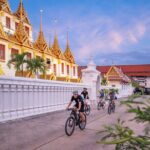
You’ll get an English professional guide, bikes plus safety gear, and a relaxed pace that works for most fitness levels. Expect stops around Khaosan Road’s fringe, Phra Athit Road, Bangkok Noi’s canal-side lanes (including a Muslim community area), a local ferry crossing, and the Giant Swing area. For temple moments, bring clothing that covers your shoulders and knees.
In This Review
- Key points before you pedal
- How backstreets, canals, and small groups change Bangkok
- Meeting at Discova near MRT Sam Yot: timing that makes or breaks the ride
- From Khaosan edges to Phra Athit Road: the city shift you’ll feel in minutes
- Rama VIII Bridge: a breather with big-city perspective
- Bangkok Noi canal lanes and a Muslim community area
- Chao Phraya crossing, Grand Palace neighborhood park, and river geography
- Sao Chingcha (Giant Swing): a landmark with a different kind of access
- Food, snacks, and refreshment stops that actually help
- Safety on narrow turns: how the guide keeps it smooth
- Price and value: what $39 buys you in Bangkok reality
- Should you book this Bangkok backstreets bike tour?
- FAQ
- What time does the tour start?
- How long is the bike tour?
- What’s included in the price?
- Where do I meet for the tour?
- Do I need special clothing for temples?
- How many people are in the group?
Key points before you pedal
- Max 10 riders makes it feel more like a guided neighborhood stroll than a cattle-car tour
- Rama VIII Bridge and ferry crossings give you real Bangkok geography, not just street-hopping
- Snacks and refreshments included so you’re not stuck hunting for food in the heat
- No need for a scavenger hunt: the route strings together canals, forts, and temple-era landmarks
- Narrow alley riding is part of the fun, but it’s also the main challenge
How backstreets, canals, and small groups change Bangkok
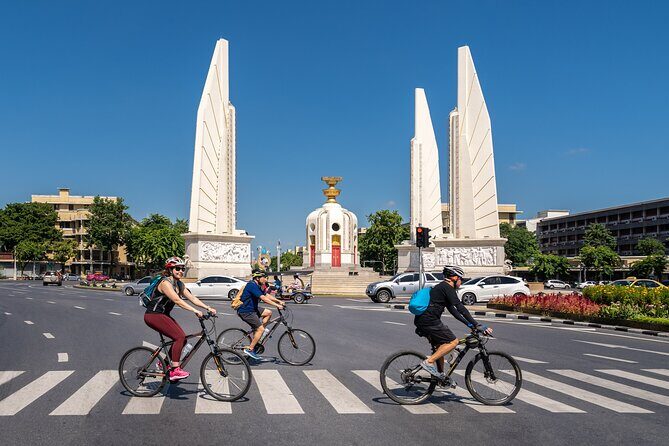
Bangkok can be loud, fast, and tourist-focused in a hurry. This tour sidesteps the big, crowded showpieces and puts you where people actually live—on side streets, next to canals, and through areas that don’t get filmed as much.
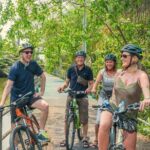
The best part is the small group. With a maximum of 10 travelers, you’re less likely to get separated at intersections, and the guide can steer the pace around real street conditions. One-minute you’re cruising a main drag, the next you’re threading a lane that feels like it should only exist on a local map.
You also get a guide who can explain what you’re seeing as you’re seeing it. Guides I’ve come across leading this route include Tom, Tammy, Max, Seen, Golf, and Pak, and the consistent theme is clear, practical local context—history mixed with what the area feels like today.
There’s one more big reason to do it this way: you ride across Bangkok’s “in-between” spaces. That means bridges, canals, and ferry connections that make the city make sense quickly.
You can also read our reviews of more cycling tours in Bangkok
Meeting at Discova near MRT Sam Yot: timing that makes or breaks the ride
You meet at the Discova Day Tour Shop at 719 Maha Chai Rd, across from MRT Sam Yot station (next block to Miramar Hotel, the last building next to the canal). The tour departs at 9:00 am sharp, after a bike fitting and briefing.
Plan to arrive with buffer time. In Bangkok, “right on time” can still mean “traffic plus one wrong turn.” If the shop area isn’t where you expected, you’ll want those extra minutes to get sorted.
What to wear matters more than you’d think:
- Comfortable shoes are a must (you’ll get off the bike at points and walk briefly).
- Comfortable clothing for heat and sun.
- If you’re visiting sacred sites or temples, wear clothing that covers shoulders and knees.
If you’ve got sensitive knees or balance issues, tell the guide early. They can often adjust how you handle narrow sections, but the route is built around alley riding.
From Khaosan edges to Phra Athit Road: the city shift you’ll feel in minutes
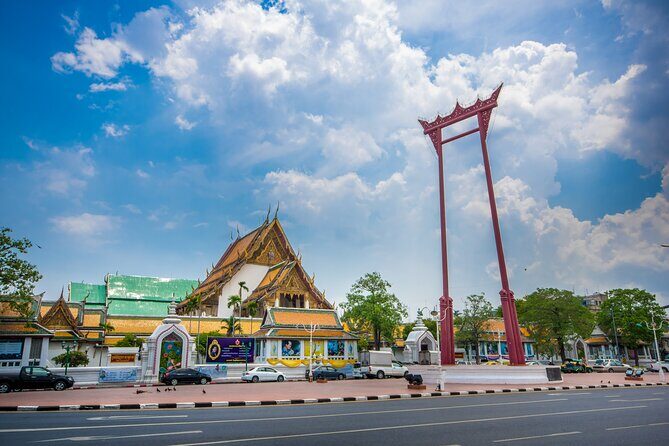
The ride starts with a quick bike fitting and briefing—so you don’t spend the first 20 minutes fiddling with gears and seat height. Then you roll out through the Khaosan Road area.
Khaosan is famous, yes, but what matters here is the transition. You start in a place many visitors recognize, then you push out past it into quieter lanes. That shift is one of the most satisfying parts of the tour. It’s like watching Bangkok change channels: from backpacker energy to everyday routines.
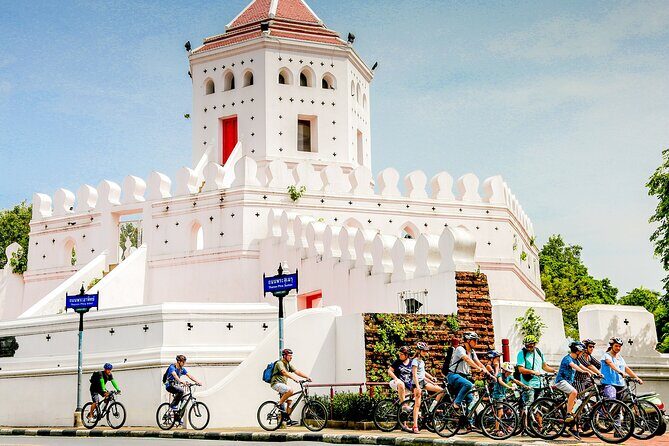
From there, you head along Phra Athit Road and pass an older fort area (the point is less the monument-as-a-standalone, more how the fort-era geography influenced where people built and moved). After that, the route takes you off major roads and into small laneways, canals, and temple-adjacent streets.
What you gain from this segment:
- You get your bearings fast, because you’re not just “going sightseeing.”
- You learn how street layouts and waterways connect neighborhoods.
- You start understanding why Bangkok is such a bike-friendly city if you’re comfortable with local road behavior.
Possible drawback: because the pace is relaxed but the lanes can be tight, you can’t treat this as a casual “walk around and linger” experience. You’re on the bike for a reason.
Rama VIII Bridge: a breather with big-city perspective
Riding over Rama VIII Bridge is one of the route’s natural reset points. You get a break from the maze of side streets and see a wider slice of the city.
You’ll also get a short stop to get out and cycle, which sounds simple, but it’s useful. It gives you a chance to adjust your grip, stretch your legs, and refill your attention span before the route narrows again.
This stop matters because it connects your day’s story:
- earlier: local lanes and waterways
- now: the bridge view that shows how Bangkok’s pieces fit together
- next: canal riding and then the river crossing
If you like “how the city works,” this is where it clicks.
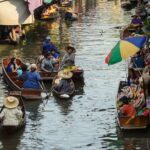
Bangkok Noi canal lanes and a Muslim community area
Next comes Bangkok Noi, described as a large canal area of the Chao Phraya River. This is where the ride turns intimate.
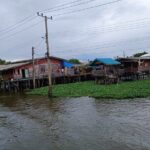
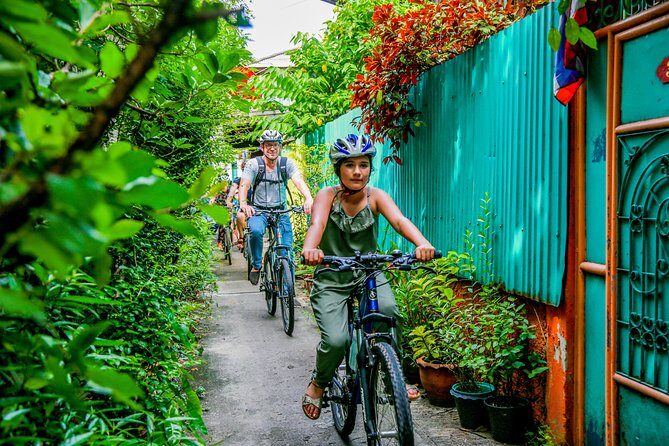
You’ll bike along the canal through tiny alleyways, including sections tied to a Muslim community. That’s the point: you’re not just seeing a canal from a boat deck. You’re moving along it, at human scale, where the edges of daily life are right next to the path.
Expect these sections to feel narrow and close to buildings. Some passages are tight enough that if you’re used to wide bike lanes back home, you’ll need a minute to recalibrate. The good news is that the guide sets the pace, and the tour is at a relaxed speed.
Why I think this stop is a highlight:
- It gives Bangkok texture beyond the postcard buildings.
- The canal-side arrangement changes how you read the city.
- You get a sense of community geography—where people gather, move, and travel.
Main consideration: if you’re anxious about sharp turns or narrow roads, this is the segment to focus on. Stay calm, slow down when the guide signals, and keep your line. The guide is there for that.
You can also read our reviews of more historical tours in Bangkok

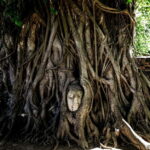
Chao Phraya crossing, Grand Palace neighborhood park, and river geography
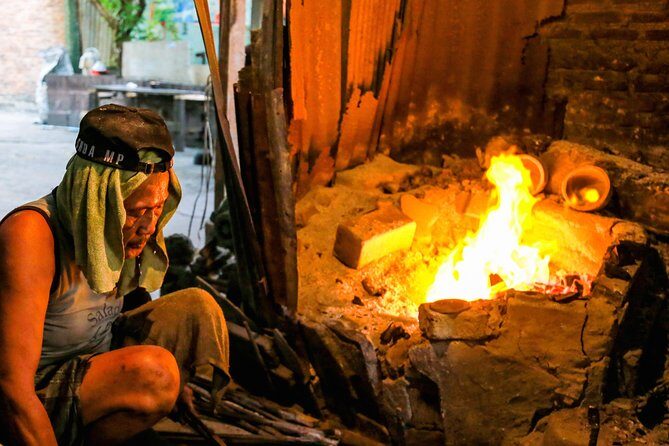
After canal lanes, you switch to the river system. You’ll use a local ferry to cross back over the river as part of the experience.
Then you’ll pass the Grand Palace area. You’re not doing the Grand Palace as a full interior visit here. Instead, you walk through a public park that was once exclusively used by the royal family—an important detail, because it lets you see a historically royal space in a way that’s more open and local-feeling than a ticketed palace stroll.
This part of the tour is valuable because it shows how Bangkok layers history and everyday use. A former royal space becomes a public park, and people simply move through it as part of their day.
What to expect after that park moment:
- more twisting, smaller roads
- another shift back into neighborhood-scale riding
- a return toward the tour’s landmark finish
If you’re heat-sensitive, this is also the part where you’ll appreciate the included breaks and snacks later on, because riding in the sun can add up.
Sao Chingcha (Giant Swing): a landmark with a different kind of access
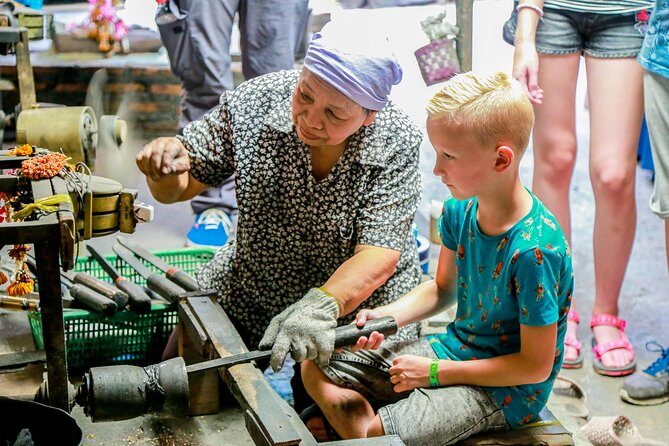
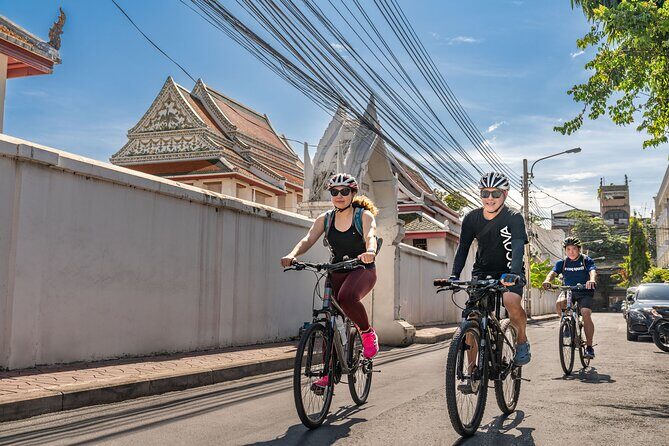
The Giant Swing (Sao Chingcha) is one of the city’s landmark features, tied to older Hindu ceremony traditions. Here, you get a short stop connected to the ride’s route logic—then you cycle back toward the end.
This is not a long, museum-like visit. It’s more like: see the landmark, take in the scale, notice how it sits within the street network, and keep rolling.
That approach can be great if you’ve already seen the big names or if you don’t want your day swallowed by queues. It also pairs well with the rest of the day, because earlier you’ve been learning street patterns, and now you anchor those patterns with a recognizable icon.
If your goal is photography-heavy sightseeing, keep expectations realistic. The day is built around riding and short stops, not long timed picture sessions.
Food, snacks, and refreshment stops that actually help
One practical advantage: snacks and refreshments are included. That sounds minor until you’re biking in Bangkok heat with no plan for when you’ll find something quick.
Along the way, you can expect snack breaks that help you stay fueled. Reviews and route descriptions also point to hydration being part of the plan—there’s typically water provided, plus fruit or snack-style items, and in some cases you may get extras like coffee stops depending on the day and guide.
What I’d do as your fellow planner:
- Drink early, not at the moment you feel thirsty.
- If you’re sensitive to spicy food, don’t assume you’ll get a mild option. Ask your guide what’s included in each stop before you take the first bite.
- Keep your hands free if you’re riding near tight turns. Stash wrappers in a pocket or small bag.
The “food” in this tour isn’t just a bonus. It’s part of pacing so you can focus on the ride.
Safety on narrow turns: how the guide keeps it smooth
This tour has a consistent safety message: equipment is included, and you’ll ride at a slow, controlled pace. That helps a lot, especially in a city where lanes can feel chaotic from a distance.
Still, the main challenge is physical, not safety policy. Some alleyways are described as extremely narrow with sharp turns. That’s why it’s not ideal if you’re nervous riding close to obstacles or if you hate unpredictable street surfaces.
You’ll likely encounter:
- very tight turns
- occasional rough pavement
- busy intersections on the way between neighborhoods
The guide’s job is to warn you ahead of time—things like narrow passages, obstacles in the road surface, and how to handle traffic flow near busy points. That warning matters because it reduces surprise. One nice detail: some guides also send quick messages during or after the ride to help you keep track of where you went.
Who should feel comfortable:
- You can ride a bike confidently.
- You don’t mind slow riding in tight spaces.
- You pay attention and follow the guide’s instructions.
Who might want a different tour:
- You’re uncomfortable riding on narrow alleys.
- You want a sightseeing day with long photo stops and minimal “ride skill” needed.
Price and value: what $39 buys you in Bangkok reality
At $39 per person for a half-day, this is priced like an efficient, practical city activity. The value comes from what’s included, not just the price number.
You get:
- bike and safety equipment
- transport fare
- an English professional guide
- snacks and refreshments
In Bangkok, those add up quickly if you try to assemble them yourself—bike rentals, guide time, local crossings, and food planning. This tour bundles all of that while keeping the group small.
Also, the day is about access. You’re not spending the whole time staring at big-ticket sites. You’re getting into places that don’t feel easy to reach solo, especially if you’re not already comfortable navigating side streets and canal edges.
The best value angle: if you want a fast introduction to how neighborhoods connect—Khaosan’s edge, Phra Athit’s historic streets, canal areas in Bangkok Noi, then river-linked landmarks—this format gives you the story in four hours.
Should you book this Bangkok backstreets bike tour?
If you want a real Bangkok feel without spending your day stuck in taxis, I’d strongly consider booking. This is a good fit if:
- you like biking and can handle narrow lanes
- you want local neighborhoods, not just famous sights
- you’d rather learn the city’s layout through movement than through a lecture
- you appreciate included food so you don’t plan meals around heat and timing
I’d pass (or look for a different style tour) if:
- you hate tight turns or riding on narrow streets
- you’re expecting a classic “major temples all day” itinerary with lots of standing around
- you want extended picture stops at every landmark
FAQ
What time does the tour start?
The tour meets at 8:30 am and departs at 9:00 am sharp.
How long is the bike tour?
It runs about 4 hours.
What’s included in the price?
The tour includes a bike and safety equipment, transportation fare, an English professional guide, and snacks and refreshments.
Where do I meet for the tour?
You meet at 719 Maha Chai Rd, near MRT Sam Yot station (across from the station, next block to Miramar Hotel, the last building next to the canal).
Do I need special clothing for temples?
Yes. For visits to sacred sites, temples, and pagodas, you need clothing that covers your shoulders and knees.
How many people are in the group?
The tour has a maximum of 10 travelers.