REVIEW · BANGKOK
Bangkok: Hands-on Thai Cooking Class & Market Tour in Sathon
Book on GetYourGuide →Operated by House of Taste Thai Cooking School · Bookable on GetYourGuide
Thai food that you can repeat.
Start at Suan Phlu fresh market in Sathon, then head to House of Taste Thai Cooking School to cook with ingredients you just picked. The hands-on part is the draw: you learn how to make curry paste and fresh coconut milk, then cook and taste four dishes while they’re still hot.
I love how the pace stays practical, not rushed. I also love the way the instructors explain techniques so even a novice can follow along, from chopping herbs to building flavor.
One drawback to consider: you’ll be actively cooking for most of the session. If you prefer watching over getting your hands involved, this may feel a bit too hands-on.
In This Review
- Key highlights you’ll care about
- From Suan Phlu Market to House of Taste: the 210-minute flow
- What you’ll learn: fresh coconut milk and curry paste by hand
- Your four-dish menu: classic Thai comfort food in one sitting
- Timing that keeps you fed (and not stressed)
- Market tour: what you’re learning beyond the shopping
- Dietary needs: substitutes are part of the design
- Price and value in Bangkok: what $45 buys you
- Who this class suits best (and who should think twice)
- Should you book this hands-on Thai cooking class?
- FAQ
- How long is the Bangkok hands-on Thai cooking class and market tour?
- How much does it cost?
- Where do I meet for the class?
- Do you visit Suan Phlu fresh market during every class?
- What dishes will I cook?
- Can the class accommodate dietary restrictions?
- Is the meal included, or do I pay extra for food?
- Are ingredients and cooking equipment provided?
- What about recipes after the class?
- Is alcohol included?
Key highlights you’ll care about
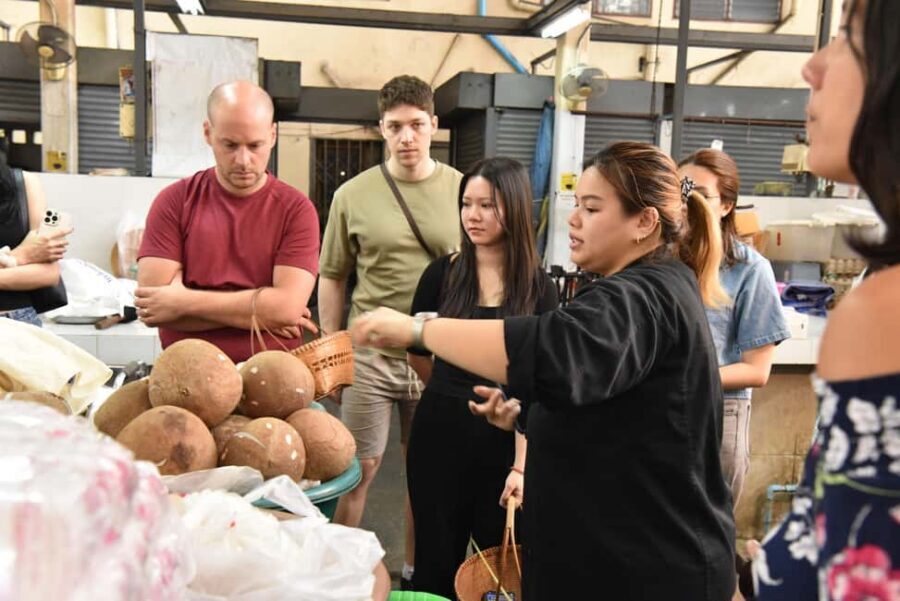
- Market to ingredients in minutes: meet at the school, then walk to Suan Phlu fresh market for ingredient selection
- Curry paste + fresh coconut milk from scratch: real prep skills, not shortcuts
- Four cooked dishes you eat hot: you taste your work as you go, not hours later
- Daily menu variety: each day has a different set of dishes, including classics like Som Tum and Mango Sticky Rice
- Clear English instruction: the class runs with English and Thai support
- Recipes to take home: standard recipes provided so you can cook again later
From Suan Phlu Market to House of Taste: the 210-minute flow
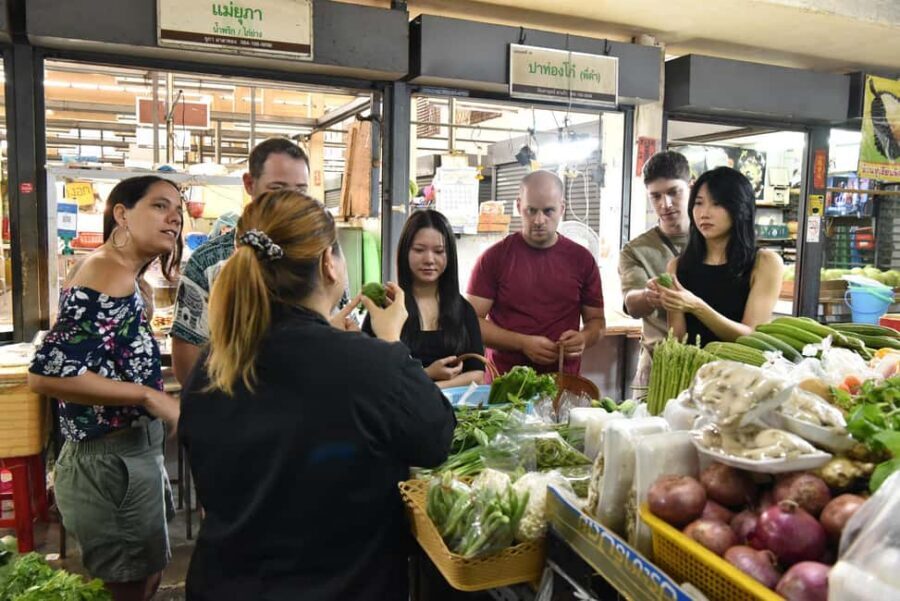
This is a cooking class built around one idea: learn Thai food by handling Thai ingredients. You start in Suan Phlu, in the Sathon area, and you’re not sent across Bangkok to find a market that feels staged. Instead, you meet at the cooking school near 33 Thanon Suan Phlu, behind Suan Phlu Market, and you keep moving.
The market stop is close. You walk about a minute from the school area to Suan Phlu fresh market to choose what you’ll cook with. That quick hop matters because it keeps the session feeling connected: you see ingredients up close, learn what they’re for, then use them soon after.
Sessions run for about 210 minutes, and the market tour happens in the morning, afternoon, or evening depending on the class you book. In real terms, that means you get options if you hate early mornings or if you’d rather fit this around dinner plans. It also means the market experience is treated as part of the class, not an add-on.
You can also read our reviews of more shopping tours in Bangkok



What you’ll learn: fresh coconut milk and curry paste by hand
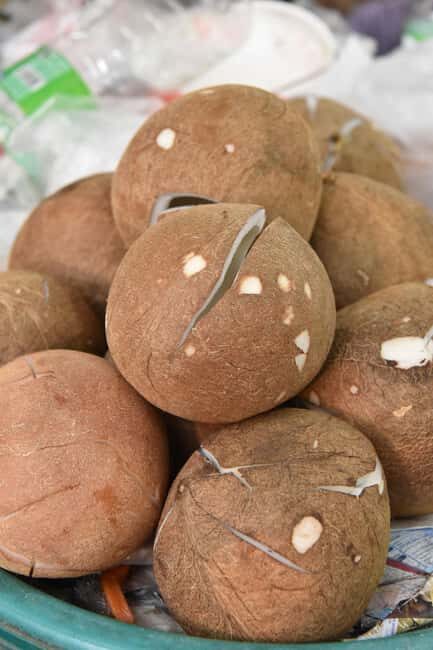
The cooking portion is where this class earns its place on a Bangkok list. You’re not just assembling dishes; you’re learning core Thai techniques that show up in multiple menus.
The biggest hands-on skills are:
- Making fresh coconut milk
- Making curry paste from scratch
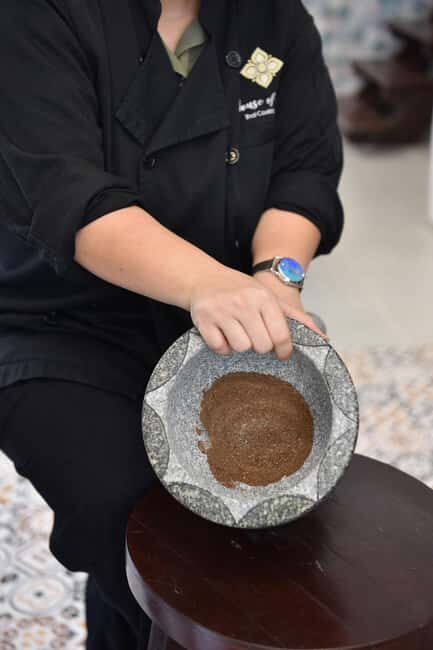
If you’ve ever tried to cook Thai curry at home using bottled paste, you know the flavor difference can be dramatic. Here, you’re working the ingredients into a paste and learning what makes it taste right. That’s the sort of learning that sticks, because you understand the logic behind the paste, not only the steps.
You’ll also spend time learning about the ingredient roles: vegetables, rice, herbs, and spices, and how each one supports the dish you’re making. Even if you don’t know Thai ingredient names, the teaching style is geared toward making the process clear and doable. If you’ve seen instructors like Pitch, Jay, or April named in past sessions, you’ll recognize the pattern: friendly guidance and a focus on getting you to the finished plate.
And yes, it’s messy in the best way. Making curry paste means you’ll get your hands involved, then cook with what you created.
Your four-dish menu: classic Thai comfort food in one sitting
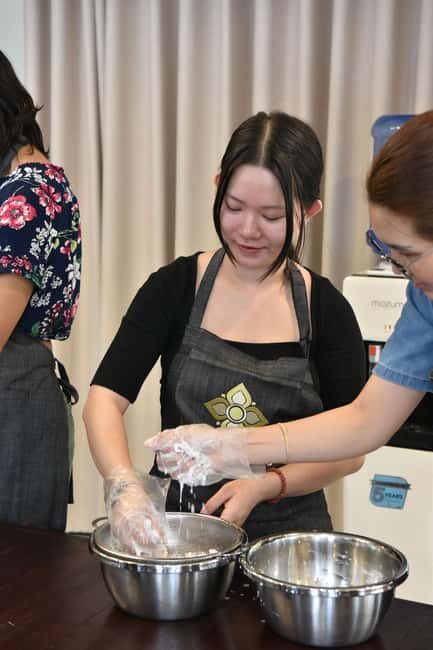
The class is built around cooking four authentic Thai dishes and eating each one while it’s hot. That hot-taste part is more important than it sounds. Many cooking classes leave you with leftovers to taste later. Here, you taste the dish as you finish it, so you can connect cause and effect: seasoning, paste, simmer time, and balance.
The exact menu depends on the day of the week. The rotation is laid out clearly, and the set includes both savory mains and that sweet ending Thailand does so well.
Here’s what you can cook on each day:
Monday
- Thai Papaya Salad (Som Tum)
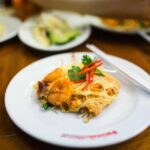
- Stir-Fried Noodles with Shrimp (Pad Thai)
- Green Curry with Chicken
- Mango Sticky Rice
Tuesday
- Spicy Coconut Soup with Chicken (Tom Kha Gai)
- Stir-Fried Thai Basil Chicken (Pad Krapow Gai)
- Red Curry with Chicken
- Mango Sticky Rice
Wednesday
- Hot and Sour Soup with Shrimp (Tom Yum Goong)
- Stir-Fried Flat Rice Noodles with Chicken (Pad See Ew)
- Green Curry with Chicken
- Mango Sticky Rice
Thursday
- Spicy Minced Chicken Salad (Larb Gai)
- Stir-Fried Noodles with Shrimp (Pad-Thai)
- Panang Curry with Chicken
- Mango Sticky Rice
Friday
- Thai Papaya Salad (Som Tum)
- Stir-Fried Thai Basil Chicken (Pad Krapow Gai)
- Red Curry with Chicken
- Mango Sticky Rice
Saturday
- Spicy Coconut Soup with Chicken (Tom Kha Gai)
- Stir-Fried Noodles with Shrimp (Pad-Thai)
- Green Curry with Chicken
- Mango Sticky Rice
Sunday
- Hot and Sour Soup with Shrimp (Tom Yum Goong)
- Stir-Fried Flat Rice Noodles with Chicken (Pad See Ew)
- Panang Curry with Chicken
- Mango Sticky Rice
A couple things to note if you’re planning your own Bangkok schedule. First, almost every day includes Mango Sticky Rice, so you can treat that as your reliable sweet payoff. Second, you’ll see a mix of noodle dishes, curries, soups, salads, and one bright, crunchy side from Som Tum or Larb Gai depending on the day.
If you’re unsure which day to pick, choose based on the dish you want most. Want curry? You’ll likely get it (green, red, or panang) almost every day. Want zing and heat? Tom Yum Goong or Tom Kha Gai shows up on several days. Want a salad that wakes up your palate? Som Tum or Larb Gai is waiting.
Timing that keeps you fed (and not stressed)
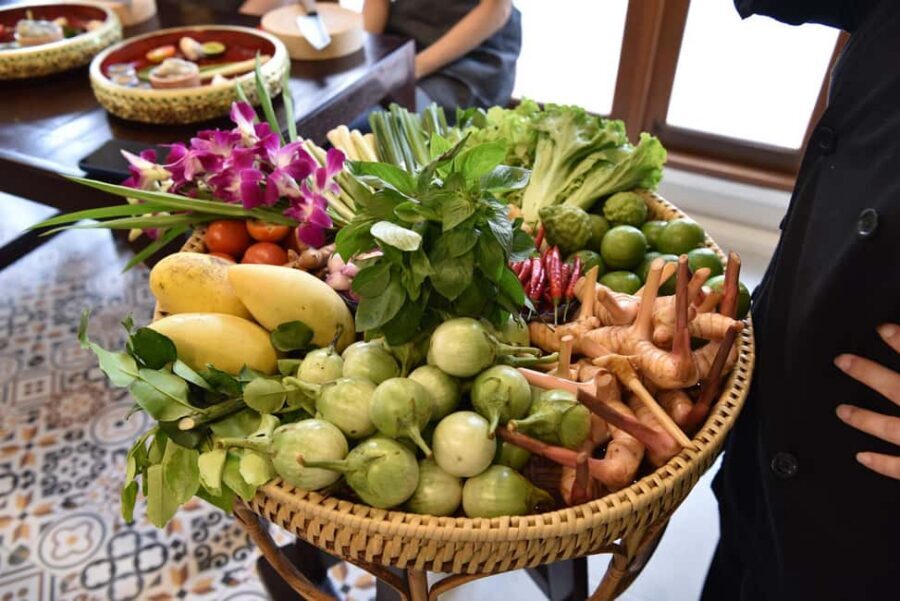
A Thai cooking class can either feel like a fun lesson or like kitchen chaos. This one is structured so you cook, eat, and move to the next dish without disappearing into endless prep.
You spend about two hours cooking your four dishes, and the flow is set up so you have time to eat before moving on. That’s a big quality-of-life detail. When you’re learning several recipes in one session, it helps to taste them immediately and reset between steps.
Because the class includes both market time and cooking time, the session works best when you keep your expectations simple: you’re here to learn a repeatable set of techniques and eat the results on the spot.
The class also uses a supportive format for beginners. You’re not expected to already know Thai cooking. The steps are presented in a way that helps you follow even if your Thai kitchen vocabulary is still under construction.
Market tour: what you’re learning beyond the shopping
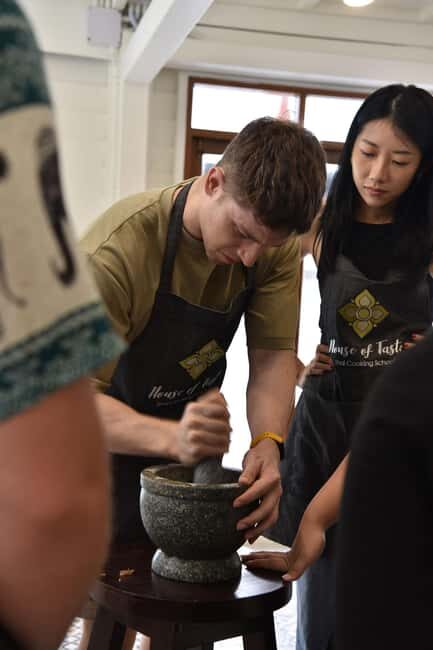
The Suan Phlu market stop is the other half of the experience. You’re choosing ingredients, but you’re also learning how Thai cooking thinks.
You’ll look at:
- Vegetables and herbs used for fresh flavor
- Rice and staples that affect texture
- Spices and key aromatics that define each dish
This is useful even if you never plan to shop at Thai markets at home. You’ll leave knowing what to look for and why it matters. When you later cook, you can substitute intelligently instead of grabbing whatever is closest.
Also, you may find yourself buying a few extra ingredients during the market time. The market tour is part of the experience, and it makes sense: you’ll recognize items you learned about in class and want them for later. If you do, just keep your shopping light and practical—stick to ingredients you know you can use, not souvenirs.
You can also read our reviews of more tours and experiences in Bangkok




Dietary needs: substitutes are part of the design
Thai cooking can be flexible, but only if the class is ready for it. This one states it can accommodate different needs with suitable substitute ingredients for:
- Vegetarian guests
- Halal requirements
- Kosher requirements
- Allergy-sensitive guests
That means the class is set up to adjust, rather than forcing you to guess what will happen. If dietary restrictions matter to you, it’s still smart to tell the team when you book so they can handle substitutions correctly.
In practice, this is one of the reasons the class is a good fit for groups and mixed diets. You’ll still cook and eat in the same general structure, while ingredients are adapted to fit.
Price and value in Bangkok: what $45 buys you
At $45 per person for 210 minutes, you’re paying for more than a recipe handout. You’re paying for:
- A market tour included every time
- Ingredient selection and explanation
- Teaching for coconut milk and curry paste from scratch
- Four-course meal (you cook and eat everything)
- All ingredients and equipment
- A personal locker
- Standard recipes provided free of charge
That adds up fast. You’re not buying ingredients twice, and you’re not paying for extra meal costs separately. The alcohol part is simple: alcoholic drinks are available for purchase, but they’re not included. So the price covers the full food-and-learning core.
If you like value, look at it this way: you’re paying for the skill transfer. The biggest “payoff later” is being able to cook curry paste and coconut milk without hunting for a perfect store-bought shortcut.
And because it’s a private group, you should expect a more personal atmosphere than you’d get in a huge group class. Private group doesn’t automatically mean silent or strict; it usually means you can get more attention while you cook.
Who this class suits best (and who should think twice)
This class is a great match if:
- You’re a beginner and want clear steps rather than intimidation
- You want to cook several Thai favorites in one outing
- You care about ingredient quality and want to learn what to choose
- You want recipes you can use at home, not just a full belly today
It can also work well for families, since it’s taught in an accessible way and designed for people who want to participate, not just observe.
You might think twice if:
- You prefer a purely sightseeing tour with minimal cooking
- You have very limited time and can’t fit a 210-minute block
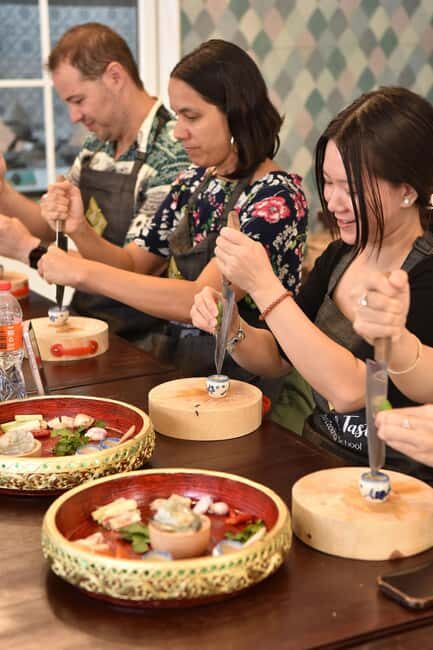
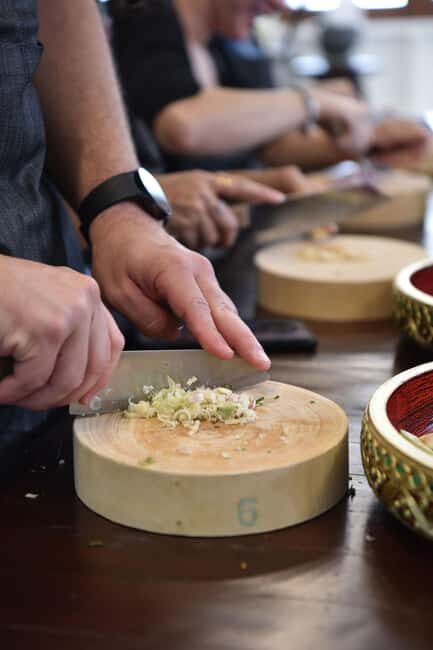
- You hate the idea of hands-on prep like grinding or chopping for curry paste
It’s also wheelchair accessible, which is a real advantage when you’re comparing cooking schools.
Should you book this hands-on Thai cooking class?
Yes, if you want Thai cooking that feels practical. This isn’t only about eating Thai food in Bangkok. It’s about learning the technique behind it—especially coconut milk and curry paste—then cooking four dishes while you’re still in the learning moment.
Book it for the value: market + cooking + meal + recipes for one set price. Pick the day based on the dish lineup you want most—Som Tum, Tom Yum, Pad Thai, curries, and that Mango Sticky Rice finale.
And if you want to maximize your results at home, pay attention to the paste-making steps and the balance of flavors. Those are the parts that turn into repeatable cooking, not just a one-time meal.
FAQ
How long is the Bangkok hands-on Thai cooking class and market tour?
The experience lasts about 210 minutes, including the market tour and the cooking time for four dishes.
How much does it cost?
It’s $45 per person.
Where do I meet for the class?
Meet at the cooking school at 33 Thanon Suan Phlu, behind Suan Phlu Market, Thung Maha Mek, Sathon Bangkok 10120. The activity then connects to the nearby market.
Do you visit Suan Phlu fresh market during every class?
Yes. The market tour is included in every class and takes place as part of the experience in the morning, afternoon, or evening.
What dishes will I cook?
You cook four dishes that change by the day of the week. The menu includes options like Som Tum, Pad Thai, green/red/panang curry, Tom Kha Gai, Tom Yum Goong, and Mango Sticky Rice.
Can the class accommodate dietary restrictions?
Yes. The class can use suitable substitute ingredients for vegetarian, halal, kosher, and allergy-sensitive guests.
Is the meal included, or do I pay extra for food?
The four-course meal is included, along with drinking water.
Are ingredients and cooking equipment provided?
Yes. All ingredients and cooking equipment are included, and you also get a personal locker.
What about recipes after the class?
Standard recipes are provided for free, and you can take them home to recreate the dishes later.
Is alcohol included?
Alcoholic drinks are not included, but they are available for purchase.