In This Review
- A crowd-control snack mission
- What I love most: food with context
- One thing to keep in mind
- Key things to know before you go
- Start at the River: why the 4:00 pm timing works
- Talad Noi first: narrow lanes and a Chinese community legacy
- Holy Rosary Church: a Gothic Revival detour you’ll actually remember
- Food stops: how the guide helps you order the right things
- A quick reality check on food quantity
- Chow Sue Kong Shrine: blessings with a view of living faith
- Sol Heng Tai Mansion and Hong Sieng Kong: history you can point to
- Chinatown proper: old and new in the same frame
- Ending at Wat Mangkon Kamalawat: where to go next
- Price and value: is $42.48 a fair deal?
- Who should book (and who might want a different plan)
- Should you book this Talat Noi and Chinatown Street Food Tour?
- FAQ
- What’s the duration of the Bangkok Talad Noi and Chinatown street food tour?
- How much does the tour cost?
- Where do we meet for the tour?
- Where does the tour end?
- What food is included?
- Does the tour offer vegetarian options?
- How much walking is involved?
- What’s the minimum age to join?
- Can I cancel for a full refund?
A crowd-control snack mission
Bangkok’s Talad Noi and Chinatown feel like two different cities that shake hands in the same streets. This tour is interesting because you’re not just eating. You’re also getting the why behind the places, from a Portuguese-built Catholic church to a centuries-old Hokkien shrine, all while you sample Thai and Chinese street food along the way.
What I love most: food with context
I like the small-group pace and the way the guide keeps the bites coming at a level that feels doable. I also love the Holy Rosary Church and Chow Sue Kong Shrine stops, which turn the walk from random wandering into something you can actually place on Bangkok’s map.
You can also read our reviews of more food & drink experiences in Bangkok

One thing to keep in mind
The main drawback is simple: you’ll walk about 2 km on a lively, sometimes crowded route. If you’re sensitive to lots of walking and standing, or if streets get messy during big local events, the tour can feel more like an eating-and-navigation workout than a museum-style stroll.
Key things to know before you go
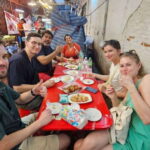
- Small group (max 12) with a friendly, English-speaking guide who keeps everyone on track
- Thai + Chinese street food samples included, with named dishes like turnip cake and chwee kueh
- Holy Rosary Church (Portuguese Gothic Revival, founded era) paired with Chow Sue Kong Shrine blessings
- Talad Noi’s narrow lanes and local street art make the walk feel real, not staged
- A traditional Chinese mansion stop (Sol Heng Tai Mansion) helps you see history in brick and wood
- You end near Wat Mangkon Kamalawat, handy if you want to keep exploring after
Start at the River: why the 4:00 pm timing works
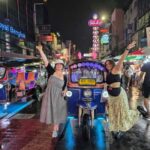
This tour begins at 4:00 pm at River City Bangkok (Si Phraya/Chao Phraya Express Pier area), with a clear meeting point by River City Gate 1. Starting near the river matters. Bangkok evenings cool down faster than you’d expect, and that’s when Talad Noi and Chinatown really wake up—shops open, stalls fire up, and the streets get that busy, on-purpose chaos.
You’re also anchored to one spot, which helps. A lot of Bangkok “food tours” end up being scavenger hunts across the city. Here, the flow is designed so you can keep moving without losing the thread of where you are and what you’re looking at.
If you like the idea of seeing Bangkok while the day is changing—sun on shop signs, scooters buzzing, and people stepping out for dinner—this timing fits.
Talad Noi first: narrow lanes and a Chinese community legacy
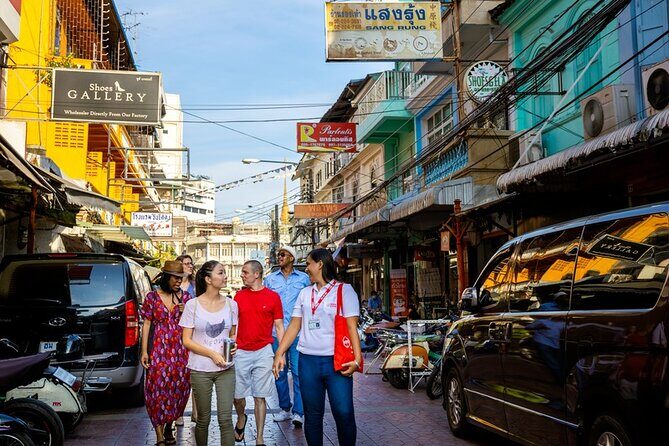
The walk starts with Talad Noi, a neighborhood tied to Chinese communities for over 300 years. Talad Noi has those narrow lanes where you feel the city’s old rhythm before you hit the bigger, louder Chinatown streets.
What I like about starting here: it slows you down just enough to learn how to read the area. You notice the shopfronts, the food smells, and the everyday mix of commerce and religion. You’re not dropped into the most crowded block first. You ease in.
You’ll also see market-life texture—people buying ingredients, vendors moving quickly, and the kind of street-level details you’d miss if you simply walked through on your own.
And yes, this part is hot-and-people-y, so wear comfy shoes. The tour covers about 2 km total walking, which is not huge, but it adds up in the evening bustle.
You can also read our reviews of more tours and experiences in Bangkok
Holy Rosary Church: a Gothic Revival detour you’ll actually remember
Next comes the Holy Rosary Church, built in a European Roman Catholic style (Gothic Revival) by Portuguese settlers, dating back to the early foundation era. This stop is brief—about 15 minutes—but it hits the right note.
Bangkok often surprises you with how many layers exist at once. One minute you’re thinking about Chinese-Chinatown rhythms, and the next minute you’re standing in a church that reflects Portuguese influence. The architecture gives you something solid to look at, not just street stalls.
This is the kind of stop that makes the rest of the tour make sense. When you understand that communities built their own institutions—churches, shrines, markets—you stop seeing Chinatown as one monolithic vibe and start seeing it as many histories working side by side.
Food stops: how the guide helps you order the right things
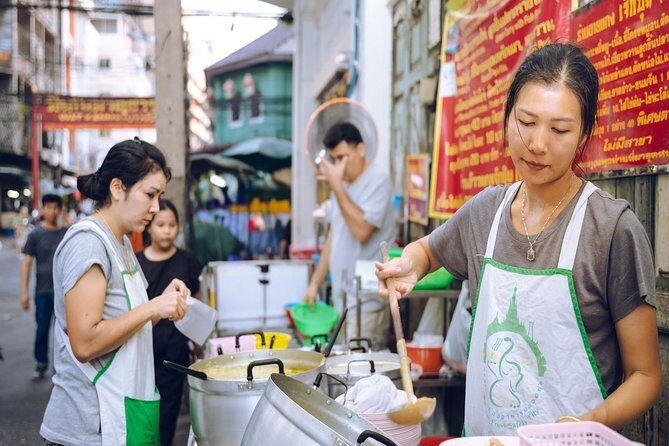
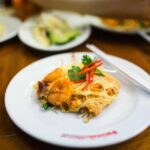
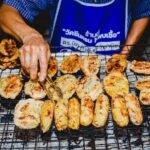
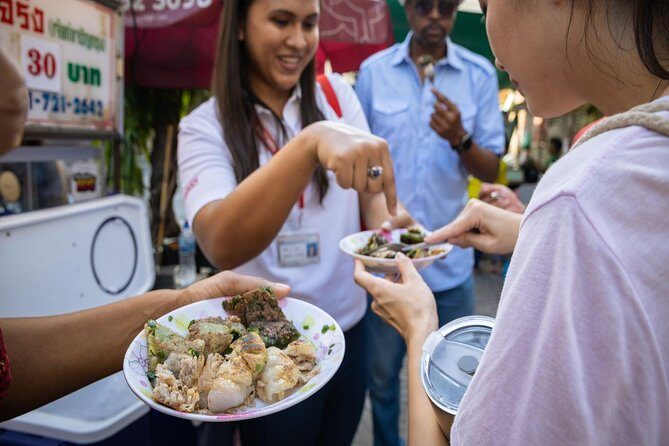
This tour’s core is Thai and Chinese street food samples, and they’re not random “try whatever looks good” snacks. You’re given a focused set of dishes such as:
- Turnip cake (Chinese dim sum style)
- Chwee kueh (steamed rice cake with preserved radish)
- Chao Tha (duck noodles soup)
- Phad Thai Uncle Pom
The value here isn’t only the price—it’s guidance. In Chinatown, you can absolutely get overwhelmed. There are too many stalls, too many menu boards, and lots of food that looks similar until someone points out the difference.
A good guide also does something practical: they help you pace the samples so you don’t end up overfull or missing out. In past small groups, guides like Nana and Pam have been noted for making sure everyone eats well and for keeping the mood fun while still explaining what you’re tasting. Another guide, Gof, has been praised for steering people through tight, crowded conditions (like during Chinese New Year).
You’ll also get a cafe moment by the Chao Phraya River—a chance to sit, cool off, and reset between street stretches. Even better, it breaks the day into “walk, taste, breathe” sections.
A quick reality check on food quantity
The tour includes samples, not a full sit-down feast. Plan on leaving satisfied, but still hungry enough that a nearby dessert or mango sticky rice afterward could feel necessary. That’s Bangkok. Your stomach will file its own request.
Chow Sue Kong Shrine: blessings with a view of living faith
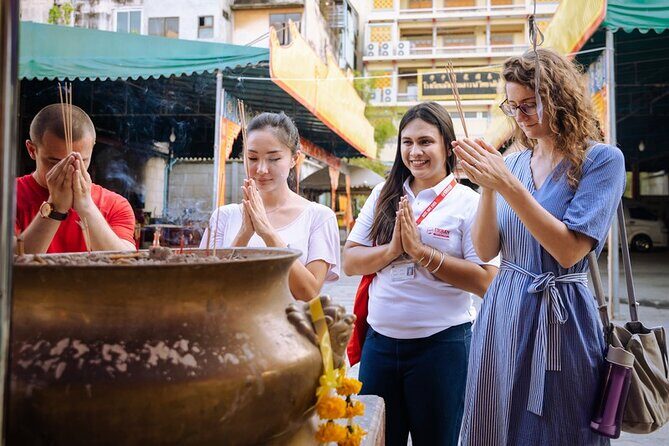
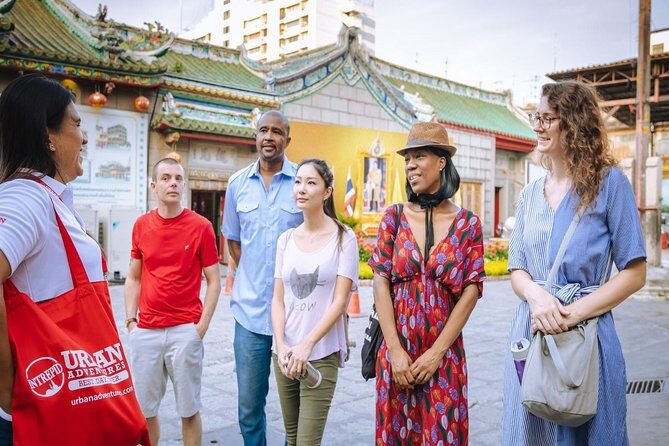
After you eat, the tour shifts from food to faith with the Chow Sue Kong Shrine, a Hokkien shrine more than 200 years old. You can ask for blessings for well-being, protection, and guidance.
This isn’t a history lecture. It’s a chance to see how religious practice works in the middle of a neighborhood’s daily life. Shrines like this aren’t “background culture.” They’re active places that shape what people notice, how they behave, and when they slow down.
If you’re the type who likes respectful observation—quietly watching rituals, reading details on plaques, noticing incense smoke—this stop gives you that.
Just keep it simple: look, be respectful, and follow the guide’s cues.
Sol Heng Tai Mansion and Hong Sieng Kong: history you can point to
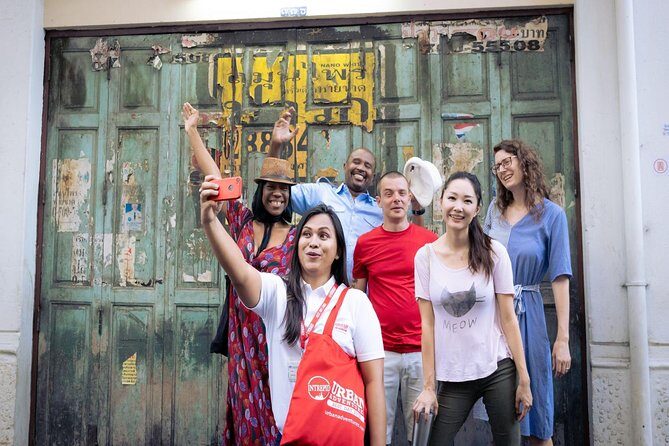
One of the more interesting parts of this tour is that it doesn’t treat Chinatown as only food and crowds. You also pause for architecture and local culture.
You’ll stop at Sol Heng Tai Mansion, described as one of the last remaining traditional Chinese houses in Bangkok. That’s the kind of detail that makes a tour feel grounded, because you’re not only hearing stories—you’re seeing surviving structures that were built for a different era of Bangkok.
Then you go to Hong Sieng Kong, which includes a gallery of a local artist and a cafe by the Chao Phraya River housed in a building tied to the reign of King Rama II and the Rattanakosin era.
Even if you’re not a big museum person, this works because it’s not about museum rules. It’s about stepping into spaces where local design and local work still matter. A cafe stop also helps you digest, literally and mentally.
Chinatown proper: old and new in the same frame
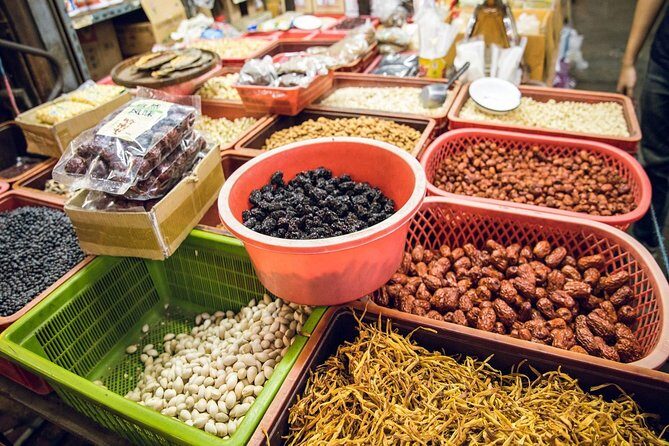
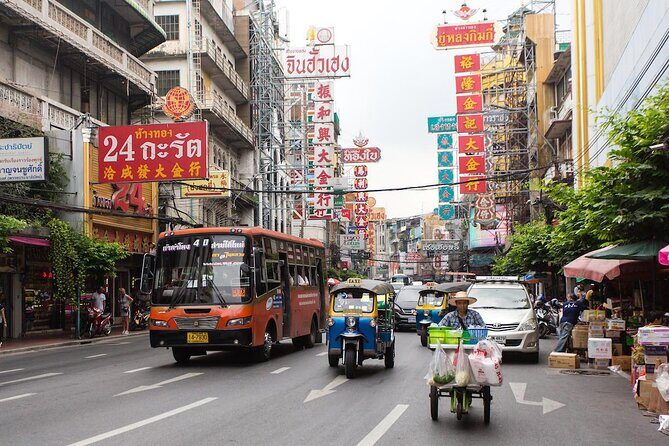
After the shrine and mansion stops, you cross into Chinatown itself, described as the largest Chinatowns in the world. This is the stage where the streets turn louder and more packed. You’ll notice modern influences woven into the neighborhood rather than something preserved behind a rope.
This part is ideal for first-time visitors because it gives you a first “map in your head.” You learn the rhythm: narrow food lanes, shop signs stacked high, people moving fast, and the sense that the area functions as a real community—not just a sightseeing circuit.
The main thing to remember is that it can get crowded quickly. During major festivals (for example, Chinese New Year timing), it can be intense. The benefit of a guide is obvious here: they help you keep moving and they know which streets feel manageable. You’re not stuck staring at your phone while the group disappears.
Ending at Wat Mangkon Kamalawat: where to go next
The tour ends at Wat Mangkon Kamalawat (a short 5-minute stop in the itinerary). That ending point is useful because it’s another anchor for continuing your evening.
If you want to keep exploring right after, you’ll be in a zone where it’s easy to find food nearby and connect to other sights. And if you need to head out, finishing near a well-known temple area is convenient.
This finish also gives you closure: you started with a church, moved through shrine and traditional houses, and end in another major religious landmark. It’s a full loop of Bangkok’s community identities.
Price and value: is $42.48 a fair deal?
At $42.48 per person for about 2 hours 30 minutes, the big question is what you’re actually buying.
Here’s the practical value breakdown:
- You get Thai and Chinese food samples (named dishes included) rather than vague “snacks”
- You get coffee or tea during the cafe stop
- You get access to Holy Rosary Church and Chow Sue Kong Shrine, plus other featured stops
- You get a friendly English-speaking guide who helps you navigate crowds and order the right things
- The group size stays small (max 12), which usually means more attention and less waiting
The value is strongest if you’re new to Chinatown and Talad Noi, or if you don’t want to spend time researching which stalls are worth your money. If you already know exactly where you want to eat and you like wandering without guidance, you might feel this is pricier than DIY.
But if you want an organized route that mixes food with place-based context, $42.48 starts to look like a bargain—especially for a neighborhood where a wrong turn can cost you time and appetite.
Who should book (and who might want a different plan)
This tour fits best if you:
- want a first taste of Talad Noi + Chinatown without needing to plan every stop
- like street food but prefer direction so you don’t miss key dishes
- enjoy short cultural stops (church + shrine + historic house) between eating rounds
- appreciate small-group walking with someone keeping the pace fair
It may be less ideal if you:
- struggle with standing and walking in crowded areas
- hate tight lanes and don’t enjoy street-level navigation
- expect a long, sit-down meal format (this is samples and movement)
Also note: the minimum age is 8, and the tour says most people can join, but your comfort matters more than the checkbox. Bring water, wear shoes you trust, and plan for “Bangkok weather” energy.
Should you book this Talat Noi and Chinatown Street Food Tour?
If you’re visiting Bangkok and you want a smart first pass through Talad Noi and Chinatown with real food variety—plus meaningful stops like Holy Rosary Church and Chow Sue Kong Shrine—I’d book this. The small-group size and included samples are exactly what make it feel worth your time.
I’d skip it or consider another option if you hate walking, dislike crowds, or want deep museum-style pacing. Otherwise, treat it like a guided evening walk where your appetite does most of the sightseeing.
FAQ
What’s the duration of the Bangkok Talad Noi and Chinatown street food tour?
It runs for about 2 hours 30 minutes.
How much does the tour cost?
The price is $42.48 per person.
Where do we meet for the tour?
You meet at River City Bangkok at River City Gate 1 in front of Starbucks on the first floor, at the Si Phraya/Chao Phraya Express Pier area.
Where does the tour end?
The tour ends back at River City Bangkok (same address area) and/or near Wat Mangkon, which is useful for connecting to the MRT Wat Mangkorn area.
What food is included?
You’ll sample local Chinese and Thai dishes, including turnip cake, chwee kueh, Chao Tha (duck noodles soup), and Phad Thai Uncle Pom.
Does the tour offer vegetarian options?
Yes. Vegetarian can be catered for, but you must provide it at least 24 hours prior to your travel date.
How much walking is involved?
The tour covers about 2 km (1.2 miles) of walking.
What’s the minimum age to join?
The minimum age is 8 years.
Can I cancel for a full refund?
Yes. You can cancel up to 24 hours in advance for a full refund.