REVIEW · BANGKOK
Bangkok: Mango Cooking School Thai Cooking Class
Book on GetYourGuide →Operated by Mango Cooking School · Bookable on GetYourGuide
Thai cooking class without the stress.
I like how close it is to BTS On Nut and how smoothly the whole experience runs. You’ll get a real market walk for picking herbs and ingredients, then head straight into an air-conditioned kitchen to cook iconic dishes like som tum, pad thai, tom yum goong, and mango sticky rice. One thing to consider: this is hands-on, and the rules are strict—non-registered people can’t just watch, and parents can’t assist during the program.
The facility itself is a big part of the appeal. The space is spotless, air-conditioning is on every floor, and they even provide air purifiers and kid-friendly cooking tools.
If you’re coming with kids, read the age rules carefully. Children under 5 can’t attend, and kids ages 5–11 must come with a reserved guardian, while parents are not allowed to observe.
In This Review
- Mango Cooking School’s biggest wins near BTS On Nut
- Location that makes the class feel simple
- The market tour: where your Thai flavors start
- Inside the kitchen: how the 3-hour class flows
- The cooking lessons you’ll actually use at home
- Coconut milk basics for mango sticky rice
- Som tum: learning crunch and sour-salty balance
- Pad thai: timing and texture, not just sauce
- Tom yum goong: soup that teaches balance
- Stir-fried morning glory: garlic-chili snap
- Thai dessert experience beyond mango sticky rice
- Thai milk tea and the sweet side of the lesson
- English instruction and real chef guidance
- Price and value: what $27 buys you in Bangkok
- Who this cooking class suits best (and who might not)
- Practical tips before you go
- Should you book Mango Cooking School in Bangkok?
- FAQ
- How long is the Bangkok Mango Cooking School Thai Cooking Class?
- Where is the meeting point?
- Is there a market tour?
- What dishes will I cook?
- Is the class taught in English?
- What is included in the price?
- Is hotel pickup and drop-off included?
- Can children attend, and can parents watch?
- What should I bring, and what is not allowed?
Mango Cooking School’s biggest wins near BTS On Nut
- A 2-minute walk from a local market, plus an easy approach from BTS Skytrain On Nut (about 5–10 minutes on foot).
- Clean, air-conditioned space on every floor, with air purifiers and kid-friendly tools.
- Hands-on cooking with an English-speaking instructor, aimed at first-timers and families.
- Market-to-meal learning, so you know what you bought and why it matters on your plate.
- QR recipes and a special gift so you can repeat the dishes at home.
Location that makes the class feel simple
Bangkok can be loud, hot, and a little chaotic. This class fights that with location and comfort. The meeting point is easy to find: walk from BTS Skytrain On Nut (about 5–10 minutes) and look across from BIG-C (On Nut) Market.
Once you arrive, the school is built for people who want a straight, low-effort day. It’s near a Thai local market, so you’re not dealing with long transfers or vague directions. And inside, the kitchen setup is clean and organized, with air conditioning on every floor.
That matters more than it sounds. When you’re learning Thai techniques—chopping herbs, stirring sauces, balancing sweet/sour/salty/spicy—you don’t want to fight the heat or unclear instructions.
You can also read our reviews of more cooking classes in Bangkok
The market tour: where your Thai flavors start
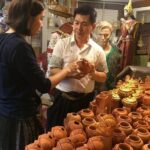
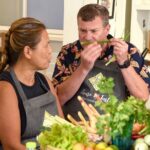
Your class can include a Thai local market tour in the morning or afternoon. Either way, you’ll walk with your instructor and learn how ingredients shape Thai taste. This is not just wandering for photos. The point is picking the components that make dishes smell like Thailand the moment you cut them.
The market stop is useful because Thai cooking is ingredient-driven. Green papaya for som tum, aromatic herbs, and the spice-and-sour balance for soups are not interchangeable with whatever you find at a supermarket. Seeing fresh items up close helps you understand why Thai food tastes the way it does.
You’ll also bring what you buy back to the school. Past classes run with the idea that you collect ingredients first, then cook with them right away—so it feels like one continuous lesson rather than a disconnected shopping trip.
Inside the kitchen: how the 3-hour class flows
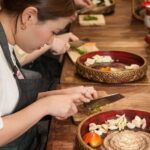
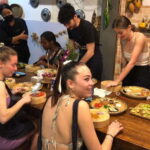
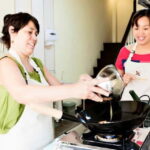
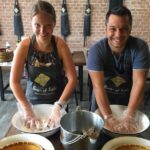
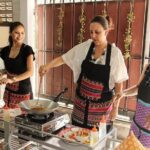
The class runs for about 3 hours, and it’s paced so you’re not stuck waiting for the meal at the end. The format you can expect is a mix of short instruction, guided cooking steps, and hands-on chopping and cooking at your station.
You’ll cook around six dishes/items, based on the menu provided and what’s available that day. Even if the exact menu can change, the structure stays consistent: learn, cook, taste as you go, then sit down for the dishes you worked on.
The kitchen setup is family-friendly in a practical way. They provide kid-friendly cooking tools, and the space includes air purifiers and air-conditioned floors to keep things comfortable. In the bigger picture, that’s what makes it work for a range of skill levels—some people want to learn from scratch, others just want a guided path to better Thai results at home.
One operational note that affects your experience: individuals who haven’t registered can’t observe or wait during the class. So plan on being in the learning seats, not hovering in the background.
The cooking lessons you’ll actually use at home
Thai cooking can feel intimidating until you understand how the flavors are built. This class focuses on those building blocks, then gives you real practice. And because you’ll make multiple dishes, you start to recognize patterns: how sour works with herbs, how sweetness rounds out chili, and how coconut tones down sharp edges.
Coconut milk basics for mango sticky rice
You’ll make coconut cream and coconut milk for mango sticky rice. This is one of those small lessons that changes everything at home. Coconut sauce in Thai desserts is not an afterthought—it’s part of the texture and the balance.
Once you understand that coconut base, mango sticky rice stops being a guessing game. You’ll see how the coconut adds richness and how the glutinous rice should feel soft and chewy rather than dry.
You can also read our reviews of more tours and experiences in Bangkok
Som tum: learning crunch and sour-salty balance
Som tum (green papaya salad) is a great starter lesson because it’s all about contrast. Freshness from ingredients you handle, crunch from the papaya, and the tangy punch that comes from Thai flavoring.
This dish teaches you that Thai cooking isn’t just about heat. It’s about getting sour, salty, and savory to land together without tasting flat.
Pad thai: timing and texture, not just sauce
Pad thai is the quintessential Thai noodle dish, so it’s also the one most likely to be over-simplified elsewhere. Here you learn the real method—how the ingredients are stirred and cooked so the noodles and sauce don’t turn into one sticky paste.
It’s also a confidence-builder for first-timers. You’ll feel the difference between undercooked noodles and properly cooked ones, and you’ll learn what “sweet-salty” tastes like when it’s actually controlled.
Tom yum goong: soup that teaches balance
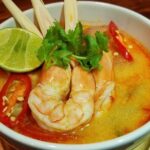
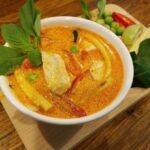
Tom yum goong is tangy, spicy, and aromatic. It also teaches you about balance fast—because if the soup is off, you notice instantly. This class approach makes it more understandable than ordering a bowl and guessing the recipe.
Since tom yum is shrimp-based on the menu, it’s worth keeping seafood preferences in mind. One class review noted protein was primarily shellfish, and the easiest way to protect your experience is to mention any dietary needs clearly before cooking.
Stir-fried morning glory: garlic-chili snap
You’ll cook stir-fried morning glory with garlic and chili. This is a “quick win” dish for many people because the technique is direct. It’s about heat, garlic aroma, and getting the right bite in the greens.
It also gives you a savory counterpoint to the sweeter dishes like mango sticky rice and Thai dessert options.
Thai dessert experience beyond mango sticky rice
On top of mango sticky rice, there’s typically a chance to taste a traditional Thai dessert specially selected by the Mango chef. That’s a nice added bonus because it gives variety without turning the class into a sugar overload.
Thai milk tea and the sweet side of the lesson
Thai desserts are where a lot of people get surprised—in a good way. You’re not just making a sweet dish. You’re learning how Thai sweetness works with creaminess and fragrance.
Along the way, you’ll also get Thai milk tea and dessert tasting. In practical terms, that means you leave with a clearer sense of what Thai sweetness feels like compared with many Western versions. It’s less about cloying sugar and more about blended flavor and texture.
English instruction and real chef guidance
The instructor teaches in English, and the cooking is guided by professional chefs. Names you may see connected with past classes include Serene, MC, and PUI—each described as energetic, organized, and clear in how they explain steps.
You’ll benefit most if you pay attention during the short demonstrations, but the class is still hands-on. Many people like that you don’t just watch. You chop, stir, and cook, then eat what you make.
Also, spice level can be adjusted to your comfort. One review specifically mentioned accommodation on spice levels, so if you want Thai flavor without turning your tongue into a protest sign, tell the instructor what you prefer.
Price and value: what $27 buys you in Bangkok
At around $27 per person for a 3-hour experience, the best value isn’t just the dishes. It’s what’s included and what it saves you.
You’re getting:
- A five-course meal (plus tastings built into the class flow)
- Ingredients and cooking equipment
- QR recipes (video) you can revisit later
- A special gift
- A market tour experience paired with what you cook
When you factor in the market component and the fact that the facility is air-conditioned and built for cooking, the price feels fair. You’re not paying for a lecture. You’re paying for supervised prep, ingredients, and a structured way to learn Thai technique fast.
Who this cooking class suits best (and who might not)
This is a strong pick for:
- First-timers who want a guided introduction to Thai flavor building
- People who learn best by doing, not by reading
- Families who want a structured, kid-friendly activity
- Anyone staying near On Nut who wants something different than another mall meal
It’s less ideal if:
- You want a casual look-and-snack experience. The program is hands-on, and non-registered observers aren’t allowed to wait during class.
- You’re traveling with very young children. Kids under 5 can’t attend, and kids ages 5–11 need a guardian who also reserves.
- Parents expect to watch from the sidelines. Parents are not allowed to observe or assist during the program.
Practical tips before you go
A few small things can make the difference between a smooth class and a mildly annoying one.
- Wear comfortable shoes. You’ll walk from BTS and move through the market area and kitchen.
- Bring a camera if you like food photos. The market ingredient hunt is photo-worthy, and the final dishes look great.
- Expect that menu items can change depending on availability. Your instructor will adapt so you still learn the techniques behind the dishes.
- If you have allergies or avoid seafood, say so early. The menu includes shrimp in tom yum goong, and one class mention noted protein was primarily shellfish.
And one very simple rule: no pets and no smoking.
Should you book Mango Cooking School in Bangkok?
If you want a well-organized, hands-on Thai cooking class that doesn’t require complicated logistics, I think it’s a good bet. The near-BTS location helps, the market walk makes the flavors make sense, and the kitchen comfort (air conditioning plus air purifiers) makes it easier to stay focused.
I’d especially recommend it if you’re traveling with kids, because the setup is built for young cooks with kid-friendly tools. And if you’re doing Bangkok for the first time, this is a smart way to leave with more than photos—you leave with recipes you can actually repeat.
If you want, tell me your travel dates and whether you’re going with kids or have any food restrictions, and I can suggest the best timing for a morning vs. afternoon class based on what you care about.
FAQ
How long is the Bangkok Mango Cooking School Thai Cooking Class?
The class lasts about 3 hours.
Where is the meeting point?
You should take a 5–10 minute walk from BTS Skytrain On Nut Station. The meeting point is across from BIG-C (On Nut) Market.
Is there a market tour?
Yes. The Thai local market tour is available for both morning and afternoon classes.
What dishes will I cook?
The menu includes coconut milk for mango sticky rice, som tum, pad thai, tom yum goong, stir-fried morning glory, and mango sticky rice. A traditional Thai dessert selected by the chef may also be included. The menu can change depending on availability.
Is the class taught in English?
Yes, the instructor teaches in English.
What is included in the price?
Included are the five-course meal, cooking equipment, ingredients, QR recipes (video), and a special gift.
Is hotel pickup and drop-off included?
No. Hotel pickup and drop-off are not included.
Can children attend, and can parents watch?
Children under 5 cannot attend. Children aged 5–11 must be accompanied by a guardian who also needs a reservation. Children cannot attend alone, and parents are not allowed to observe or assist during the program. People who have not registered are not permitted to observe or wait during the class.
What should I bring, and what is not allowed?
Bring comfortable shoes and a camera. Pets and smoking are not allowed.