REVIEW · BANGKOK
Wat Paknam Walking Tour
Book on Viator →Operated by Brandy & Friends · Bookable on Viator
Big Buddha mornings are a rare treat.
This Wat Paknam walking tour in Bangkok pairs a major temple stop with a guided look at the canal-side world of Thonburi, where old daily life still shapes the city. I really like the scale of the 80-meter Buddha at Wat Paknam, and I also enjoy how the guide, Champ, keeps the story moving so you’re not just sightseeing signs and statues.
The best part for me is the way the day mixes temples and local textures—then ends with a proper Thai lunch that feels like part of the route, not a random add-on. One drawback to plan for: it’s still a walking tour, so if you have knee issues (or need extra room for mobility), this probably won’t be the right fit.
In This Review
- Key highlights I think you’ll care about
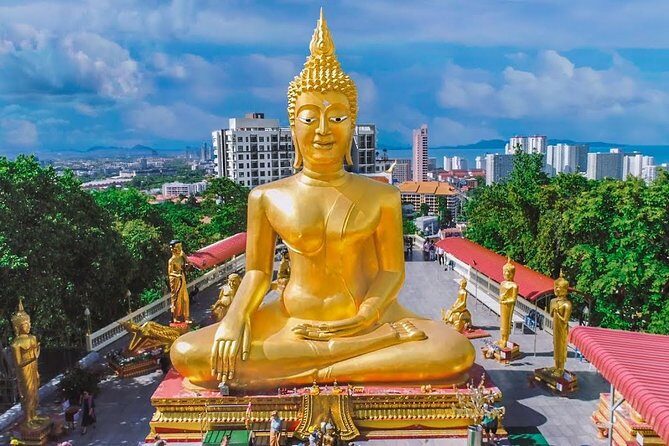
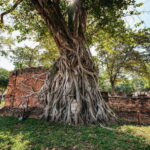
- Wat Pak Nam: The 80-meter Buddha and the museum pagoda
- Thonburi canal life: where old Bangkok meets modern streets
- Artist House Bangkok: watching Thai craft culture along the canal
- Wat Kamphaeng Bangchak: a quieter temple chapter
- Khlong Bang Luang Market: fish-feeding in a former floating market area
- Lunch included: what the a la carte meal is really worth
- Price and value: why $70 feels fair for this kind of route
- Who should book this Wat Paknam walking tour
- Practical tips for your 10:00 am start and Bangkok weather
- Should you book this Wat Paknam Walking Tour?
- FAQ
- How long is the Wat Paknam Walking Tour?
- What time does the tour start?
- How much does it cost and what’s included?
- What isn’t included in the tour price?
- Where is the meeting point?
- What happens if the weather is poor?
- What’s the cancellation policy?
- Is the tour suitable for everyone?
Key highlights I think you’ll care about
- Wat Paknam’s giant Buddha: an 80-meter sight you can actually appreciate in person
- Pagoda with a museum inside: temple architecture plus indoor context
- Thonburi canal culture: you’ll see a different Bangkok side beyond the big sights
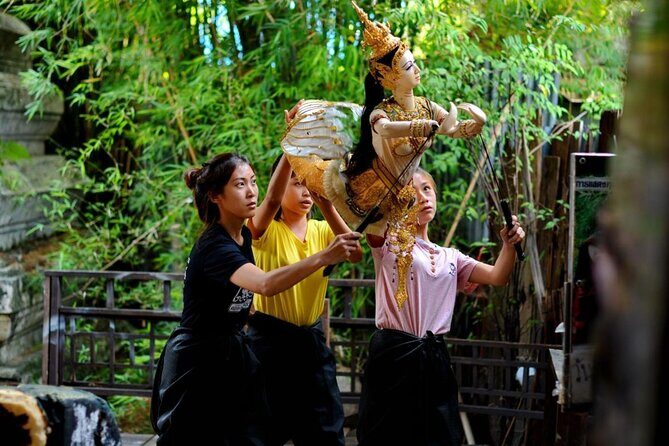
- Artisan stop at Artist House Bangkok: a wooden Thai house along the water with local craft energy
- Khlong Bang Luang Market and fish-feeding: a former floating market vibe that still includes feeding fish
- Guide Champ’s Q&A style: you’ll have a human who answers questions, not a silent headset tour
Wat Pak Nam: The 80-meter Buddha and the museum pagoda
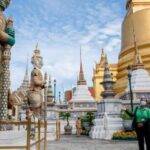
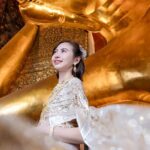
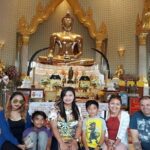
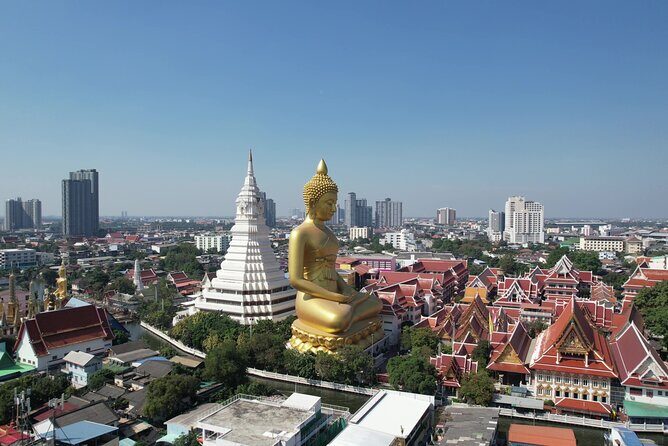
Wat Paknam is the kind of temple stop that changes your sense of scale fast. The headline is the 80-meter Buddha image, described as one of Bangkok’s highest, and that height matters once you’re there. You don’t have to be a religious expert to appreciate what that size does to the whole space.
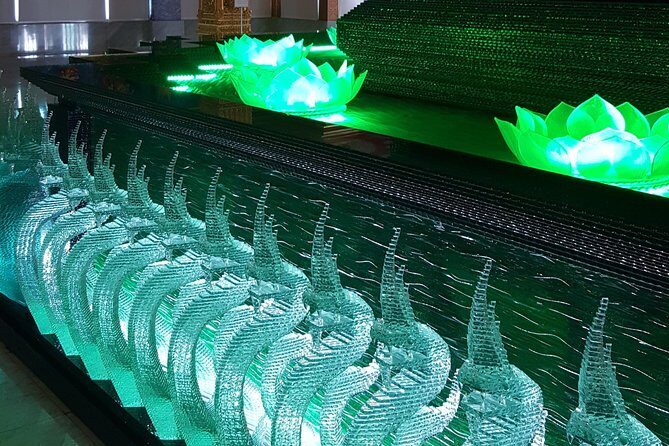
The temple also includes a beautiful pagoda with a large museum inside, which is a smart combo for a morning itinerary. Temples can sometimes feel like you’re rushing from one photo angle to the next; the museum helps slow the day down and gives you context for what you’re seeing outside. Even if you’re more into architecture than artifacts, you’ll likely find something worth a second look.
There’s also a calmer side to this stop if you’re paying attention to how people actually use the place. The tour information frames Wat Paknam as an original Buddhism meditation temple that’s worldwide popular, so expect the vibe to be more than a quick stop for sightseeing selfies. If you like places where locals still treat the site as meaningful, this fits.
What to watch for: you may need a bit of patience for crowds, especially around the most dramatic viewpoints. The upside is that the payoff is visual and memorable, and you’re not just walking past another temple plaque.
You can also read our reviews of more walking tours in Bangkok

Thonburi canal life: where old Bangkok meets modern streets
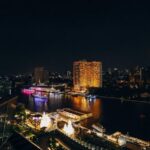
After Wat Paknam, the tour shifts gears toward Thonburi, the old capital side of Bangkok. This part is valuable because it shows you Bangkok as lived-in, not just mapped. The guide leads you toward the canal-world, where daily rhythms move differently than in the city-center grid.
I like canal-focused tours because they give you something practical: you start to understand how geography shaped neighborhoods. You’ll see the “how” behind the “what,” especially in areas where water isn’t just scenery—it’s infrastructure for the way people organize their day.
The route is also designed to keep you moving, not stuck in one static location. That matters when you’re planning a morning: you get variety without feeling like you’re sprinting all day. You’re walking with a guide who was born and raised in the area, which helps when questions pop up about how things work.
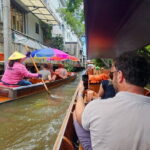
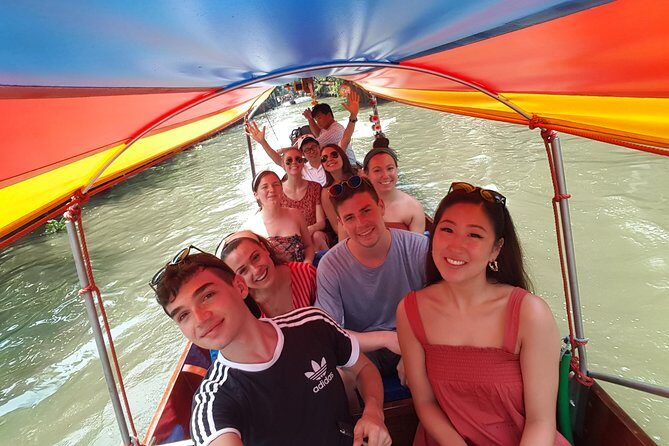
Also, there’s a strong chance you’ll get a boat ride bonus. One review calls it out as a real plus, and I’d treat it as part of the value, not a random perk. If you’re thinking of this as a walking tour only, keep an open mind—canal time is often the best “Bangkok postcard” moment that still feels grounded.
Potential drawback: canal neighborhoods can mean uneven sidewalks and short bursts of walking. If you’re used to smooth, flat tourist areas, this section may feel more real—and more uneven.
Artist House Bangkok: watching Thai craft culture along the canal
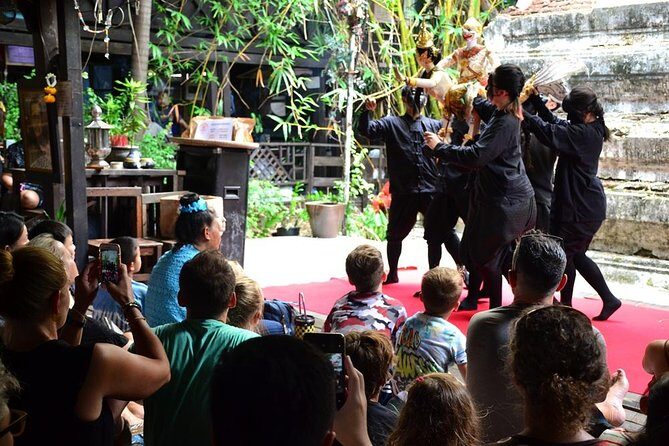
One of the most fun stops is Artist House Bangkok, a wooden Thai artist house along the canal. This is where the tour adds texture. Instead of only temple sights, you get a perspective on local creativity—how artists gather, show skills, and keep tradition visible.
If you like seeing craft in action (even at a casual level), this stop can turn the day from “beautiful places” into “places with people.” The tour description points to an artist-focused atmosphere where art lovers come to show their skill, and that’s the kind of detail that makes a group tour feel more specific.
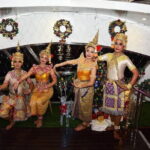
This is also a smart contrast after Wat Paknam. Temples are visual, museum is reflective, then you switch to a more human scene where you can watch performance or craft energy. Even if you don’t buy anything, you’ll likely leave with a better sense of how Thai culture expresses itself beyond religion and food.
What I’d keep in mind: art spaces can vary in what’s happening that day. The best mindset is to go curious, not expecting a fixed show. The value here is the canal setting plus the chance to see local creative life, not a guaranteed production.
Wat Kamphaeng Bangchak: a quieter temple chapter
Then comes Wat Kamphaeng Bangchak, a third temple stop on the route. The exact details of this stop aren’t described in the tour notes, so I’d treat it as a complementary piece rather than the “main event.” In a well-paced temple tour, these additional stops matter because they fill in the map of what the area offers.
How you’ll experience it depends on what’s active when you arrive. You might find a more local feel than the most famous shrine—sometimes these sites give you that “less staged” sense even within a guided day. It’s also a chance to compare temple styles across stops, especially with Wat Paknam’s strong presence dominating the early part of the itinerary.
If you love architecture or temple layout, this is a good time to slow your thinking and notice differences. If you’re less into temple detail, it can still be worth it because it keeps momentum while giving you a breather from the canal and market portions.
Khlong Bang Luang Market: fish-feeding in a former floating market area
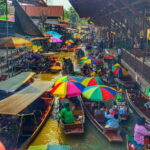
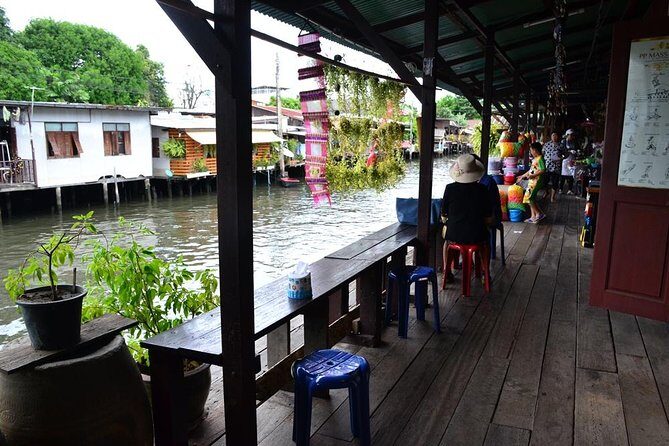
One of the more memorable moments is Khlong Bang Luang Market, described as a former floating market, with only a few boat activities today. That detail is important: you’re not going to a living replica of the past, and you’re not going to ignore reality either. You’ll see what remains and how the area has shifted while keeping the water connection in the story.
Feeding fish is part of this stop, and that’s exactly the kind of simple activity that makes a market feel lively. In a tour like this, it also breaks up the walking with something hands-on, and it tends to be the moment people remember later—more than another photo of a stall.
Markets also help you understand daily food culture and commerce. You may pick up ideas about what locals actually eat and buy, even if you don’t snack constantly during the tour.
Possible drawback: markets can be busy, and feeding activities may involve standing in the same area for a bit. If you’re not comfortable around water or splashes, go slowly and follow your guide’s direction.



Lunch included: what the a la carte meal is really worth
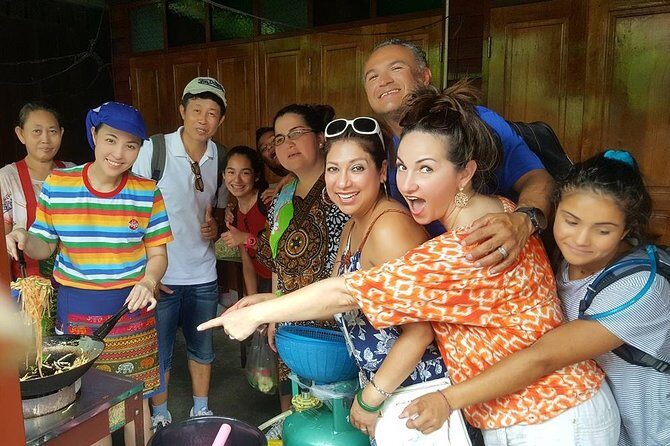
At the end of the tour, you’ll try Thai food at a local restaurant. Lunch is included as an a la carte lunch, plus bottled water, and that’s a meaningful value piece when you look at the full $70 price.
Here’s how I think about it: tours that cost similar amounts often give you “included water and vibes,” but this one explicitly includes your lunch. It also avoids the problem of choosing a place yourself at the last minute when you’re tired and hungry. The included meal turns the day into a complete experience.
You do need to plan for what’s not included: alcoholic beverages aren’t included, and coffee and/or tea aren’t included either. That doesn’t make it bad value—just budget slightly if you like a drink with lunch. And since coffee and tea aren’t listed as included, I’d treat any caffeine stop as your choice, not a promise.
One more practical tip: Thai lunches can be spicy. You can usually ask for mild options, but the tour information doesn’t spell out spice levels. When in doubt, speak up early with the restaurant staff so your meal matches your comfort.
Price and value: why $70 feels fair for this kind of route
For $70 per person over about 3 hours 30 minutes, the price can feel either expensive or reasonable depending on what’s included. In this case, it’s easier to see where it goes.
You get:
- Wat Paknam entry time and the structured route through multiple stops
- A guide who knows the area (Champ is specifically praised)
- Lunch included
- Bottled water
- Travel insurance
Group discounts and a mobile ticket can help too, but the biggest value lever is lunch plus insurance. If you were doing this on your own, you’d likely pay for temple time, pay for a guide or a half-day plan, then still pay for lunch right afterward. This packages those decisions into one set schedule.
The biggest thing you’re paying for is not just transportation—it’s the ordering and context. You’re visiting famous sights, sure, but you’re also seeing how Thonburi’s canal life fits around them.
Who should book this Wat Paknam walking tour
This tour makes the most sense if you want a morning mix of temples, local canal culture, and a real Thai meal without having to build the plan yourself. I’d especially recommend it if you’re the type who likes questions—Champ’s Q&A style gets praised, and that matters on a guided day.
It’s also a good fit if you like variety. Wat Paknam covers the “wow Buddha” side, the artist house gives you culture beyond temples, and Khlong Bang Luang Market brings market energy and fish-feeding into the mix.
Who should think twice: it’s not suitable if you have knee problems or if you weigh over 130 kg. The tour says “most travelers can participate,” but those limits are clear enough that you shouldn’t gamble if you’re in a sensitive mobility category.
If you’re traveling with kids, this kind of fish-feeding and market stop can be a hit. Still, the walking nature remains, so judge it based on your group’s comfort.
Practical tips for your 10:00 am start and Bangkok weather
The tour starts at 10:00 am, and it runs about 3 hours 30 minutes. Plan to arrive a little early so you can settle in and start without rushing. The meeting point is described as near public transportation, which is helpful if you’re staying in parts of Bangkok that are easy to reach by transit.
Weather matters here. The tour requires good weather, which is common in Bangkok canal and outdoor walking experiences. If weather turns poor, the tour notes you’ll be offered a different date or a full refund, so don’t assume you’ll push through rain no matter what.
Wear shoes you actually trust. Markets and canal areas tend to have changing pavement and short uneven stretches, and you’ll be happier if your feet feel supported from start to finish. Also, bring a light layer—temple shade and museum cool air can feel great after time outdoors.
Since bottled water is included, you’re covered for that. If you know you’ll want coffee or tea, plan on buying it yourself since it’s not included.
Should you book this Wat Paknam Walking Tour?
I’d book it if you want a well-shaped half-day that combines an iconic temple (Wat Paknam and its 80-meter Buddha), Thonburi’s canal culture, an artisan stop, and a finish with Thai lunch. The $70 value improves because lunch, water, and travel insurance are included, and the guide Champ is highlighted for being attentive and answering questions.
I’d skip it if your knees don’t do well with walking, or if the idea of uneven ground and market crowd movement isn’t your thing. Also, go in expecting a real-world day—some parts are structured sightseeing, and others are daily-life spots that may not look like a perfectly curated museum.
If that sounds like your kind of Bangkok morning, this tour is a strong bet.
FAQ
How long is the Wat Paknam Walking Tour?
It lasts about 3 hours 30 minutes.
What time does the tour start?
The start time is 10:00 am.
How much does it cost and what’s included?
The price is $70.00 per person, and it includes an a la carte lunch, bottled water, and travel insurance.
What isn’t included in the tour price?
Alcoholic beverages and coffee and/or tea are not included. Pick up and drop-off are also not included.
Where is the meeting point?
The meeting point is near public transportation.
What happens if the weather is poor?
The tour requires good weather. If it’s canceled due to poor weather, you’ll be offered a different date or a full refund.
What’s the cancellation policy?
You can cancel for free up to 24 hours in advance of the experience for a full refund. If you cancel less than 24 hours before the start time, the amount you paid will not be refunded.
Is the tour suitable for everyone?
Most travelers can participate, but it’s not suitable for guests who had knee problems or weigh more than 130 kg.