REVIEW · BANGKOK
Baipai Thai Cooking School Class in Bangkok
Book on Viator →Operated by Tour East Thailand · Bookable on Viator
A Thai cooking class in a calm garden oasis. This half-day Baipai session teaches Thai flavor basics and then puts you right to work making four dishes you’ll eat for lunch, with step-by-step help from the kitchen team. I really liked the hands-on stations for total beginners and the smooth hotel pickup and drop-off. One catch: the cooking area is partly open air, so plan for warm conditions and bring your best hydration habits.
The class runs about 4 hours and is taught in English, so you won’t feel lost. You’ll also leave with free recipe cards and a cook book, plus a lunch you made yourself. Expect teachers such as Pae, Toon, Chef Eye, Pop, Charles, Jun, and Fya to keep things moving and explain what to do next.
In This Review
- Key things to know before you book
- From your hotel to a garden kitchen outside the city
- What “4 hours” really means in a Thai cooking class
- Learn by cooking: how the class is structured at your station
- The kinds of Thai dishes you’ll make (and why they’re good lessons)
- Coconut sticky rice with mango
- Papaya salad
- Chicken in pandanus leaves (and the idea of aromatic wraps)
- Red curry paste and red curry
- Lunch you make: eating with purpose, not just to fill time
- Teachers, language, and the hands-on coaching you want
- Price and value: what $88.99 includes that matters
- Heat, tools, and practical tips so you enjoy the day
- Expect warm, open-air elements
- You won’t be doing “knife boot camp”
- You might do ingredient tasting
- Who this Bangkok Thai cooking class is best for
- Should you book Baipai Thai Cooking School in Bangkok?
- FAQ
- FAQ
- What is included with the Baipai Thai Cooking School class?
- How long is the class in Bangkok?
- Do you get hotel pickup and drop-off?
- Is the class taught in English?
- Do I need prior cooking experience?
- What will I be cooking and eating?
- Is there a minimum age?
- What happens if I need to cancel or change my booking?
Key things to know before you book
- You cook four dishes and eat them as lunch, not just watch demonstrations
- Hotel pickup and drop-off are included, which cuts Bangkok stress fast
- English instruction helps you learn the why, not only the how
- Learn classic techniques like making and using red curry paste and wrapping with pandanus leaves
- Open-air cooking is part of the vibe, so heat management matters
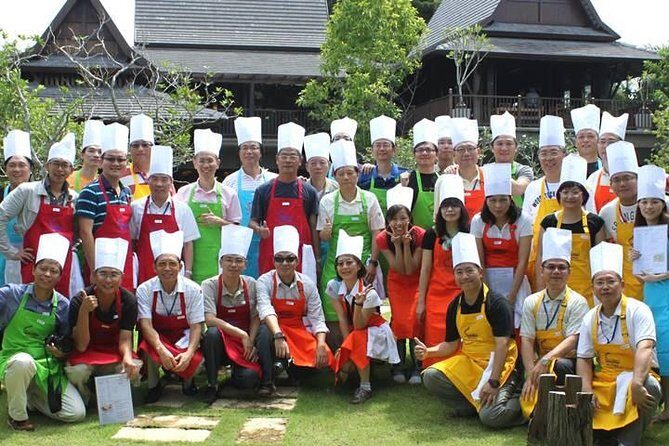
- Small-group feel with a maximum of 30 people for a more hands-on pace
From your hotel to a garden kitchen outside the city
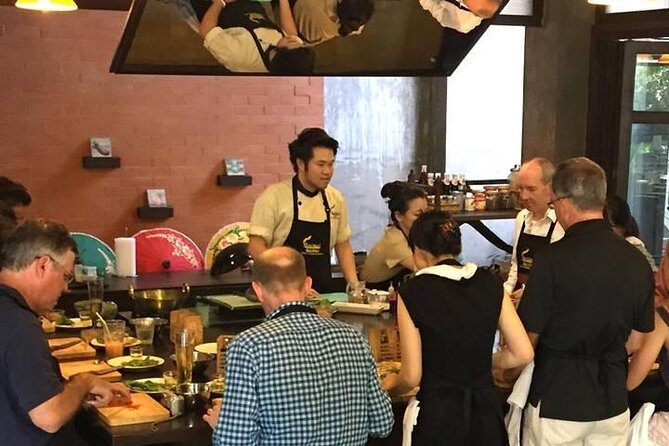
Bangkok can feel like a nonstop rush. This class gives you a clear “get out of the traffic” moment, with an air-conditioned vehicle picking you up and dropping you back off afterward. Even better, the food experience starts right away, because the school is set up for guests to shift from city mode to cooking mode quickly.
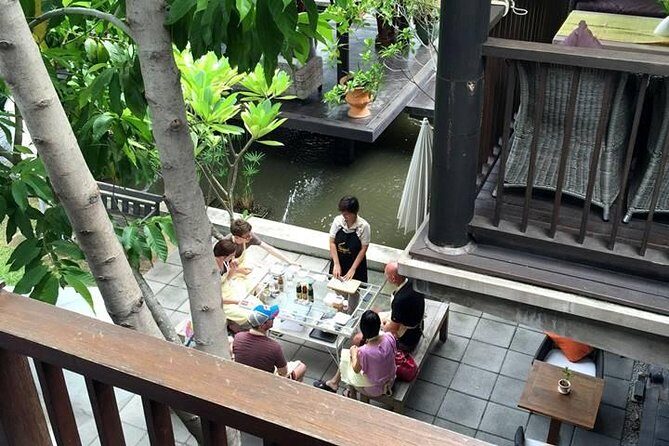
The Baipai property has a “closed gate, open peace” feel. From what you’ll see and hear during the day, it’s designed for your senses: herbs growing nearby, greenery, and outdoor cooking spaces that feel like a retreat rather than a showroom. One review described walking through the gate and finding a tranquil oasis with a water pond and fish, which is exactly the kind of contrast that makes this class feel like an actual experience.
Practical tip: make sure you provide your hotel details at booking. The tour notes that failure to do so may result in cancellation, so don’t leave that to chance.
You can also read our reviews of more cooking classes in Bangkok
What “4 hours” really means in a Thai cooking class
A half-day can sound short. In a good Thai class, it’s just enough time to cover real cooking, not only chopping and tasting.
Here’s the flow you can expect:
- You start with a multi-sensory introduction to Thai flavors and ingredients. This is where you learn what makes Thai food taste Thai, beyond just “it’s spicy.”
- Then you move into prep and cooking. You’re not stuck doing one small task while someone else handles the stove.
- You cook four authentic dishes and eat the lunch you made.
- You leave with recipe support so the dishes don’t disappear the moment you get home.
The teaching style matters. Multiple instructors you might meet (Pae, Toon, Jun, Fya, and others) focus on clear instructions and getting you unstuck when you make a mistake. That matters for first-timers, because Thai cooking looks intimidating until someone shows you the exact grip, timing, and texture they’re aiming for.
Learn by cooking: how the class is structured at your station
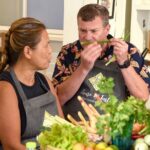
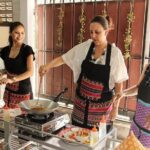
The standout format at Baipai is the station setup. You’ll have a prep station and a cooking station, and everything is organized so you can actually follow along. This design helps you avoid the classic cooking-class problem: mixing bowls everywhere, no clear plan, and everyone waiting on the same pan.
You’ll likely work through dishes that use different Thai flavor tools:
- balancing sweet, sour, salty, and spicy
- understanding fresh herbs versus dried/powdered flavor
- learning how curry paste becomes a base once it’s heated
Some sessions also include extra learning moments like an ingredient walk or market tasting. In past experiences, guests have been shown fruits and vegetables, tasted items along the way, and gotten practical advice on what’s easy to find back home and what might need swapping.
No prior kitchen experience is required. That doesn’t mean it’s “no work.” It means you’ll get the guidance to make progress even if your knife skills are rusty.
The kinds of Thai dishes you’ll make (and why they’re good lessons)
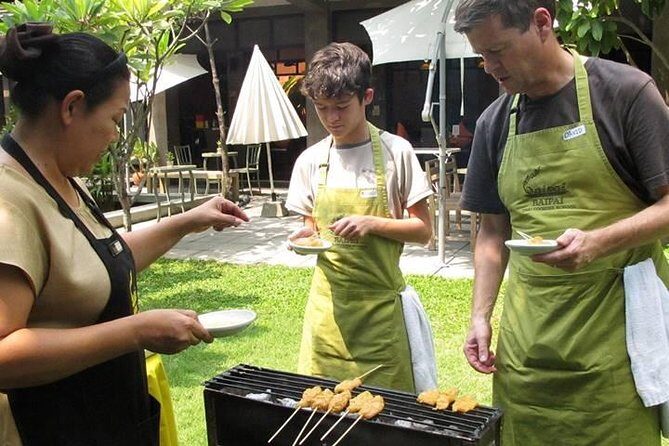
You’ll cook four dishes during the class, and the menu can vary. Still, several classic Thai items show up often in Baipai programs, and they each teach a different skill.
Coconut sticky rice with mango
This is the kind of dessert that forces you to care about texture. Sticky rice needs the right moisture and timing. Mango isn’t complicated, but the pairing teaches you how Thai sweets often use fruit for brightness rather than just sugar.
You can also read our reviews of more tours and experiences in Bangkok
Papaya salad
Papaya salad is all about balance. You’ll learn how crushing, mixing, and seasoning create the final flavor, rather than treating it like a simple bowl of chopped vegetables. Expect sour and salty notes to show up fast once the dressing hits.
Chicken in pandanus leaves (and the idea of aromatic wraps)
Wrapping chicken in pandanus leaves teaches technique and aroma. It’s also a confidence builder: one guest specifically mentioned getting help when wrapping was tricky, then feeling like an expert afterward. If you’re nervous about folding or wrapping, this is the dish where patience from the instructor really pays off.
Red curry paste and red curry
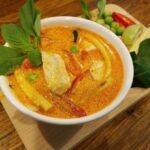
Red curry is a whole training course inside one meal. You’ll learn how curry paste is made or used as the flavor engine, then how it transforms in the pot with heat. Red curry can also include options like pork, chicken, or tofu, depending on what’s served that day.
Why this menu works: it covers Thai food in four different categories—sweet, salad/sour-spicy, aromatic prep, and curry. That combination makes it easier to recreate at home because you learn building blocks, not just recipes.
Lunch you make: eating with purpose, not just to fill time
This is not a “watch then snack” situation. You cook and then eat what you made, which turns the class into a real food lesson.
When you sit down to eat, you’re tasting with fresh context:
- You understand what you did to get that papaya salad balance.
- You recognize how the curry base changed once heat took over.
- You can tell when seasoning is correct, because you worked toward it.
Lunch is included, and it’s a key value driver. At $88.99, you’re paying for instruction plus a full meal experience. You’re not just buying food, and you’re not paying restaurant prices for a plate you didn’t learn from.
And yes, the vibe matters. Some classes are described as open-air and breezy in the morning, with cold water available. Just remember: if you’re sensitive to heat, you’ll want to pace yourself. Thai kitchens can be warm on purpose, especially near cooking stations.
Teachers, language, and the hands-on coaching you want
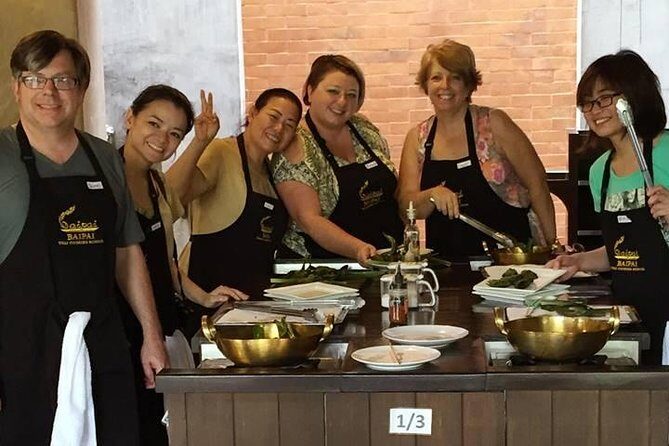
The class is taught in English. That sounds simple, but in cooking it’s huge. You need to understand measurements, textures, and steps while your hands are busy.
You might meet instructors like:
- Pae (a class coordinator with patient, articulate English)
- Toon (helpful and interactive)
- Chef Eye (clear, makes steps look easy)
- Pop and Charles (friendly and fluent)
- Jun and Fya (hands-on ingredient explanations)
What you’re really buying here is clarity. You’ll get individualized attention, and staff are there to help when something isn’t working. That’s why beginners often feel comfortable fast.
If you’re traveling as a couple, this format is ideal: you can work side-by-side, share taste comparisons, and both go home with the same recipe set. Solo travelers do fine too, because the stations and instructors keep you moving rather than isolating you.
Price and value: what $88.99 includes that matters
Let’s talk about money without the hand-waving.
At $88.99 per person, you’re getting:
- a Thai cooking course
- lunch
- a cook book
- hotel pickup and drop-off via an air-conditioned vehicle
- a local guide
- recipe cards (free)
That’s a lot packed into one half-day. The pickup isn’t a small perk in Bangkok. It’s time saved and stress avoided, especially if you’re staying in the busy areas where traffic and navigating can eat up a morning.
Also, the maximum group size is 30. That keeps the day from turning into a lecture. You’ll spend your time cooking rather than watching long gaps while someone else handles the hot parts.
Value note: the class is non-refundable and can’t be changed once booked. If you’re the type who might want flexibility due to weather or schedule uncertainty, plan your day so you can commit.
Heat, tools, and practical tips so you enjoy the day
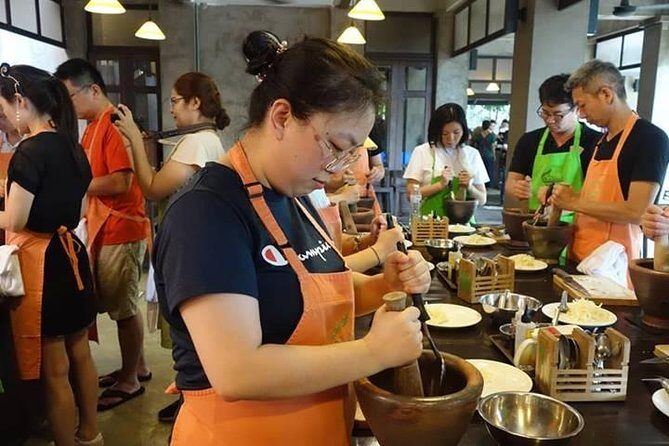
This is where you can make or break your experience.
Expect warm, open-air elements
Even though the vehicle is air-conditioned, the cooking area can be open air. One guest warned to be prepared if you’re sensitive to heat. Another said it was fine in the morning but still worth being ready.
Bring:
- a small towel or wipe-up option
- comfortable clothes that can handle kitchen heat
- sunscreen if you’re sensitive (even if cooking is mostly indoors/outdoors mix)
- a water mindset, because you’ll be working up a sweat
You won’t be doing “knife boot camp”
Reviews describe the dishes as simple and fail-proof, with help at hand. This is not a competition class. You’re learning techniques that actually translate to home cooking.
You might do ingredient tasting
Some sessions include market visits and tastings of fruits and vegetables, plus guidance on ingredient substitutes for places where certain Thai items are harder to find. Even if your class focuses more on kitchen prep, you’ll still get ingredient explanations during the multi-sensory intro.
Who this Bangkok Thai cooking class is best for
This Baipai class fits best if you want real skills, not just a fun morning photo. I’d point you here if:
- you’re a beginner and want step-by-step coaching
- you want English instruction and don’t want to guess your way through Thai flavors
- you enjoy cooking with a clear outcome: four dishes, one lunch
- you like guided meals with a strong cultural-food angle
- you want a calmer break from Bangkok’s street energy
It’s less ideal if:
- you hate heat or open-air spaces
- you need a fully indoor, climate-controlled cooking environment
- you’re looking for a slow, leisurely pace with no multitasking
Should you book Baipai Thai Cooking School in Bangkok?
Yes, if you want a practical Thai cooking class with hotel pickup, English support, and a menu built around skills you can repeat at home. The biggest strength here is how the day is structured around you cooking at your own stations, then eating what you made, with clear instruction from teachers like Pae and Chef Eye.
Book it if your schedule is firm enough to handle the non-refundable nature and if you’re okay with some warm, open-air kitchen conditions. If that sounds good, this is one of the better ways to spend a half-day in Bangkok: you leave full, you leave learning, and you leave with recipes you’ll actually use.
FAQ
FAQ
What is included with the Baipai Thai Cooking School class?
The package includes the Thai cooking course, lunch, a cook book, an air-conditioned vehicle, and a local guide.
How long is the class in Bangkok?
The class runs about 4 hours.
Do you get hotel pickup and drop-off?
Yes, hotel pickup and drop-off are included, with transport by an air-conditioned vehicle.
Is the class taught in English?
Yes. The class is taught in English.
Do I need prior cooking experience?
No prior kitchen experience is necessary. The class is designed so you can learn from scratch.
What will I be cooking and eating?
You’ll prepare four authentic Thai dishes and eat your own Thai lunch.
Is there a minimum age?
Yes. The minimum age is 18 years.
What happens if I need to cancel or change my booking?
This experience is non-refundable and cannot be changed for any reason.