REVIEW · BANGKOK
Bangkok and Ayutthaya 3 Days
Book on Viator →Operated by Bravo Indochina Tours · Bookable on Viator
Temple bells and boat canals.
This 3-day Bangkok and Ayutthaya trip is interesting because it strings together royal Bangkok, two wild markets, and Ayutthaya’s ruined-temple scenery without you wrestling with transport. I especially like the private guided tour feel (you get real explanations at each stop) and the air-conditioned vehicle that keeps you human between sights. One thing to watch: the start is 7:30am, and if you need a Spanish or German-speaking guide, you’ll want to confirm language requirements in advance.
What you get for the money is more than a sightseeing walk. You’re covered with 2 nights in a central Bangkok hotel (3–4 stars), breakfast (2), lunch, entrance fees, and an English-speaking guide to handle the big landmarks you came for. Pickup is offered, and you travel as your group only—so you’re not stuck waiting on strangers to finish a photo set.
The itinerary is packed by design, so it’s not a slow Sunday stroll. Expect a lot of walking, heat on exposed routes, and changing river/market vibes in quick succession. If you’re sensitive to long days, plan to keep your evenings low-key and your shoes comfortable.
In This Review
- Key points worth knowing before you go
- A smart way to see Bangkok’s royal core (and not miss the point)
- Wat Arun’s river views and Pak Khlong’s flower chaos
- Maeklong Railway Market: when the train owns the room
- Damnoen Saduak floating market and the long-tail boat idea
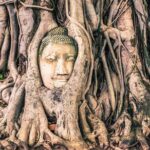
- Ayutthaya day: palaces, prangs, and the tree-root Buddha
- Price and what makes $389 feel like value
- Guide vibes: Giftsy and Mr. Sunshine make the day work
- How the schedule feels from 7:30am to late afternoon
- Should you book this Bangkok and Ayutthaya 3-day tour?
- FAQ
- What time does the tour start?
- Is pickup included?
- How many nights of hotel stay are included, and where?
- What meals are included?
- Are entrance fees included?
- Is the tour private?
- What language is the guide?
- What’s the deal if weather is bad or you need to cancel?
Key points worth knowing before you go
- Private pacing, not a cattle call: you move as one group with a guide who can adjust the flow.
- Central Bangkok hotel for 2 nights: fewer transfers, more time to reset after temple-heavy days.
- Two market worlds in one day: the railway market and Damnoen Saduak bring very different sights and photo opportunities.
- Entrance fees are included: you won’t be doing math at ticket counters all day.
- English is the default guide language: other languages may require a surcharge.
- Ayutthaya mixes palaces and iconic ruins: from Bang Pa-in’s royal setting to Wat Mahathat’s famous tree-root Buddha head.
A smart way to see Bangkok’s royal core (and not miss the point)
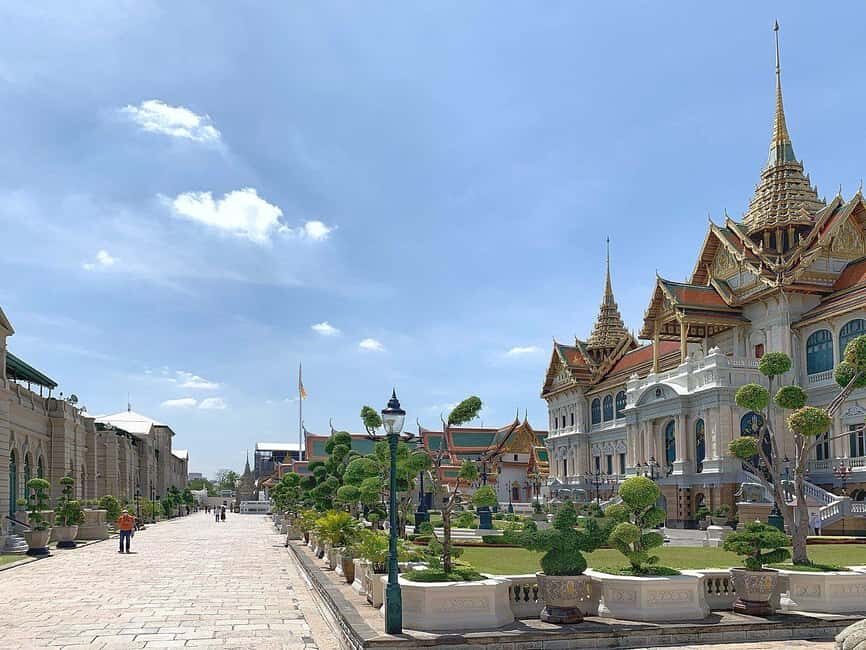
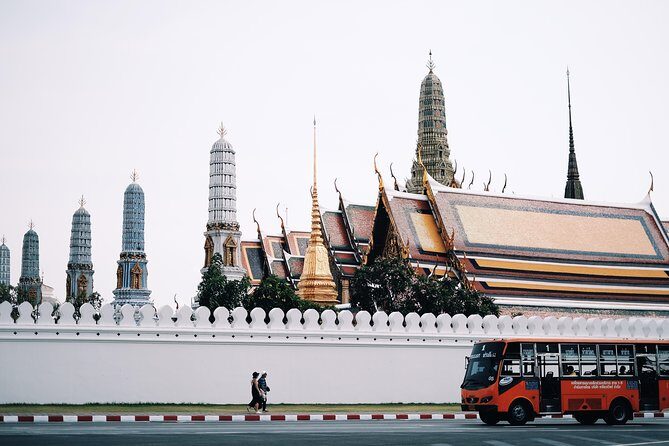
Day 1 hits the big hitters, starting with the Grand Palace. This is the classic Bangkok must-see, and the guide’s role matters here. Without context, the place can feel like walls and gold. With a guide, you understand why it’s historically central and how the layout ties together royal power and Buddhist symbolism. You’ll spend about an hour at the Grand Palace with an admission ticket included.
Right after that comes Wat Phra Kaew, the Temple of the Emerald Buddha. This is one of the most important Buddhist temples in Thailand, and it’s not just a pretty stop. You’ll see how this site fits into Bangkok’s spiritual and cultural identity, not as an add-on, but as one of the heart points of the city. The time here is also about an hour, and the admission ticket is included.
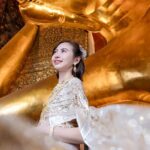
Then you cross the river-world vibe with Wat Arun (Temple of Dawn). Wat Arun sits on the west side of the Chao Phraya River (Thonburi bank), and it’s striking because of the riverside setting. The guide helps you focus on what to look for—so you’re not just taking generic temple shots.
After the temple run, the tour switches tempo to something local and tactile: Pak Khlong Flower Talat, Bangkok Flower Market. It’s the biggest wholesale and retail fresh flower market in Bangkok, and the best part is watching how the city moves through everyday trade. This stop is marked as free, and it works well right after temples because it’s a different kind of Bangkok—less ceremonial, more street-level color.
My practical tip: keep your camera ready at Wat Arun for river angles, but don’t forget to slow down at the flower market and notice what people buy and how they pack it. That’s where the market energy really lands.
You can also read our reviews of more tours and experiences in Bangkok
Wat Arun’s river views and Pak Khlong’s flower chaos
This is the part of the tour where you get contrast. Temples are the spectacle; markets are the daily engine.
Wat Arun is a landmark temple, and even if you’ve seen photos, being there in person feels different because you’re tied to the river geography. You’re on one bank, and your view lines up with the water, the bridges, and the light. The guide’s timing (about an hour here) is enough to take in the main sights without turning it into a endurance event.
Then Pak Khlong Flower Talat brings in that market smell—fresh stems, floral packaging, and wholesale logistics. Even if flowers are not your thing, this is a fun window into how Bangkok supplies the rest of the city. The stop is free and lasts about an hour, which makes it a good break from ticketed temple time.
If you want good photos: you’ll usually have better results when you pause and frame rather than constantly walking. The flower market rewards slower attention.
Maeklong Railway Market: when the train owns the room
Day 2 starts with Mae Klong Railway Market (also known as Hoop Rom Market). If you like oddball, high-impact sights, this one is special. The concept is simple: imagine a train passing straight through a market that people use as part of their normal day. The market is known locally as Talad Rom Hub, and the “how can that work?” factor is exactly what makes it memorable.
This stop lasts about an hour and is free for admission. What you’ll enjoy most is watching the rhythm—how vendors and customers handle the train’s presence and how everyone seems to understand the choreography. With a guide, you’re not just watching a spectacle; you learn what you’re seeing and why it exists.
Practical note: bring a little patience. You’re watching a moving system, not a museum display. Stay clear of the tracks and follow guide direction.
Damnoen Saduak floating market and the long-tail boat idea
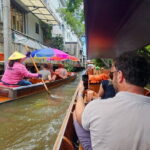
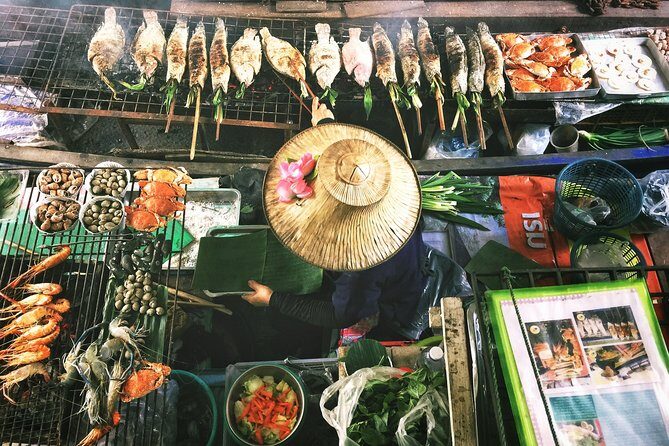
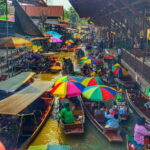
Right after the railway scene, you head to Damnoen Saduak Floating Market. This is the classic floating market experience—colorful handicrafts and fresh produce, set in the canal network instead of streets.
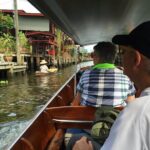
The floating market stop is listed at about an hour and is free for admission. The tour description also mentions the possibility of an unforgettable one-hour long-tail boat ride through the canals. Since the boat ride isn’t listed among what’s included, treat it as an optional add-on you choose based on your budget and how hot you feel.
This stop is great if you want Thailand’s “water-market” look without planning a day trip yourself. It also pairs well with Mae Klong, because you get two totally different market styles in one day—one rail-based, one water-based.
My advice: if you’re doing the long-tail boat ride, use that time to see angles you can’t get from the dock. It’s one of those rare travel moments where the viewpoint actually changes the story.
Ayutthaya day: palaces, prangs, and the tree-root Buddha
Day 3 is where the trip earns its name. You drive to Bang Pa-in first. This is the summer palace of the Thai Royal Family, built during the reign of King Rama IV. What makes Bang Pa-in worth your time is the setting: a royal retreat with a mix of styles (the tour notes it as an oriental and … blend). You’ll spend about an hour and you’ll likely appreciate it more because you’ve already seen Bangkok’s temples and markets. This is “royal calm” compared to the busier Day 1 and Day 2 energy.
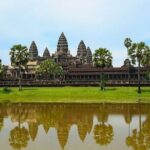
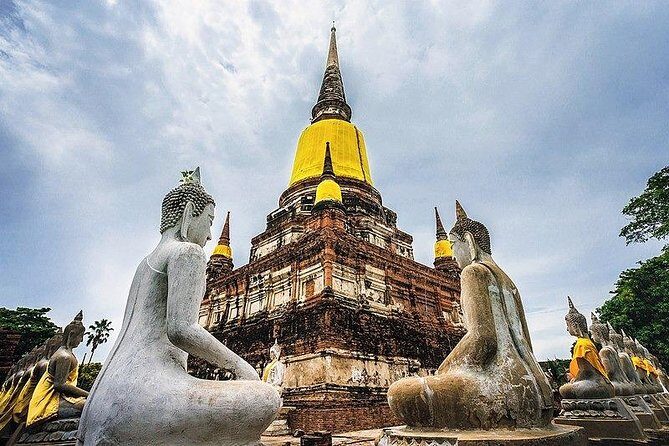
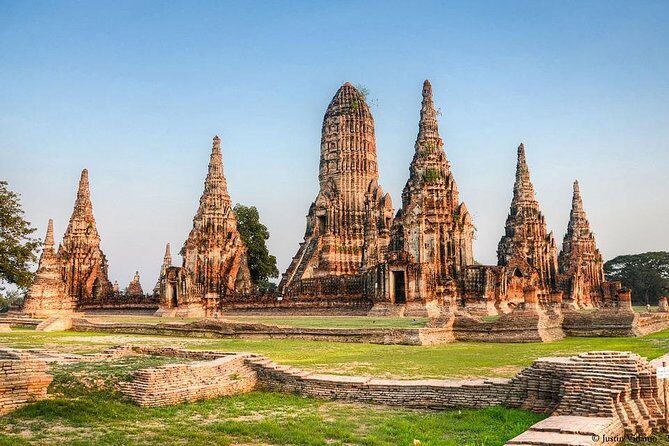
Next is Wat Chaiwatthanaram. Its architectural style is influenced by the world-renowned Angkor temples in Cambodia, and the standout feature is a large central prang surrounded by smaller ones. That single description gives you the mental image: a big focal tower with a ring of supporting structures. This is the kind of site where a guide helps you understand how to read the layout instead of just staring at impressive stones.
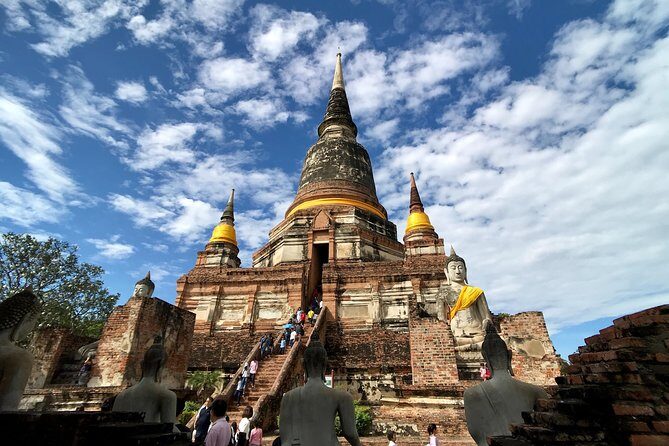
Then you move deeper into Ayutthaya’s religious core with Wat Phra Sri Sanphet. The three distinctive chedis are among the most famous sights in the ancient capital. The tour framing highlights it as the holiest temple on the site of the old Royal Palace until the city was completely destroyed—so again, context matters. These ruins aren’t just ruins; they’re tied to power, faith, and how the kingdom’s story changed over time.
You’ll also see Wihan Phra Mongkhon Bophit. The tour points out its large bronze seated Buddha image, noted as one of the largest bronze Buddhas in Thailand. This stop is a good moment to slow down and appreciate scale. Bronze Buddha images tend to feel heavy and grounded, and this one’s size is the point.
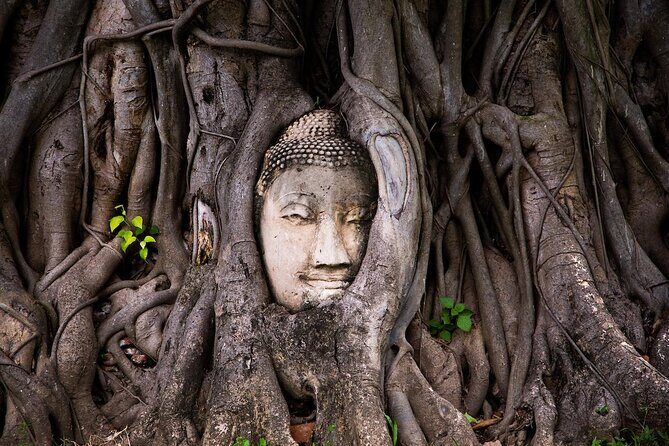
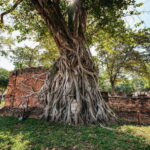
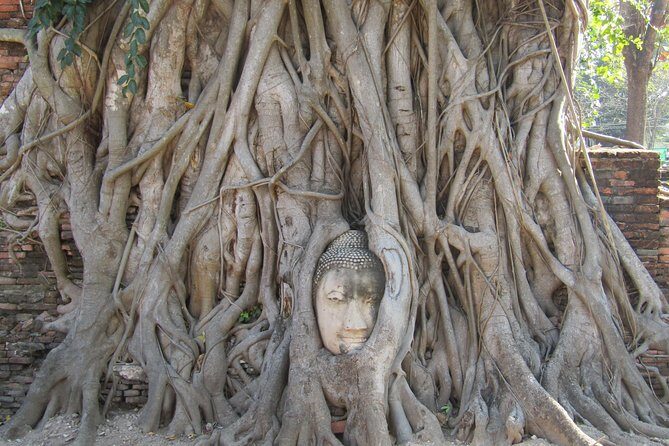
Finally, the classic photo moment: Wat Mahathat, where you can find the Buddha head entwined within the roots of a tree. This is one of Thailand’s most recognizable images, and seeing it in person is often different than seeing it in a frame. The roots add texture and unpredictability—like nature quietly taking over.
Practical tip: Ayutthaya is a lot of outdoor walking. Hydrate early. Keep a light layer for shade breaks. And don’t rush Wat Mahathat—because that’s the moment you came for.


Price and what makes $389 feel like value
At $389 per person for a 3-day, private, guided trip with transfers, central Bangkok lodging (2 nights), entrance fees, breakfast (2), and lunch, the value comes from what’s packaged—not from saving every individual ticket.
Here’s the “value logic” I’d use when deciding:
- You’re not paying separately for entrance tickets across major sites.
- You’re not planning the routing across Bangkok plus a day in Ayutthaya. That’s exhausting even for experienced travelers.
- Your hotel is handled, in central Bangkok and in the 3–4 star range, for two nights.
- You get an English-speaking guide, which helps you make sense of places like the Grand Palace complex and Ayutthaya’s temple layout.
Could you do it cheaper on your own? Sure, maybe, depending on your hotel costs and how you arrange transport. But the convenience here is real. It’s the kind of trip where your time is the currency, and the organizer is spending that currency for you.
Also, the tour is typically booked well in advance (on average about 178 days), which usually means it’s a popular and well-run option. Still, always check what you’re buying—especially if language support matters.
Guide vibes: Giftsy and Mr. Sunshine make the day work
The standout pattern from the experience is the human touch. One review highlighted the tour guide named Giftsy and the driver Mr. Sunshine as lovely and fun, with real knowledge and personality. Another review focused on care for basic comfort—food, bathrooms, and staying cool thanks to air conditioning.
That matters because when you do temple-heavy days, logistics can make or break the mood. An English-speaking guide helps you understand what you’re looking at, but also helps you navigate the practical rhythm: when to go in, what to notice first, and how to keep the day flowing.
One caution from the experience: there was a complaint about not getting a Spanish-speaking guide when expected. The tour data says an English-speaking guide is provided and that there’s a surcharge for other languages (including Spanish and German). So if you need Spanish or German, treat it like an important requirement, not a hope.
How the schedule feels from 7:30am to late afternoon
The tour start time is 7:30am, which tells you the organizer aims to beat heat and reduce waiting. That’s good for temples and for market areas that can get busy. The tradeoff is simple: you’ll need to treat Day 1 and Day 3 as full days, not quick sightseeing add-ons.
Each stop is about an hour, but you’ll also spend time on driving and moving between sites. The air-conditioned vehicle helps a lot, especially on Bangkok’s hotter stretches and on the longer Ayutthaya day.
What to pack mentally:
- comfortable shoes (temples and ruins mean uneven ground in places)
- a hat or sun protection for outdoor parts
- water access, since beverages during meals aren’t listed as included
- your camera battery charged, because Wat Arun and the tree-root Buddha are picture magnets
Should you book this Bangkok and Ayutthaya 3-day tour?
I’d book this if you want a guided, efficient way to cover the core Bangkok highlights plus Ayutthaya’s iconic temples without planning transport, tickets, and timing yourself. It’s also a strong choice if you like explanations as much as photos—because the stops are the kind where context makes a real difference.
Skip or rethink if:
- you need Spanish or German language support and haven’t confirmed it
- you’re looking for a slow pace with lots of free time between sites
- early mornings are a problem for you
If your goal is to hit the major sights, stay in central Bangkok for two nights, and let someone else handle the driving, this is a solid value for the structure you’re getting.
FAQ
What time does the tour start?
The tour starts at 7:30am.
Is pickup included?
Pickup is offered.
How many nights of hotel stay are included, and where?
You get a 2-night hotel stay in central Bangkok. The hotel level is described as 3–4 stars.
What meals are included?
Breakfast is included for 2 days, and lunch is included. Dinner and beverages during meals are not included.
Are entrance fees included?
Yes. All sightseeing entrance fees are included.
Is the tour private?
Yes, it’s a private tour/activity, meaning only your group will participate.
What language is the guide?
An English-speaking guide is included. There is a surcharge if you want another language, including Spanish or German.
What’s the deal if weather is bad or you need to cancel?
The experience requires good weather. If it’s canceled due to poor weather, you’ll be offered a different date or a full refund. You can cancel up to 24 hours in advance for a full refund.