REVIEW · BANGKOK
Bangkok: Historic Siam and Cultural Gems Walking Tour
Book on GetYourGuide →Operated by Vox City Walks · Bookable on GetYourGuide
Bangkok moves fast, and this tour helps you move smarter. You’re guided through major landmarks tied to Bangkok’s cultural, political, and religious life, with stops that range from classic temple streets to the Chinatown Gate area. The route is designed to cover a lot in about two hours, and some moments are quick pass-bys while you get the story and the context you’d otherwise miss.
I especially like two things. First, the live English guide really keeps the group moving and answers questions without getting rattled. In particular, one guide named Fern stood out for being engaging and making good use of the limited time. Second, I like the included Vox City app, because you can keep exploring after the walk with planned self-guided routes across central Bangkok.
One consideration: this is a walking tour and entry to attractions isn’t included, so you’ll still need to decide what you want to pay for once you’re standing in front of it. Also, since the meeting point can vary, you’ll want to follow the app instructions closely so you don’t waste time on the wrong street.
In This Review
- Key points at a glance
- Why This Bangkok Walk Feels Like Three Neighbourhoods at Once
- Starting at 9:00: Meeting Points and How to Stay on Track
- Historic Siam: Watching the City’s Power Lines Take Shape
- Wat Suthat and the Giant Swing: One Big Landmark to Set Your Bearings
- Mahakan Fort and Pi Kun Bridge: Fortifications and Crossings
- Bangkok Cultural Gems: Temples, Markets, Bridges, and the Museum of Siam
- Chinatown by Night: The Street-Level Bangkok You Don’t Get from a Quick Drive-By
- Wat Hong Rattanaram and Wat Saket: Closing the Walk with More Sacred Stops
- Wang Burapha District and the Siam Area Temples: Why These Streets Matter
- The Vox City App: How to Extend Your Ticket for 3 Days
- Price and Value: What $30 Actually Buys You
- Who Should Book This Tour (and Who Might Feel Crowded)
- Should You Book This Bangkok Historic Siam and Chinatown Tour?
- FAQ
- How long is the walking tour?
- How much does it cost?
- Is there an English-speaking guide?
- What languages are available for audio commentary?
- Do I get the Vox City app with my ticket?
- Can I use my ticket on a different day?
- Are transportation and attraction entry included?
- What should I bring for the tour?
- Where do I meet the guide?
Key points at a glance
- Three guided themes cover Historic Siam, cultural landmarks, and Chinatown by Night
- English live guide plus audio commentary in five languages for extra support
- Vox City app included with self-guided routes you can use over three days
- Smart starter options let you begin from Sanam Chai, Sam Yot, or Hua Lamphong
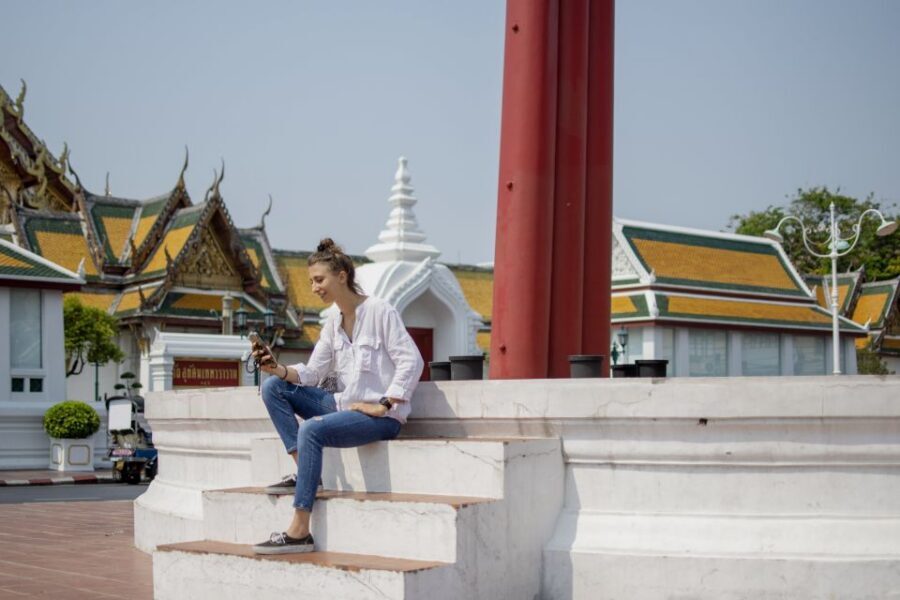
- Iconic stops like Wat Suthat and the Giant Swing anchor the walk
- No transport or attraction entry included, so you control the add-ons
Why This Bangkok Walk Feels Like Three Neighbourhoods at Once
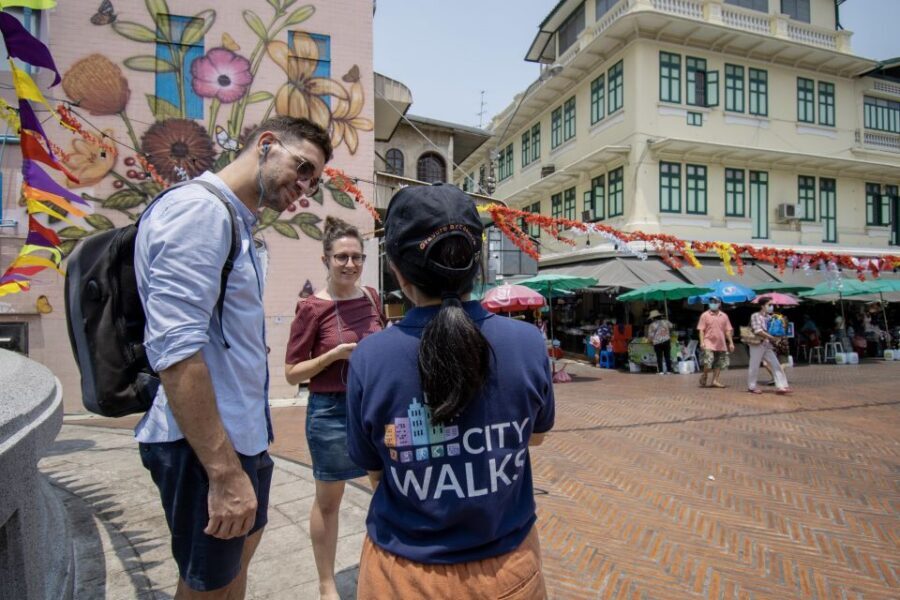
This experience is built around the idea that Bangkok isn’t one story. It’s several overlapping ones. In one ticket you get guided time through Historic Siam, Bangkok Cultural Gems, and Chinatown by Night. Even if you’ve visited Bangkok before, those labels are useful because they point you toward different kinds of landmarks: temples, major city-facing institutions, and the dense commercial and religious world of Chinatown.
The other smart part is pacing. You’re not just “see a thing, take a photo.” You’re walking with explanations tied to cultural, political, and religious sites, then moving through the streets that connect them. That’s where Bangkok starts to make sense—when you can connect a temple area to the nearby roads, bridges, and civic spaces that shaped how the city developed.
And yes, there’s plenty of colour and temple atmosphere. The tour description leans hard into vivid colours and powerful scents, which is exactly what you experience when you’re doing temple-focused Bangkok right on foot. Expect to smell incense, see gold details, and notice how the street life keeps going around the monuments.
You can also read our reviews of more walking tours in Bangkok



Starting at 9:00: Meeting Points and How to Stay on Track
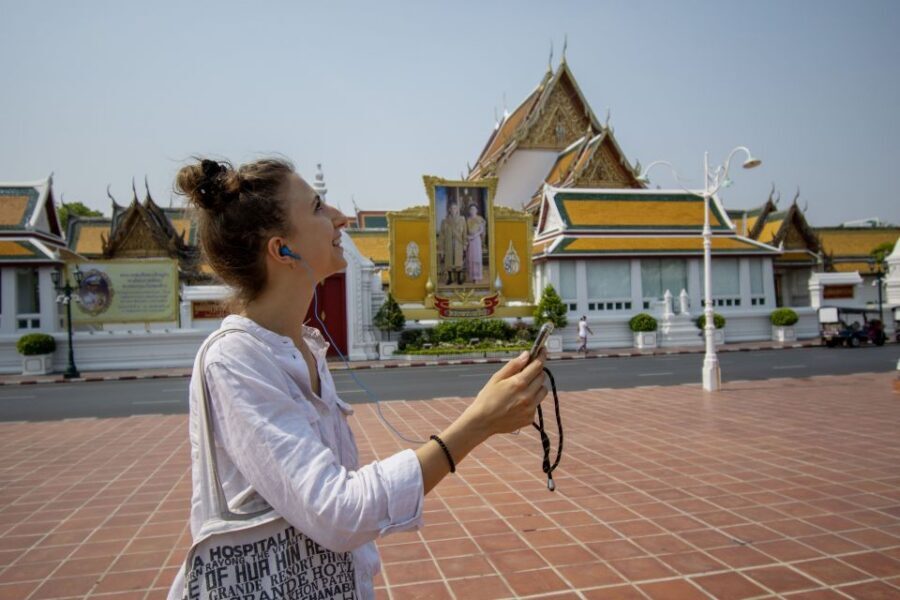
Tours start from 09h00, and the meeting point may vary based on which option you book. You’ll use the Vox City app to track your guide and book your spot, so treat the app like your compass for the morning.
Here’s what I’d do if I were planning this day: before you leave your hotel, make sure your phone is charged. The tour specifically asks you to bring a charged smartphone, and you don’t want to be hunting for power while you’re trying to scan a QR code or pull up the map.
One more practical note: drop-off locations can vary too, with options including Sam Yot, Hua Lamphong, and Sanam Chai. If you’re planning an afternoon that depends on your exact location, look at which area your route ends in so you don’t burn time crossing the city.
Historic Siam: Watching the City’s Power Lines Take Shape
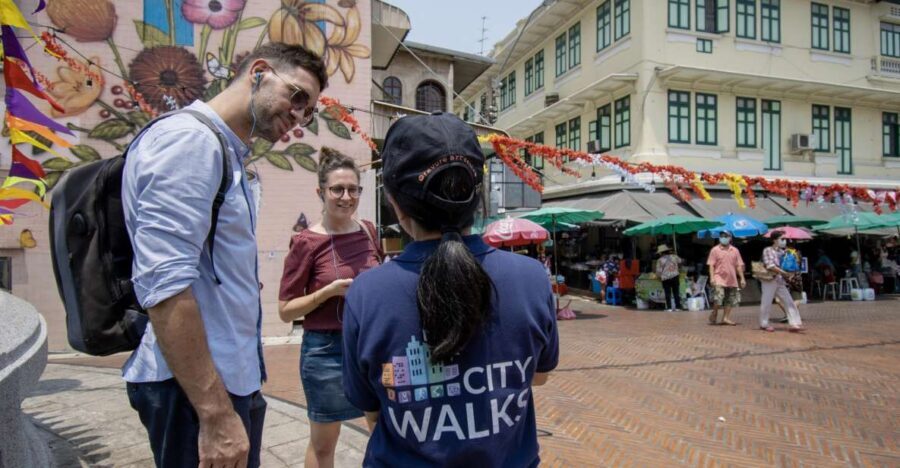
Historic Siam is where Bangkok starts to feel like a “worked city,” not just a collection of temples. This part of your ticket highlights places such as Wat Ratchapradit, Pi Kun Bridge, Mahakan fortress, Rommaninat Park, Tanao Road, Wat ratchabophit, and Bangkok City Hall.
What I like about this mix is that it ties together different types of landmarks:
- temples that represent religious authority
- bridges and road corridors that show how movement and settlement grew
- civic space like Bangkok City Hall, which helps you understand that Bangkok’s identity isn’t only sacred space
If you’re the kind of traveler who likes to know what you’re looking at, this theme is a good match. You’ll get explanations about cultural, political, and religious landmarks, which makes the architecture more than a backdrop.
A small drawback to keep in mind: Historic Siam includes multiple major stops, and not all of them can be slow and detailed in a two-hour walk. Some parts may be quick, and you’ll have to decide on the spot whether you want to linger when you get the chance. The good news is that your app routes let you return later at your own pace.
Wat Suthat and the Giant Swing: One Big Landmark to Set Your Bearings
If you want a single anchor point for your day, this is it: Wat Suthat and the Giant Swing. This stop appears early in the guided flow, tied to a sightseeing walk and a pass-by moment.
Why this matters: a big visual landmark helps you read the rest of the neighborhood. Once you’ve seen the Giant Swing area, streets around it become easier to place, and you’re less likely to feel like you’re just walking in circles.
Also, the tour structure includes both guided time and pass-by viewing. That’s practical in Bangkok, where you can spend forever trying to get the perfect angle—or you can get the story quickly, then continue walking.
Mahakan Fort and Pi Kun Bridge: Fortifications and Crossings
Two other named waypoints help round out the “old Bangkok” feeling: Mahakan Fort and Pi Kun Bridge.
Fort + bridge sounds simple, but it’s actually a smart pairing. A fort suggests boundaries—where defense and control were concentrated—while a bridge shows connection, trade, and daily movement. When you walk between these types of spots, you start to understand how the city’s geography influenced what happened on the ground.
This portion also includes guided sightseeing and walk segments. That’s useful because you get the context while you’re still close enough to the structures to absorb them. If you only visited these places alone later, you might still enjoy them, but you’d miss a chunk of the “why Bangkok looks like this” explanation.
You can also read our reviews of more historical tours in Bangkok





Bangkok Cultural Gems: Temples, Markets, Bridges, and the Museum of Siam
The Bangkok Cultural Gems theme is where your tour broadens from “big landmark” to everyday Bangkok energy. It includes Wat Ratchaburana, Drum Tower, Wat Pho, Phahurat market, Sampheng area, Museum of Siam, and Mon bridge.
I like this theme because it combines three different textures of travel:
- Temple time (Wat Pho and Wat Ratchaburana)
- Street market time (Phahurat market, Sampheng area)
- City-scale sights (Drum Tower, a bridge like Mon bridge, and Museum of Siam)
That means you get more than photos. You get a feel for how people shop, worship, and move through the city.
Now, a practical consideration: entry to attractions isn’t included. So if you want to go inside places like Museum of Siam or any temple areas that require payment, you’ll need to budget separately. The guided walk still helps you decide what to prioritize once you’re there.
For timing, this theme works best if you arrive with a flexible mindset. If you try to cram every museum or indoor stop into a two-hour guided window, you’ll end up disappointed. Use the guided route to set priorities, then use the app afterward when you have breathing room.
Chinatown by Night: The Street-Level Bangkok You Don’t Get from a Quick Drive-By
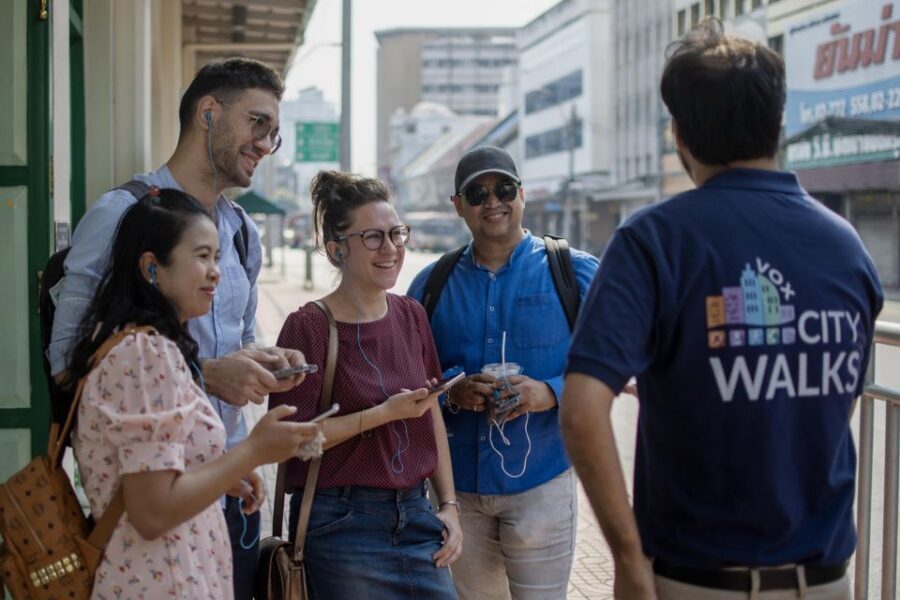
Chinatown by Night is part of what makes this ticket feel like more than a checklist. The itinerary includes Chinatown Gate, Bangkok, and the overall set of sights associated with Chinatown and adjacent roads includes places you can also explore through the Vox City self-guided routes such as Wat Mangkon Kamalawat, Tang Toh Kang Golden Shop, Nana Plaza, Jek Pui curry rice, and Charoen Krung Rd.
Here’s the value of doing Chinatown with a guide: you learn what to look for as you walk. Instead of getting stuck scanning menus or filming shop signs, you get the cultural and religious landmarks tied into the neighborhood story.
Food note: food and drinks aren’t included. That’s not a deal-breaker. It’s also honest, because Chinatown is where you’ll want to choose your own pace and budget. If you’re carrying cash or ready for street-food pricing, you’ll feel in control.
Wat Hong Rattanaram and Wat Saket: Closing the Walk with More Sacred Stops
Your itinerary also calls out Wat Hong Rattanaram and Wat Saket as guided sightseeing and walk segments.
Why these late stops are useful: temple areas often feel calmer once you’ve already walked through busier streets. They give you a mental reset, and they help balance out the commercial energy from earlier parts of the day.
Also, you get a mix of viewing styles across the tour—some moments are more of a pass-by while others involve a walk-through. That matters because it keeps the pace realistic. Bangkok is crowded, and a two-hour window is exactly long enough to see several high-impact places without turning into a sprint.
If you enjoy travel days where you learn something at each step, these temple stops at the end make the whole route feel like it’s landed somewhere meaningful.
Wang Burapha District and the Siam Area Temples: Why These Streets Matter
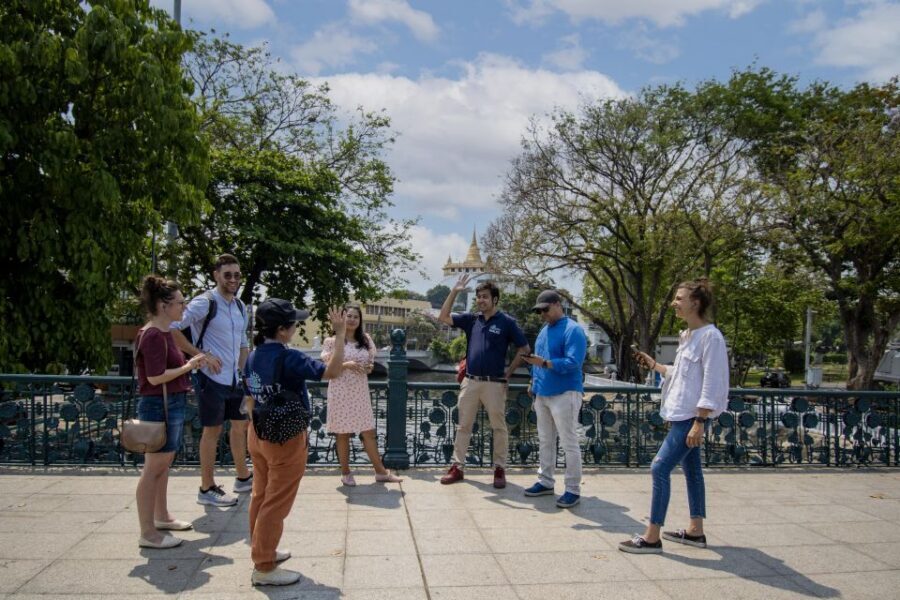
Two of the stated highlights are strolling through the Wang Burapha district and exploring ornate temples in the Siam area. I find this combo especially effective because it connects architecture with neighborhood life.
Ornate temple areas show you Bangkok’s spiritual and artistic priorities. Wang Burapha, as a distinct district, gives you a sense of how those temple zones fit into the broader city layout.
This is where the guided explanations matter most. Without context, you might treat temples as isolated stops. With the guide’s framing—cultural, political, and religious landmarks—you start to notice patterns: how routes connect, how buildings face the street, and how the city’s “public life” interacts with sacred space.
The Vox City App: How to Extend Your Ticket for 3 Days
One of the best parts of this experience isn’t the guided time—it’s what you can do after. Your ticket includes the Vox City app, and you can download it for free. You scan the QR code on your voucher to download the map in your preferred language.
Your ticket validity is also generous: if you don’t have time to join the tours on the same day, your ticket is valid for 3 days from first use. That’s practical in Bangkok, where plans change and “two hours” can easily turn into “two hours plus one detour.”
The app includes multiple self-guided walking tours through main quarters, and the experience lists a 7 self-guided route set of main sights. Some of the named highlights include:
- Wat Pathum Wanaram
- Erawan Shrine
- Talat Phlu
- Siam Square
- Wat Chana Songkhram Ratchaworamahawihan
- Phra Sumen Fort
- Chiao Eng Biao Shrine
- Siam Commercial bank
- Wat Hong Rattanaram
- Guan Yu shrine
- Wat Kanlayanamit Woramahawihan
- Wat Khun Chan …and more
This is where I think you get the best value. The guided tour sets the scene, then the app lets you choose your own follow-ups. Want more temple time? Go back. Want more market and street life? The app routes include Phahurat and Sampheng-area coverage. Prefer civic and older-city structures? You’ve got bridges and forts in the mix too.
Audio helps here as well. The experience includes audio commentary in five languages, which is great when you’re wandering independently later.
Price and Value: What $30 Actually Buys You
At $30 per person for a two-hour guided experience, this isn’t just “pay to be walked around.” You’re paying for a package:
- three guided theme segments included with your ticket
- an English live guide
- access to the Vox City app with multiple self-guided routes
- audio commentary in five languages
The value equation improves further because entry fees aren’t included. That might sound like a minus, but it’s also a budgeting advantage. You’re not locked into attraction prices you didn’t want. You decide what to pay for once the guide’s context makes those places feel worth it.
Also, the “ticket for 3 days from first use” is part of the value. If you only did the guided walk and then never used the app, you’d be getting less. But if you plan even one extra self-guided walk the next day, the $30 stretches a lot farther.
If you’re cost-conscious, this is one of those deals where the planning is the key. Pair the guided morning with an afternoon stroll you’re excited about.
Who Should Book This Tour (and Who Might Feel Crowded)
This tour works best if you want:
- a guided overview that ties together cultural, political, and religious landmarks
- an English-speaking guide who stays engaged and can answer questions (Fern is a named example of a guide who does that well)
- a structured route, plus freedom afterward via the Vox City app
It might be less ideal if you prefer a slow, museum-first day with minimal walking. This is still a walking-based experience, and your guided window is tight.
Best match: first-timers to Bangkok, or repeat visitors who want help organizing their next day’s explorations without relying on guesswork.
Should You Book This Bangkok Historic Siam and Chinatown Tour?
Yes, I’d book it if you want a guided framework you can reuse. The combination of guided stops in Historic Siam, Cultural Gems, and Chinatown by Night—and the fact that the Vox City app extends your ticket across three days—makes it a strong value for travelers who like to return to the places they found most interesting.
Book if you’ll use the app afterward. If you’re only doing the two-hour walk and you won’t download the map or follow any self-guided routes, you might feel like you left value on the table.
FAQ
How long is the walking tour?
The duration is 2 hours.
How much does it cost?
It costs $30 per person.
Is there an English-speaking guide?
Yes. The tour has a live tour guide in English.
What languages are available for audio commentary?
Audio commentary is available in 5 languages.
Do I get the Vox City app with my ticket?
Yes. Your pass includes the Vox City app.
Can I use my ticket on a different day?
Yes. Your ticket is valid for 3 days from first use.
Are transportation and attraction entry included?
No. Transportation and entry to attractions are not included.
What should I bring for the tour?
Bring a charged smartphone so you can download the app materials and use the map.
Where do I meet the guide?
The meeting point may vary depending on the option booked, and you’ll use the app to track your guide.