Bangkok feels like a living timeline. This walking-tour ticket is built to help you bounce between eras, from temple gold and canal crossings to museum stops and market lanes, using both a guided experience and the VoxCity app on your phone (mobile ticket and VoxCity app).
I especially like the mix of guided time plus self-guided flexibility. The included audio commentary runs in 5 languages, and the app adds extra walking routes (so you can keep exploring even if you miss a guided window).
One thing to think about: the price doesn’t include entry to attractions or transportation. You’ll likely pay a few ticket fees along the way, and you’ll handle your own getting-around between stops.
In This Review
- Key highlights to know before you go
- How the Two-Day Ticket (and 3 Days) Lets You Plan a Real Bangkok Rhythm
- Old Bangkok Temples, Canal Crossings, and Fort Mahakan’s Quiet Power
- Buddha Shops, a Thai-European Monastery, and the “You’ll Notice It More” Effect
- Wat Pho and Wat Traimit: Two Temple Visits That Anchor a Full Bangkok Day
- Chinatown and Chinese Bangkok: Wat Mangkon, Sampheng, and the Chinatown Gate
- Markets and Neighborhood Lanes: Phahurat’s Little India, Pak Khlong Talat, and Siam Square
- Museums and Royal Stories: Museum of Siam, King Prajadhipok, and Saranrom Palace Park
- Spiritual Bangkok Beyond Buddhism: Erawan Shrine and the Giant Swing at Wat Suthat
- The Route’s More Adult Side Near Khlong Toei: What You Should Know
- Budgeting Value: Why $24 Works (and What Costs Extra)
- Should You Book This Bangkok Walking Tour?
- FAQ
- How long is the walking tour?
- Is the ticket valid only on the day you start?
- What’s included with the ticket besides the guided walk?
- Are entrance fees for temples or museums included?
- Is transportation included?
- How many languages are the audio commentaries available in?
- What is the maximum group size?
- What’s the cancellation refund policy?
Key highlights to know before you go
- Two-day flexibility: use the guided routes across your stay, with 3 days validity from first use
- Audio commentary in 5 languages: you can follow along at your own pace
- A very wide route: temples, forts, markets, museums, and major landmarks from multiple communities
- VoxCity app support: includes 7 self-guided walking tours for extra context
- Practical group size: capped at 99 people so it stays manageable
How the Two-Day Ticket (and 3 Days) Lets You Plan a Real Bangkok Rhythm
This isn’t a one-and-done walking tour. You’re buying a flexible ticket that covers a pair of guided walking tours across a 2 day window, so you can spread the walking out instead of trying to force everything into one afternoon.
Here’s the big practical win: even if your schedule changes, your ticket stays usable for 3 days from your first use. That means you can start with a guided walk, then use the remaining time to finish other highlights or just take your time wandering nearby streets.
You also get the VoxCity app included, with 7 self-guided walking tours and audio commentary in 5 languages. So even when you’re not actively in a group, you still have a way to understand what you’re looking at—temple architecture, canal history, and the why behind each neighborhood.
And yes, it’s a walking experience. That’s great for seeing Bangkok at street level, but it also means you’ll want to wear shoes that won’t punish your feet.
You can also read our reviews of more walking tours in Bangkok

Old Bangkok Temples, Canal Crossings, and Fort Mahakan’s Quiet Power
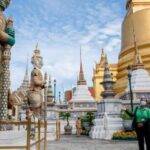
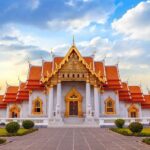
One of the most satisfying ways to understand Bangkok is to start in old-city shapes: temples, old structures, and waterways. This ticket’s opening focus leans into that feeling—Ornate Buddhist temples with gold and marble details, plus the kind of landmark you’d otherwise walk past without realizing it matters.
You’ll also cross Pi Kun Bridge, a pedestrian overpass spanning Khlong Khu Mueang Doem, also described as Khlong Lot (tube canal). Canal life is part of Bangkok’s identity, and this sort of crossing helps you “read” the city in layers, not just as roads and buildings.
Then comes Fort Mahakan, built in the 18th century. It’s one of the oldest structures in Bangkok, and that alone makes it a useful stop. Even if you don’t memorize every date, you’ll feel the difference between modern Bangkok and what’s left from earlier centuries.
A later stop in this old-Bangkok mood is Rommaninat Park, where the past isn’t hidden. The area includes the former old Bangkok prison, now turned into a museum—so you’re not only looking at beauty in a park. You’re also learning how systems of punishment and control fit into Thailand’s history.
Buddha Shops, a Thai-European Monastery, and the “You’ll Notice It More” Effect
Some Bangkok stops are about big monuments. Others are about the streets around them—the everyday places where the culture shows up in shopfronts and small details.
This ticket includes time in an old neighborhood lined with shops selling Buddha statues and memorabilia. You’ll get a better sense of what’s valued locally—devotional objects, souvenirs that are actually tied to belief, and the commercial side of temple culture.
There’s also a monastery highlighted for how it blends Thai and European influences, described as a masterpiece of art within Buddhist monasteries. Even without going deep into architecture terms, this is the kind of stop that changes how you look at Bangkok buildings afterward. You start spotting influences you didn’t notice before.
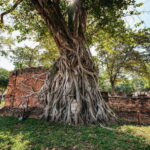
Another temple ruin on the list is Wat Racha Burana, described as a restored monastery ruin in Ayutthaya’s Historical Park. It’s listed as part of what this ticket helps you understand, and it’s a reminder that Bangkok’s story is connected to older Siamese capitals. You don’t have to travel far to feel that thread—you just need context, and the app’s audio supports that.
Wat Pho and Wat Traimit: Two Temple Visits That Anchor a Full Bangkok Day
If you want two stops that instantly anchor you, put Wat Pho and Wat Traimit Withayaram Worawihan high on your list.
At Wat Pho, you’re stepping into one of Thailand’s most important temple complexes. The site includes more than 1,000 Buddha images and statues, with the most famous being the Reclining Buddha (Phra Buddha Saiya). This is where the scale becomes part of the lesson: Bangkok’s religious spaces aren’t small side-quests. They’re major cultural centers.
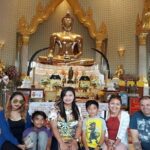
Then you’re headed to Wat Traimit, famous for hosting the largest golden Buddha statue in the world, made of solid gold. The details are huge—5.5 tonnes in weight and about 3 meters tall. If you like your landmarks with numbers you can’t forget, this is that.
This pair works well because you get two different kinds of temple impact. Wat Pho teaches you through depth and volume; Wat Traimit hits you with a single, unforgettable object.
Practical note: since entry tickets are not included, you’ll want to check what each site charges so you aren’t surprised mid-walk.
Chinatown and Chinese Bangkok: Wat Mangkon, Sampheng, and the Chinatown Gate
Bangkok’s Chinatown isn’t one single street. It’s a whole neighborhood system, with temples, markets, and streets that feel like they run on momentum.
You’ll visit Sampheng, described as a historic neighborhood and market area in Chinatown. It’s the kind of stop that helps you understand how daily commerce and cultural identity overlap.
A cornerstone here is Wat Mangkon Kamalawat, the largest and most important Chinese temple in Bangkok. The details are specific: established in 1871 and originally named Wat Leng Noei Yi. That gives you more than a photo moment; it gives you a timeline you can actually hold onto.
The route also includes the Chinatown Gate, described as a large red Chinese gate that functions as a roundabout and marks the center of Chinatown. There are plaques with information about the history of the Chinese community, which turns a simple landmark into a quick mini-lesson.
And for food lovers, you’ll get a clear direction for a meal stop: Kuai Chap Uan Photchana, described as a Michelin-rated street food restaurant. The focus is on kuai chap soup and taco-style dishes, with vegetarian options available.
You can also read our reviews of more historical tours in Bangkok


Markets and Neighborhood Lanes: Phahurat’s Little India, Pak Khlong Talat, and Siam Square
Bangkok has a talent for making neighborhoods feel like worlds within the city. This ticket leans into that with a set of market-and-lane stops that give you multiple cultural flavors.
In Phahurat Market, you’ll see it described as Bangkok’s Little India, the focal point of Indian life in the area. Market time here is useful because it shows how religious and cultural identity carries into everyday shopping and street life.
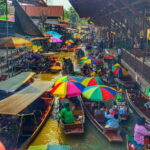
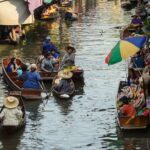
For flowers, Pak Khlong Talat is on the list. It’s described as a major flower market, open 24/7, selling fruits and vegetables too, though it’s most famous for flowers coming from all over Thailand. If you want a sensory stop that doesn’t require a museum ticket, this is the one.
Then you shift to a modern-but-street-edged area: Siam Square. It’s described as a mix of massive malls and lanes packed with street vendors. This is the kind of stop that helps you understand Bangkok as both heritage and present-day consumer culture, without pretending one cancels the other.
You’ll also pass through a classic local-food setting at Talat Phlu, described as a railway station surrounded by food stalls and shophouses. It’s a straightforward way to see daily life—no fancy staging.
Museums and Royal Stories: Museum of Siam, King Prajadhipok, and Saranrom Palace Park
Not every Bangkok insight comes from temples. Some of the clearest comes from museums and royal-linked spaces.
The Museum of Siam is included and described as Thailand’s first national discovery museum, established in the mid-2000s. If you like learning context before you visit sacred sites, this kind of museum stop can make the rest of the walk click.
For modern Thai political change, the King Prajadhipok Museum is dedicated to the life of King Prajadipok (Rama VII). The key story here is spelled out: during his reign, Thailand transitioned from outright monarchy to constitutional monarchy in 1932. Even a short museum visit helps you connect the city’s monuments to government and society—not just to aesthetics.
And close to the Grand Palace area is Saranrom Palace Park, once an outdoor relaxation area reserved for Thai Royal Family members. It’s described as having rare and native plants, centuries-old trees, colorful flowers, and memorials. It’s a useful pause point during a walking-heavy itinerary—nature and memory in the same place.
One plus of mixing museum time with temple time: you’ll understand why people build monuments, not only what they look like.
Spiritual Bangkok Beyond Buddhism: Erawan Shrine and the Giant Swing at Wat Suthat
This ticket doesn’t treat spirituality as one single style. It points you toward the city’s mix of faith traditions.
The Erawan Hindu shrine is described as a major landmark in the center of Bangkok, and also as the best-known of nearby Hindu shrines. It was built in 1956 to ward off bad luck from a hotel built nearby. That origin story makes the shrine feel grounded in real-world events, not just myth.
Then you’ll learn about the Giant Swing, a massive religious structure positioned in front of Wat Suthat, described as one of Bangkok’s oldest and most impressive Buddhist temples. The pairing matters: the swing gives you one big visual marker, while Wat Suthat provides the Buddhist context around it.
If you’re trying to understand Bangkok as a city where different belief systems live side-by-side, these are strong stops. You’re not only photographing buildings—you’re getting the why behind the structures.
The Route’s More Adult Side Near Khlong Toei: What You Should Know
There’s at least one stop on the itinerary that won’t match a traditional temple-and-market vibe. The tour list includes an entertainment complex and red-light district in the Khlong Toei District, described as a three-story commercial building and calling itself the world’s largest adult playground.
I’d treat that as a heads-up for your planning. If you’re traveling with kids, or if you prefer to keep your sightseeing strictly family-friendly, decide in advance whether this stop is for you.
On the other hand, it can be an honest look at how Bangkok’s nightlife and commerce show up in real city space. This kind of stop can be educational, just not in the same tone as Wat Pho.
Budgeting Value: Why $24 Works (and What Costs Extra)
At $24 per person, this ticket is good value if you like guided orientation plus app-based follow-up. You’re getting two walking-tour experiences, a VoxCity app with 7 self-guided tours, and audio commentary in 5 languages.
But here’s the trade: transportation and entry to attractions are not included. In practice, that means you’ll want to think of the $24 as paying for the walk, the guide-led context, and the digital tools—not the temple tickets or museum fees.
Food and drinks are also not included. The good part is that the itinerary points you toward a specific street-food option—like Kuai Chap Uan Photchana—so you don’t have to guess where to eat.
Also, the duration is listed as 1 to 2 hours (approx.), which is another value clue. You’re paying for efficient sightseeing time with interpretation, rather than a full-day marathon.
Should You Book This Bangkok Walking Tour?
Book it if you want an organized way to hit major Bangkok highlights—temples like Wat Pho and Wat Traimit, Chinatown landmarks like Wat Mangkon and the Chinatown Gate, plus museum stops like Museum of Siam and the King Prajadhipok Museum—without feeling totally dependent on taxis.
Consider skipping or tailoring it if you strongly prefer family-friendly stops only. That Khlong Toei adult-oriented listing is part of the route set, so it’s better to be intentional.
If you’re the type who likes understanding what you see as you walk—canals, forts, markets, shrines—this is a smart low-cost entry point, especially with the VoxCity app giving you extra routes for the remaining days.
FAQ
How long is the walking tour?
The experience duration is listed as about 1 to 2 hours.
Is the ticket valid only on the day you start?
No. Your ticket is valid for 3 days from the first use.
What’s included with the ticket besides the guided walk?
You get the VoxCity app with 7 self-guided walking tours, plus audio commentary in 5 languages.
Are entrance fees for temples or museums included?
No. Entry to attractions is not included.
Is transportation included?
No. Transportation is not included.
How many languages are the audio commentaries available in?
Audio commentary is available in 5 languages.
What is the maximum group size?
The experience lists a maximum of 99 people.
What’s the cancellation refund policy?
Free cancellation is available. You can cancel up to 24 hours in advance for a full refund. If you cancel less than 24 hours before the start time, the amount paid is not refunded.