REVIEW · BANGKOK
Bangkok : History Temples Markets and Food Tasting
Book on GetYourGuide →Operated by Best Local Experiences · Bookable on GetYourGuide
Four hours, and Bangkok makes sense fast. This tour stitches together the city’s timeline with temple stops and market time, moving by public transportation and boat so you see how locals actually travel around the river.
I like the way the English-speaking guides keep explanations paced for real Bangkok heat, with named guides like Judy and Elena getting praise for handling questions calmly and helping people take great photos. I also like that you do not just see big monuments; you get stories tied to what you’re looking at, plus a market moment that helps you understand how street food works.
One consideration: the Grand Palace dress code is strict, and during the Queen Mom funeral of King Rama IX period, the program is limited to viewing the Grand Palace from the outside.
In This Review
- Key highlights at a glance
- Where you start and how the route stays easy
- Grand Palace area: architecture, rules, and outside-only access
- Grand Palace dress code basics to follow
- Wat Pho: Buddha focus and the calm after the royal area
- Wat Arun at sunset timing energy (and why it’s a highlight)
- The history thread: from 1782 to Krung Thon Buri and beyond
- Local market stop and food tasting: learning how to choose
- Getting around by ferry and public transport without stress
- Price and value: what $51 really buys you
- What to wear, bring, and avoid for a smooth day
- Who this tour fits best (and who should reconsider)
- Should you book Bangkok: History Temples Markets and Food Tasting?
- FAQ
- How long is the Bangkok history, temples, markets, and food tasting tour?
- Where do I meet the guide?
- What’s included in the price?
- Are entrance fees included?
- Does the tour skip the ticket line?
- Will I get around using public transportation?
- Is the Grand Palace fully accessible right now?
- What should I wear for the Grand Palace?
- Is the tour wheelchair accessible?
- Can I cancel or pay later?
Key highlights at a glance
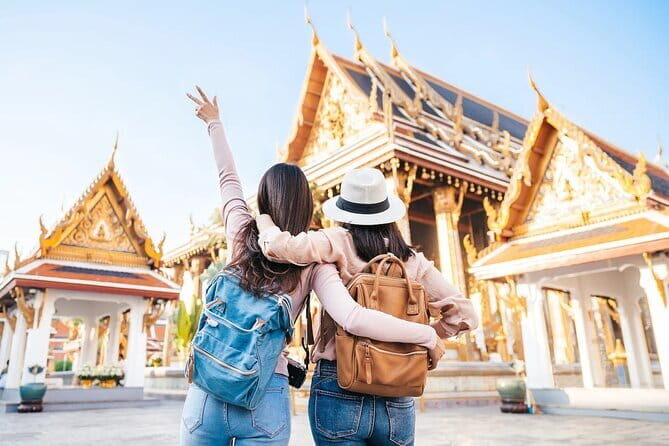
- A 1782-to-today Bangkok history walk tied directly to major royal and religious sites
- Meet at Golden Place by Tha Chang Pier in a yellow building, near the river action
- Ferry + public transport route that keeps the day moving without tourist-only hopping
- Temple trio: Wat Pho, Grand Palace area, and Wat Arun with guided context
- Local market stop with a food bite plus included snack and drinking water
- Grand Palace outside-only during the Queen Mom funeral period
Where you start and how the route stays easy
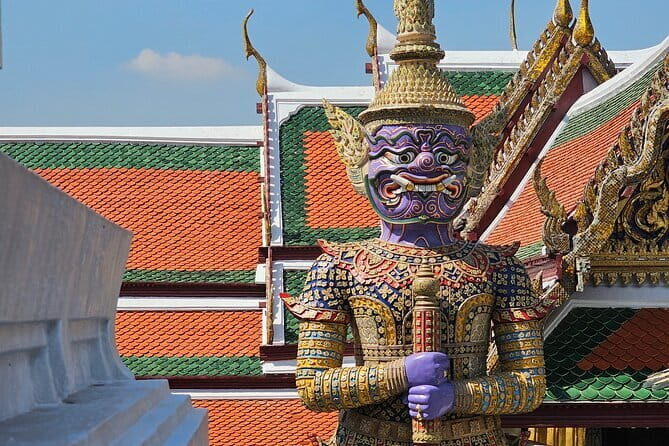
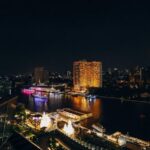
The day begins near the river, at Golden Place (Tha Chang Pier Branch) in the yellow building. It’s very close to the Grand Palace area, and it’s also positioned by Tha Chang pier (N9), across from Wat Rakang Temple. That location matters because Bangkok temples are spread out, and starting by the water keeps the day from feeling like a nonstop bus ride.
Most tours also connect the day’s start with the MRT area around Sanam Chai Exit 5 (Rajini pier), so you can think of the meet-up as the “river side” anchor. From there, the plan uses a mix of short walks, ferries, and public transport. The result is practical: you cover real Bangkok distances without turning the day into a marathon.
I like that this tour is short enough to fit into a busy schedule, but long enough that you actually get a sense of the city moving through time. At 4 hours, you’ll still feel like you went somewhere, not just through a checklist.
You can also read our reviews of more food & drink experiences in Bangkok


Grand Palace area: architecture, rules, and outside-only access
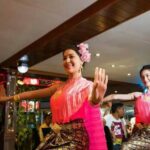
The first major sight is the Grand Palace area, with a guided walk that helps you orient quickly. Even when you’re only viewing it from the outside, you still get the value of seeing why the complex is so central to Bangkok identity: the setting, the layout, and the royal-religious mood of the grounds.
The big practical note is the current outside-only limitation during the Queen Mom funeral period for King Rama IX. So don’t plan on full palace entry on this specific tour during that time. What you will get is the architecture and the story angle from the program, plus the pacing that helps you understand what you’re looking at.
Then there’s the dress code, which is not optional. The Grand Palace rules are detailed, and the safest move is to plan your outfit around coverage first, comfort second.
Grand Palace dress code basics to follow
If you want a smooth day, dress like you’re attending a temple ceremony, not a daytime sightseeing stroll. These are the style rules given for entry:
- No shorts and avoid short skirts
- Cover shoulders and chest; no tank tops or vest tops
- Avoid anything with midriff showing and no backless clothing
- For women: avoid low-cut clothing
- Keep legs and ankles covered; avoid mini skirts and shorts, and avoid pants that stop high on the ankle
- No flip-flops
- No alcohol or drugs on the tour (and no audio recording)
Even if you’re used to temple visits elsewhere, Bangkok’s Grand Palace rules tend to be stricter than most. Plan early and you’ll waste less energy at the gate.
Wat Pho: Buddha focus and the calm after the royal area
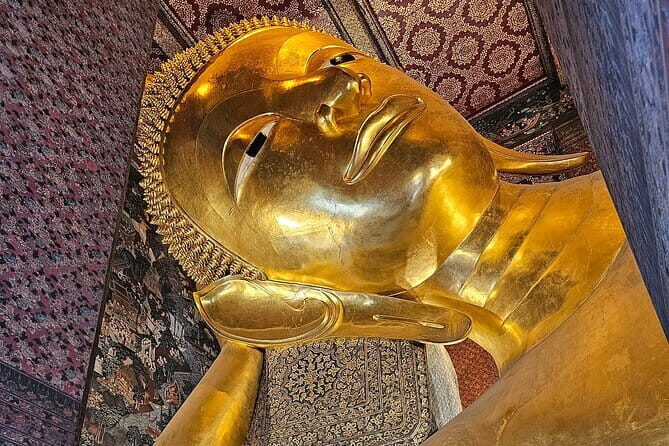
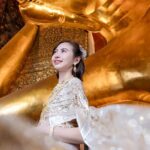
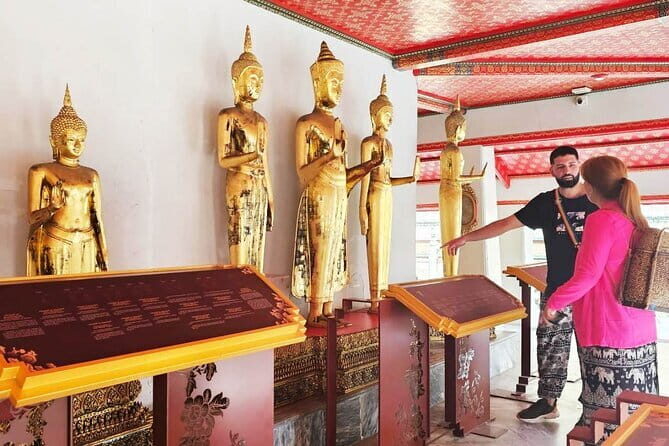
After the river segments and transport hops, the tour reaches Wat Pho, one of Bangkok’s best-known temple complexes. This stop is guided, with time to walk and take in key areas.
What makes Wat Pho especially helpful on a history-focused route is that it anchors the religious side of Bangkok’s story. You’re not just seeing gold and stone; the guide’s job is to connect what you’re seeing to the role temples play in everyday Thai life and in the way the city has been organized over centuries.
You’ll also appreciate the tempo here. The stops are arranged so you do not feel rushed from one big moment to the next. The program is built for walking, but with breaks and guided pacing, which matters in Bangkok’s heat.
Wat Arun at sunset timing energy (and why it’s a highlight)
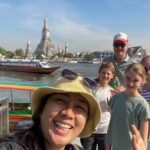
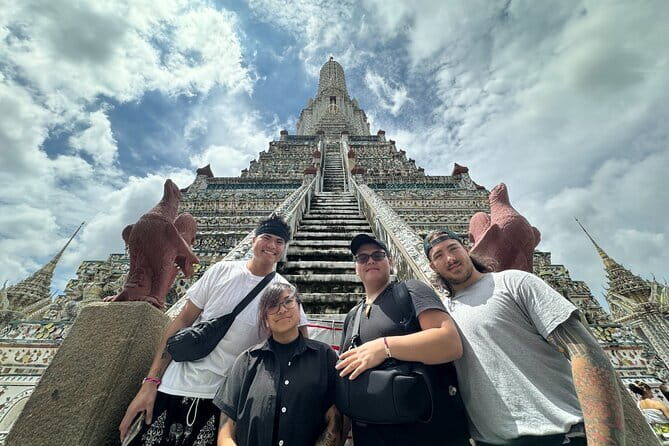
Then comes Wat Arun, often described as one of the most beautiful temples in Bangkok, especially around sunset. On this tour, Wat Arun is treated as a major moment, with guided time to see the temple properly rather than just taking a quick photo and sprinting away.
Even if you’re not a hardcore photography person, Wat Arun works because of its visual rhythm: the stepped structure and river setting create a strong sense of place. Pair that with the guide’s explanations, and the temple stops become more than “pretty buildings.” They turn into landmarks with meaning.
This stop is also a good reminder that Bangkok history isn’t only about palaces. It’s equally about religion, river life, and the way people organize their communities around sacred spaces.
You can also read our reviews of more tours and experiences in Bangkok


The history thread: from 1782 to Krung Thon Buri and beyond
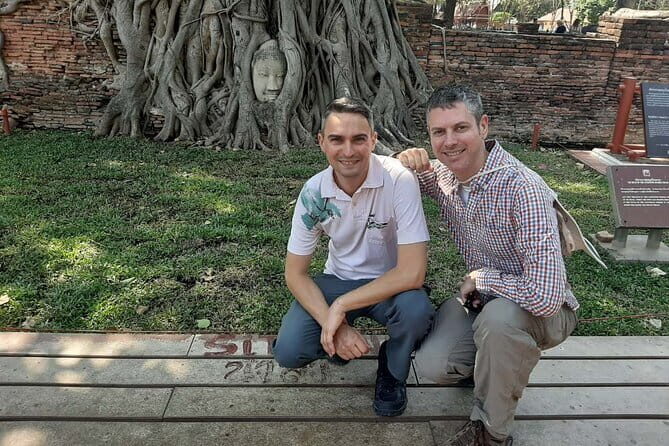
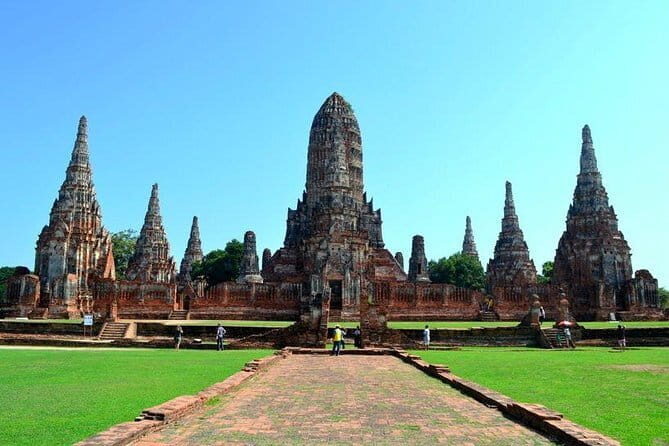
The tour’s main theme is a brief Bangkok history from 1782 to the present. That storyline structure helps you connect why the temples are placed where they are, and why certain architectural styles and religious spaces matter.
You’ll also get a stop tied to the Krung Thon Buri side of the story. The program includes a “secret stop” break for sightseeing and walking between transport segments. This is valuable because it gives you context beyond the famous postcard sites. Bangkok isn’t only Grand Palace and river views. It’s also neighborhoods, old geography, and how the city expanded and shifted over time.
I like this approach because it turns the day into understanding, not just movement. You’re not memorizing dates for a test. You’re building mental links: this temple sits here for a reason, and that reason connects to a bigger historical picture.
Local market stop and food tasting: learning how to choose
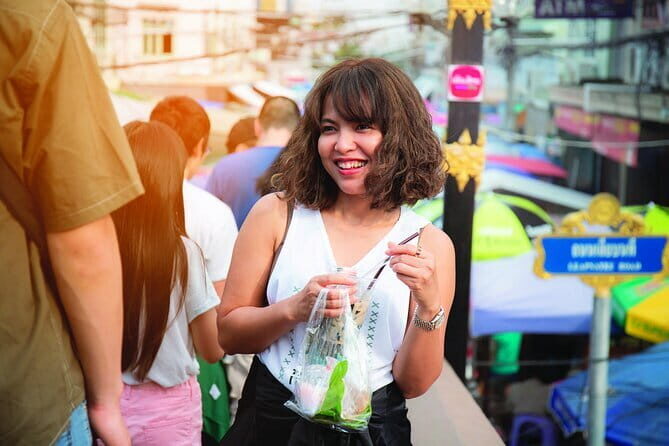
One of the most practical parts of this experience is the local market time, led by the guide. You get a walk-through that includes market context and then a chance to try a bite, which is where the “food tasting” part becomes more than a token snack.
This is also where you learn a useful skill: how to spot food you’ll probably enjoy. The tour’s intent is not just tasting today, but giving you ideas for your next street food meal on your own. That matters because Bangkok street food is legendary, but it can also be overwhelming when you’re hungry and don’t know where to start.
What’s included here is an included snack and drinking water, so you’re not walking around empty-handed. Entrance fees are not included, but the food tasting component is part of the tour experience. If you want extra items beyond the program’s offered bite(s), that would be personal purchase territory.
A small caution: if it’s your first full day in Bangkok and you’re still adjusting to jet lag, markets can feel intense. The guide can help you pace it, but you’ll still want to listen to your body.
Getting around by ferry and public transport without stress
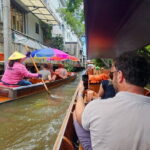
A big part of the value is how you move. This isn’t a private car sprinting between landmarks. You use public transportation and ferry segments, which gives you two benefits.
First, you see the river-city relationship for real. Bangkok’s river isn’t a backdrop; it’s a functioning piece of daily life. Second, the route feels more like how people actually connect neighborhoods.
The plan includes multiple legs with walking, then ferry crossings, then additional transport time before arriving at the next temple highlight. That structure keeps the day from feeling like one endless queue after another, and it keeps you from wasting energy on long transfers.
Also, the tour includes skip-the-ticket-line, which is especially helpful for popular sites. When you’re short on time, that little bit of friction reduction is worth its weight in cold water.
Price and value: what $51 really buys you
At $51 per person for a 4-hour guided tour, you’re paying for more than sightseeing. You’re paying for an English-speaking guide, the temple-and-history linking, and the time saved from queues via skip-the-ticket-line. You also get snack and drinking water, which is a solid base so you don’t have to hunt immediately.
What’s not included is equally important. Entrance fees are not included, and personal purchases are on you. The practical takeaway: budget a bit extra for any temple access costs, and plan that you may want to buy additional bites beyond what’s part of the tasting moment.
For me, the best value sign is how tightly the tour stays connected to a theme. A history-and-temple tour that also includes a market stop gives you multiple kinds of payoff: context, sights, and local taste. That combination usually justifies the price better than a straight temple checklist.
What to wear, bring, and avoid for a smooth day
Beyond the Grand Palace dress rules, the tour lists a few no-go items. You should avoid tight clothing and see-through clothing, and skip anything that looks like beachwear. Audio recording is not allowed, and alcohol and drugs are obviously off the table.
Also note the limits: shorts are not allowed, and sandals like flip-flops are not the right choice for palace grounds. Wear something you can walk in for hours, because even when transport breaks things up, you’re still doing temple walking.
If you wear glasses, keep them secure. If you’re taking a lot of photos, make sure your phone battery is good before the day starts. Bangkok heat drains batteries fast, even when you’re not sweating like a chef in a wok.
Who this tour fits best (and who should reconsider)
This tour is best for people who want context. If you love learning why places look the way they do, and you want a clean bridge between royal sites, religious landmarks, and everyday life, this format fits well.
It’s also a good first-days-in-Bangkok option. With a 4-hour timeline and guided history from 1782 to today, you’ll leave with a mental map that makes future wandering easier.
Two groups might want a different plan:
- Wheelchair users: the tour is not suitable for wheelchairs.
- Anyone who doesn’t want to follow strict dress rules: the Grand Palace requirements are detailed, and you’ll need covered shoulders, covered legs/ankles, and clothing that fits the guidance.
If you’re traveling with kids, note the tour’s restriction on baby strollers. That doesn’t make it impossible, but it does shape what “easy” looks like.
Should you book Bangkok: History Temples Markets and Food Tasting?
Book this tour if you want a fast, organized way to understand Bangkok’s story while still getting real local life. The mix of Grand Palace area, Wat Pho, Wat Arun, a market food bite, and river-side transport is exactly the kind of “more than postcards” combo that saves you time and stress.
Skip it (or choose a different option) if you’re not up for a strict dress code, or if you’re expecting full Grand Palace entry during the Queen Mom funeral period. Since this version is outside-only for the palace, make sure your expectations match the program.
For most visitors, the decision is simple: if you’re planning to visit these temples anyway, a guided history thread plus a market stop usually makes the whole day more satisfying than going site to site on your own.
FAQ
How long is the Bangkok history, temples, markets, and food tasting tour?
It lasts 4 hours.
Where do I meet the guide?
Meet the guide at Golden Place (Tha Chang Pier Branch), a yellow building next to Tha Chang pier (N9), opposite Wat Rakang Temple by the Chao Phraya River.
What’s included in the price?
The tour includes an English-speaking guide, plus snack and drinking water.
Are entrance fees included?
No. All entrance fees are not included.
Does the tour skip the ticket line?
Yes, it includes skip the ticket line.
Will I get around using public transportation?
Yes. The tour uses public transportation, plus ferry segments and walking between stops.
Is the Grand Palace fully accessible right now?
During the Queen Mom funeral of King Rama 9 period, the tour is available only as a Grand Palace outside visit.
What should I wear for the Grand Palace?
You must follow the Grand Palace dress code: no shorts, no tank/vest tops, no showing shoulders or midriff, and cover legs and ankles. No flip-flops and avoid see-through or low-cut clothing.
Is the tour wheelchair accessible?
No. It is not suitable for wheelchair users.
Can I cancel or pay later?
Yes. You can cancel up to 24 hours in advance for a full refund, and there is a reserve now & pay later option.