REVIEW · HUA HIN
The Real Jing Jing Thai Food Tour in Hua Hin
Book on Viator →Operated by Feast Thailand · Bookable on Viator
Thai food in Hua Hin, with a serious syllabus. This tour is built around Jing Jing, meaning authentic, not touristy. I like the fact you get 15+ tastings (with drinks and water) plus context on why Thai cooks build flavor with chilis, peppercorns, and spices. I also love how the menu keeps shifting—Southern Thai one stop, northeastern Issan the next—so you’re not just repeating the same dish in different colors. One drawback to consider: it’s not for everyone, especially if you’re vegetarian, pescatarian, vegan, gluten intolerant, or allergic to nuts.
What makes the whole afternoon work is the pace and the logistics. You’re not stuck walking between places; you hop on local songtheaws and roll from one small kitchen stop to the next. That’s a big deal in Hua Hin heat, and it keeps the tour feeling like eating with locals instead of doing a long walking crawl.
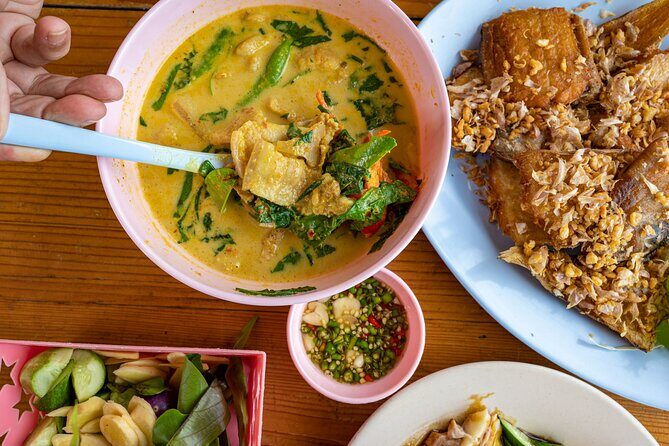
Finally, the food range can be bold. Expect mild to fiery options, and you may encounter dishes that sound unusual (I saw blood soup and catfish red curry called out in feedback). If you’re cautious about very strong flavors or unfamiliar ingredients, you’ll want to tell your guide what you do and don’t want before service starts.
In This Review
- Key highlights you’ll actually care about
- Jing Jing in practice: what you’re paying for
- Who should book this (and who should skip)
- Price and logistics: 12:00 pm, small group, and no long walks
- Stop 1 in Hua Hin: Ayutthaya-style boat noodles and kitchen rhythm
- Stop 2: Southern Thai dishes with Indian spice hints
- Stop 3: Issan flavor explosion and the logic of heat
- Stop 4: the guide-chosen “not typical tourist radar” tasting
- What it feels like to eat with a guide (not just follow a route)
- Your best strategy: come hungry, plan your spice level
- Transportation and timing: why the songtheaw setup helps
- Value check: is $73.12 worth it?
- Should you book the Real Jing Jing Thai Food Tour?
- FAQ
- What is the duration of the Real Jing Jing Thai Food Tour in Hua Hin?
- Where does the tour start and end?
- What time does the tour begin?
- How much food is included?
- What transportation does the tour use?
- Does the tour include a guide?
- Is alcohol included?
- Is the tour suitable for vegetarians or for people with dietary restrictions?
- How big is the group?
Key highlights you’ll actually care about
- Jing Jing focus: tastings aim for real Thai flavor, not just what’s familiar to visitors
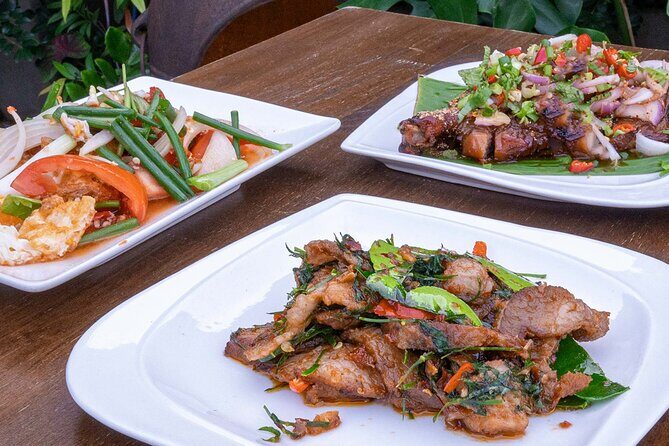
- Southern + Issan range: you’ll taste how Thailand’s regions cook differently
- Songtheaw rides, little walking: easier in the midday heat and simple to follow
- Spice mechanics explained: chilis, peppercorn, and spice mixing taught through food
- Small group size: up to 7 people, which helps questions stay personal
Jing Jing in practice: what you’re paying for
This is a 3 hours 30 minutes afternoon food tour in Hua Hin with a mobile ticket. The price—$73.12 per person—looks simple on paper, but the value comes from the amount of food and the way it’s taught.
You’re looking at 10 to 15+ tastings plus drink items and water. That’s a lot of bites for one session, especially in a beach town where single meals can add up fast. You also get a local English-speaking licensed Thai guide, and that’s where the “why” matters. Instead of just pointing at plates, your guide ties each dish to technique and ingredients—how heat is built, how spice blends work, and how Thai kitchens balance salty, sour, sweet, and spicy.
You’re not just eating. You’re learning enough that you can order better later, without guessing. That’s the biggest thing I want you to walk away with: a mental shortcut for how Thai flavor gets assembled.
You can also read our reviews of more food & drink experiences in Hua Hin
Who should book this (and who should skip)
This tour is a good fit if you want regional Thai food and you’re comfortable trying things beyond the standard pad thai / fried rice comfort zone.
It’s especially suited to you if:
- you like spice and want to understand it, not avoid it
- you enjoy learning how dishes are made and why ingredients matter
- you want a guided way to eat in places that don’t cater to tourist menus
It’s not suitable for you if you’re vegetarian, pescatarian, vegan, gluten intolerant, or allergic to nuts. The tour operator asks you to share dietary restrictions in advance, and depending on your situation you may miss 2 to 4 dishes. If that would disappoint you, it might be better to choose a tour designed around your diet.
Also consider heat tolerance. The tour includes options from mild to fiery, and the point is to experience how Thai chefs handle chilis and peppery spice.
Price and logistics: 12:00 pm, small group, and no long walks
You start at 12:00 pm at the Hua Hin Clock Tower (HXC4+7VJ). The experience ends back at the meeting point. Plan to show up a bit early so you can get settled before the first tasting.
A key practical win: there’s no walking involved in the way you might picture for a food tour. You use local transport (songtheaws) between stops, so you’re not dragging yourself between far-apart eateries while the day warms up.
Group size tops out at 7 travelers. That’s not a huge number, which usually means faster questions, more back-and-forth about ingredients, and a better chance your guide can steer you toward the right level of spice and curiosity. (That matters when you’re tasting things you’ve never heard of.)
One more detail that many people skip: Feast Thailand includes vehicle accident insurance. You’ll need to provide your name and passport number for the insurance requirement under Thai law. It’s handled as confidential, but it’s still worth knowing up front.
Stop 1 in Hua Hin: Ayutthaya-style boat noodles and kitchen rhythm
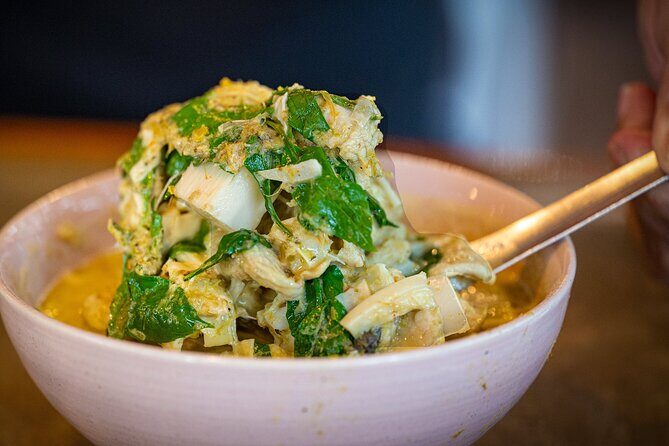
The first stop centers on Ayutthaya style noodles—specifically guay dtiow reua, or boat noodles. This is a great opener because it anchors you in Thai technique early. Broth, noodles, and toppings all work together, and the guide can point out how the base flavors are built before the chili and pepper hit your tongue.
You’ll see authentic cooking in action. Even if you’ve had noodles in Thailand before, boat noodles tend to feel different because of how the dishes are assembled and served. It’s also a smart start because the flavors are varied but approachable, so you can calibrate your spice tolerance before the stronger stuff later.
A small heads-up: noodle stops can be a little messy, by nature. I’d dress in a way you don’t mind getting close to food steam and sauce splash. Bring a napkin mindset.
Stop 2: Southern Thai dishes with Indian spice hints
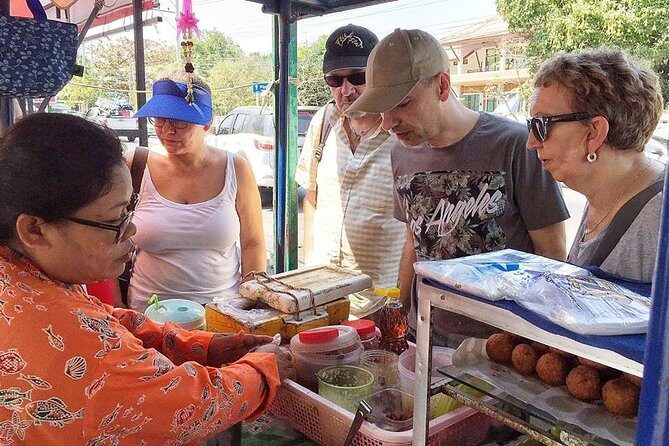
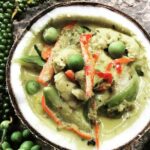
Next you shift to southern Thai cuisine, and this is where the tour gets more interesting for many food lovers. The south of Thailand has a distinct flavor profile, partly shaped by Indian spice influence. Expect hints like turmeric and other spice notes that don’t show up the same way in northern or central Thai dishes.
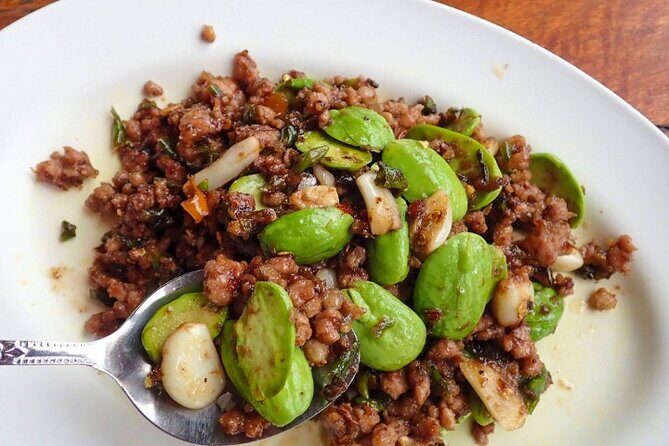
Your guide will help you identify what you’re tasting. That means you’re not just eating something “good.” You’re learning why it tastes that way: aromatic spices, how they’re used, and how southern cooks manage balance. You’ll also try a stir-fried crispy dish made with those spice ingredients, and this kind of contrast—crispy + spice + sauce—helps you understand Thai cooking as more than one texture.
What can be a drawback here is that southern Thai flavors can be intense even when the heat level isn’t blazing. If you’re sensitive to strong spice aromas, tell your guide early. You’ll still get plenty to eat, but you can steer your portion sizes and spice level.
You can also read our reviews of more tours and experiences in Hua Hin
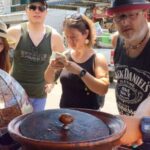
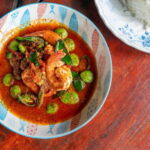
Stop 3: Issan flavor explosion and the logic of heat
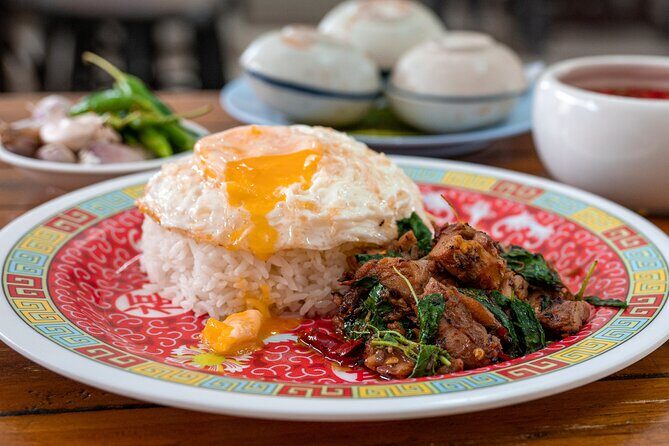
Then comes Esaan—northeastern Issan food. This is the regional section many people end up loving, because Issan has a reputation for punchy flavors. Here, the guide keeps the focus on how chilis and spices are used, not just that they are used.
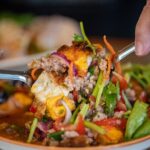
You can expect dishes that lean toward “hot and so…” flavors—think sour, spicy, and bold combinations. Issan food is often about fermentation notes and sharp seasoning balances, so you’ll taste brightness alongside heat.
This stop also matters because it gives you a fuller picture of Thai cuisine. If your only Thai reference point is central Thai dishes you’ve seen in tourist areas, Issan can feel like a new conversation entirely. And because the tour ties ingredients to recipes, you’re more likely to remember what to look for when you’re ordering later.
If you’re unsure about spicy food, you don’t have to go full fire mode. The tour is designed to range from mild to fiery, and your guide can help pace it.
Stop 4: the guide-chosen “not typical tourist radar” tasting
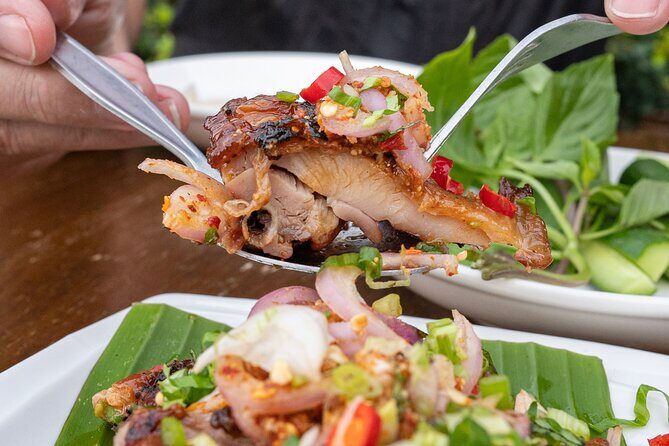
The last stop is the wild card. You’ll visit one of the guide’s favorite places that’s not on the typical tourist radar, and the choice depends on what they understand you need to taste.
This is where unusual dishes can pop up. In the feedback I saw, people mentioned catfish red curry and even blood soup. That tells you this stop can go beyond safe choices. The goal is to keep things authentic and interesting, not to force you into something you hate.
Practical advice: if you’re curious but cautious, tell your guide exactly where your comfort line is—especially around organ meats, very strong broths, or anything that smells unusual before it hits the palate. A good guide will adjust your tasting portions so you still get the experience without ruining your stomach.
What it feels like to eat with a guide (not just follow a route)
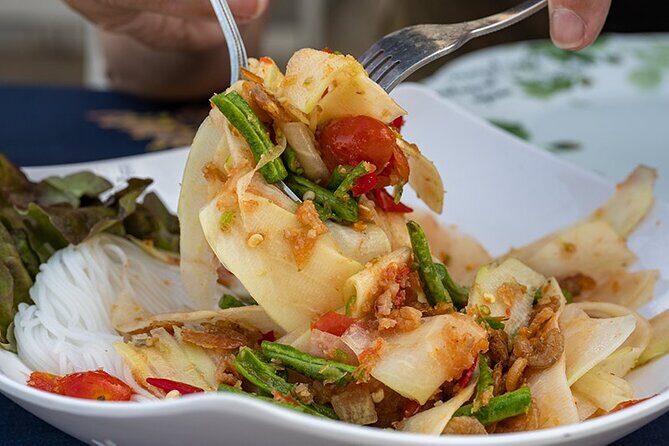
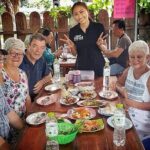
The strongest part of this tour is the human element. I saw guide names like Belle and Cream in feedback, and what stood out in those comments was how they connected recipes to context. You’re not only learning ingredient names; you’re learning how Thai cooks think.
That matters because Thai flavor is built from multiple layers:
- spice (heat and aroma)
- peppery notes (often part of the signature)
- sour and sweet balance
- salty depth
When you get that explained in the middle of eating, it sticks. Later, when you’re staring at a menu, you’ll have a better sense of what combinations are likely to taste right.
Also, because the group is small, you’re more likely to ask questions and get real answers rather than hearing the same speech repeated.
Your best strategy: come hungry, plan your spice level
This is a “come hungry” tour. You’re doing a sequence of tastings, not a single big meal. If you snack lightly beforehand, fine—but don’t arrive stuffed.
Here’s what I recommend you do before you sit down for the first tasting:
- Tell the guide your spice comfort level (mild, medium, or bring it)
- Mention any dietary boundaries early, even if they’re not on the official list
- If you’re sensitive to unfamiliar ingredients, say so plainly
During the tour, take notes in your head. Try to remember the dish that hit best—then listen for the ingredient explanation. That’s how you’ll turn this afternoon into future ordering confidence.
And yes, you may be offered something like blood soup. If that lands with you, great. If it doesn’t, you’ll still have plenty of other dishes to anchor the experience.
Transportation and timing: why the songtheaw setup helps
One reason I like this tour format is that it respects your energy. In many food tours, you’re stuck walking between stops and losing hunger to heat and fatigue. Here, you use local songtheaws, and that keeps the energy focused on eating.
Because the tour lasts about 3 hours 30 minutes, it’s long enough to feel like a full meal journey but not so long that you’re exhausted by the last tasting. It’s also timed for an afternoon start at 12:00 pm, which can work well if you want to keep your morning flexible.
The practical upside for you: after the tour ends back at the clock tower, you’re in a central area and can continue exploring with a clearer idea of what to eat next.
Value check: is $73.12 worth it?
For me, this tour looks like good value if you want:
- a lot of tastings (10 to 15+), not just a sample bite
- drinks and water included
- regional Thai variety (Southern + Issan + Ayutthaya noodles)
- a licensed Thai guide who connects ingredients to dishes
- transport handled for you via songtheaws
If you only want one or two dishes and you’re happy to DIY meals, you might feel the cost. But if you want structure, guidance, and a higher chance of tasting things you wouldn’t pick on your own, the price makes sense.
The real bargain is the learning. When you leave understanding why the food tastes the way it does, you’ll order better for the rest of your trip. That’s hard to price, but it’s where the money quietly pays off.
Should you book the Real Jing Jing Thai Food Tour?
Book it if you’re hungry for authentic regional Thai food in Hua Hin and you want a guide to explain the spice logic behind the dishes. The no-long-walk setup, small group size, and big tasting count make it a strong value play for an afternoon.
Skip it if your diet is limited (vegetarian, vegan, gluten intolerance, nut allergy) or if you strongly prefer only familiar dishes with no surprises. Also skip it—or choose a different option—if “fiery” and unfamiliar ingredients are a hard no.
If you like Thai food but want the next level of understanding, this is a smart way to spend a few hours: you’ll eat, you’ll learn, and you’ll likely leave with at least one dish you’ll remember long after the last spoonful.
FAQ
What is the duration of the Real Jing Jing Thai Food Tour in Hua Hin?
It runs for about 3 hours 30 minutes.
Where does the tour start and end?
It starts at the Hua Hin Clock Tower (HXC4+7VJ) and ends back at the same meeting point.
What time does the tour begin?
The start time is 12:00 pm.
How much food is included?
You’ll get 10 to 15+ food tastings and drink items, plus water, depending on group size.
What transportation does the tour use?
There’s no walking between stops. The tour uses local songtheaws for transportation.
Does the tour include a guide?
Yes. You’ll have a local English-speaking licensed Thai tour guide.
Is alcohol included?
Alcohol is not included, though it may be purchased.
Is the tour suitable for vegetarians or for people with dietary restrictions?
The tour is not suitable for vegetarians, pescatarians, vegans, gluten intolerance, or nut allergies. You can advise restrictions when booking, but you may miss 2 to 4 dishes depending on the restriction.
How big is the group?
The tour has a maximum of 7 travelers.