REVIEW · BANGKOK
Bangkok: Chinatown By Night Walking Tour
Book on Viator →Operated by Vox City International Ltd · Bookable on Viator
Chinatown at night is a street-level history lesson. This Bangkok Chinatown by Night Walking Tour takes you through neon lanes in the Yaowarat area, with stops tied to Chinese community life, trade stories, and river-side worship spots. You’ll also get a look at the Chinatown Gate and learn how the city’s Chinese quarters shaped Bangkok after dark.
I love two things most: first, the tour is built around live storytelling—the history comes with places you can see, not facts thrown at you. Second, you’ll taste popular Thai street food along the way, which makes the whole night feel less like sightseeing and more like getting your bearings in a neighborhood.
One thing to plan for: headphones and attraction entry aren’t included, so if a stop requires a ticket (or you want audio support), you’ll need to handle that yourself.
In This Review
- Key things to know before you go
- Why this Chinatown night walk works in Bangkok
- Meeting point and timing: make it easy on yourself
- The money question: is $15 actually good value?
- Stop-by-stop: what each place adds to the night
- Chareon Chai community museum: daily life, preserved
- An old mosque with a European-villa style twist
- Talat Kao (Chinatown’s Old Market): the alley that feels like a secret
- Riverside temple sightline near the Chao Phraya orange express line
- So Heng Tai Mansion in Talat Noi: courtyard house drama
- An Ayutthaya-era royal monastery: older Bangkok, not just Chinatown
- Zhou Si Kong Shrine by the Chao Phraya: good luck, prayed for in place
- Thai street food on this tour: what to expect and how to plan
- Chinatown Gate and the larger Yaowarat feel
- Guides make or break it: what you’ll notice
- Group size up to 99: lively, not intimate
- What’s included vs. what you handle yourself
- Don’t miss the Vox City app bonus
- Who this tour is best for
- Should you book Bangkok: Chinatown By Night Walking Tour?
- FAQ
- What time does the tour start?
- How long is the Bangkok Chinatown by Night walking tour?
- How much does it cost?
- Where is the meeting point?
- Does the tour include food?
- What’s included in the price?
- What’s not included?
- Is it near public transportation?
- How big is the group?
- Is there free cancellation?
Key things to know before you go
- 2 hours, 6:30 pm start: perfect timing for night lighting without losing your whole evening
- $15 price point: strong value for a guided night walk with food sampling
- Talat Noi and river-side temples: you’ll see Chinatown’s quieter, older layers beyond the main road
- Neon food lanes + community sites: the mix is part market, part culture, part architecture
- Mobile ticket, Vox City app extras: you get in-app add-ons after the walk
- Group size up to 99: big enough to be lively, small enough that you still feel guided
Why this Chinatown night walk works in Bangkok
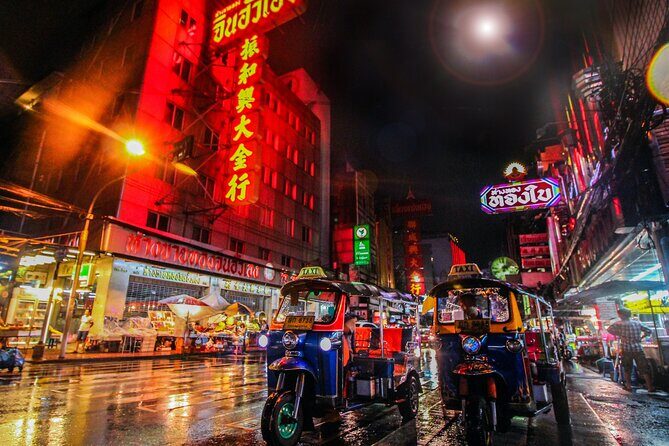
Bangkok’s Chinatown isn’t just a place to pass through. At night, it’s a working neighborhood—shops open late, food smoke drifts into the alleys, and people move with purpose. This tour leans into that real-life feel. You’re not just taking photos. You’re getting context while you walk.
The big win is pacing. You spend about 2 hours on your feet, which is long enough to see a real slice of the area, but short enough that you can still grab dinner afterward or hop to another spot in Bangkok. And starting at 6:30 pm means you catch the moment the streets truly turn on.
You can also read our reviews of more walking tours in Bangkok

Meeting point and timing: make it easy on yourself
You’ll start at Hua Lamphong (Rong Muang), Pathum Wan, Bangkok at 6:30 pm, and the tour ends back near the meeting point. That back-to-start approach matters at night. It keeps the logistics simple when Bangkok traffic and crossing streets can eat time.
It’s also listed as near public transportation, which is a practical relief. If you’re already using the BTS/MRT area to get around, you won’t feel stuck on the far side of the city for a short evening activity.
If you’re trying to fit it into a bigger night plan, treat this like your anchor event. Do it early, then you’re free to explore on your own afterward.
The money question: is $15 actually good value?
At $15 per person for a guided, 2-hour nighttime walk, this is priced like an affordable “taste of the neighborhood” rather than a full-day production. For many people, that’s exactly right.
Here’s what you’re getting for the price:
- a guided Chinatown walk with local insights and expert storytelling
- Thai street food sampling
- Vox City app add-ons (3 free self-guided tours)
What you’re not getting: headphones and entry to attractions. If you’re someone who prefers audio gear or you plan to enter every site you pass, you may need to budget a little extra. But if you’re happy with the walk, the stories, and the food, the value is strong.
Stop-by-stop: what each place adds to the night
This tour is structured like a guided path through the Chinese-Bangkok story. Each stop adds a different “layer,” from community preservation to temple worship, and from older courtyard houses to a market alley.
Chareon Chai community museum: daily life, preserved
Your first stop is an old house turned community museum for the Chareon Chai Community. This is the kind of place that helps you understand Chinatown beyond signage and street food.
What you’ll likely appreciate here is the shift in viewpoint. Instead of starting with big landmarks, you start with how people lived, worked, and organized community life. That makes everything you see later—markets, shrines, and temple traditions—feel more connected.
A small consideration: community museums can be more about atmosphere and storytelling than flashy displays. If you love architecture or local life details, you’ll enjoy it.
You can also read our reviews of more evening experiences in Bangkok




An old mosque with a European-villa style twist
Next up is an old mosque built in an unusual European villa style. This contrast is a reminder that Bangkok’s neighborhoods are layered, not locked into a single “look.”
This stop is especially valuable because it breaks the common assumption that Chinatown equals one cultural style. You get a concrete example of cultural mix in the built environment. It also gives you a reason to slow down and look closely at details you might otherwise walk past.
Talat Kao (Chinatown’s Old Market): the alley that feels like a secret
Then you’ll head to Chinatown’s Old Market, also called Talat Kao, tucked down a long narrow alley off Yaowarat Road.
This is where the neighborhood energy really shows. Narrow alleys force crowds to move at walking pace, and that’s when you see real small-scale commerce. It’s also a natural setup for street food culture because markets are where food traditions evolved: local ingredients, quick cooking, repeat customers.
If you don’t like tight spaces or shoulder-to-shoulder crowds, plan on taking it slow here. Still, the payoff is that you see an older, more grounded side of Chinatown than just the main road.
Riverside temple sightline near the Chao Phraya orange express line
One of the stops is a small temple near the Marine Department station of the Chao Phraya orange express line. You can see it from the riverside, which means you don’t need to fight the deepest alley crowd to catch it.
Why this matters: the river shapes Bangkok. Even on a walking tour, adding a riverside viewpoint gives your brain a map of the city. It also connects the Chinatown area to the movement of people and goods along waterways.
So Heng Tai Mansion in Talat Noi: courtyard house drama
Next is the So Heng Tai Mansion, a nineteenth-century Chinese courtyard house in the Talat Noi area.
Courtyard homes are a big deal in southern Chinese-influenced architecture. The layout can feel like a small world—family space organized around inner air, light, and privacy. Even if you don’t go deep into architectural explanation, you’ll likely feel the difference between a courtyard house and a typical shopfront street.
If you love old architecture, this is one of the more rewarding stops.
An Ayutthaya-era royal monastery: older Bangkok, not just Chinatown
The tour continues to an old royal monastery established during the Ayutthaya era. This is how the walk expands beyond Chinatown into the broader Thai timeline.
Ayutthaya-era sites help you connect the dots: Chinatown is part of Bangkok’s modern story, but Thai religious and royal history set foundations long before the neighborhood became what you see today.
This stop can also be a useful “reset” from snack-time. It’s quiet enough that the noise in your head settles for a minute.
Zhou Si Kong Shrine by the Chao Phraya: good luck, prayed for in place
Finally, you reach Zhou Si Kong Shrine, described as about 200 years old along the Chao Phraya River. The shrine is tied to prayers for good luck, good health, no illness, and strength throughout the year.
This is one of those stops where the purpose is clear. You’re not just looking at decoration—you’re seeing where people come to ask for well-being. That makes the whole tour feel less like a “show” and more like daily faith in action.
Even if you’re not religious, it’s still powerful because it explains what the space is for.
Thai street food on this tour: what to expect and how to plan
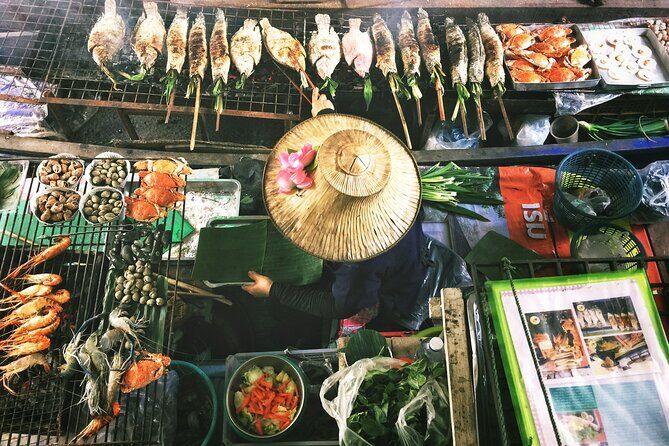
The experience includes tasting popular Thai street food, and the guides also explain the dishes along the way. That combo is what makes street-food tours work. Food without context can feel random. Context without food can feel like homework.
From the guides’ approach, the tour seems to include both sampling and tips for where you’ll likely want to buy more on your own. One helpful detail: a couple of people noted that the food plan wasn’t always obvious from the description—so if you care about food logistics, arrive ready to eat and bring small cash for extras.
Practical tip: wear comfy shoes. Chinatown is a lot of walking plus stop-and-go. Also, keep your water handy. Night heat can still be real, and the crowd density doesn’t help.
Chinatown Gate and the larger Yaowarat feel
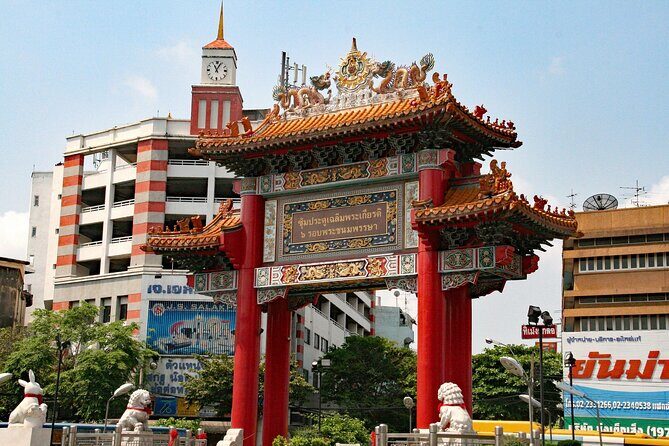
Even though not every landmark is its own “stop,” the tour is designed to move through the iconic Chinatown Gate area and the main Yaowarat rhythm. That’s important. It gives you the headline sights, then immediately supports them with quieter, older, more specific places like Talat Noi courtyard houses and the river-side shrine.
So you don’t just leave with photos of lights. You leave with a mental map: market alley → community life → religious sites → river connection.
Guides make or break it: what you’ll notice
The quality of the night tends to track with the guide’s energy and storytelling style. In past bookings, you’ll see names like Nam, Jimmy, Tony, Bobby, Kim, Bass, and Den/Dan. Different voices, same goal: make the city feel readable.
What I’d call the standout pattern from those descriptions is this: the guides don’t treat the tour as a script. They adjust to the group, including pacing when someone feels the heat or needs extra attention.
That matters in Chinatown, because the environment can be loud and crowded. A good guide helps you slow down enough to notice the details that make the tour worth it.
Group size up to 99: lively, not intimate
This tour allows a maximum of 99 travelers. That number tells you the night will likely feel lively. You may not always move like a private group, especially at popular points like market areas.
Still, it’s not so large that it has to feel chaotic. The tour keeps a guided structure with multiple stops, so you won’t be wandering alone with a map.
If you want a more intimate experience, you might prefer smaller-group tours in general. But for a $15 evening walk, this size often hits a sweet spot.
What’s included vs. what you handle yourself
Included:
- Chinatown walking tour
- local insights and storytelling
- 3 free self-guided tour options in the Vox City app
Not included:
- headphones
- entry to attractions
That last point is worth remembering. You can still see a lot from outside and in open-air areas, but if a stop has paid entry, you’ll need to cover it.
If you’re the type who likes to take slow photos or linger at shops, you’ll also want to keep your schedule flexible. This is a walking tour, so time can feel like it moves faster than you’d expect once you’re in the crowd flow.
Don’t miss the Vox City app bonus
One of the smartest value add-ons here is the 3 free self-guided tours in the Vox City app. These aren’t part of the 2-hour guide, but they can extend your Bangkok night planning without paying for another guided ticket.
Think of it as a way to keep momentum after the walk. If you liked Chinatown’s themes—food, temples, and local neighborhoods—those self-guided options can help you keep exploring in a more relaxed way.
Who this tour is best for
You’ll like this tour if:
- you want a guided route through Chinatown without getting lost
- you enjoy street food and want it explained
- you’re interested in Chinese-TThai community life, temples, and courtyard architecture
- you’d rather learn by walking than sitting in a classroom
You might not love it as much if:
- you need quiet or personal space during city walks
- you hate crowds and narrow alleys
- you strongly prefer that every stop includes attraction entry (this one doesn’t)
Should you book Bangkok: Chinatown By Night Walking Tour?
If you want an affordable, well-paced night introduction to Chinatown, this is a solid pick. The $15 price makes it easy to justify as your “first Chinatown night,” especially since you’ll sample Thai street food and get stories that connect markets, community history, and riverside worship.
I’d book it if you’re ready to walk, eat a bit, and let the guide shape your route. I’d think twice if you’re very sensitive to crowd density or if you expect all stops to include paid entry.
Either way, plan comfy shoes, bring some cash for extra bites, and set aside your phone for a few moments so you can actually notice what the guide points out.
FAQ
What time does the tour start?
The tour starts at 6:30 pm.
How long is the Bangkok Chinatown by Night walking tour?
The duration is about 2 hours.
How much does it cost?
It costs $15.00 per person.
Where is the meeting point?
The meeting point is at Hua Lamphong Rong Muang, Pathum Wan, Bangkok 10330, Thailand.
Does the tour include food?
Yes. You’ll taste popular Thai street food during the walk.
What’s included in the price?
The tour includes a Chinatown walking tour, local insights and expert storytelling, plus 3 free self-guided tour options in the Vox City app.
What’s not included?
Headphones and entry to attractions are not included.
Is it near public transportation?
Yes, the meeting area is listed as near public transportation.
How big is the group?
The tour has a maximum of 99 travelers.
Is there free cancellation?
Yes. You can cancel for a full refund up to 24 hours before the experience starts.